Why study American Sign Language and Deaf Studies at MC?
Maryville College has a rich history of teaching American Sign Language (ASL) and partnering with the local Deaf Community. Language and community bind Deaf culture, and the major in ASL & Deaf Studies provides the knowledge and experiences to explore that connection. Our program allows students to explore ASL, Deaf Studies, and Psychology research and language advocacy for D/deaf, deafblind, and hard of hearing communities. Students will build a foundation in the historical, sociological, and multicultural aspects of D/deaf and deafblind communities to prepare for careers in deaf education or applied contexts such as art history, linguistics, STEM, psychology, business, law, interpreting, or social work. Students will be prepared to pursue graduate-level study and jobs that serve and support D/deaf, deafblind, and hard of hearing communities. If you are interested primarily in being an interpreter for the Deaf, Maryville College also has a major in ASL—English Interpreting.
The Major in American Sign Language and Deaf Studies is intended for those desiring to pursue studies in the areas of linguistics or anthropology at the graduate level or communication skills/cultural knowledge for use in counseling, social work, teaching, working in schools for the Deaf, or other service fields. Audio-visual materials are accessible for individual study of a broad cross-section of communication methods. Interactions with D/deaf and hard-of-hearing persons and regular practice using videotaping equipment are principal means for the development of skills. Successful graduates of the ASL studies major will be able to comfortably communicate in ASL receptively and expressively and to interact comfortably and appropriately in the Deaf community at entry level. The Major in American Sign Language and Deaf Studies requires 46 hours. A double major in American Sign Language and Deaf Studies and American Sign Language-English Interpreting is not permitted.
In addition to the primary, we also offer majors in these sub-areas:
ASL & Deaf Studies with Mental Health track
The American Sign Language & Deaf Studies with Mental Health Track builds on existing courses in Deaf Studies, Psychology and Sociology. Students who major with this emphasis will be equipped with the necessary skills to support and advocate for Deaf and hard-of-hearing individuals in traditionally underserved settings. This specialized training enables graduates to remove barriers and promote equity in health services, creating professionals who are well-prepared for entry-level roles in social services and behavioral health or for graduate programs in counseling, social work, and psychology. Practice in communication is enhanced by audio-visual materials that are accessible for individual study of a broad cross-section of communication methods, interactions with D/deaf and hard-of-hearing persons, and regular practice using video equipment.
ASL & Deaf Studies with Teacher Licensure
American Sign Language (ASL) & Deaf Studies with Teacher Licensure program is the region’s first Bachelor of Arts degree of its kind offered through a private institution in the South, providing students the opportunity to become licensed to teach ASL as a World Language in grades 6–12. This innovative program is the result of a dynamic collaboration between the Division of Education and the Division of Behavioral Sciences, combining deep cultural and linguistic understanding with the rigor of professional teacher preparation.
Students in this program will engage in extensive field experiences that begin early and continue throughout their coursework, ensuring they are classroom-ready from day one. Through immersive learning and mentorship, candidates will be prepared to foster inclusive classrooms where ASL flourishes as a vibrant, living language. Graduates will be prepared to meet the growing demand for ASL educators and to expand access for Deaf, DeafBlind and Hard of Hearing communities across educational and workforce settings.
Meet a Current Scot

Kaliyah Washington
Hometown: Atlanta, Georgia and Alcoa, Tennessee
Kaliyah has lived all over the United States, most recently in Alcoa. Starting her college search while a resident of Atlanta, Georgia, she saw that ASL was offered as a major at MC and applied right away. She plans to pursue a master’s degree after graduation and work with the Deaf community..
She said she enjoys learning something new every day and the rigor of the program. “Being able to meet people in the Deaf community (she volunteers for the Knoxville Center for the Deaf) and how the major pushes me to get comfortable with being uncomfortable and learning how to be more confident in myself,” brings her the most enjoyment, she added.
Meet a Recent Grad
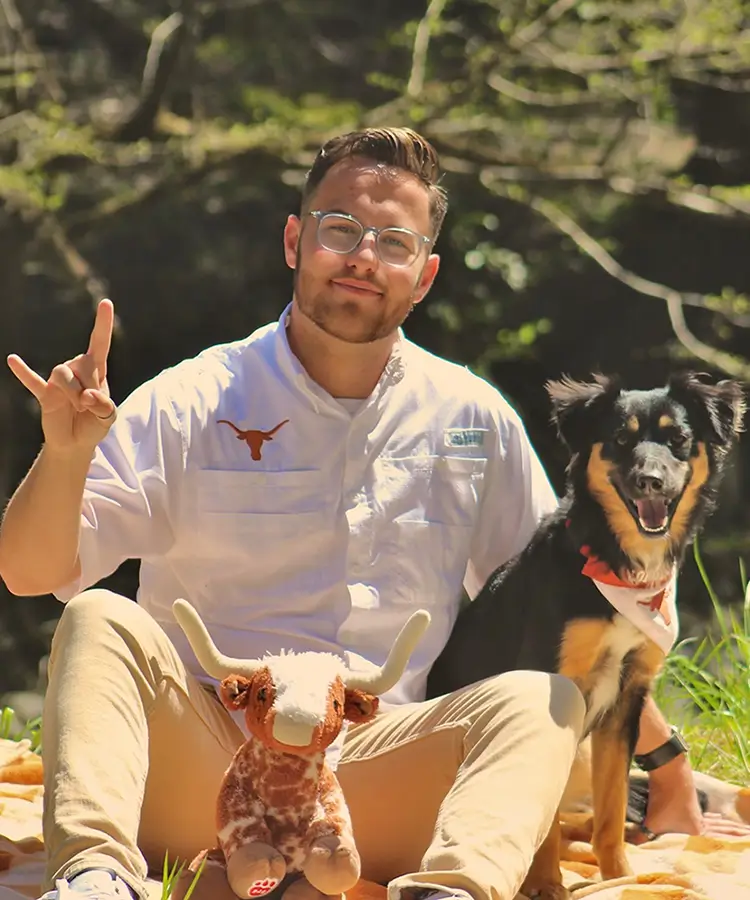
Kelton Bloxham ’24
Currently: Pursuing a Master’s Degree in Higher Education Leadership & Policy at the University of Texas at Austin
Kelton chose MC as he knew he wanted to study ASL but wasn’t sure what his career path could be. “Maryville College prepared me because it truly gave me the space to explore all of my options,” he said. It was this exploration that led to Kelton want to connect his passions for ASL and the Deaf community with his passion for higher education and law. As a Bonner Scholar, Kelton served in more than 10 internships throughout his time at MC, including one at the Tennessee Schools for the Deaf.
In addition to pursuing his master’s degree, Kelton also works as a graduate research assistant at the National Deaf Center on Postsecondary Education.