Close

The primary objective of this study is to examine how stretching and strength training plays a role in the rehabilitation process of an anterior cruciate ligament (ACL) injury in a physical therapy setting. The injury to the ACL is the most reoccurring injury with contact activities, such as football, basketball, and soccer. The knee joint is the most complex joint in the body and it comprises of four bones, three joints, and four essential ligaments. This massive hinge joint requires a large support system to function properly, without it the joint would be rendered useless. The support system is made up of muscles that have specific functions and help in the production of motion. The underlying problem that is most often found in all patients with knee problems is that there is a dysfunction in how the knee is operating. ACL rehabilitation takes anywhere from 6 to 12 months depending on the individual. Stretching exercises primary purpose in the rehabilitation process is to increase the range of motion in a joint while helping to restore a normal gait pattern. The strengthening exercises develop the muscle and connective tissues around the joint and increase the stability of the joint. The ACL injury has been transformed from a lifetime disability or career ending injury to a 6 month long rehabilitation period where the patient will undergo physical therapy and ultimately have no lasting long term effects.
Hometown: Kingsport, Tenn.
Major: Physical Education
Thesis Title: Stretching and Strength Training in Anterior Cruciate Ligament Rehabilitation
Advisor: Dr. Traci Haydu
Matt Dunn could write a book on the knee.
Actually, he kind of did.
Dunn, a physical education major whose sights now are set on a doctorate in physical therapy, devoted 26 pages of his Senior Study to explaining every bone, muscle, joint and disc of the knee and how they all work together.
It was foundational information in answering the basic question of his study –How does stretching and strength training play a role in the rehabilitation of an anterior cruciate ligament (ACL) injury?
The ACL is one of the four major ligaments of the knee. A strong ligament, it connects the thigh bone to the leg bone and controls the movement of the knee joint, helping keep the knee aligned.
A tear or malfunction of the ACL is a common injury among athletes, especially football, basketball and soccer players.
Dunn came up with the idea for his Senior Study after interning with Colonial Heights Physical Therapy group in Kingsport, Tenn., during the summer of 2007.
“I saw a lot of knees,” he remembered. “And the physical therapist I was working with emphasized stretching and strengthening in the rehab process.”
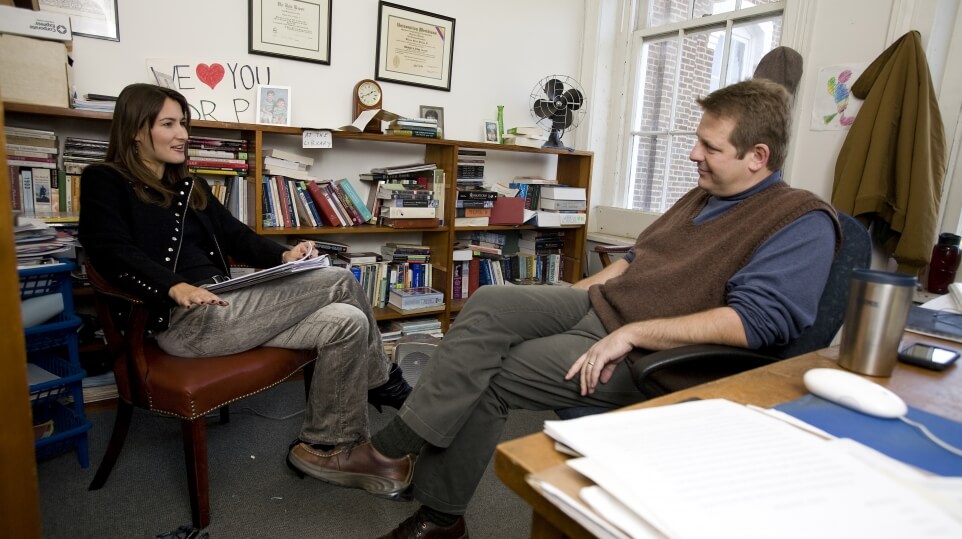
The majority of the therapy clients Dunn saw that summer weren’t ACL injuries, though. When he suggested putting stretching and strength training together with ACL injuries, Dr. Traci Haydu, assistant professor of physical education and Dunn’s advisor, recognized it as a new concept.
“The ACL is a common injury,” she said, “but most of the research seems to focus on preventative programs, surgical techniques and incidence comparisons between male and female athletes.
“Matt’s take on the ACL was completely different.”
Dunn said he was surprised to find little to no research devoted to how the combination of stretching and strengthening aided rehabilitation. The concept, after all, seems logical. As he explained: “You can strengthen something all you want, but it doesn’t help if you can’t move it.”
Aided by Haydu, Dunn conducted a thorough search of research and reports published on ACL rehabilitation. She described the resulting study as a “literature review.”
“It’s very well written,” she said of Dunn’s work. “It’s comprehensive – what a literature review should be. Matt put a lot of time and effort into synthesizing the material and writing.”
Dunn didn’t administer studies and collect data, but instead looked at the different kinds of stretching and strengthening programs, explaining what they were and accessing exercises, equipment, techniques and benefits.
And because any good study of the knee has to take into account other parts of the body and other biological functions, Dunn’s study also included explanations of related issues such as tissue damage and fatigue.
“Matt is an outstanding student. He already had a good grasp of the muscular-skeletal system, but what his thesis did was strengthen that knowledge,” Haydu explained. “He recognizes that the body is like a chain – everything is connected. Dysfunction in one area can affect other parts of the chain.”
Dunn said that numerous courses in the College’s Physical Education Department helped prepare him for his Senior Study: kinesiology, physiology of exercise, motor development and motor learning. He was happy to be able to recall lessons from two specific courses in the Biology Department, as well – human anatomy and physiology and the principles of cellular biology.
“Learning about small fibers in cell biology was valuable,” Dunn said. “Dr. [Jerilyn] Swann emphasized that you have to understand the small things before you can understand the big things.”
Haydu said that she learned a lot alongside her advisee.
“He went into a lot of detail,” she said. “There were sections that he worked on where I told him ‘I’ve never read that research.’ It was fascinating. In the process, I learned, and that was definitely cool.”
Dunn said his advisor was particularly helpful in helping him find sources and then explaining new concepts. Haydu said she’s now sharing some of those new concepts in her kinesiology course.
The appendix of Dunn’s study includes a rehabilitation protocol that outlines, week by week, specific goals for recovery and the stretching and strength training that should help meet those goals.
Although Dunn has yet to have a “live subject” to utilize the plan outlined in his appendix, Haydu feels confident that he’ll soon have the opportunity.
“Matt can test those theories while working on a master’s or doctoral thesis,” she said. “What he has here is a great foundation to work from.”