Why study Environmental Studies at MC?
Are you ready to help the planet? Are you ready to learn how to make money while creating a green business? Do you see yourself studying ecology in the rainforests of Costa Rica, or rural development in Africa, or doing field work on air quality and forests in the Great Smoky Mountains? Would you like to teach environmental education to the next generation of students, or write land, air, and water or energy policy in Washington, DC? Would like to help create the next set of renewable energy projects in East Tennessee? The Environmental Studies (ENV) major provides you with a wide-ranging set of skills that prepares you to tackle planet-wide issues of sustainability, ecology, green building, environmental business practices and non-governmental advocacy of environmental issues.
The ENV Major is housed in the Social Sciences, insuring that you will gain a strong background in economics, politics, sociology and business from a North American and global perspective. The other courses in the major are in math, the humanities, education and the natural sciences, where you will gain skills in analyzing data, best practices in laboratory and field sciences, and environmental education training. As one of the only majors at MC with a required practicum, you will be expected to take your knowledge and apply it in the world beyond campus. Students have interned at any one of over 20 environmental wildlife, renewable energy, air, and water or soil organizations. ENV graduates work at the US Environmental Protection Agency, the State of Tennessee, the National Aeronautics and Space Administration, in a variety of large and small businesses developing efficient, sustainable products and processes. We have ENV graduates who are practicing lawyers and ENV graduates who currently patrol and guide visitors and rangers for the US National Park Service. Come and be a part of our world.
Meet a Current Scot
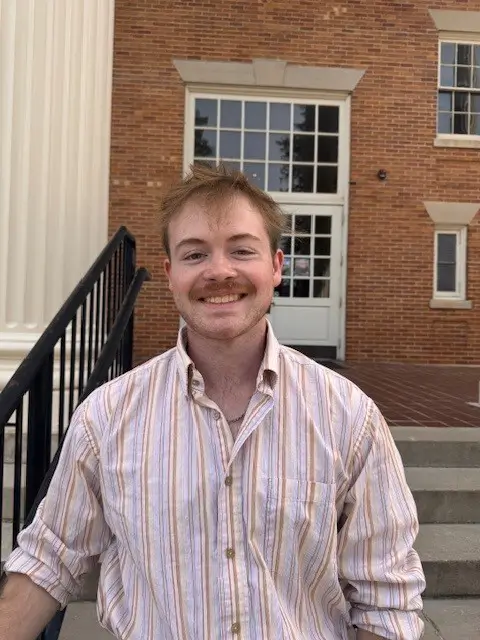
Josh Cornell
Hometown: Chattanooga, Tennessee
A double major in Environmental Studies and Political Science, Josh came to MC due to its proximity to home and the wide range of activities both on and off campus. He has served in the Student Government Association since his first year and is also the President of MC Politics (the College’s non-partisan civic engagement club) and treasurer of the Sustainable Fashion club.
Josh has ample opportunities to study Environmental Studies in the field. “It’s refreshing to talk about a key concept and to be able to observe that concept in the College Woods or the Great Smoky Mountains National Park,” he said. His long-term goal – fostered at MC – is to obtain his juris doctorate and practice law.
Meet a Recent Grad
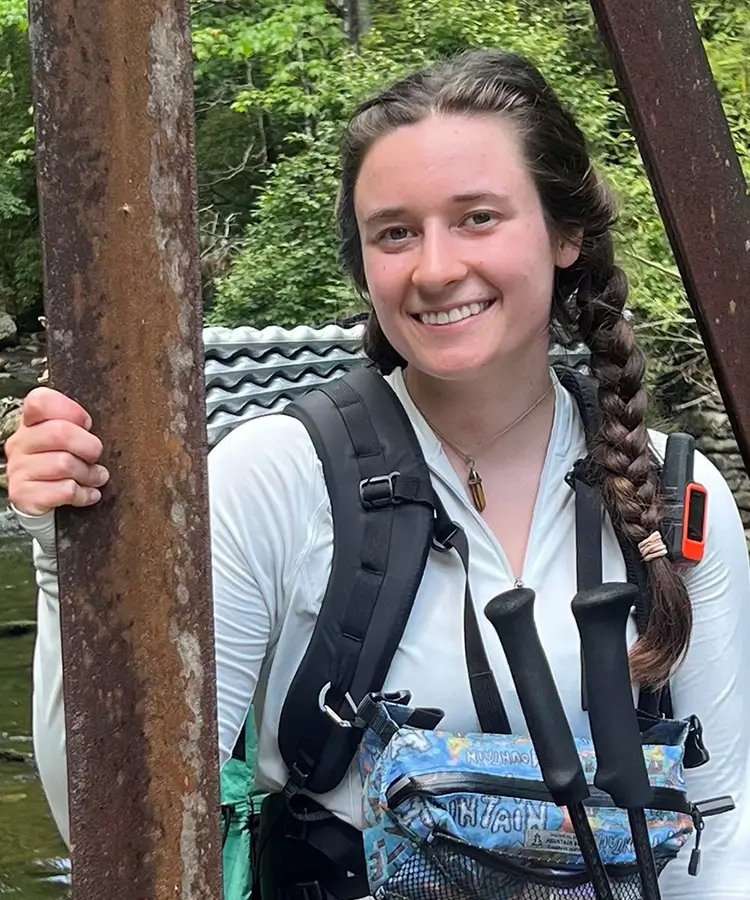
Hayley Harmon Gorham ’23
Currently: Invasive Species Biologist in Marshall, North Carolina
Hayley came to MC knowing that she would study Environmental Studies and realizing that the College’s location near the Smoky Mountains would provide her with unique learning experiences. She chose to double major in both Environmental Studies and Biology, believing that those fields would better position her to impact change.
She worked as an outreach coordinator with the Environmental Justice Community Action Network (EJCAN) prior to her current position. Today, she independently plans and implements restoration projects on private lands. While she eventually hopes to work in public land management, she enjoys seeing the impact her work makes. “It’s really rewarding to assess a site, treat it and come back later to see native ferns and wildflowers flourishing.”