Kara Whitlock

Kara Whitlock ’08

Hometown: Louisville, Tenn.
Major: Biology
Thesis Title: Fluorescent Technology in Medulloblastoma Research
Advisor: Dr. Jerilyn Swann

Unlike a lot of students embarking on their Senior Study experience at Maryville College, Kara Whitlock didn't stress out when her advisor asked her what she would like to study in depth for two semesters.

Whitlock, who had spent the summers of 2006 and 2007 in the laboratories of St. Jude Children's Research Hospital in Memphis, had been invited back for the summer of 2008 – this time to study fluorescent technology in medulloblastoma research. Could she, she wondered, incorporate her summer research into her Senior Study?

“I was open to any idea,” the 23-year-old biology major explained. “I like to learn everything, but I'm particularly fascinated about the brain and the different diseases that can affect the brain.”

A Senior Study conducted mostly off-campus is not the norm, but Dr. Jerilyn Swann, associate professor of biology, knew that access to world-class laboratories, state-of-the-art technology and world-renowned scientists at St. Jude would help Whitlock compose an impressive study – and résumé.

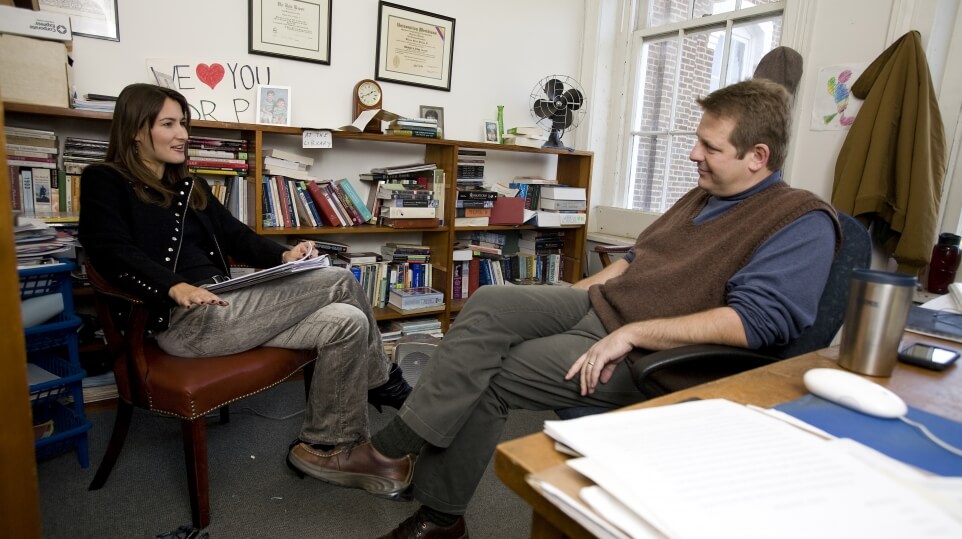
Swann and WhitlockFamiliar with Whitlock's work ethic, competency in the subject matter and maturity level from her Cell and Tissue Biology course, Swann had no concerns about her advisee's commitment to stay in communication and stay on task.

Whitlock got the green light.

She and Swann, a cell and tissue biologist, met early in the spring of 2008 to establish the parameters of the study and discuss the study's introductory chapter.

“During that semester, I researched medulloblastomas, which are malignant tumors of the cerebellum that occur during the early development of the brain,” Whitlock explained, “and I also studied how different fluorescent technologies can help study the role of certain genes in tumor formation.”

When injected into tissue, fluorescent proteins can act as markers. They can track cells and bind to certain molecules, giving scientists an accurate picture of events at the cellular and sub-cellular level.

Once in the lab at St. Jude, Whitlock worked with two scientists considered to be at the forefront of medulloblastoma research. Years of research have shed light on the genes believed to play a role in the interruption of the brain's development, but questions still remain. Focusing on three fluorescent techniques, Whitlock tracked normal and abnormal brain development in mice.

She monitored about 30 mice daily, looking for signs of tumor formation.

“The cerebellum is the brain's center for coordination and balance, so mice that had developed tumors would lose lots of motor coordination. They would quit grooming themselves.”

Mice were sacrificed when visible signs of tumors appeared. Whitlock then extracted the brains, found the tumors and created slides of the tissues. Using a high-powered microscope, she captured color/images/research/ of healthy and malignant brain tissue, showing clear differences.

Those/images/research/ are printed on several pages of her Senior Study – a study that Swann says is so thorough and well presented that it could be a component of a master's degree thesis.

Whitlock credits Swann for helping her organize the research results in addition to helping her understand the complexities of cell and tissue biology. And Swann organized a kind of “peer review” of the research, sharing Whitlock's study with colleagues in the College's biology department and asking for feedback.

Several professors suggested additions that would “put it over the top” and make it even more impressive to graduate school admissions officers. Whitlock incorporated them.

“I was impressed with Kara's willingness to take on extra work to really polish it,” Swann said. “And I never sensed in Kara an elevated stress level about [those suggestions]. I'm so proud of her – those additions made her thesis that much better.”

WhitlockWhitlock said the study settled the question of vocation for her. Today, she said she knows that she wants to “go the biology route,” pursue a graduate degree and work in a laboratory. (Since graduating in December 2008, she has been working as a laboratory technician at the Knoxville division of Microbac Laboratories.)

Her Senior Study research didn't find a cure for cancer or result in a vaccination against this number one disease killer of children, but she recognizes it as an important step toward finding a cure and developing medicines.

“It was an honor to be a part of a study like this,” she said.