Why study Criminal Justice at MC?

Are you looking for a stimulating career that provides the opportunity to serve others? A degree in Criminal Justice is one that prepares students to become professionals, researchers, and educators in a wide variety of contexts. Environmental protection officers, park rangers, and counselors of juveniles are fields open to graduates with Criminal Justice degrees. Additionally, federal agencies, such as the Secret Service, Homeland Security, Border Patrol, and Federal Probation and Parole, are seeking college graduates with criminal justice backgrounds. Other related fields include: public health (health inspector/regulation administrator), social work (case worker, child protective services agent, adult services provider), and city and state policy researchers.

MC Crime Talk, an on campus student organization, hosts guest speakers and plans field trips and other learning and discussion opportunities for all students who share an interest in crime, justice and the criminal justice system.

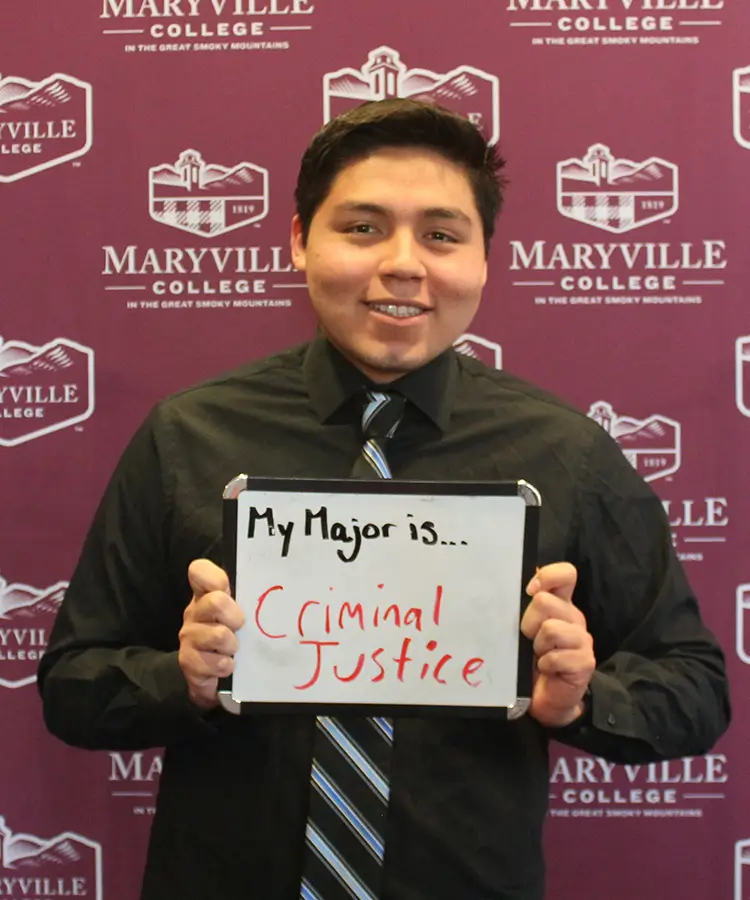
Photo of Jesus Olguin De Los Santos

Jesus Olguin De Los Santos

Hometown: Knoxville, Tennessee

Jesus’s first introduction to MC was through playing at the Clayton Center for the Arts with his high school band. Struck by the beauty of the campus, Jesus later discovered that the College offered a Criminal Justice major. “I knew it was the right place for me,” he said.

Combining his love of music and his major, Jesus is a member of the Maryville College Tartan Band, as well as the MC Crime Talk Club.
“I enjoy learning the complexities of the criminal justice system and how it continues to adapt in a constantly shifting environment.” His future plans include a career in law enforcement, eventually working for a federal agency.


Photo of alumna Riley Cook who graduated with a degree in Criminal Justice.

Riley Cook ’23

Currently: Pursuing a JD and a Master’s in Criminal Justice at Lincoln Memorial University’s Duncan School of Law

Riley initially came to MC to study Biology for a career as a plastic surgeon. Midway through her sophomore year, however, Riley realized she was unhappy with her studies and changed her major to Criminal Justice, where she thrived. After she earns her master’s and JD, Riley would like to join the Army Judge Advocate General’s Corps (JAG Corps).


“The writing classes and my senior thesis prepared me for law school more than any other class,” Riley said. “There is a lot of writing involved in law school, and Maryville College more than prepared me for it.”
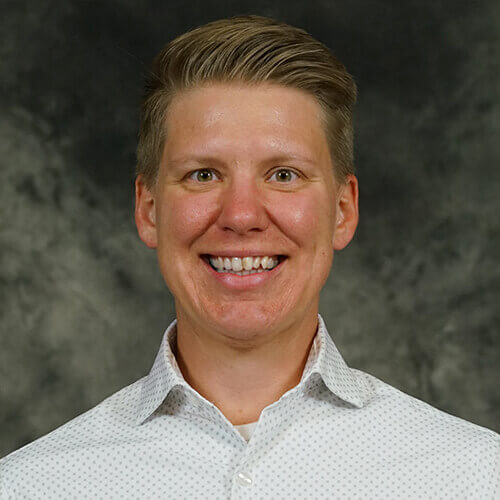
 

Rachel Ponder
Dr. Rachel Ponder
Assistant Professor in Criminal Justice
View More

Individuals majoring in Criminal Justice can choose from a plethora of careers including: Social Worker, Victims Advocate, Criminal Researcher, Federal Special Agent, Police Officer, Police Detective, Probation Officer, Military Police, Transportation Security Administration Officer, Customs Agent, US Border Patrol, Coast Guard, Substance Abuse Counselor, and Game Warden.

Alcoa Police Department
Blount County Justice Center
Blount County Sheriff’s Office
Federal Bureau of Investigation (FBI)
Haven House Domestic Violence Services
Maryville Police Department
New Hope Blount County Children’s Advocacy Center
Tennessee Bureau of Investigation (TBI)
United States Secret Service

  1. Demonstrate an understanding of the operations of various components of the criminal justice system and how they relate to each other.
  2. Recognize historical and current approaches to law enforcement, courts, and corrections.
  3. Develop critical thinking skills, acquire knowledge in theoretical perspectives and methodological techniques, and gain from experiential learning opportunities.


The Major in Criminal Justice requires a minimum of 47 to 48 credit hours.

Required courses include:

Major and Major-Related Courses

CRJ 101: Introduction to Criminal Justice (3 hrs)
CRJ 149: Selected Topics in Criminal Justice (3 hrs)
CRJ 204: Criminal Law & Procedure (3 hrs)
CRJ 226: Investigative Forensics (3 hrs)
CRJ 349: Selected Topics in Criminal Justice (3 hrs)
CRJ 337: Internship (1 hrs)
CRJ 353: Senior Study (3 hrs)
PSY 101: Introductory Psychology (3 hrs)
SOC 101: Introductory Sociology (3 hrs)
SLS 301: Social Sciences Research Methods (3 hrs)

Either of the following courses:

SLS 299: Issues in Professional Development (2 hrs)
Or
MCW 299: Issues in Professional Development (0-1 hrs)

Either of the following courses:

SOC 315: Social Inequality (3 hrs)
Or
SOC 221: Social Psychology (3 hrs)

Either of the following courses:

BUS 305: Organizational Behavior (3 hrs)
Or
PLS 316: International Organizations and Law (3 hrs)

Either of the following courses:

MTH 221: Inferential Statistics w/Data Visualization (3 hrs)
Or
MTH 222: Regression Analysis (3 hrs)

One of the following courses:

PSY 331: Abnormal Psychology (3 hrs)
PSY 336: Community Psychology and Social Justice (3 hrs)
PSY 324: Child Poverty and Inequality (3 hrs)

Either of the following courses:

PLS 211: Comparative Government and Politics (3 hrs)
Or
PLS 322: The Judicial Process (3 hrs)

One of the following courses:

PHL 2XX: PHL 2XX One course in Philosophy at the 200-level (3 hrs)
PLS 232: Public Policy (3 hrs)
PSY 248: Drugs and Behavior (3 hrs)
SOC 326: Social Movements (3 hrs)
SOC 226: Global Child Welfare (3 hrs)
PSY 232: Child Trauma and Resilience (3 hrs)
CRJ 349: Selected Topics in Criminal Justice (1-4 hrs)
Other courses approved by the advisor and Criminal Justice Program Coordinator (3 hrs)


The Minor in Criminal Justice consists of a minimum of 15 hours.

Required courses include:

Minor and Minor-Related Courses

CRJ 101: Introduction to Criminal Justice (3 hrs)
CRJ 204: Criminal Law & Procedure (3 hrs)
CRJ 226: Investigative Forensics (3 hrs)
CRJ 349: Selected Topics in Criminal Justice (3 hrs)

Three additional hours selected from the following courses:

BUS 305: Organizational Behavior (3 hrs)
PLS 322: The Judicial Process (3 hrs)
SOC 101: Introductory Sociology (3 hrs)
PSY 101: Introductory Psychology (3 hrs)
PSY 331: Abnormal Psychology (3 hrs)

In addition to required courses for majors and minors, Maryville College students take classes in the Maryville Curriculum, a core program of general education. Consisting of 51 credit hours, the Maryville Curriculum ensures that students see their major in a wider context and develop the basic communication, quantitative, and critical thinking skills that are needed for success in college and career.

You may also be interested in:

Apply
Faculty & Staff
Rachel Ponder
Dr. Rachel Ponder
Assistant Professor in Criminal Justice
View More

Request Info

Interested in this Program of Study at Maryville College? Submit your basic information and an Admissions counselor will contact you shortly to answer any questions you might have.

Loading…