


The Parish Project/Faith Cooperative Parish
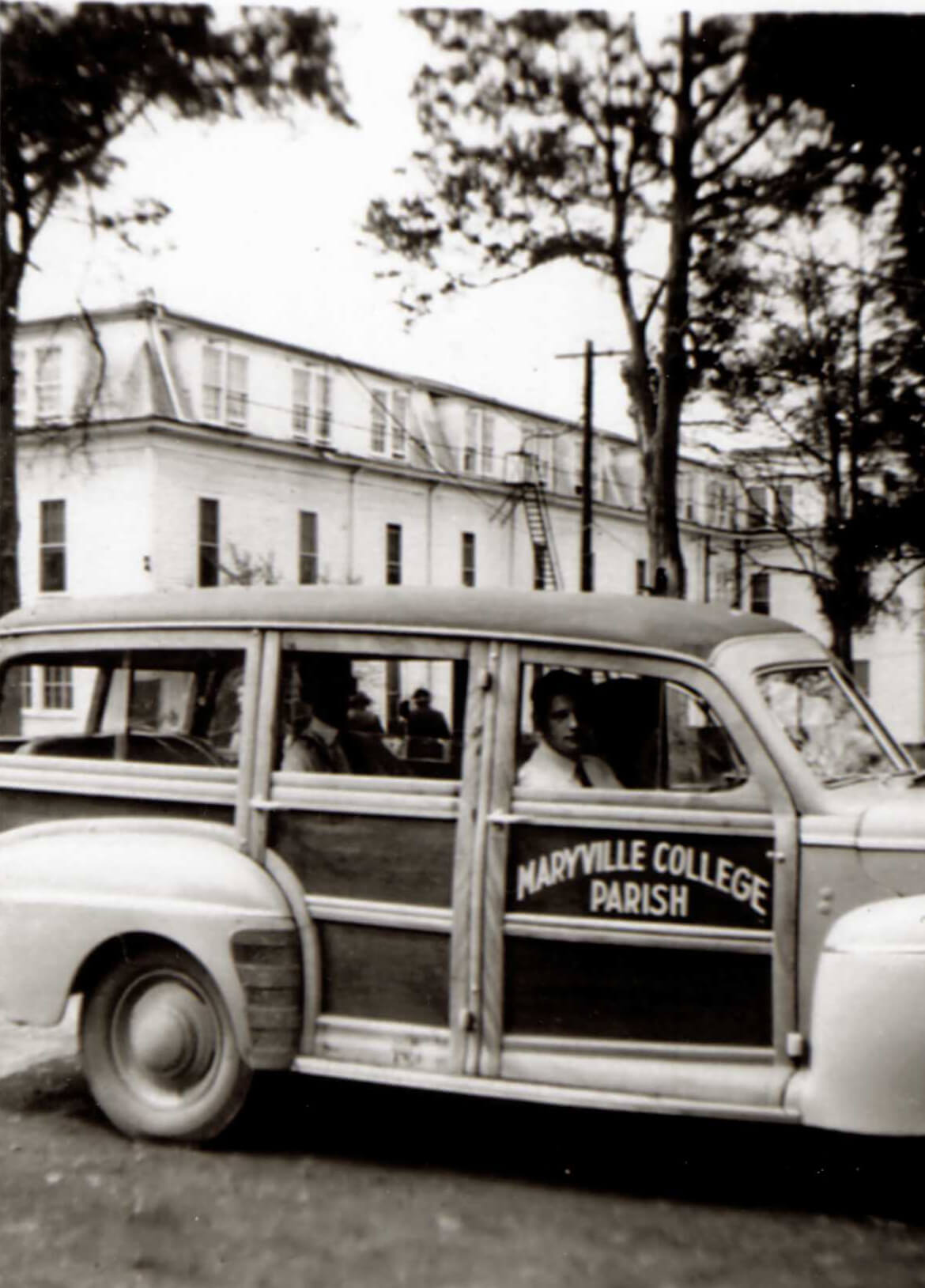
In the fall 2015 and spring 2016 issues of FOCUS, we featured photos of the College’s Parish Project (also known as the Faith Cooperative Parish) and asked alumni to share what they know about the history of the initiative. Over the past year, we have been compiling anecdotes submitted by alumni (read the responses below, and submit your own in the box at left), and, with the help of alumni volunteers in the College Archives, conducting research about the Parish Project/Faith Cooperative Parish. Surprisingly, we found very little information about the project’s early history but discovered brief mentions in the Highland Echo and Maryville College catalogs, as well as in documents from the library of New Providence Presbyterian Church.
Elenor Kramer Van Pelt ’51 was another valuable resource. Her late husband, Austin Van Pelt ’52, worked with the project as a Maryville College student and later served as associate director of the Faith Cooperative Parish. Elenor Van Pelt spent more than a year working on a book about the Faith Cooperative Parish as part of a family history project for her children.
“This was a real mission project of reaching people in Appalachia,” she said. “The Faith Cooperative Parish was an important part of our lives. This was the beginning of Austin’s career in ministry, and it was the start of our lives together. We became very close friends with the people we worked with during that time.”
In her book, she wrote, “Maryville College considered the Faith Cooperative Parish work part of its responsibility as a church-related college for doing mission work. The two parts of this program have been first, to provide a training opportunity for 60 college students interested in a full-time church vocation, and second, to provide a ministry to churches and to chapels without installed pastors.”
The Parish Project
The Parish Project began in the 1930s, although records show that Maryville College students were involved in similar mission work before then. In the late 19th century, many of the mainline churches, including Presbyterian churches, had begun mission work in local communities. New Providence Presbyterian Church, with which Maryville College has had a long partnership, is one of those churches. According to the NPPC archives, NPPC elder R.S. Kethcart in 1893 started leading services in the nearby Sunnybrook community – one of the older church organizations started by NPPC. Sunnybrook newsletters include mentions of Maryville College students volunteering at Sunnybrook around 1917, as well as references of MC students participating in mission work with NPPC during that time.
According to an article published in the Oct. 16, 1943 edition of the Highland Echo, the Parish Project was organized in 1936 by the Rev. Floyd Watt, a Presbyterian Sunday School missionary under the Board of National Missions, which supervised the field work. The project was co-sponsored by NPPC, Maryville College, the Board of National Missions of the Presbyterian Church and the Board of Christian Education. Dr. Horace Orr, professor of religion and philosophy at Maryville College, chaired the board of the Parish Project, which included representatives from each organization.
“Over 20 students have responded to the Rev. Floyd Watt’s call for volunteer workers in the Sunday school missions,” stated an article in the Sept. 25, 1937 issue of the Highland Echo. “Fourteen Sunday schools have been organized by Rev. Watt, Dr. Horace Orr and students of Maryville College.”
The directors of the Parish Project came from the Presbyterian Church USA, and in the early years of the Parish Project, the initiative was part of the curriculum for the College’s Christian Education major. The courses offered included Bible 251-252: Practicum in Religious Education and Bible 351-352: Practice Teaching in Religion. Dr. John Gates, associate professor of Bible and Christian education, taught until 1945, when Dr. Ralph Case, professor of sociology, took over the academic side of the project.
By 1943, more than 50 students participated in the project, and the student volunteer activities included teaching Sunday school; leading young people’s services; leading Wednesday programs in public schools; leading Boy Scout, Girl Scout and Cub Scout troops; leading Sunday school at New Castle, Keeble Chapel, Hickory Valley and Marble Hill; and assisting in programs at Lamar Chapel, Home Avenue Mission, Sunnybrook Mission, West Maryville Presbyterian Church and Cumberland Presbyterian Church.
Faith Cooperative Parish
The name of the Parish Project changed in 1953, when the Union Presbytery approved the plan for the Faith Cooperative Parish (FCP), which worked under the Board of National Missions of the Presbyterian Church USA. The plan, approved on Sept. 15, 1953, called for a “parish involving field work for Maryville College students and a ministry for 11 fields composed of six churches and five Sunday Schools.”
Austin Van Pelt ’52 was appointed as a Sunday School Missionary to work as Parish Associate of the FCP in 1954, during his senior year at Louisville Presbyterian Seminary. In this role, he was responsible for five mountain chapels, inner-city Sunday School programs, youth programs and teaching Bible in schools.
In 1955, Dr. Albert Cropp was installed as director of the Faith Cooperative Parish. overseeing the FCP and working as pastor of five small, rural churches: Hays Memorial, Pine Grove, Cloyd’s Creek, Mt. Tabor and West Maryville.
That same year, Austin Van Pelt was ordained as an Evangelist Teaching Elder and installed as associate director of the Faith Cooperative Parish – a position he held until 1957, when he was reassigned by the Board of National Missions to work at Sheldon Jackson College in Sitka, Alaska. As associate director, Austin Van Pelt worked with five chapels in Blount County: Home Avenue and Sunnybrook in Maryville, as well as Keeble, New Castle and East Mountain View in Walland.
The Faith Cooperative Parish was dissolved by the Union Presbytery in 1962. New Providence Presbyterian Church (NPPC) assumed responsibility of the Home Avenue and Sunnybrook missions, but MC students continued to volunteer for several years. The 1962-63 MC Catalog still lists the Bible 251 practicum, with the following description: “Through the extended parish activities of NPPC, a field service program is provided for selected students, who participate each week in supervised religious activities in communities near the College.” The Bible and Christian Education majors, along with the 251 practicum, were dropped during the 1966-67 academic year, but alumni from the late 1960s and 1970s remember volunteering with the missions through NPPC.