Cassius Cash shares “A Message to Our Future” with 2021 grads
May 9, 2021
“Start understanding your journey now, because I guarantee you it is waiting to be a gift to someone that’s going to be coming behind you.”
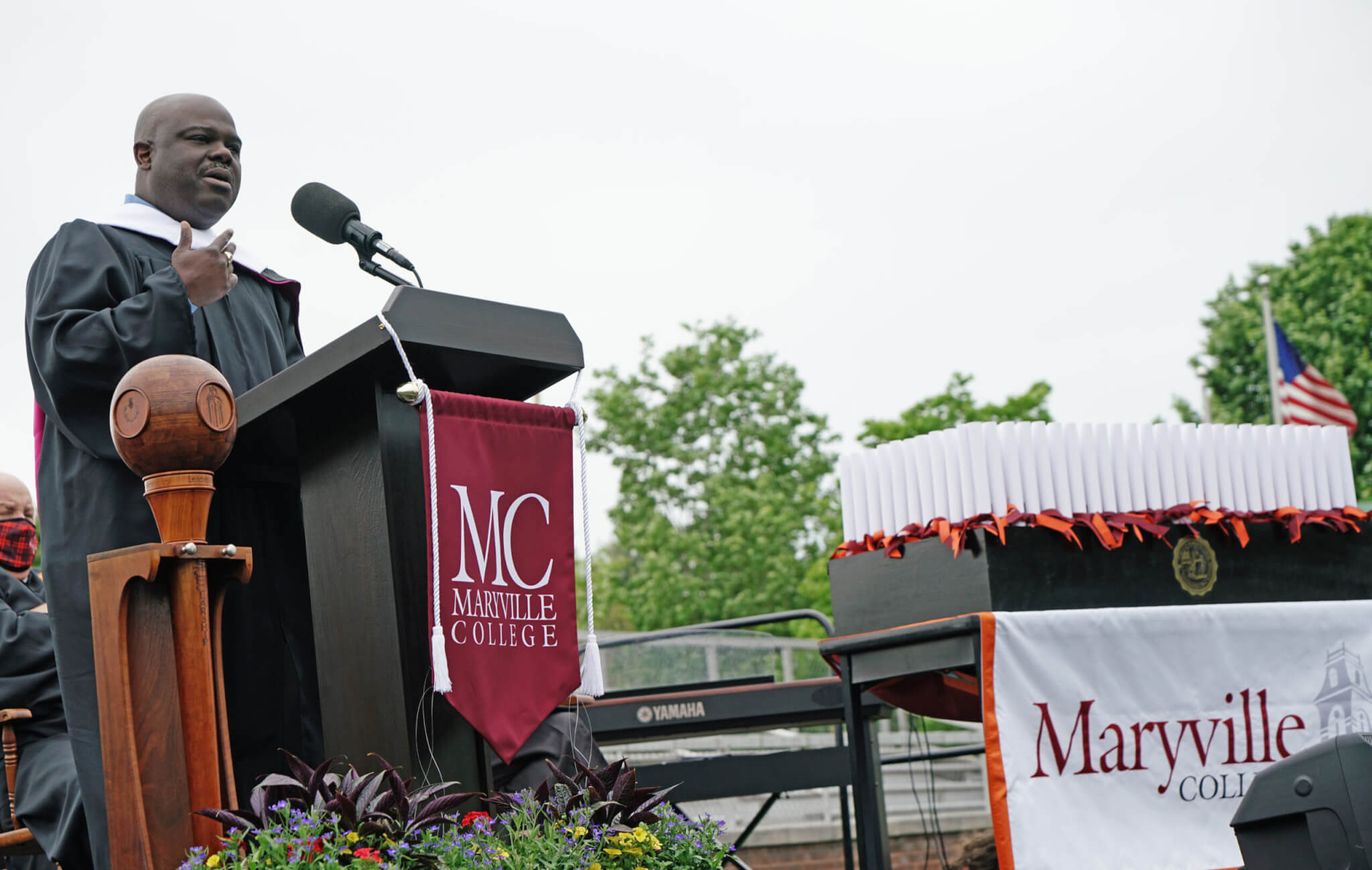
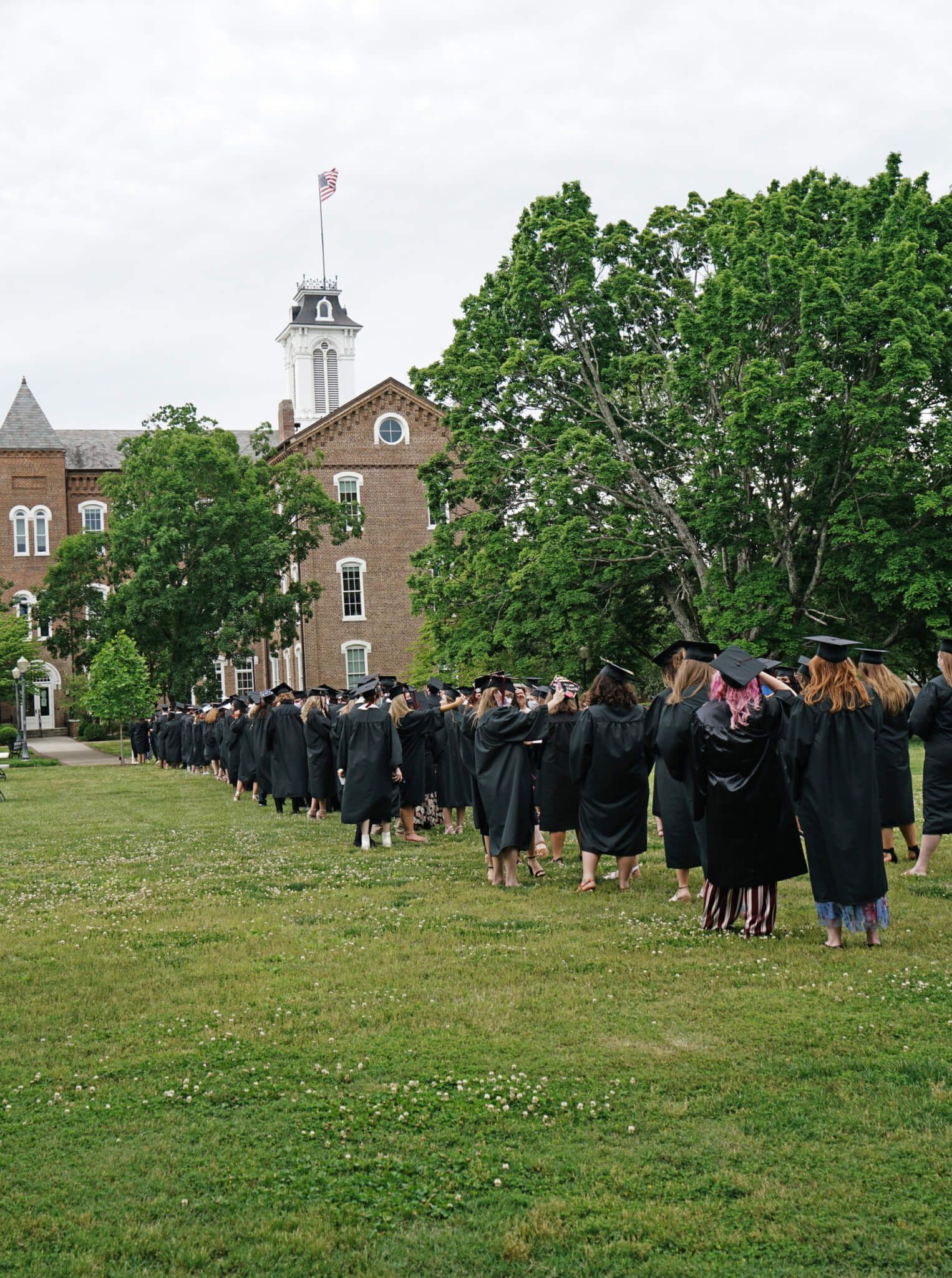
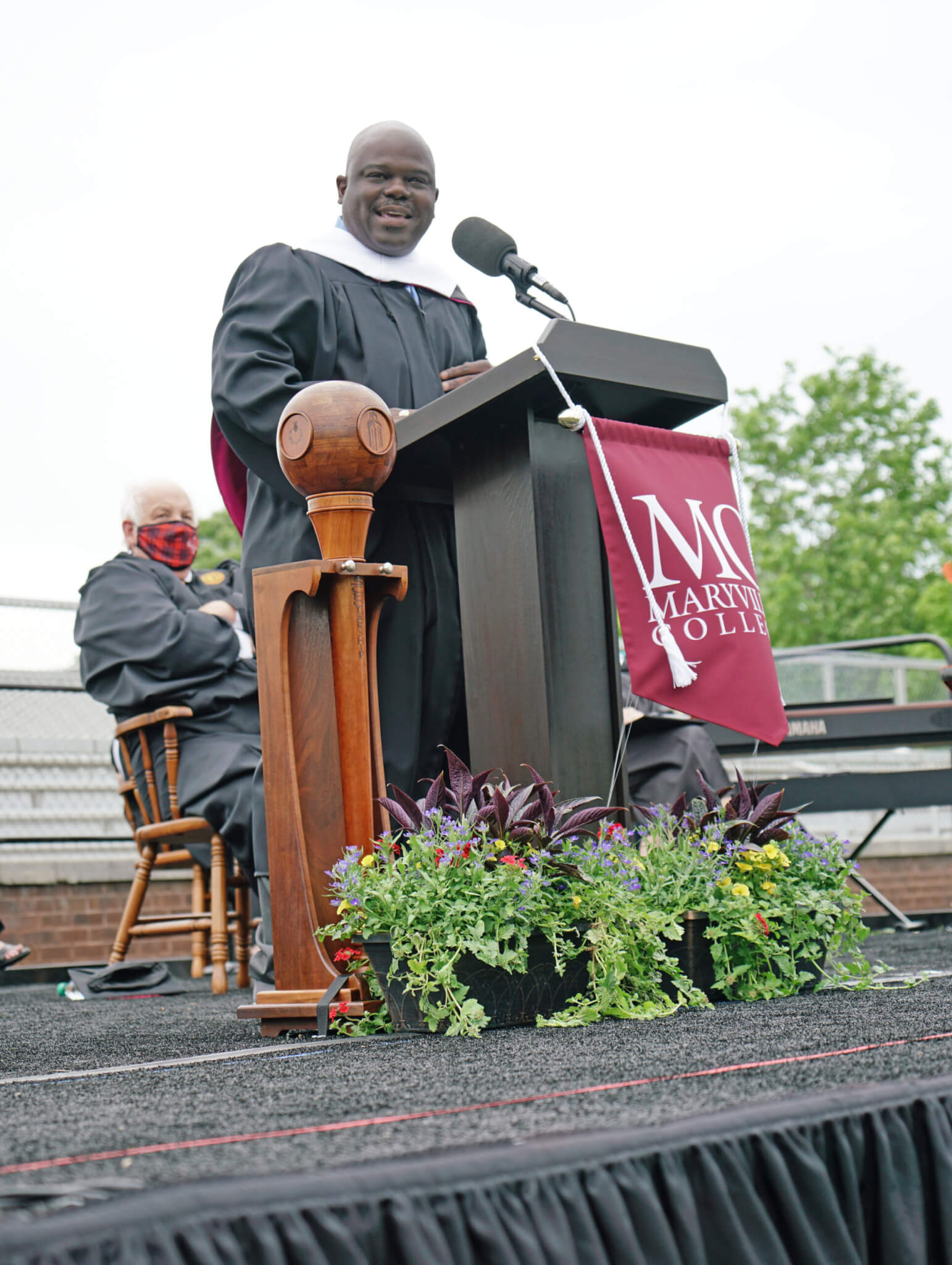
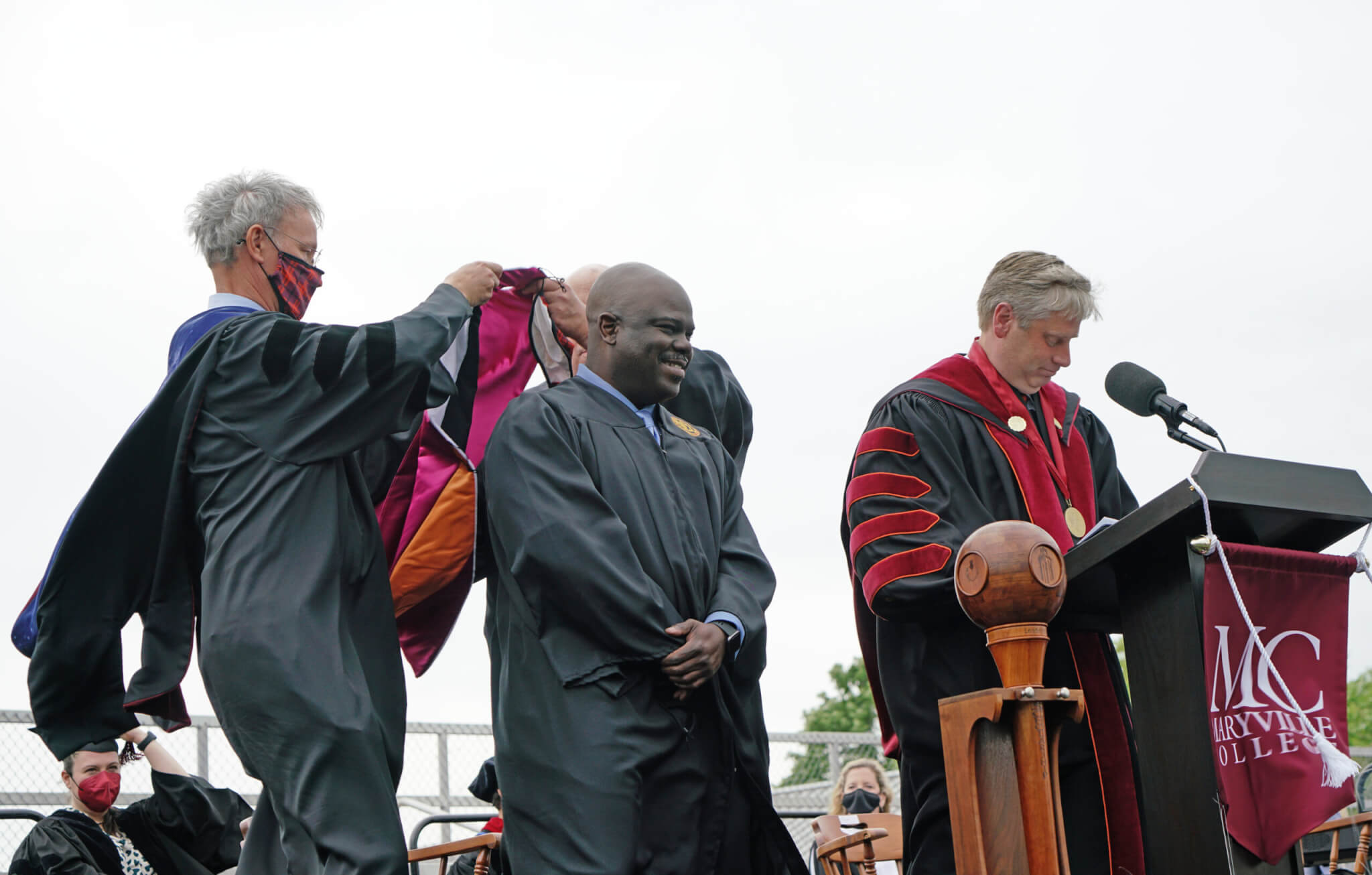
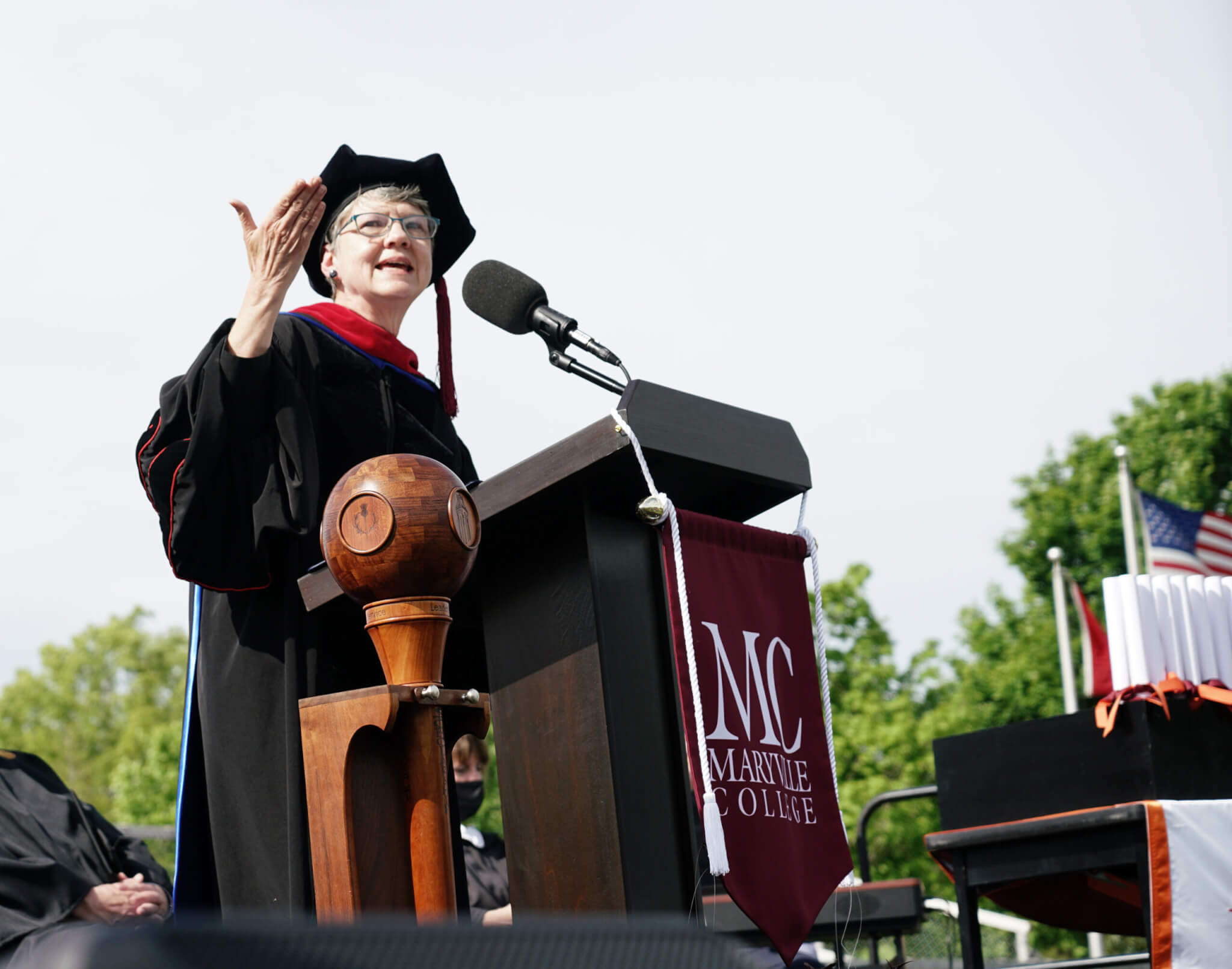
That was the message delivered to approximately 200 Maryville College graduates of the Class of 2021 by Cassius Cash, speaker for the College’s Commencement ceremony May 9. Cash, superintendent of the Great Smoky Mountains National Park (GSMNP), also was presented the honorary doctor of humane letters degree during the event held on Honaker Field.
During his address, titled “A Message to Our Future,” Cash told graduates that their journey has begun today.
“Today you are receiving a symbolic key to many doors that have endless opportunities,” Cash said. “You will hear me talk about the journey. Achievements are awesome. But the journey is where the magic happens. The journey is where character is built and determination is witnessed by many.”
Cash explained that when he started his current role as GSMNP superintendent, he was often asked to share his journey – and how a “city boy from Memphis” became superintendent of the country’s most visited national park. He admitted that he didn’t initially want to share his journey for three reasons: he’s an introvert; he had to learn to unpack his journey late in life; and he didn’t think his journey had any value to anyone else besides his immediate family.
Cash shared several “messages from the past,” or lessons he’s learned during his own journey, with the hope that it will serve graduates as they embark on their next chapter.
The first message was “to be clear in your purpose but flexible in your path to how you achieve it.” Cash said that when he began his undergraduate career at the University of Arkansas-Pine Bluff, he declared a biology/pre-med major, because he had a passion to help others – a passion that grew from his mother and father. His pre-med path changed after an internship with the U.S. Forest Service for a wildlife biology internship in Washington state, which opened his eyes to other opportunities and interests.
The second message was to “let the curiosity of your success overcome your fear of failure.”
“This journey was not easy,” Cash said. “I’m sure you won’t be appalled if I tell you there are not many African Americans in land management. Being the first or the only is not a comfortable proposition – I guarantee you. You’ve listened to the places I’ve lived – Nebraska, Southern Oregon – it’s not a comfortable proposition. But history tells us it’s always working out to be a worthwhile one, and that’s what keeps me going. There were professional and personal reasons why I wanted to quit. It was tough. Basically, I lost my footing in how I use that determination in how I got to that point. That same determination that has you in these seats today.”
The third message was “to embrace and put your arms around adversity and challenges.”
“You are not growing as an individual or a leader if you’re always comfortable. If you’re comfortable, something’s not right. Keep pushing,” he said.
Finally, Cash told graduates that “the earlier you make the important choices in your life, the quicker you will see your path in achieving your purpose.” To illustrate this point, he held up a frame containing his Boy Scout belt from his childhood. The belt had patches for three skill awards he’d earned: the environment, first aid, and community.
“Little did I know, the early choices I made in life about being a Boy Scout and having a relationship facilitated with the natural world was my path to how I was going to be achieving my purpose,” Cash said. “I will be realizing 30 years of government service tomorrow, and I’ve come to realize that I stayed true to achieving my purpose. What I’ve realized now is that I did not have to be in a white coat of a doctor to help people. I can be that same person to help people in a National Park Service green coat.”
Cash’s Public Land Management Career Spans Decades
In 2015, Cash became the 16th superintendent – and the first Black superintendent – of the GSMNP, the most visited national park in the United States. A native of Memphis, Tenn., and graduate of the University of Arkansas at Pine Bluff, he also studied wildlife management at Oregon State University.
A federal employee since 1991, Cash’s career in public land management began with the United States Forest Service as a wildlife biologist at the Gifford Pinchot National Forest in Washington State. He went on to work with the U.S. Forest Service for 18 years in various leadership positions in Nebraska, Georgia, Mississippi, and Oregon before joining the National Park Service in 2010. Prior to his move to Tennessee, Cash served as superintendent at Boston National Historical Park and Boston African American National Historical Park for five years.
Seeking to use his career – and the outdoors – as vehicles to improve citizens’ wellbeing and to address racial divisions, Cash has developed initiatives to get minority populations into nature. In 2016, to mark the centennial year of the National Park Service, he developed a “Hike 100” program that encouraged people to discover and explore the GSMNP by hiking 100 miles in one year. He met the challenge by traversing the Smokies with groups of urban and tribal children. In July 2020, in the middle of racial protests around the country, Cash launched “Smokies Hikes for Healing,” which brought together eight diverse groups of people for treks through the park and discussions about race.
Maryville College Faculty Recognized
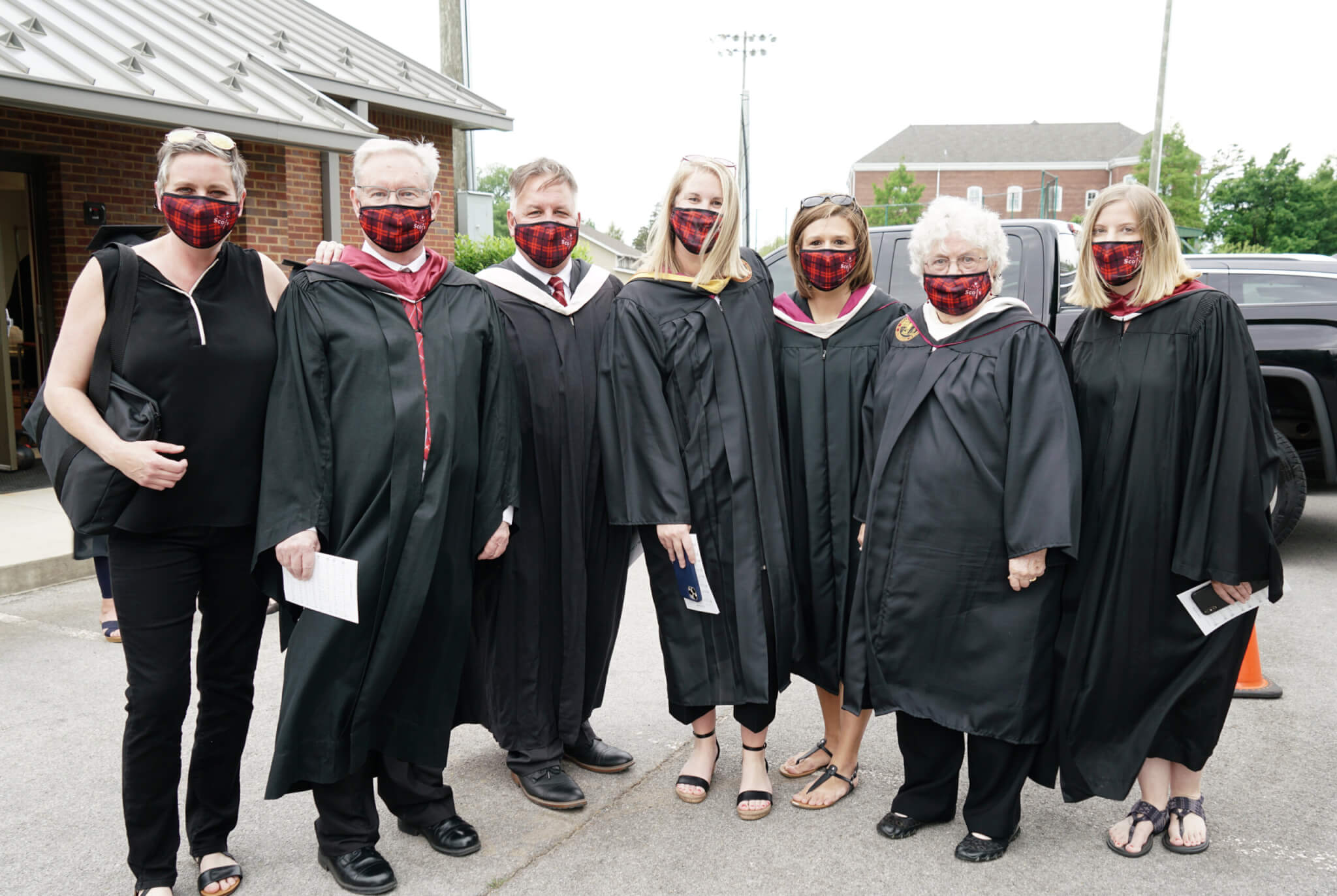
During commencement exercises, recognition was also given to faculty members for outstanding service during the 2020-21 academic year. Dr. Dan Klingensmith, vice president and dean of the College, presented the awards.
The Outstanding Teacher Award, the recipient of which is nominated by juniors and seniors at the College, went to Dr. Kristin Riggsbee, visiting lecturer in health promotion. In presenting the award, Klingensmith said Riggsbee has excelled in both in-person and virtual teaching – which isn’t easy to do.
“Students praise her organization, commitment to student success, her willingness to offer extra Zoom meetings in order to further explain a topic or an assignment, and the way she allows students to tailor assignments to meet their particular interests,” Klingensmith said. “One of them commented, ‘She makes you want to go out of your way to perform at your best and devote more time to her courses.’
Riggsbee teaches in a new major “that brings back to the curriculum, in an updated form, an ongoing concern with how to teach and learn systematically about health, wellness and nutrition,” Klingensmith said, adding that she has taught or is planning to teach courses in community health, human nutrition, health policy, medical terminology and Appalachian foodways – and she will return in the fall as assistant professor of health and wellness promotion.
Dr. Drew Crain, professor of biology, was recognized as the runner-up for the Outstanding Teacher Award – his fifth time receiving the honor. Crain received the Outstanding Teacher Award during the 2014-2015 academic year.Klingensmith described Crain as someone who “never stops challenging himself, or his students, to do better in the classroom.”
“He routinely asks permission to collect his course evaluations late, so that he can find out whether students felt his final exam was a fair test of what the course had covered – and then he uses that information to adjust his teaching and expectations for the next time,” Klingensmith said. “Students praise him for his approachability and openness to questions of all kinds. In fact, he has won recognition for his teaching multiple times before at commencement, most recently a year ago. In part, this is because his passion for his subjects is contagious and wide-ranging.
“I myself have had conversations with him on subjects as varied as the anatomy of birds’ eyes, the effects of endocrine disruptors on the tissues of aquatic animals, the relationship of science to religion, and why you should always try to plant something in your garden on Good Friday,” the dean continued. “After 23 years at Maryville College, he remains demanding, enthusiastic and committed to the idea of liberal arts education.”
Charge to the Class of 2021
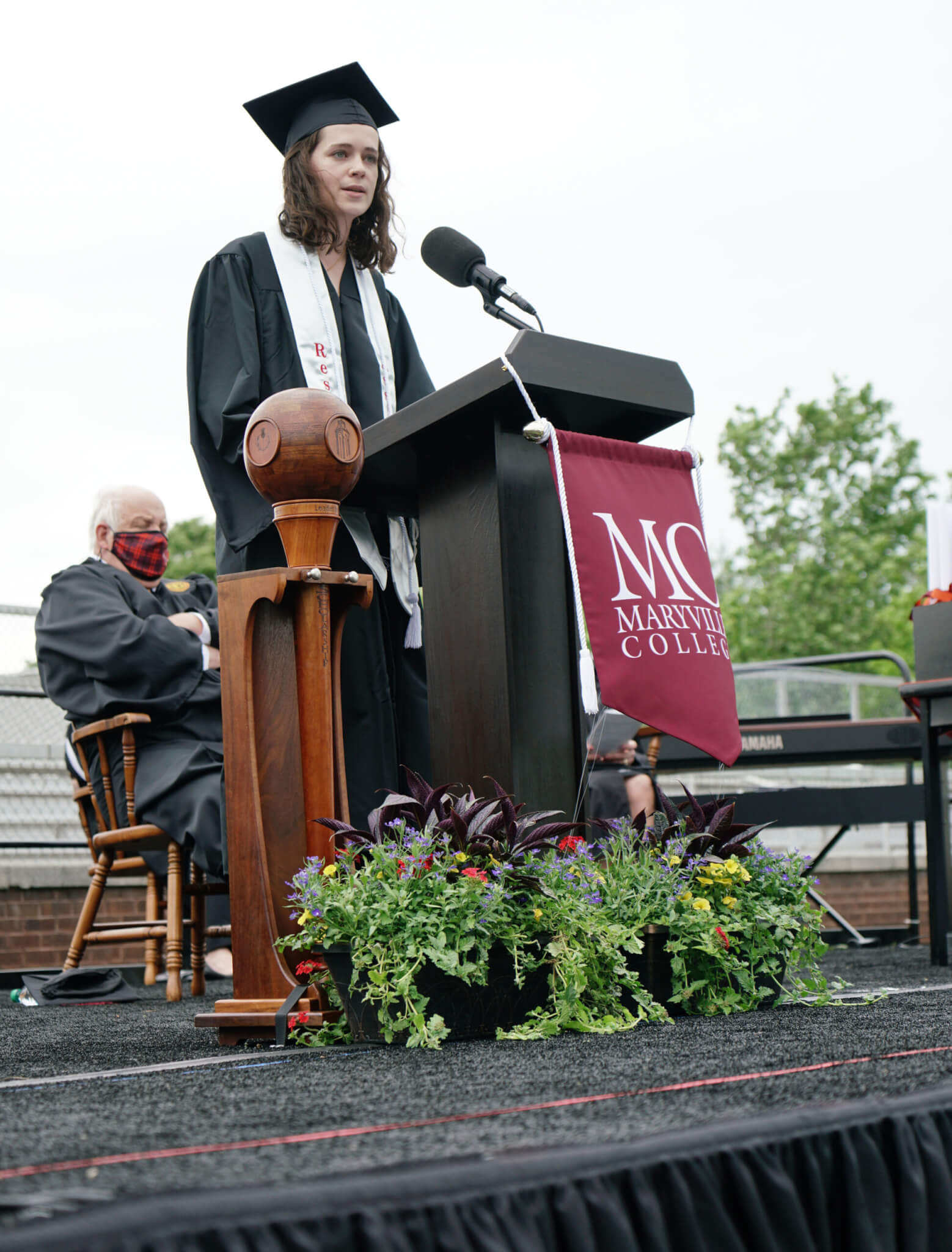
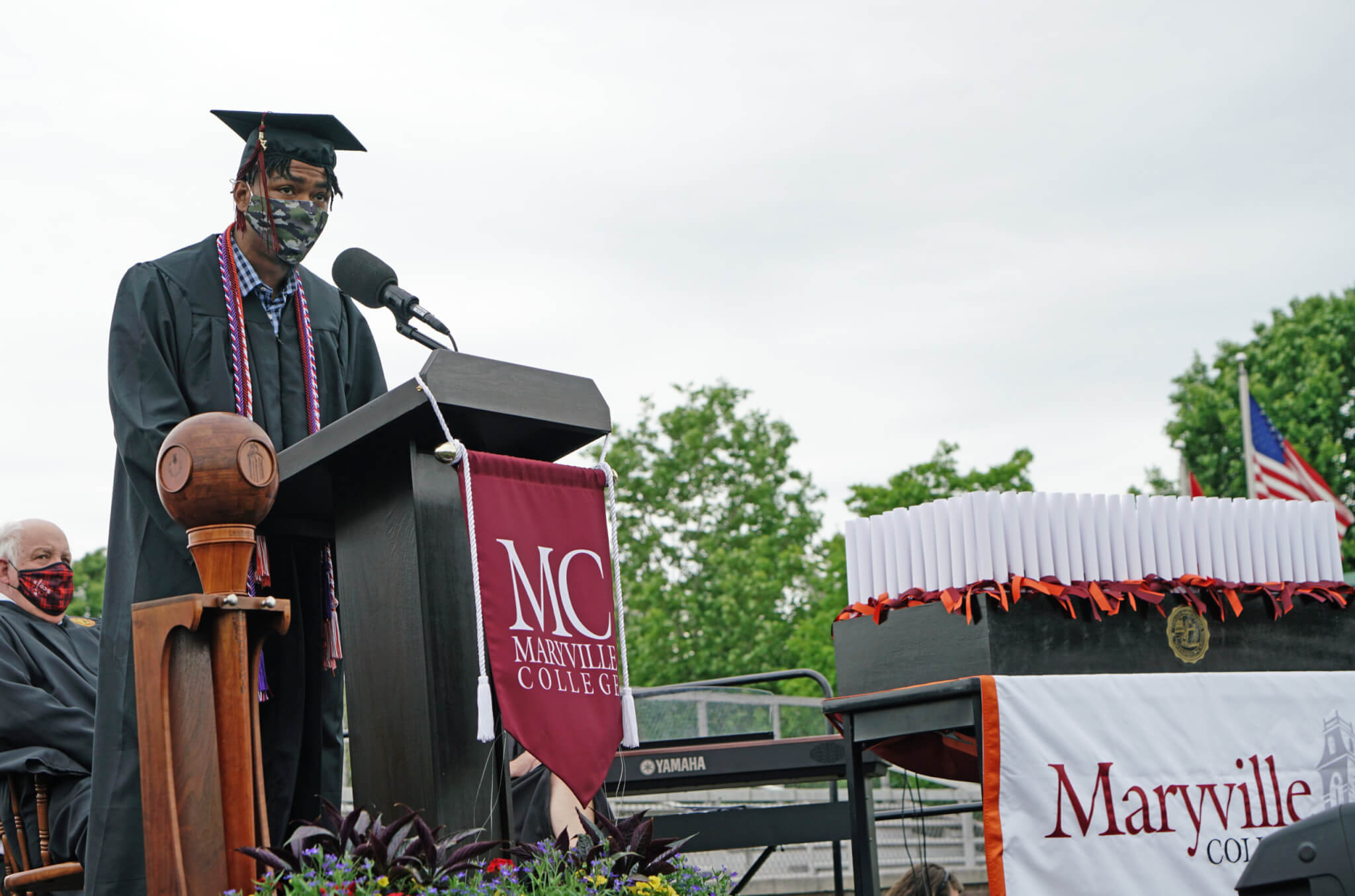
Remington Green ’21 and Eleanor Forester ’21 represented their classmates as members of the platform group. Green, class president, welcomed loved ones to the service, and Forester, an Isaac Anderson Fellow, read the scripture from Isaiah 58:9-12. Senior members of the College’s Concert Choir led the crowd in the singing of the Alma Mater just prior to the benediction.
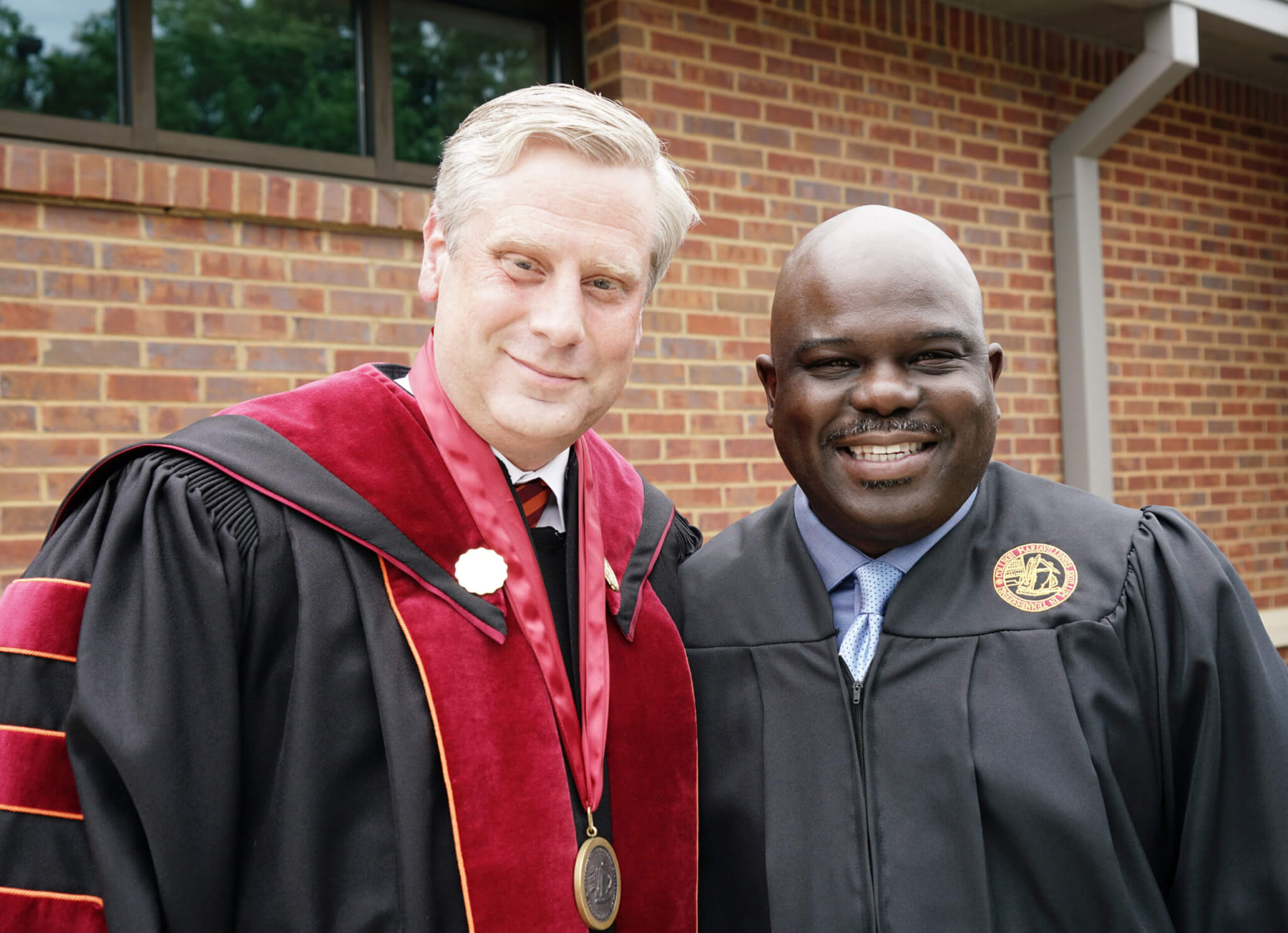
In his charge to the Class of 2021, Maryville College President Dr. Bryan F. Coker told the graduates to depart from the College with more than a diploma.
“Leave here, shaped by your experiences, and dedicated to making this world a better place. Certainly, this world needs you, now more than ever before,” Coker said. “Go forth from the campus gates, knowing that you will always have a home here … here where Chilhowee’s lofty mountains pierce the Southern blue. Go forth knowing that good, thoughtful and loving words have been spoken for you here, in this place filled with hopes, dreams, teachers, mentors, coaches and friends.
“And as you go forth, we hope you will return often in the years to come – return and share with us your successes and your struggles, just as you have done during your years here,” Coker concluded. “In the words of our founder, go forth always endeavoring to ‘do good on the largest possible scale.’”