Students in Wilderness Emergency Responder course get hands-on training
June 1, 2022
Maryville College’s OST315: Wilderness Emergency Responder course teaches students valuable lessons about how to respond to emergency situations during an outdoor-based trip or activity. But what is the outdoor professional’s role when a medical evacuation is necessary?
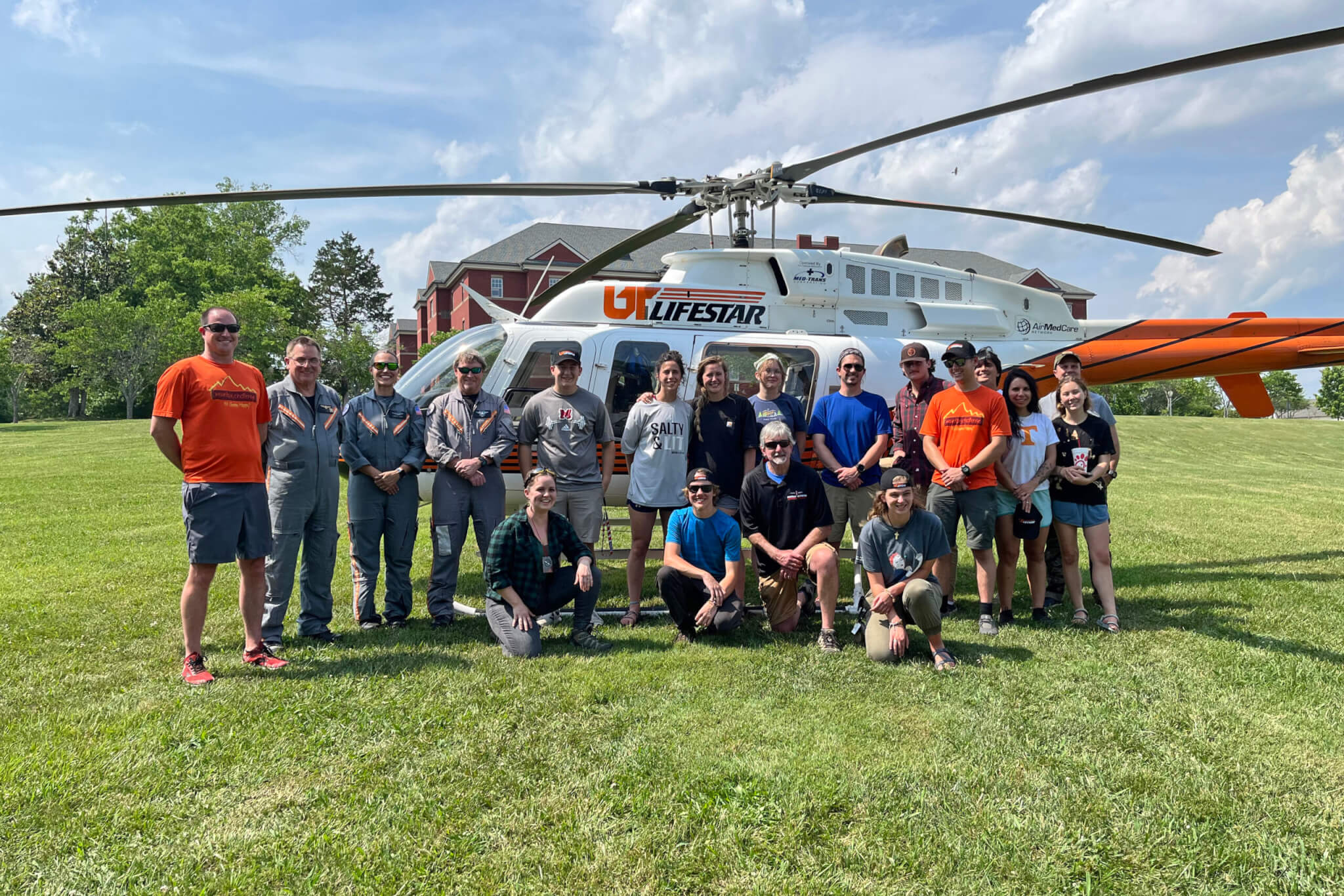
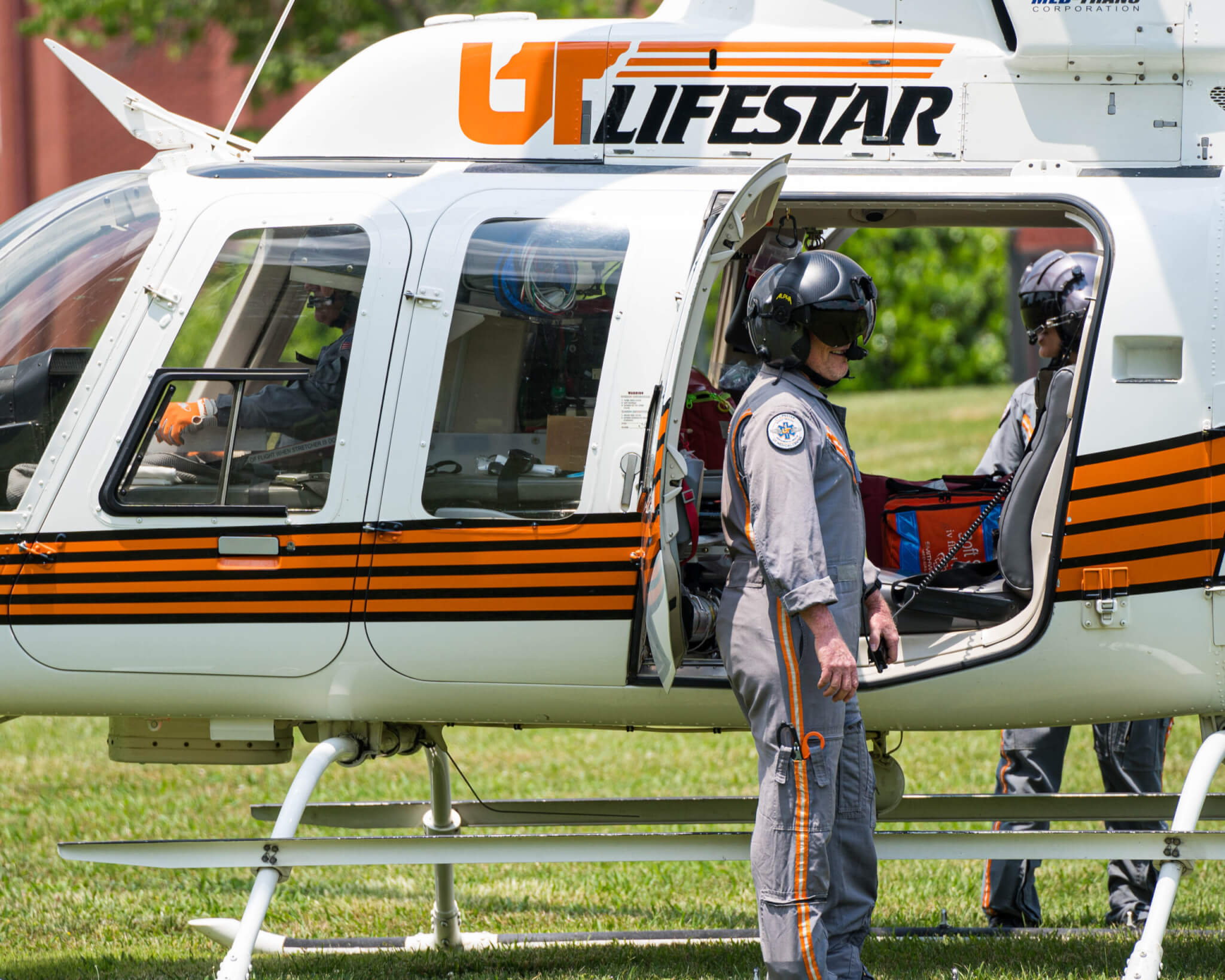
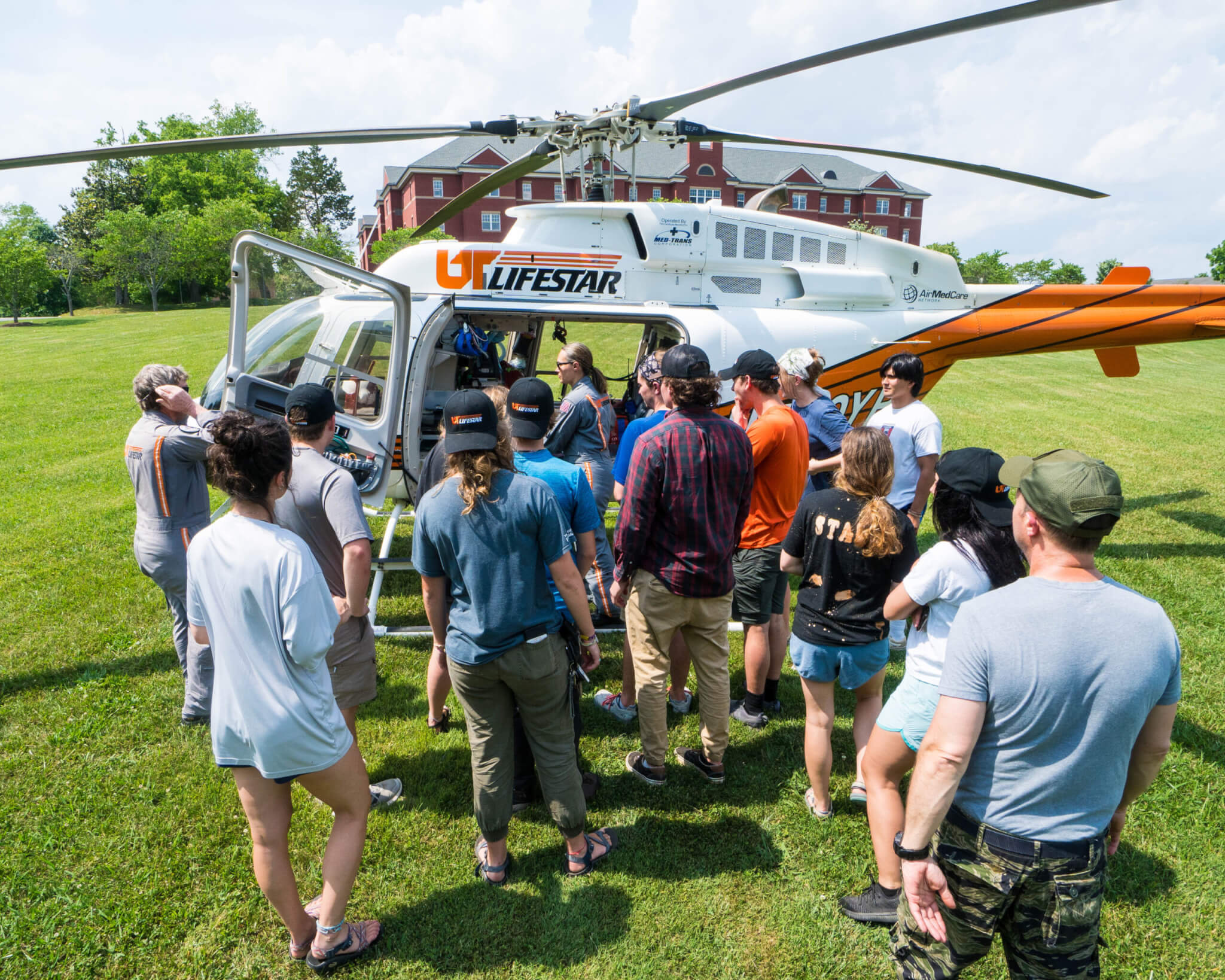
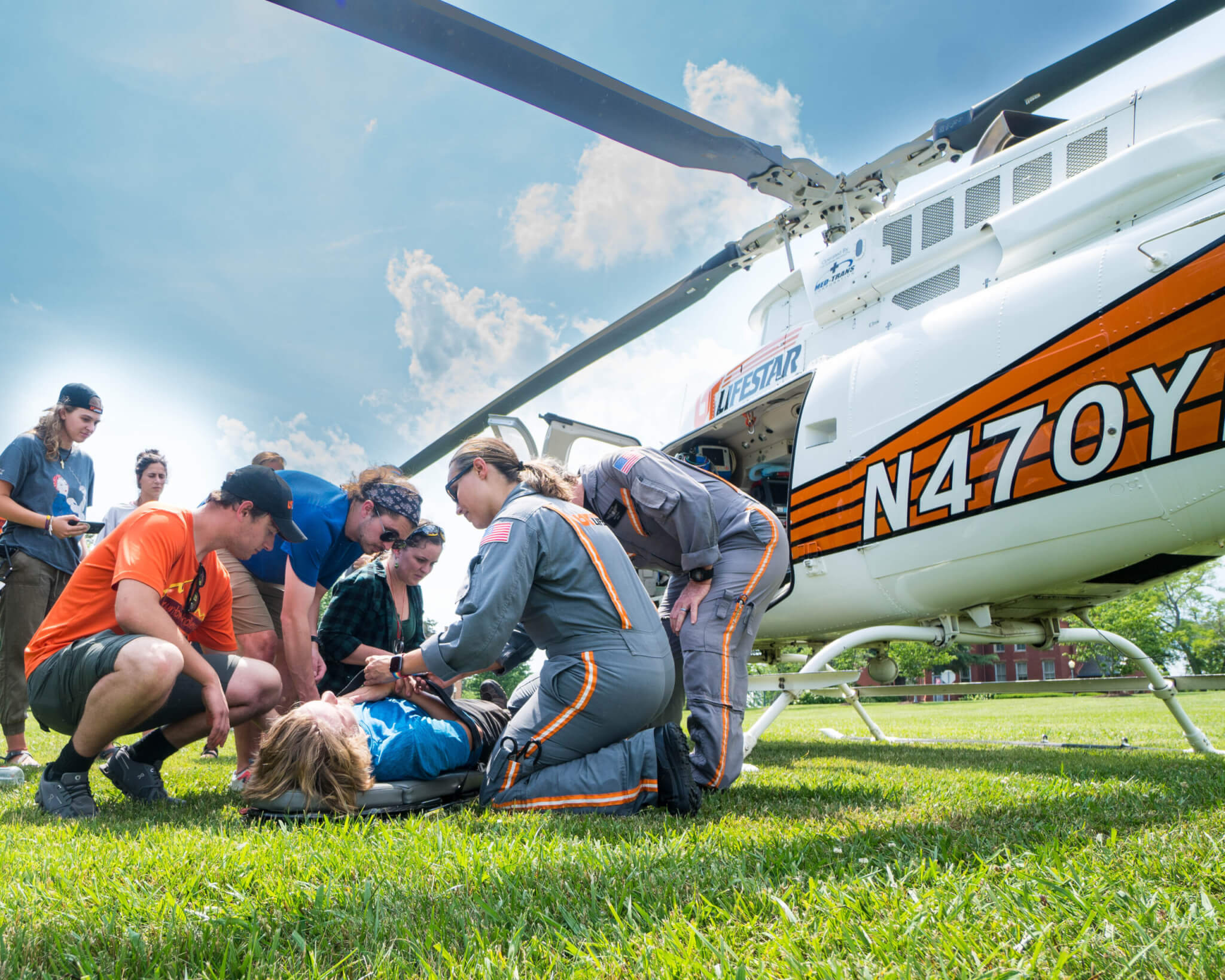
That’s exactly what students in this year’s May Term course learned, when a UT LIFESTAR medical helicopter landed on campus May 19, as part of a training exercise and demonstration.
A requirement for students who are majoring in Outdoor Studies and Tourism at MC, the course is taught by Maryville College instructors and emergency medical response professionals from nearby Roane State Community College, and it addresses things like patient assessment, likely wilderness medical scenarios, CPR, first aid kits, transport equipment, and the outdoor professional’s role in emergency situations and search and rescue management.
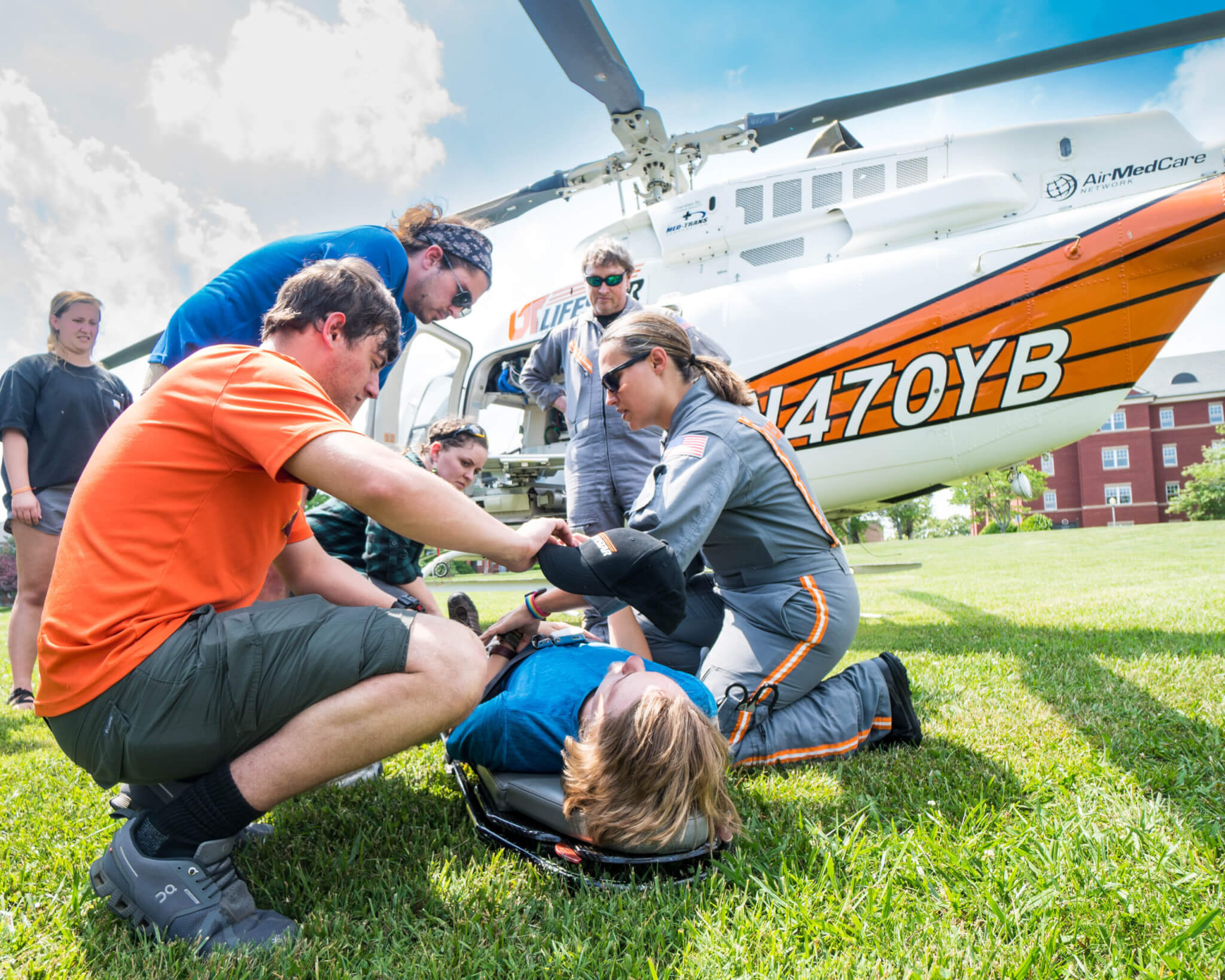
The May 19 training was the culmination of many lessons about “patient hand-off,” including stabilizing and administering first aid to patients until more experienced personnel and equipment can arrive, then practicing the important steps in a hand-off (which can sometimes be just a 20-second conversation where vital information is conveyed).
“The students have learned a lot in the class about patient assessment – what things do we need to be aware of and the current status of that patient, changes in vital signs, are they getting better or are they getting worse, and what those new professionals or arriving medical professionals might need to know related to whether they’re getting better or getting worse,” explained Tyson Murphy ’03, Mountain Challenge program manager and faculty member in MC’s Outdoor Studies and Tourism program. “For example, an hour ago their blood pressure was this, now it’s this. They’ve lost a lot of blood. Respirations per minute are improving or decreasing. So there’s a short list of really specific information that they need to get to those flight paramedics.”
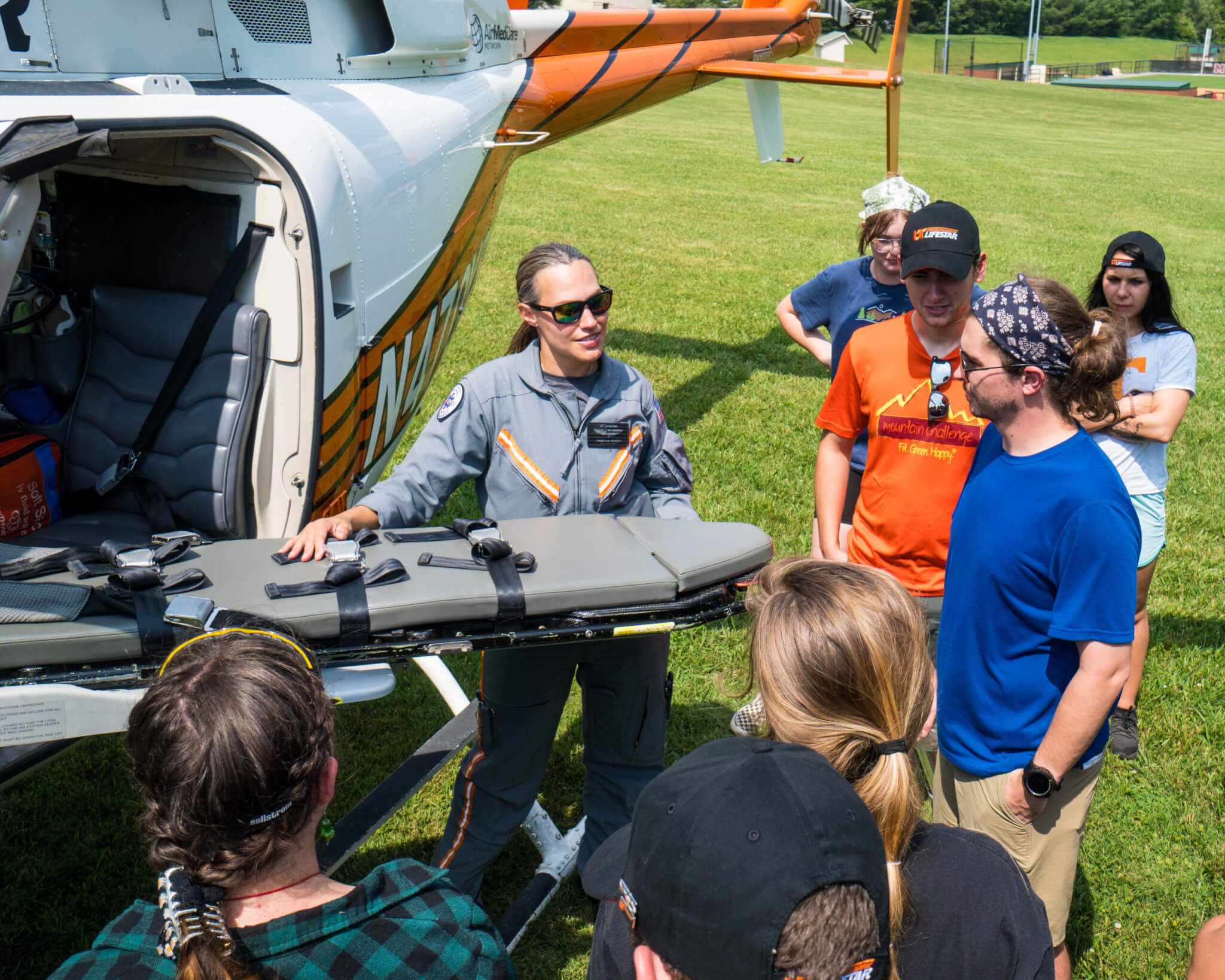
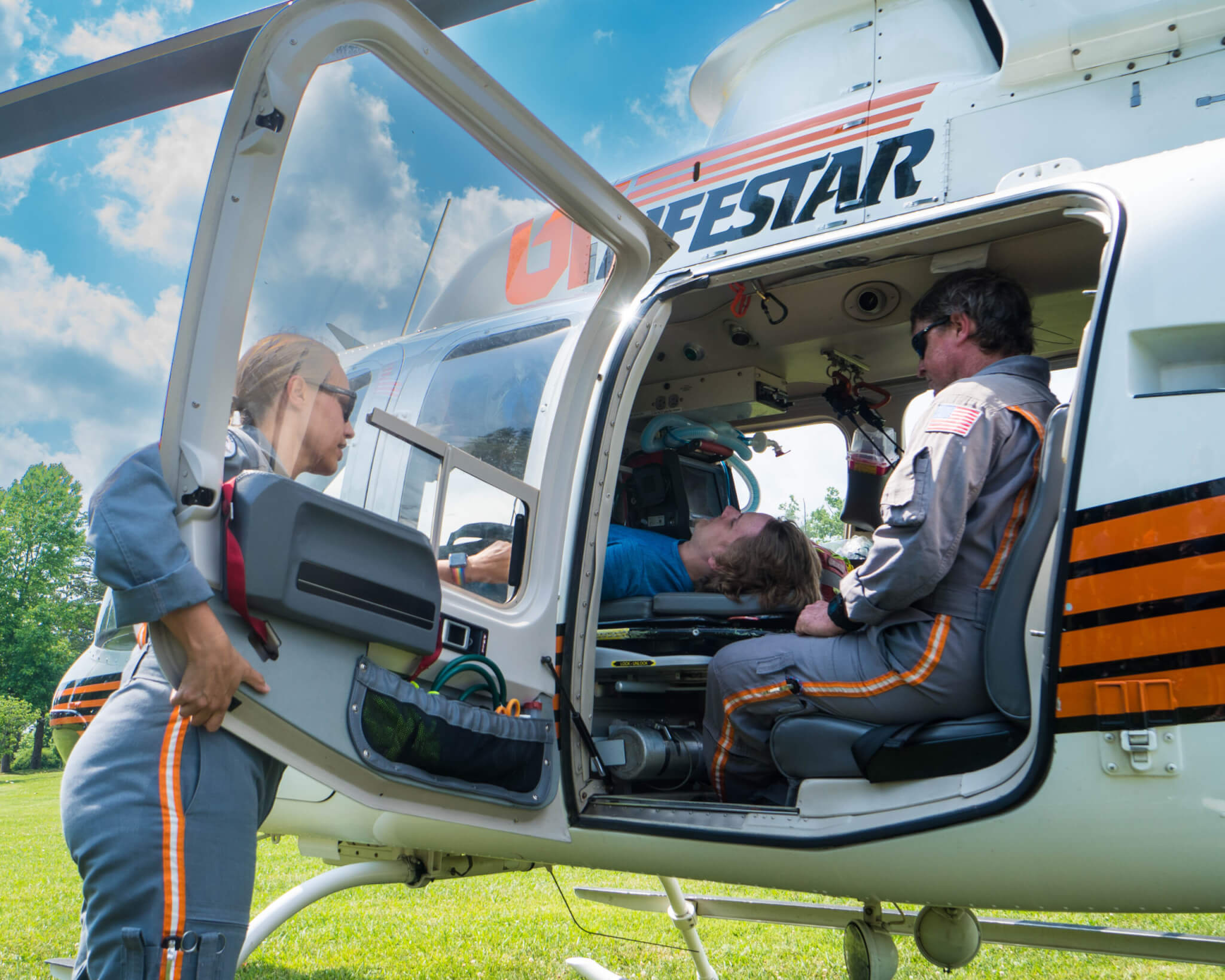
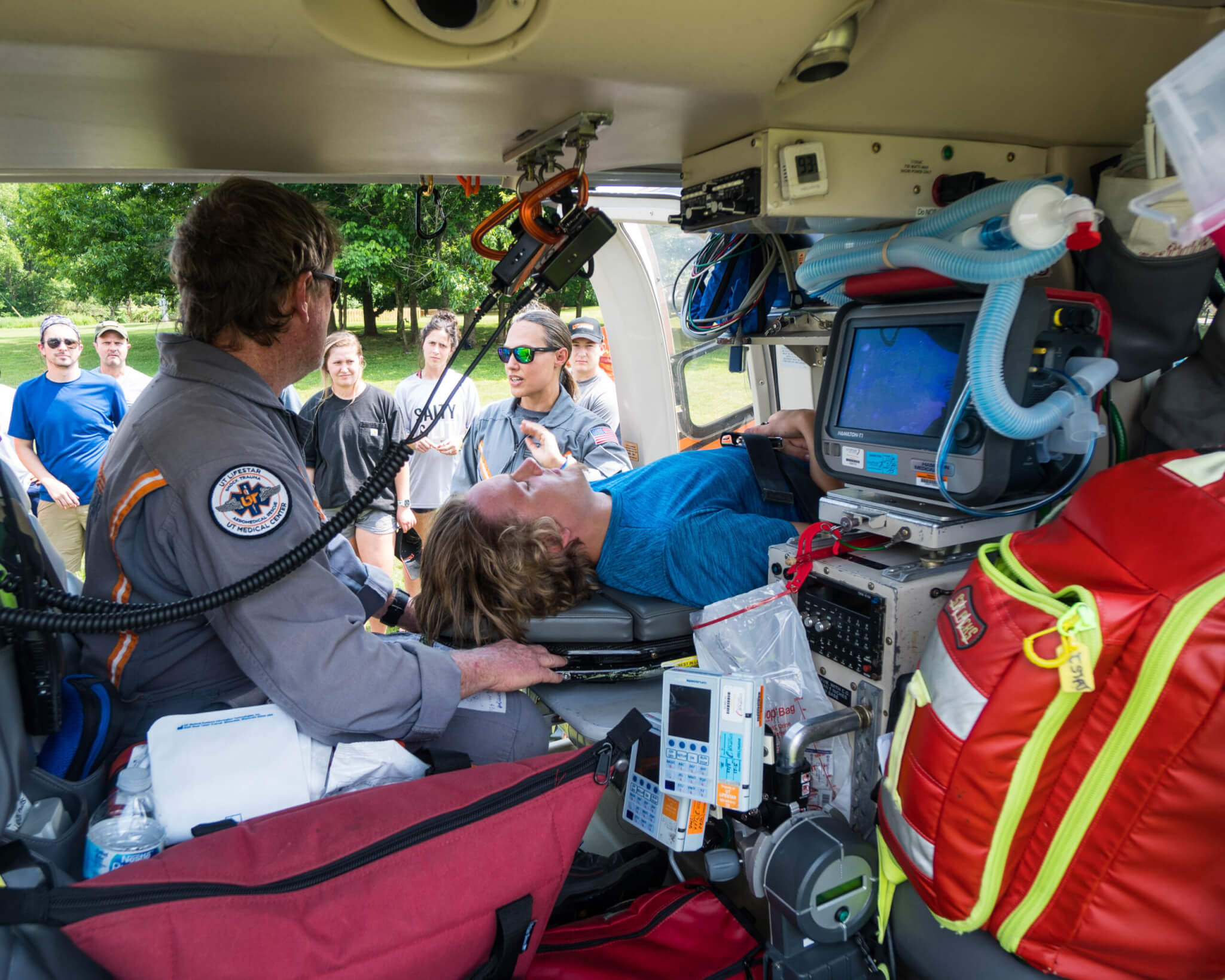
During the helicopter demonstration, three members of the UT LIFESTAR flight crew landed on Lloyd Beach on the Maryville College campus (UT LIFESTAR is based at the University of Tennessee Medical Center in Knoxville and provides critical care treatment and transport to more than 2,200 patients per year, according to the hospital’s website). The flight crew members practiced a load simulation with a student acting as an injured patient, discussed patient hand-off and reviewed details that the crew would need to know in a short period of time when they take that patient from the emergency medical responders or the personnel who have called them for a medical evacuation or assistance. They also gave students a tour of the helicopter and its equipment, talked about the qualifications to be a member of the flight crew and answered student questions.
‘Universal’ Training
The hands-on, experiential course is offered during May Term every other year, and successful completion of the course results in the opportunity to test for national certification as an Emergency Medical Responder (EMR) – a significant health care provider certification recognized nationwide. While people in several fields, such as outdoor guides or park rangers, need these skills for their jobs, the course covers a variety of disciplines and can be useful for anyone participating in outdoor activities, regardless of their career goals. Many students who work for Mountain Challenge – an award-winning outdoor recreation company located on the Maryville College campus since 1987 – also take the course.
“We talk a lot in our Outdoor Studies and Tourism program about the fact that two of the most unpredictable systems on the planet are the human system and the environment,” said Murphy, who emphasized that prevention is incorporated into many of the classes within the major. “We train a lot to manage what we expect to happen on an outdoor-based trip or activity, considering health issues, weather, difficulty or type of programming that they’re involved in … so a lot of their four years has to do with making decisions and being a professional that minimizes the need for (a helicopter medical evacuation) to happen. Now, nobody’s perfect, accidents happen, and we see it on the news every day – even with our best efforts, the unfortunate occurs, and they’ve got to be ready in that situation, as well.
“In the front country, we call 911, and we have professionals within 15-20 minutes on a long response call,” Murphy continued. “In the back country, they may be waiting hours and hours and hours – you may have to get to cell phone service to call for medical assistance … so the ability to be calm and rely on your training – and the ability to do that when a lot of the things you would have in the front country just aren’t there. So they need to respond when everything has gone wrong, and they can’t panic in those situations. A true outdoor professional needs to understand the severity of the situation that they’re in but keep a calm enough head to render aid, and the more trained and prepared that you are, the less panic that will likely ensue in that situation.”
Murphy, who took the course when he was a Maryville College student roughly 20 years ago, said he has used the lessons he learned from the course in both professional and personal situations.
“I’ve used it several times as a professional with the groups that are here at Maryville College or Mountain Challenge doing some programming with us, but I’ve also used it at Walmart, at the health club and at an intersection when I’ve seen a car wreck and I’m the first one to respond. It’s also helped me as a parent,” he said.
He calls the training “universal.”
“Here at the College we talk a lot about citizenship – how will students engage in their communities when they move on,” he said. “This training is going to go out into the Maryville and Blount County communities and to where all these other students are from across the country – and they’re going to be prepared to be able to assist somebody who’s in trouble. And they can use that training, whether they’re on the clock as an outdoor recreation and tourism major or not.”
‘Knowing Your Limits’
Gideon Stewart ’23, a junior Outdoor Studies and Tourism major from Maryville, is one of 13 students who took the “Wilderness Emergency Responder” course in May. He said the class is important not only because it teaches students how to take care of people in trouble – but also to respect yourself.
“What I mean by that is the class teaches the importance of knowing your boundaries/limitations,” Stewart explained. “We were told not to be heroes but to help patients in our fullest capacity, sometimes that means rendering care, sometimes not, and even sometimes stepping back so someone else can. Unlike recreational team building games or sports, ‘Wilderness Emergency Responder’ shows teamwork and problem solving as not an abstract ideal but a very real concept. You must rely on the people around you and step up but at the sometime have humility, honesty and self-reliance. This class really teaches the importance of being honest with yourself.”
The curriculum in Maryville College’s Outdoor Studies and Tourism major equips students with the leadership skills and knowledge necessary to create, manage and evaluate effective outdoor experiences and sustainable tourism programs. Stewart, who aspires to be a recreational minister after graduation, said he decided to major in Outdoor Studies and Tourism because he grew up in the outdoor recreation field. His father was a camp director, and Stewart recalls the various ministry and recreation outreaches at the camp.
“I always told people that I wanted to be just like my father when I grew up,” he said. “I guess this aspiration of mine is why I am attracted to outdoor recreation and ministry. I would love to work for a ministry that has the same heart and passion for recreational learning that my Dad has. I would love to be a recreational minister like my Dad showing people the order and purpose which God has given each and every one of us.”
An Important Demonstration
Stewart served as the “injured patient” during the load simulation with the helicopter flight crew. The demonstration showed him that EMRs play an important role in preparing a patient to receive the best care possible – and the more efficiently they can do that, the better equipped the handoff team will be, he said.
“The LIFESTAR crew relies on the EMRs to be able to gather information and pass it on to them so that they can render the highest quality care possible,” Stewart said. “If EMRs do not do their jobs effectively, then it slows down patient care tremendously. When it comes to an emergency, everyone has an important role to play.”
While he enjoyed being able to participate in the simulation, the exercise gave him an added appreciation for the skill and dedication of flight crew members.
“The class got tired and overwhelmed just after two weeks of learning about the work EMS does,” he said. “Those men and women dedicate themselves to caring for people in their most dire needs. They are truly selfless to live horrific experiences every day to care for people they don’t and probably will never know. I was a pretend patient, but they cared just as much for my safety as that of a real patient.”