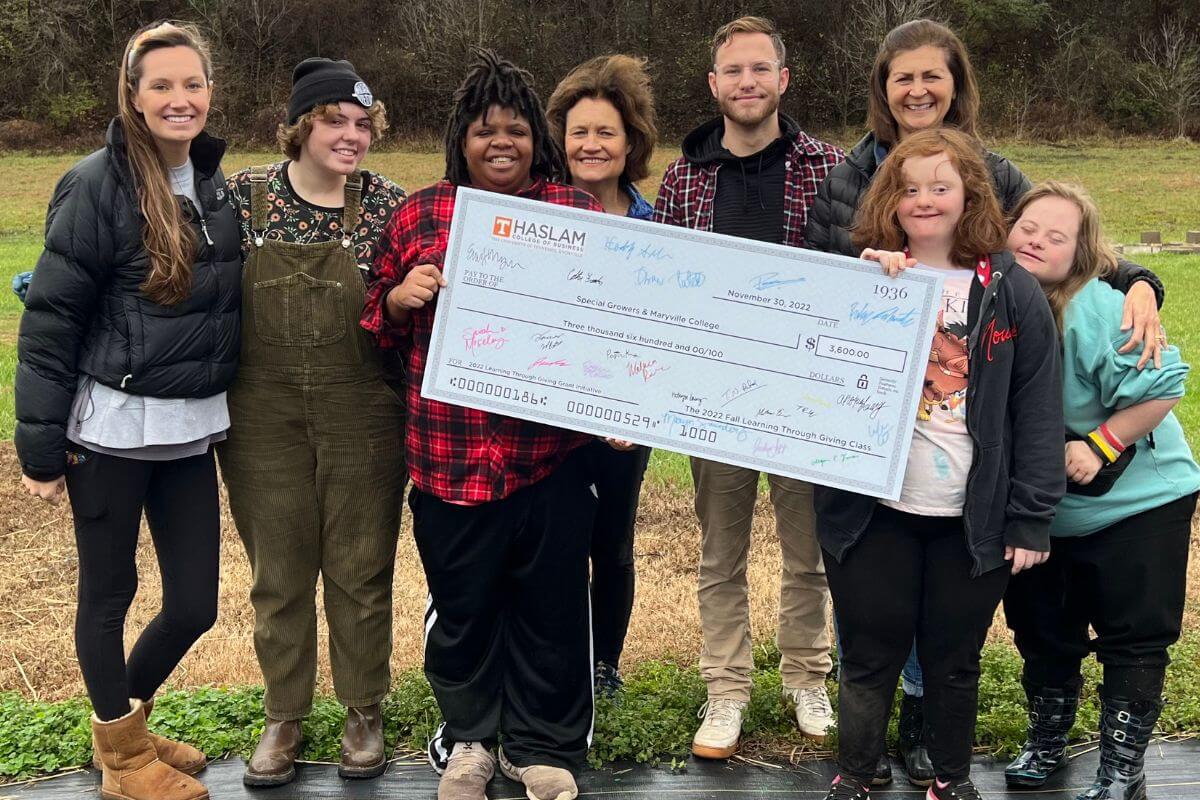
Kelton Bloxham ’24 uses nonprofit leadership skills to benefit alumni-founded nonprofit Special Growers
Jan. 4, 2023
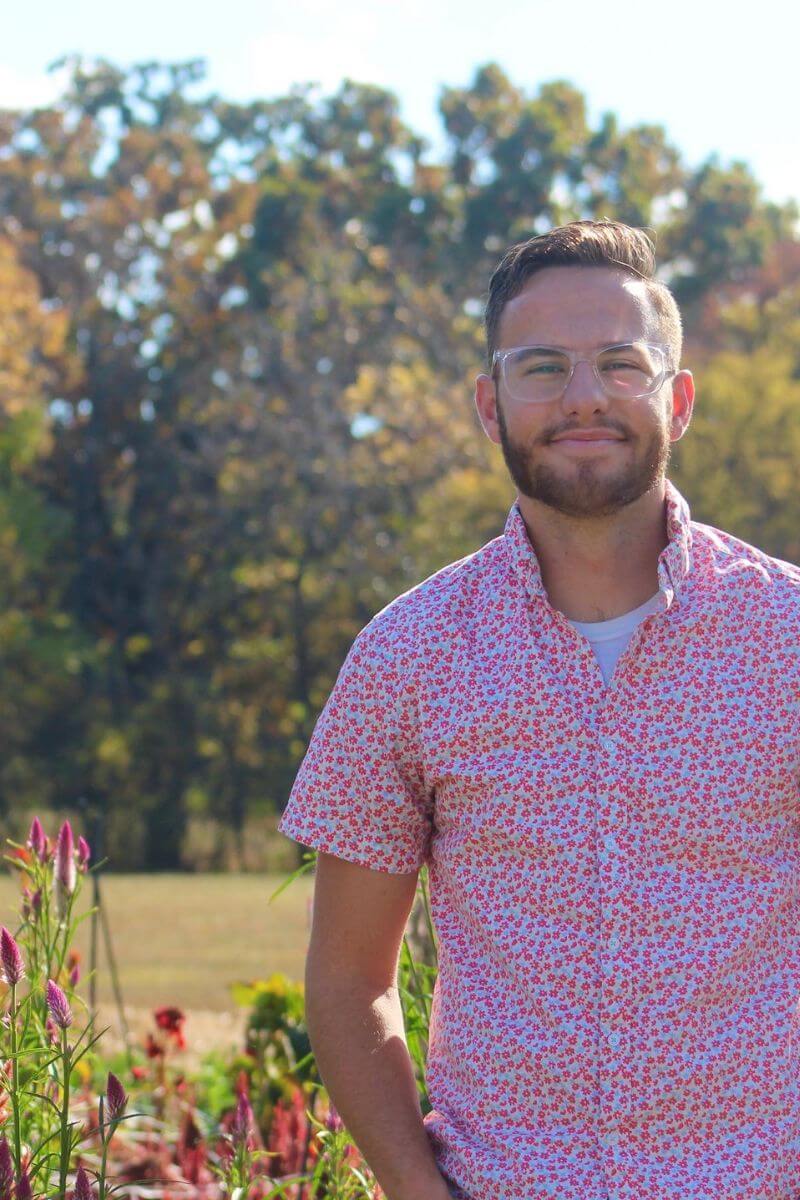
When it came time for Kelton Bloxham ’24 to select the nonprofit at which he’d spend his service hours, he remembered his grandmother.
Special Growers, he noticed, hired employees with special needs and disabilities. Established by alumnus Kent Davis ’90, the organization had grown into a business that provides fresh herbs and fresh-cut flowers to restaurants and other clients in Knoxville and Maryville.
Those employees, Bloxham said, reminded him of his grandma.
“When my dad was 8, she had a massive stroke and was permanently disabled,” Bloxham said. “For me, though, I grew up with the mindset of, ‘Oh, that’s just grandma.’ I didn’t see her as anything but my grandmother, and that set me up perfectly to work with disability services. I looked them up, contacted them, and got hired the next day. Even though it’s a requirement for my Bonner Scholarship, it’s become a second home to me during my time in Maryville.”
Grant proposal earns funding
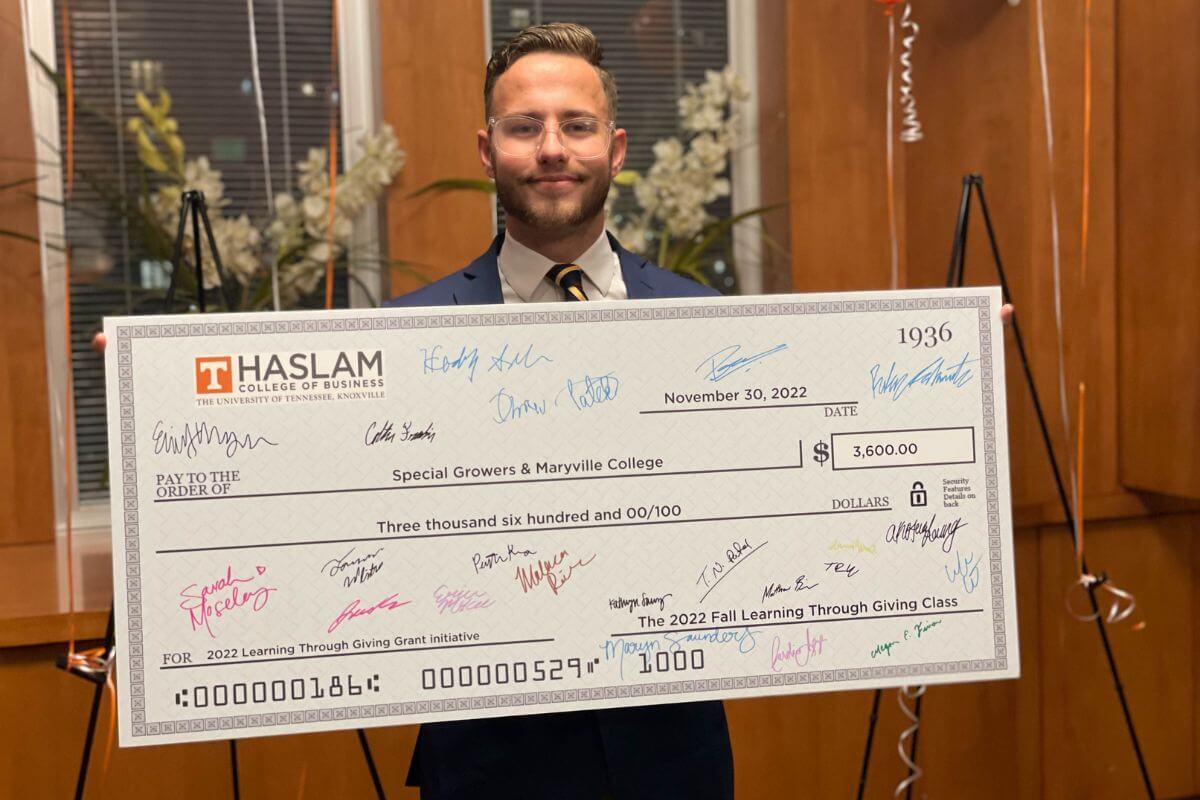
Now, as his time with Special Growers comes to an end, Bloxham is leaving the organization with a newfound appreciation for service. As a final project, he helped the nonprofit apply for and receive a $3,600 grant from the University of Tennessee Haslam School of Business.
As part of a class titled Learning Through Giving, students at the Knoxville university were tasked with vetting and awarding grant monies to nonprofit applicants. Bloxham’s work with Special Growers since his first year at MC, as well as his work toward his certification through the College’s Program for Nonprofit Leadership, made the decision to apply a natural one, he said.
“I took the Certified Nonprofit Professional class last fall, and the final project involved writing applications in order to qualify a partner organization for grant money,” he said. “When I came upon Learning Through Giving, it seemed like a perfect opportunity, because I’m a student; they’re students going through these applications and judging them and doing site visits; so if anyone can connect with them, I thought, it would be me.”
Special Growers began 12 years ago when Davis’s disabled son, Brad, turned 21. That age is the cutoff for attendance in public schools, and without a way to provide Brad with opportunities to grow and learn, Kent began to talk with other parents about developing a project that would “support their strengths and help their weaknesses, because they had no options leaving school to go into the workforce,” he added.
“We created Special Growers 12 years ago, myself and a handful of parents, and tailored it to the unique needs of these individuals,” he said.
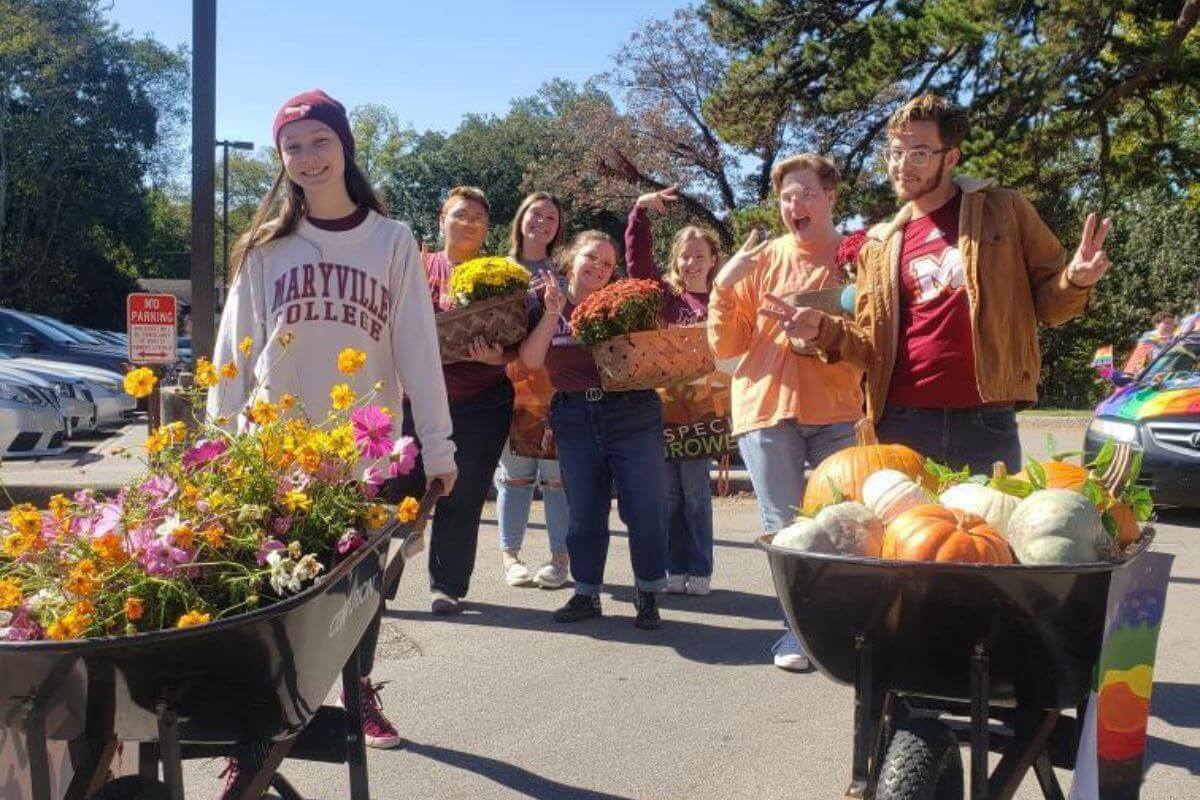
Today, Special Growers employs 25 disabled staff members and works with another 50 to 60 weekly as part of a high school work program. In addition, the nonprofit welcomes volunteers from the community, including five Bonner Scholars, which is where Bloxham enters the picture. Not only has he strengthened Maryville College’s ties to Special Growers through the recruitment of his fellow Scots to donate their time, he found the work so personally rewarding that it altered his post-graduation plans.
“Being a Bonner (Scholar) has changed what my career is going to be, and I’m getting ready to start a new job at the Tennessee School for the Deaf,” added Bloxham, a double major in American Sign Language and Deaf Studies and Developmental Psychology. “Writing this grant was my farewell present to Special Growers.”
MC students make a difference
“Kelton came in, just like the majority of the Bonner Scholars do on an annual basis, but he stuck, and he exhibited a significant amount of passion for the program, the clients we have there and the work we do,” Davis added. “He kind of thrust himself into everything we’ve done in the gardens, and he wanted to be participative and be viewed as more than a Bonner Scholar — he wanted to be viewed as one of our staff and our leaders, and that’s a direct result of his Maryville College experience, which teaches students how to go into the community and be more fruitful and serving to other organizations.”
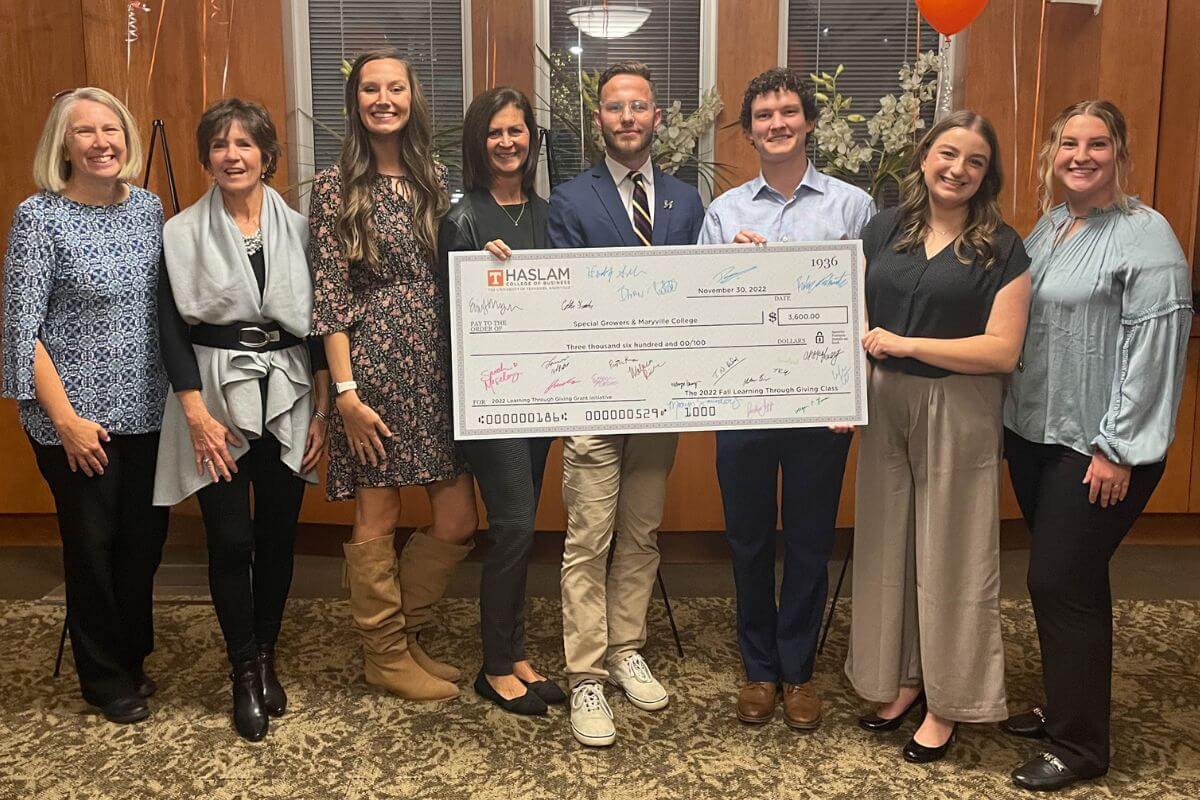
Bloxham began writing the grant last February, building it on the partnership between the College and Special Growers, and in October, he was notified that his grant had been approved. At an awards ceremony in late November, Bloxham and other Special Growers represented were presented with a $3,600 check, which will purchase a floral cooler that will give the special needs client-employees more hands-on experience in the organization’s operation.
“Right now, we have a two-hour delivery promise, meaning that within two hours of being picked or cut, what we grow will be delivered to the customer’s doorstep,” Bloxham said. “Because of that, it’s hard for the staff to get into the nitty-gritty of the flowers, where we could teach them certain designs and techniques, because the time restraints and their dexterity restraints make it difficult.”
“In the past, we’ve not had the means to cut them and preserve them for a period of time,” Davis added. “This will allow us to buy a refrigeration unit specifically for flowers, which maintains the proper temperature to accommodate flowers rather than food products. It’s a longer lifecycle, so we have more flexibility on when we deliver, and it maximizes the work our staff does without it being so stressful or hectic.”
The new cooler, Davis added, will allow Special Growers to take more orders, grow more flowers and increase revenue, which will allow the nonprofit to continue to make a difference in the local community. And that, said Amy Gilliland — director of the Center for Community Engagement at Maryville College — is what the Bonner program is all about.
“It’s all about the difference one individual can make,” Gilliland said. “In the past nine years that I’ve been at Maryville College, we’ve had several Community Engaged Scholars, mostly Bonners, who have chosen to complete their scholarship-required service and engagement with Special Growers. That Kelton was able to do even more by helping them secure this grant is exactly what it means to ‘do good on the largest possible scale,’ as our founder, the Rev. Isaac Anderson, was fond of saying.”