


MC Writing/Communication Professor Di Bei is published in North American Review
March 6, 2025
There is, at Maryville College, an expectation of excellence when it comes to the education students will receive.
The faculty members who provide it rise to the occasion, year in and year out. Their classroom commitment is steadfast, but it’s only part of the work that they do. They’re scholars as much as they are teachers, and their work outside of the classroom not only provides intellectual stimulation of the things they teach within it, it also enhances the reputation of MC as a place of academic rigor, populated by educators who routinely submit work to publications across the academic spectrum.
Throughout the course of the 2024-25 academic year, a number of Maryville College faculty members have been recognized for their contributions to academia. This is part one of a six-part series spotlighting those individuals and their accomplishments.
Di Bei
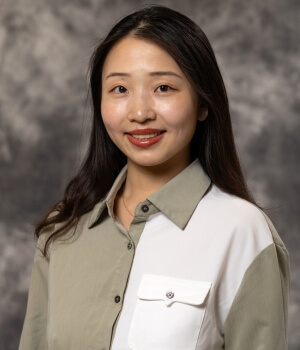
She hasn’t completed her first academic year as a Maryville College faculty member, but Di Bei — assistant professor of Writing/Communication — is already making a big difference.
As a result of a course requirement in last fall’s fiction writing class, two Scots — Emmett Roden ’25 and McKenna Marr ’28 — will have their works published in two literary journals (Roden’s “Big D, Little d” in the winter 2025 issue of Gabby and Min’s Literary Review, and Marr’s “The Little Girl I Play Cards With” in an upcoming edition of the Long River Review.) She introduced students in that class to writer Via Bleidner, who discussed her Netflix show deal with Kim Kardashian and Emma Roberts.
And Bei’s own short story, “Child’s Play,” was published in the North American Review, the oldest literary journal in the United States.
“Based in early-2000s Beijing, ‘Child’s Play’ follows an asthma-stricken girl who was born amid the one-child policy and feels misplaced in a clinic for children with cerebral palsy,” Bei said. “I had asthma as a little girl, and at one time, I was referred to a doctor who was a renowned specialist in pediatric cerebral palsy.
“His only son had asthma, so people assumed that fatherhood had legitimized his expertise in respiratory diseases. His clinic opened every Monday morning, and there I was, the only mentally abled girl in a waiting room full of children with cerebral palsy from all over China.”
Waiting on those Monday mornings, she came to see how the process resembled a religious experience: Anxious parents from across China would crowd into the waiting room to receive hope from a doctor who was regarded as a medical guru.
“I remember how the doctor narrowed his eyes behind his thick glasses,” she said. “His prescription of high-dose albuterol made my heart pound like a bunny trying to escape.”
Already a published novelist — her Chinese novel, Chassé, began as a short story written during her junior year at Randolph College — Bei is currently putting together an English short story collection titled Red Flag Girl. “Child’s Play,” she said, will be incorporated into that collection.
“Red Flag Girl explores the raw and clear-eyed experiences of Chinese girls who spend their childhood in Beijing and young adulthood in the U.S.,” she said. “Caught between two worlds, the girls survive the one-child policy and struggle with the American dream. Romantic, whimsical, and trenchant, they flit from one life to another like butterflies, navigating their days with casual innocence and betrayal.
“Up to now, all my work is strictly rooted in realism, and I find myself drawn to the portrayal of the innocence and violence of girlhood, as well as the power and sexuality of womanhood. ‘Child’s Play’ echoes and explores the recurring themes in my other works as well.”
The continued exploration of those themes, she added, is a direct result of the liberal arts education she received at Randolph, as well as the very similar environment she’s discovered here at MC.
“When I graduated Randolph College six years ago as a pre-med student, my younger self would have never envisioned a career as a writing professor,” she said. “I appreciate how a liberal arts education prepared me for the multitudes of life that are larger than the imagination of my own.”