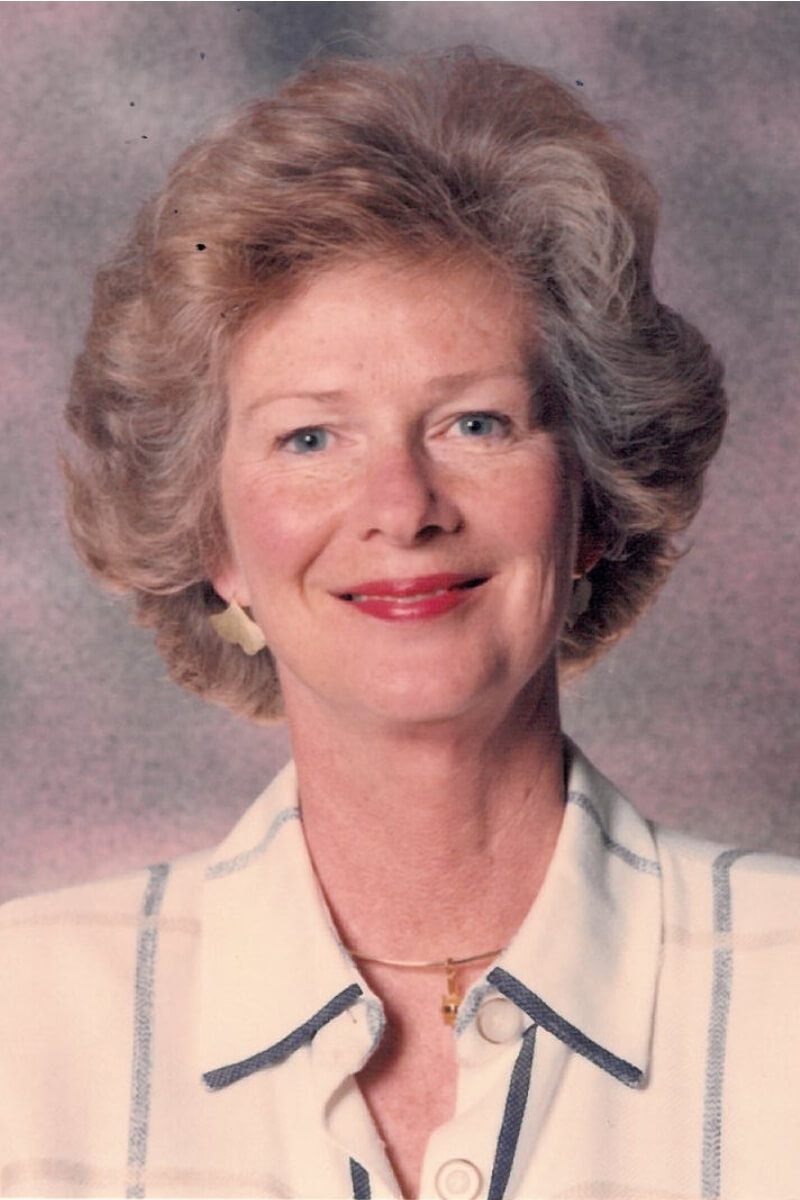
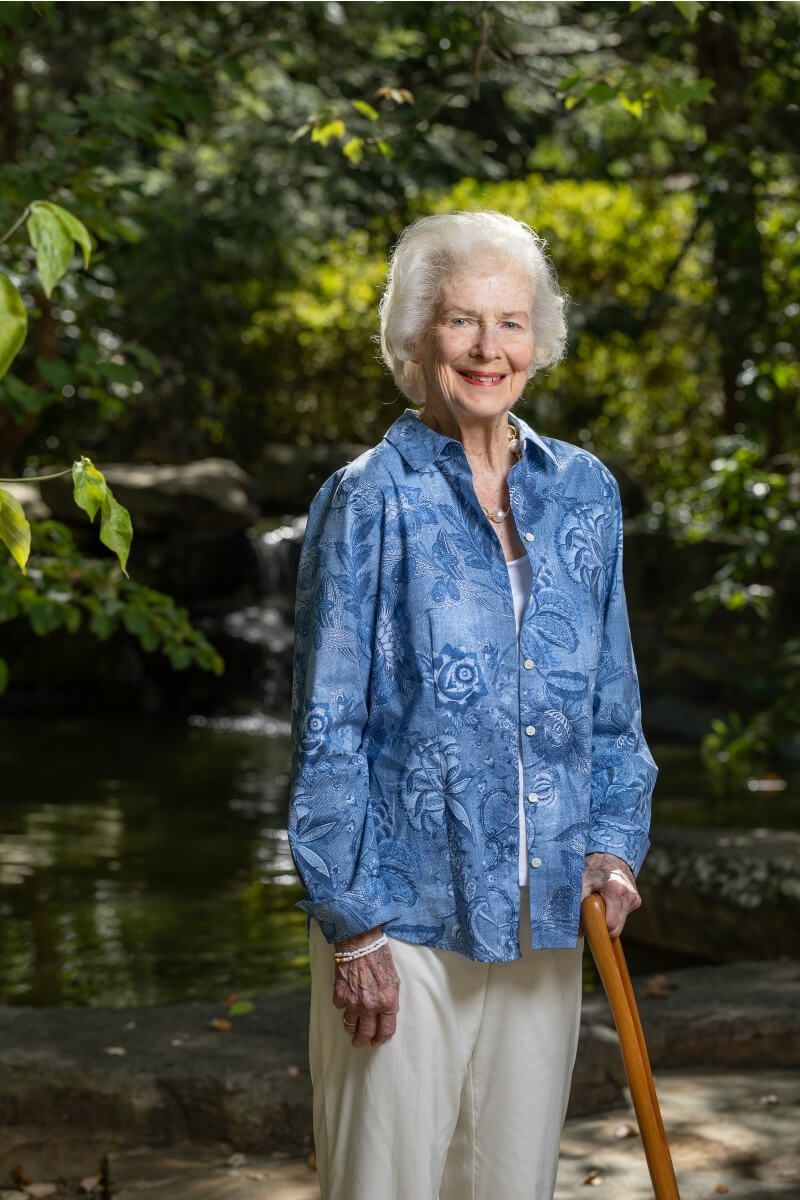
Former MC board member, dedicated philanthropist Natalie Leach Haslam remembered for lifelong commitment to education and conservation
Jan. 18, 2026
Throughout her long and storied life, Natalie Leach Haslam never tired of the view.
From her home in East Tennessee, the ridgelines of the Great Smoky Mountains rose in familiar, steady succession — blue in the distance, steadfast up close. Like that of so many East Tennessee natives, it was a landscape etched into her bones, a powerful sense of place that, from childhood, never ceased to humble or inspire.
To Haslam, who died Friday at her home at the age of 94, the mountains were never merely scenery. They represented continuity — a thread connecting generations — and a responsibility that transcended any single lifetime. They offered comfort to those who sought solace in the sunrise over their peaks and the long shadows of their summits, while quietly demanding care: a charge to leave something intact, and improved, for those who would one day gaze at the same horizon and feel the same pull.
That sense of stewardship guided her life’s work. A lifelong East Tennessean, Haslam believed deeply in the interdependence of education, conservation and civic engagement. Protecting the region’s extraordinary natural resources, she understood, required more than admiration; it required knowledge, leadership and sustained investment in the people who call the Southern Appalachians home.
Those values found a lasting home at Maryville College, where Haslam served with distinction on the College’s Board of Directors from 1989 to 1996. In that role, she was not a passive steward but an engaged and enthusiastic advocate for the institution’s mission — particularly where environmental education and regional leadership intersected. That advocacy continued long after her board service concluded, buoyed by the generosity she and her husband, Jim, showed to the Alexander Institute for Conservation Leadership and the Sciences, planning and funding for which is now underway.
Planned as a one-of-a-kind educational facility that will soon rise near the campus’ border with U.S. 321, the Alexander Institute will further cement Maryville College’s identity as an institution deeply committed to the region it has called home for more than 200 years. For Haslam, its mission aligned seamlessly with her lifelong belief that education should serve both place and purpose, preparing future leaders to understand and protect the landscapes that shape them.
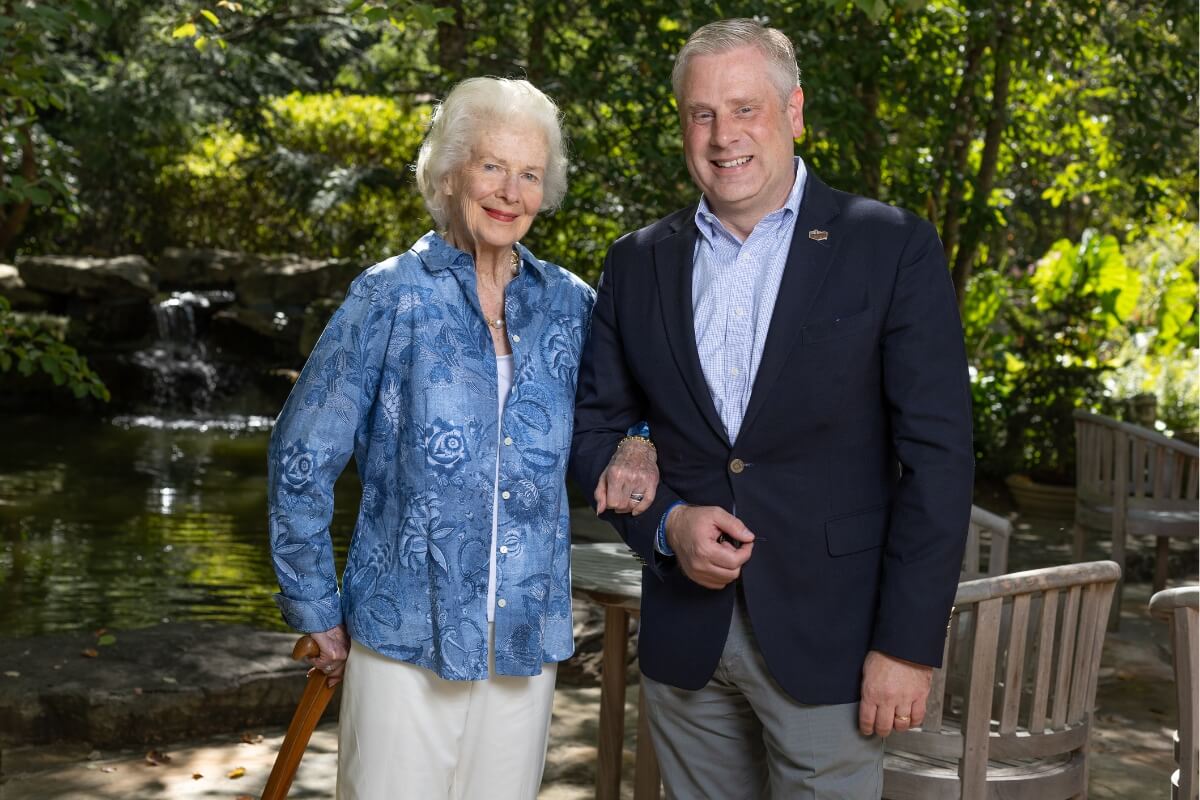
Haslam’s love for the Smokies made her a natural early partner in envisioning the institute’s future, said Maryville College President Dr. Bryan Coker, who remembers her as thoughtful, inquisitive and deeply rooted in the values of education.
“Natalie understood the importance of educating the next generation about protecting and preserving the Great Smoky Mountains that she loved so very much,” Coker said. “She was a passionate advocate for liberal arts education as well as the Great Smoky Mountains — both of which are central to the identity of Maryville College. I always enjoyed my conversations with Natalie about the need for — and value of — liberal arts education, especially in these polarized times.”
Together, Natalie and Jim Haslam formed what others might have called a “power couple,” though it’s a label she would have gently waved away. Their differences, she often joked, made them equally fierce champions of their respective passions. Born in Detroit and educated at the University of Tennessee-Knoxville — where he played football on the school’s 1951 national championship team — Jim built his career as an oil executive and owner of Pilot Corp. He, the pair used to joke, was titan of an industry that’s under increasing scrutiny for its environmental impact, and she was the one who worked to protect the environment.
“We used to tease that he was the polluter and I was the environmentalist,” she recalled with a smile during an interview in the fall of 2024.
Their playful disagreements extended into education and culture as well. Jim, the business-minded executive, later funded the James A. Haslam II Business Building at UT, while Natalie became a steadfast champion of the liberal arts, helping bring UT’s Natalie L. Haslam Music Center to life. And when it came to leisure, there was one debate she rarely lost.
“We used to argue about beach or mountains,” she said. “I told him, ‘The beach is just the beach, all the time. But in the mountains, there’s always something special and different.’”
Had he come around to her way of thinking? She smiled and gave a small nod. Age helped, she allowed — but persistence helped more.
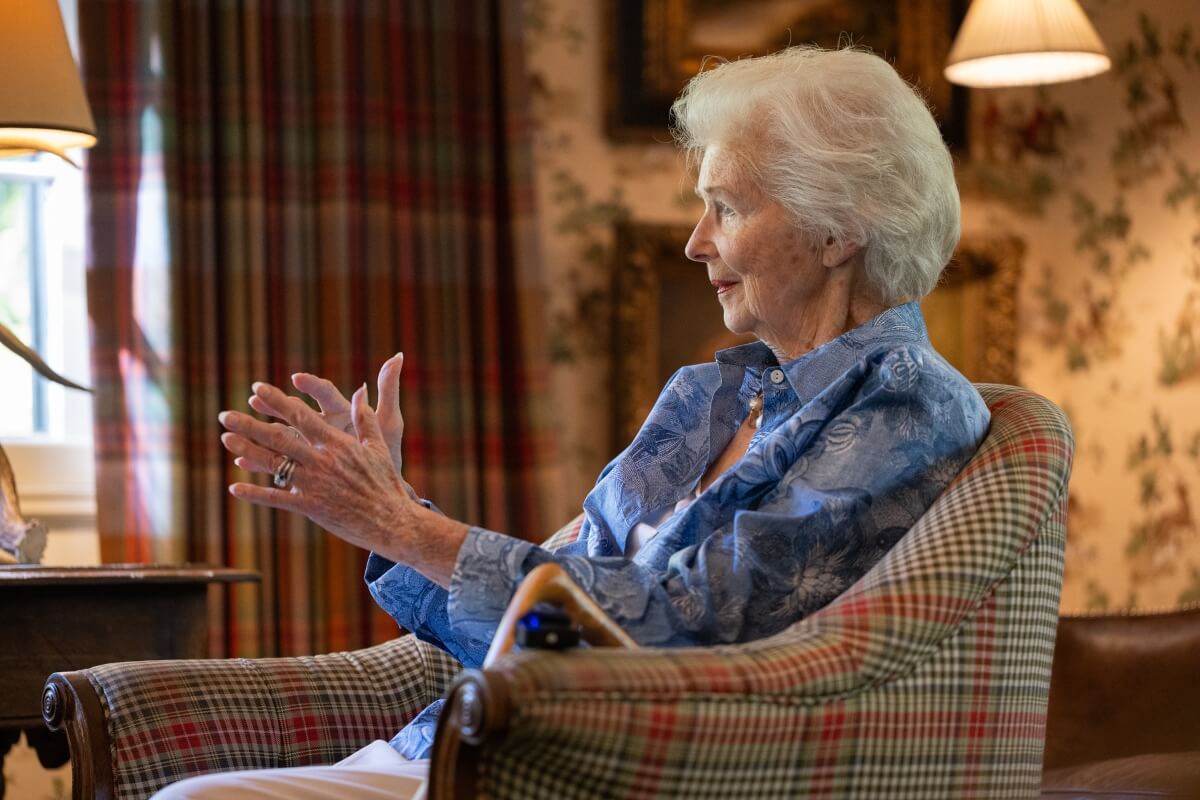
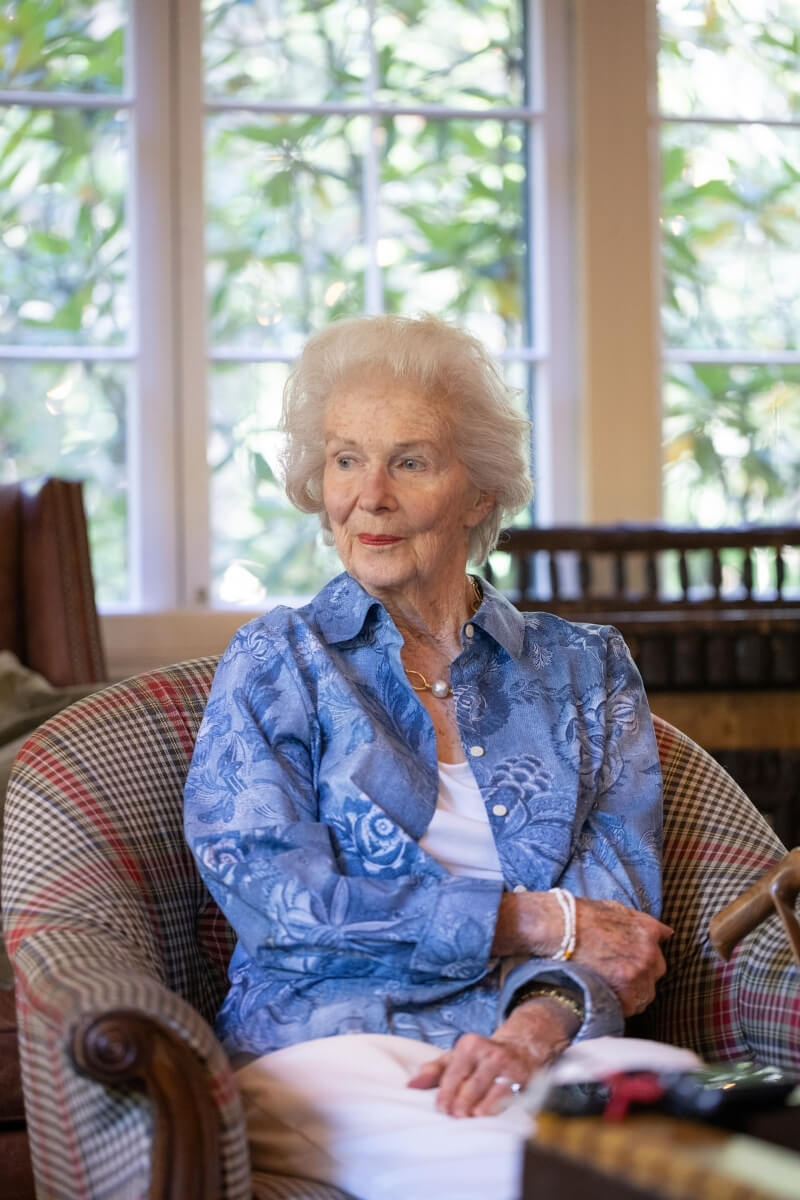
“I just am more persistent,” she said, her eyes drifting toward the windows of the RT Lodge parlor, where she sat that afternoon. The lodge — now leased from the College by her granddaughter, Annie Haslam Colquitt, and Annie’s husband, David — rests within the Maryville College Woods, a place shaped, like so much of Haslam’s life, by the intersection of natural beauty, history and thoughtful stewardship.
Long before boardrooms and benefactions, however — before titles and institutions — her love for these mountains was forged in far simpler ways when she was just a girl: in family picnics, muddy shoes and the feel of cold water against her legs as a little girl pushing through tall cornfields to reach the Little River.
Every weekend, the Leaches would embark on a short drive to the national park for a picnic lunch, and when she thinks back, she can see her mother preparing pimento cheese sandwiches. Her uncle, she recalled, owned a small cabin affectionately nicknamed “The Shack,” and as the youngest child, she often wound up being pushed into the water by her older brother.
“I learned how to swim in the Little River with my family, and to get there, we had to walk across a very, very large cornfield,” she said. “It was huge, but then they would bring out the bathing suits and everything, and we would get in the water. I remember how cold it always was, even in the summer, but it was so wonderful.”
For the rest of her life, the inclusion of a pimento cheese sandwich on a restaurant’s menu — whether prepared at a greasy-spoon diner or reimagined with haute couture embellishments at a five-star restaurant — always made her smile. The feel of cornsilk tassels brushing her arms, the rich symphony of fowl and amphibian emanating from the river’s banks, the slow pull of the current on a young girl’s floating body, staring up at azure East Tennessee skies … those weekly picnics etched the Smokies into her heart. From that point forward, she devoted much of her philanthropy to promoting and protecting them.
“We have to tell (young people) to love the mountains the best they can,” she said.
Beyond Maryville College, Haslam’s civic and philanthropic work reflected the same quiet, steadfast commitment. She was known for supporting institutions that strengthened community life, protected natural resources, and expanded educational opportunity — always with an eye toward long-term impact rather than short-term recognition.
“We are grateful for Natalie’s past service on our Board of Directors, and look forward to honoring her legacy in the Natalie Leach Haslam Center for Environmental Education, which will be part of the College’s future Alexander Institute for Conservation Leadership and the Sciences,” Coker said.
The center, Coker added, will provide K–12 students and regional visitors hands-on experiences focused on conservation, environmental awareness, biodiversity and sustainability through indoor and outdoor classrooms, exhibits and educational programming. It will serve as a fitting testament, Coker said, for a woman whose generosity was never abstract and whose vision for education was always rooted in place — someone who understood that stewardship begins not in policy or prestige, but in cultivating love, curiosity and responsibility in the generations who follow.
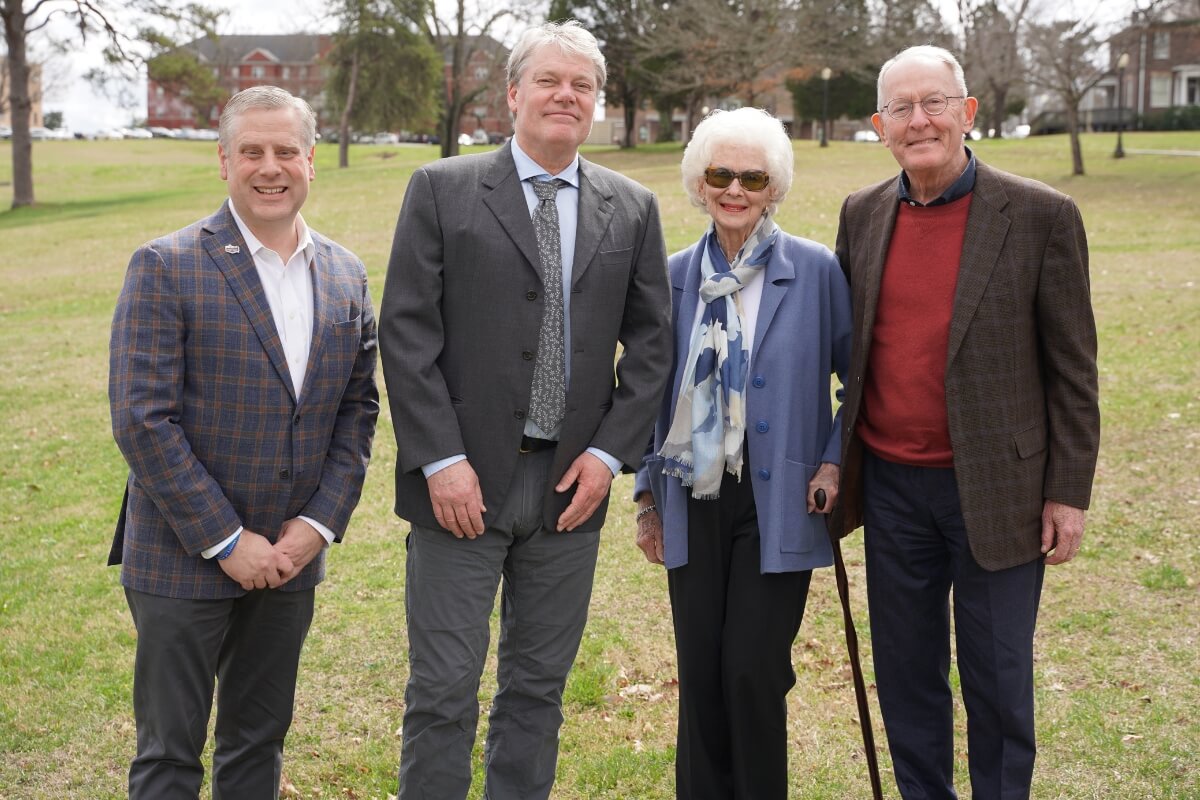
That foresight and passion is evident in the widespread recognition that began shortly after her death was announced. Friends and colleagues — like Lamar Alexander, the former Tennessee governor (an office also held by Haslam’s stepson, Bill) and U.S. senator who has been a lifelong friend to the Haslam family — describe her as generous without fanfare, principled without rigidity, and deeply grounded in the values of East Tennessee.
“Natalie Haslam was a beautiful person — beautiful in spirit, beautiful in appearance and beautiful in her thoughtfulness for others,” Alexander said. “She made friends everywhere and made lasting contributions in East Tennessee, especially to the University of Tennessee College of Music, the East Tennessee Historical Society and to Maryville College. She was a dear friend.”
She is survived by her beloved husband; her three daughters, Jennie McCabe, Susan Robie and Carol Pattison; three step-children, Jimmy Haslam, Ann Haslam Bailey and Bill Haslam; six grandchildren; and seven great-grandchildren. Funeral service is at St. John’s Episcopal Cathedral in downtown Knoxville on Wednesday, Jan. 21 at 2 p.m. with receiving of friends to follow.
Her passing leaves a profound absence, but her legacy is firmly rooted in the institutions and landscapes she helped sustain. It lives on in the students who will study conservation through the Alexander Institute, in the faculty who will guide them, and in the mountains themselves — still rising, still enduring, still instructing those willing to listen.
Natalie Leach Haslam never tired of the view. And because of her life’s work, generations to come will have the opportunity to stand before it, learn from it, and protect it with the same care she so faithfully embodied.