


Three MC faculty members pursue NEH grant-funded projects
March 16, 2021
Three Maryville College faculty members are developing content resources for educators, as part of a project funded by a National Endowment for the Humanities (NEH) CARES Act grant.
The College received the grant in June, when the NEH announced $40.3 million in new CARES Act economic stabilization grants to support essential operations at more than 300 cultural institutions across the country. Only 14 percent of applications were funded.
The $82,500 grant for Maryville College is focused on building online educational resources in the Humanities – especially during a time when faculty members were having to prepare for hybrid and online instruction last summer, due to the COVID-19 pandemic.
In addition to faculty training and resources, the grant also supports three “Humanities Faculty Fellows” – faculty members who received a course release to develop online educational materials in the Humanities. The material developed will be available for others to use, both on and off campus, and “will continue to be valuable and available after the COVID-19 crisis ends,” according to the grant proposal. The three projects are outlined below.
Seymour creates “Poetry as Joy” mini-classes
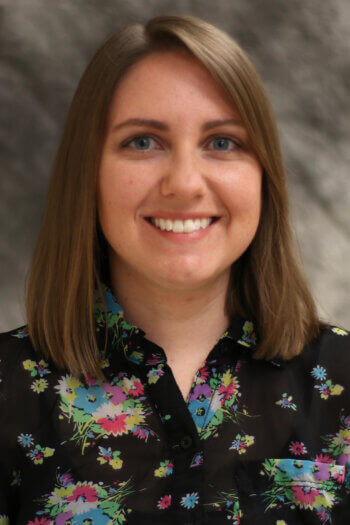
Christina Seymour, lecturer in writing communication, chose to address the lack of contemporary poetry taught in high schools by creating an electronic mini-class of poetry with the spirit of “joy and curiosity.”
“Students learn to fear or dislike poetry for many reasons: their teachers presented poems as intimidating lockboxes of meaning with ‘right’ or ‘wrong’ interpretations; their textbooks only contained works with strict rhyme and meter by white, male, and/or Christian writers that didn’t resonate with their own experiences; or standardized test questions interfered with the potential for play, joy and curiosity with the creative process,” Seymour wrote in her project proposal. “Contemporary poetry, in fact, features many energetic, inspiring, powerful, progressive, non-dominant voices that my students come to adore, to feel heard by, and to write after.”
Additionally, local high school teachers surveyed by Seymour echoed the need for such a project, saying that having new resources to teach poetry would be helpful in the classroom.
Seymour’s newly created “Poetry as Joy” website features a mini-class of poetry designed to appeal to multiple ages and to “encourage joy and interactivity.”
“I want the mini-class to demystify, rather than overwhelm,” Seymour said.
The mini-class contains three units: “Play and Solitude,” “Heart and Curiosity” and “Voice and Vividness.” Each unit includes a step-by-step format that allows students and teachers to step through the lessons. Lessons are also written in a format that allows teachers to pick and choose what they would like to use, based on their need and grade level.
The first lesson begins with Matthew Lippman’s poem, “This Will Destroy You,” published in The Cortland Review.
“I began the lessons with this poem, to emphasize that a poem can look like many things, that writing is about honoring small moments, that good/relevant poetry is being written now, and to prompt readers to think about their own first discoveries of solitude, which is/can be a place of safety and joy,” said Seymour, a published poet who came to MC in 2014 to teach poetry and professional writing. She also teaches an online course, “Crafting the Essay,” at Johns Hopkins University’s Center for Talented Youth. Her book of poems, When is a Burning Tree, won the 2017 Lyrebird Award at Glass Lyre Press.
The second lesson examines Tracy K. Smith’s poem, “Don’t You Wonder, Sometimes?” and the third lesson focuses on the poem “American Sonnets for my Past and Future Assassin [I’m not sure how to hold my face when I dance],” by Terrance Hayes.
In the website’s introduction, Seymour wrote that the mini-class was created “to help you enjoy poetry.”
“Often, we received short, confusing messages about what a poem is or can be,” the introduction states. “In reality, poetry is fun to write, to read and to understand. Seeing poetry as a playful process toward self-knowledge and self-wisdom is the key to understanding it. Be curious. Be playful. Be open-minded.”
Sherman focuses on teaching world religious traditions
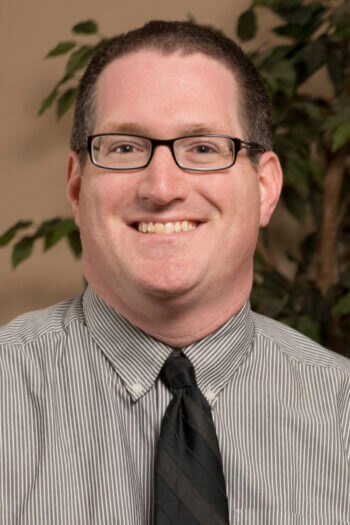
Dr. Phillip Sherman, chair of the Division of Humanities and associate professor of religion, is focusing on teaching world religious traditions as they relate to Tennessee social studies standards.
“The current state standards most directly engage world religious traditions (e.g., ancient Mesopotamian and Egyptian cultures, the origins of Israelite religion and early Judaism, early Christianity, Hinduism, Buddhism, Confucianism, and Islam) in the 6th and 7th grades,” Sherman wrote in his project proposal.
Sherman said he led two professional development workshops for Knox County Schools that “engaged questions related to content and hosted conversations around pedagogy and teaching religion in public schools, especially in the South.” Several participants expressed an interest in future events that would explore specific social studies standards in greater detail, said Sherman, who arrived at Maryville College in 2006.
Sherman’s scholarly interests focus primarily on the various ways in which Jews, Christians and Muslims have read and interpreted sacred texts over the centuries. He has also worked on projects related to the multitude of ways in which humans think about and relate to the larger animal world. He recently published “The Hebrew Bible and the ‘Animal Turn’” in Currents in Biblical Research, which explores key texts to describe and analyze what Animal Studies has brought to the field of Biblical Studies (Animal Studies refers to “a set of questions which take seriously the reality of animal lives, past and present, and the ways in which human societies have conceived of those lives, related to them, and utilized them in the production of human cultures,” Sherman wrote).
When starting his NEH grant-funded project, Sherman said it was difficult to determine an exact number of standards that relate to “religion” in the current state standards, because “the very question of why some traditions are listed as a ‘religion’ and others as a ‘philosophy’ is a perennial one in the study of religion and culture.” With that caveat in mind, he counted about 30 discrete standards that are to be met during 6th and 7th grade instruction. He decided to narrow his focus to 6th grade content, specifically religion in ancient Mesopotamia, Ancient Israel, and Hinduism.
Sherman spent the fall semester speaking with local social studies teachers about the types of questions students in their classes have about religious traditions – and determining what kind of resources might be most beneficial to educators. He also worked with Dr. Becky Lucas, associate professor of education at Maryville College, who was a valuable consultant for him.
At the end of January, he met virtually with a group of honors social studies students at Hardin Valley Middle School in Knoxville, Tenn.
“They were covering Confucianism and Daoism in class and wanted to discuss why these traditions are sometimes referred to as ‘religions’ and sometimes called ‘philosophies,’” Sherman said. “We had an excellent conversation about how scholars define (or don’t define) religion as a category of human belief and activity.”
Sherman noted that one theme that emerged during his work with teachers and students last fall was the need for curation of already existing content, rather than content creation.
“There is a tremendous amount of material online about world religious traditions, but it is of unequal accuracy or usefulness,” Sherman said, adding that he’d like to find ways to frame and connect existing content to the state standards. “There is still an important place for the creation of new content. … I believe that it is important that the creation of such content come from multiple voices and viewpoints.”
Ultimately, Sherman hopes to create an online repository of short videos and primary texts related to world religions and Tennessee state social studies standards.
Trevathan explores online undergraduate creative writing workshops
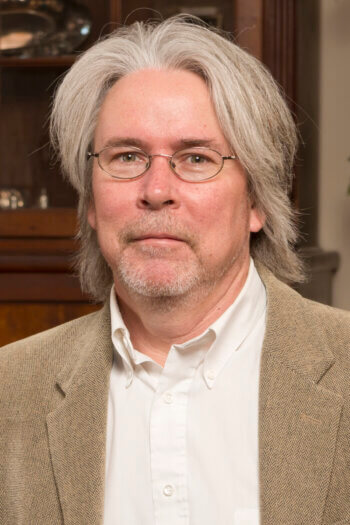
Kim Trevathan, associate professor of writing communication, wanted to see if a writing workshop – which is often held in person and combines written and oral feedback from instructors and students in small groups or among an entire class – could successfully be conducted online.
“Even under the best of circumstances, successful workshops … are complex networks of communication that can be rewarding, fun and enlightening, but can also be overly negative, overly positive or an exercise in instructors’ tactics for filling silences,” Trevathan wrote in his project proposal. “I’d like to investigate the opportunities that putting workshops online can offer us to learn about the problems and potential of this learning methodology.”
Last spring, Trevathan moved a set of advanced fiction writing workshops online, due to the COVID-19 pandemic, and he said the experiment went better than expected. For his NEH grant-funded project, Trevathan wanted to follow up on the spring experiment and develop models that would best work in creative writing, journalism, first-year student writing courses and other courses in the Humanities – asking the questions “what do we lose, and what can we gain by putting workshops online?”
First, he spoke with MC faculty members in several academic divisions to ask about the challenges they’ve faced in writing workshops as they have existed in “pre-pandemic incarnations.” Trevathan also interviewed Maryville College alumni who are teaching high school English to ask them how their use of the workshop has evolved over the years, what works and what needs to be improved.
He then focused on research in his field – creative writing, as well as first-year student writing – to find articles about online workshops and how they can be used most productively. Trevathan has been teaching journalism, creative nonfiction, fiction and first-year writing at Maryville College for 19 years. In addition to publishing fiction and essays in several literary journals, he is the author of four nonfiction books, including Against the Current: Paddling Upstream on the Tennessee River, which was published this year.
For his research, he focused on topics such as: how to prepare students for workshops, how to maximize the productivity of a workshop for the writer as well as the critics, how to avoid/pre-empt emotional crises that result from writer vulnerability, and how to use online learning in a way that combines the conventional workshop method (oral feedback) with follow-up feedback based on the writers’ questions, he said.
He then tried out versions of his new workshop strategies and applications in his fiction and journalism classes last fall, running peer student writing workshops via Zoom, and soliciting student feedback – which varied. He said he was most surprised by the “significant number” of students who said that Zoom freed them to comment in ways that they might not have in person. Some had concerns about bandwidth/connections or roommate intrusions during online workshops.
“Others felt that offering feedback in-person would allow us to go into more depth on manuscripts, to achieve a more fluid back and forth conversation among readers and writers and ultimately to form a more cohesive community,” Trevathan said. “While I was happy with the community we formed in fiction writing class, I can’t help but believe that we could have learned more from and about each other if we had had more time in the classroom together, without masks.”
He compiled and condensed his research into an article with an annotated bibliography, which he is making available to the Maryville College community, as well as any other educators or writers who are interested in this research. He also hopes to submit the article for publication to an academic journal.