From beneath the earth to above it, MC’s Dr. Joy Buongiorno is blazing scientific trails
Nov. 21, 2022
When Dr. Joy Buongiorno interviewed for a faculty position at Maryville College, she took out her lip ring and selected one of the few conservative pieces of attire from her wardrobe.
College professors, after all, are often pigeonholed as academics whose allegiance to the cerebral outweighs their fondness for the sartorial. In her pitch for the position of assistant professor of Environmental Biology, she wasn’t necessarily hoping to conform, but she wanted to make a professional first impression.
As it turns out, such concern was unnecessary. They were keen to hire the mind that’s led to articles in respected scientific journals and work helping NASA find terrestrial test sites that mimic interstellar surfaces, but they wanted her unique style as well.
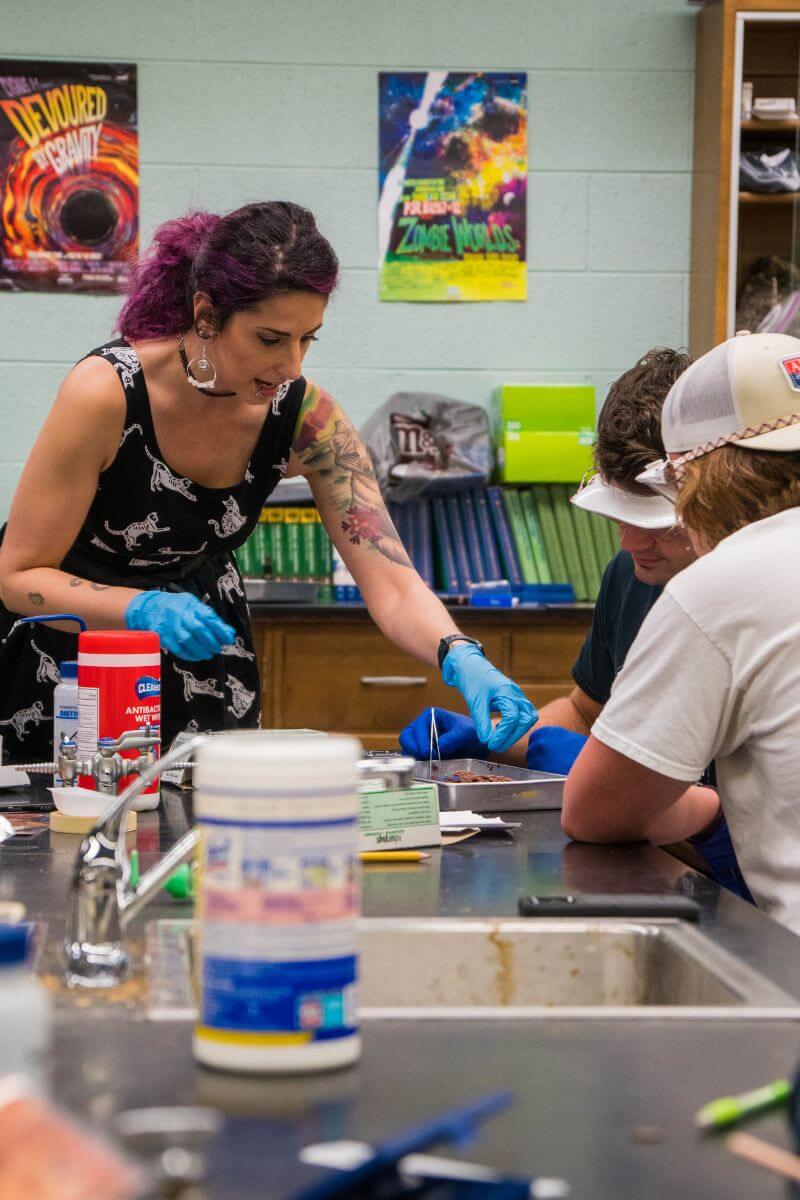
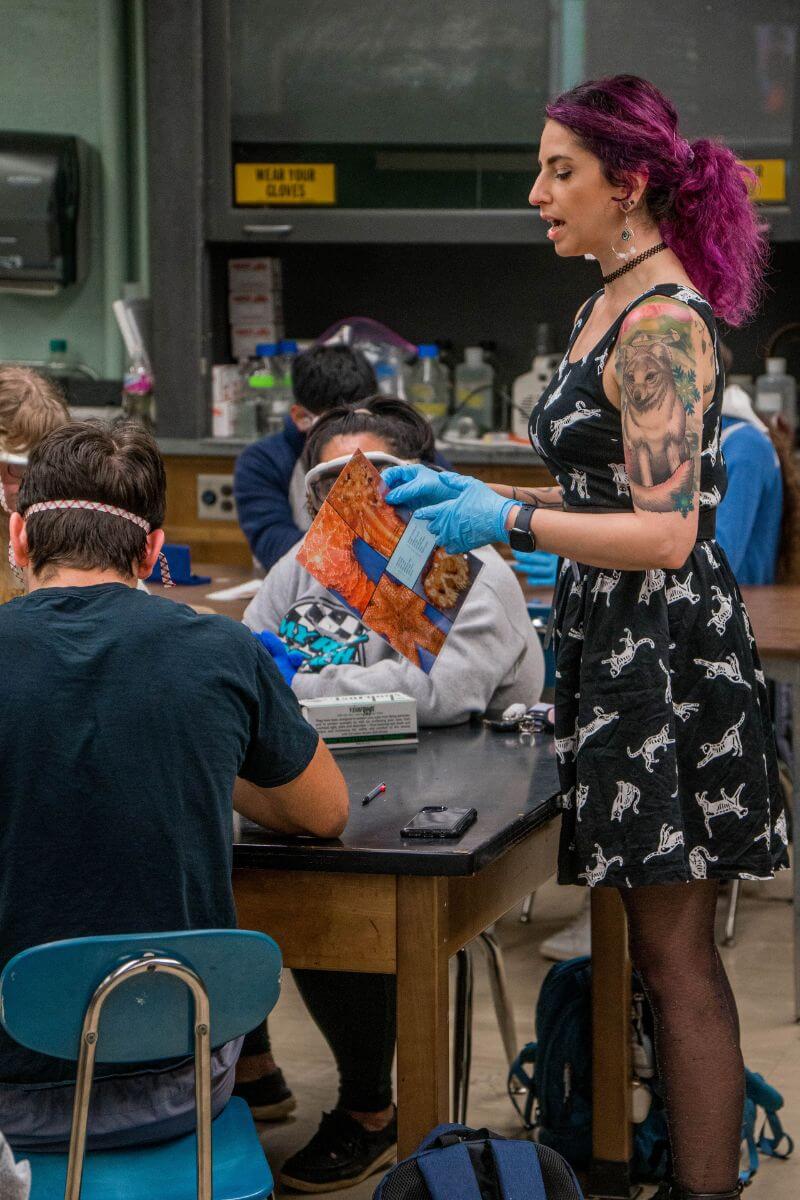
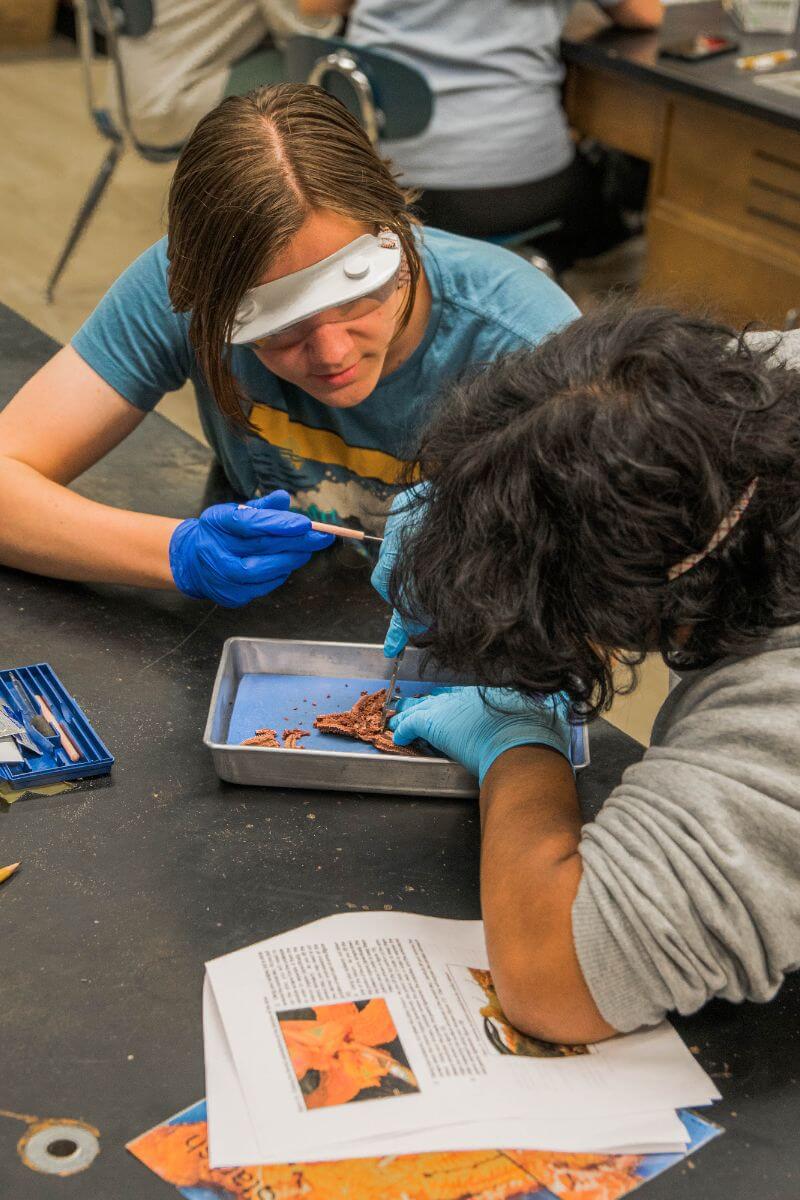
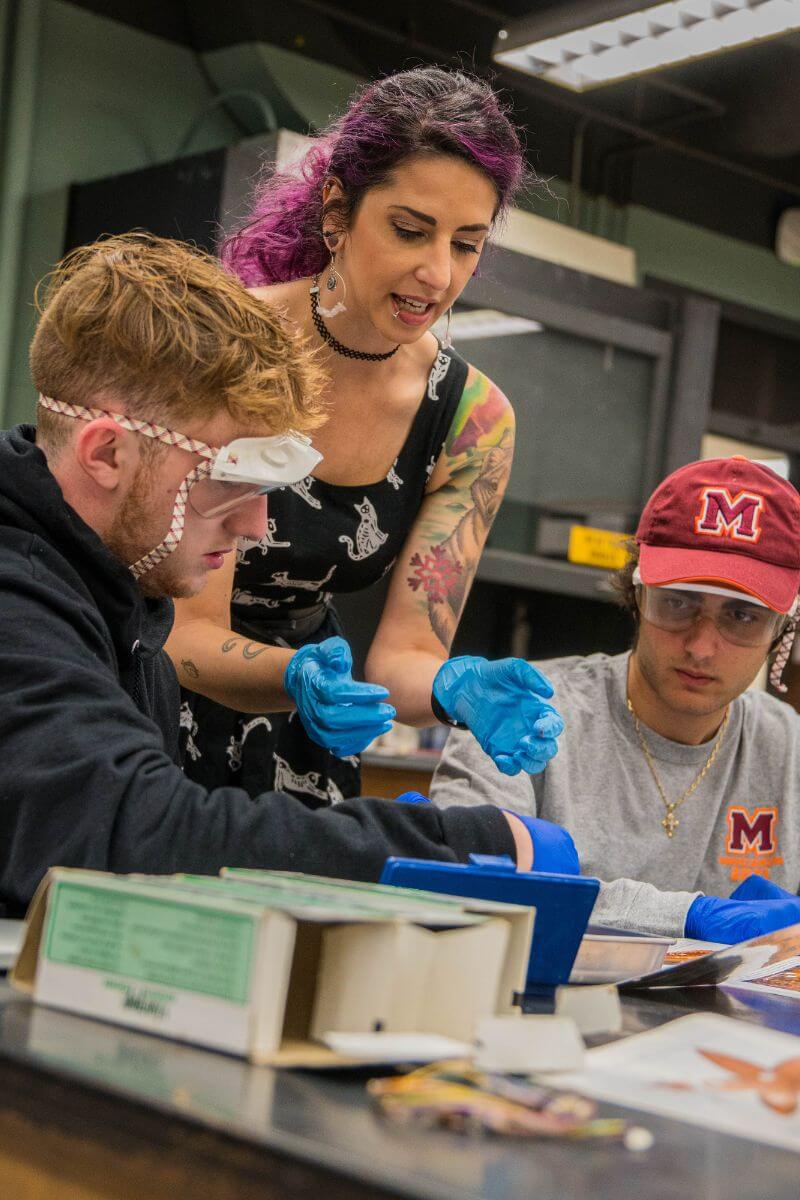
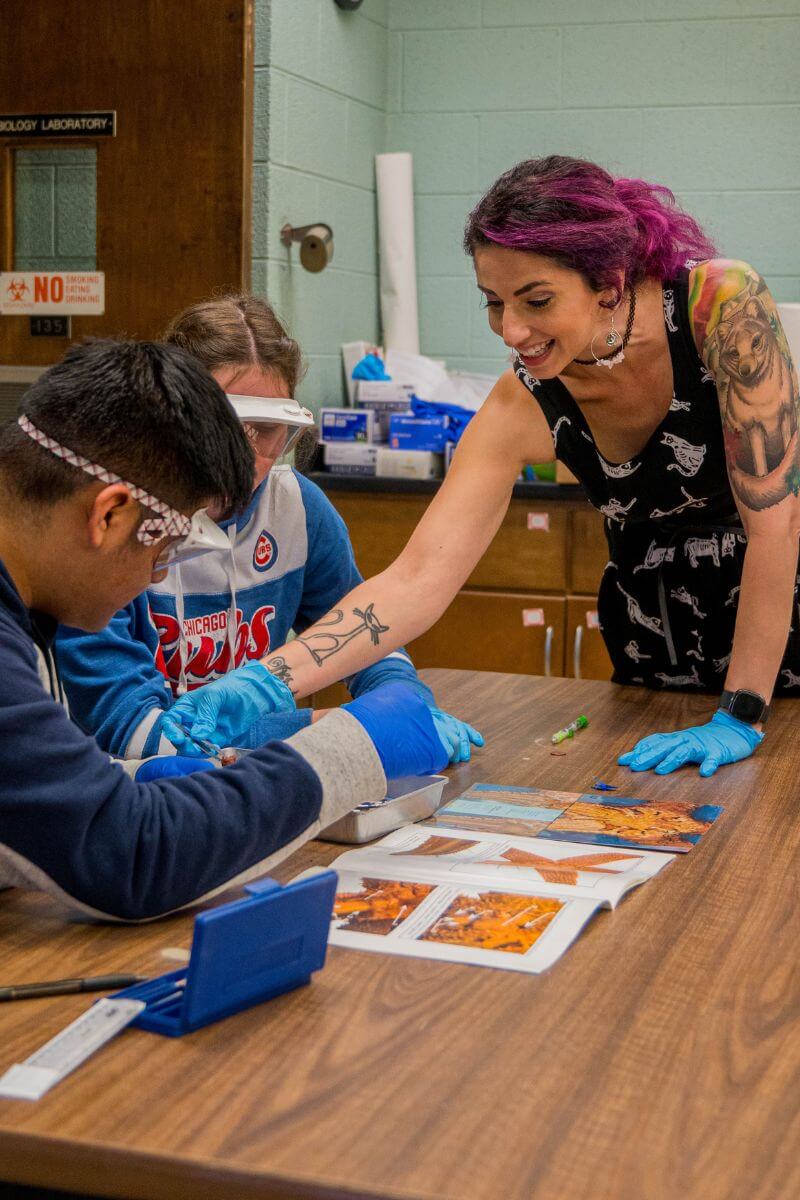
“I took out my lip ring, but it was obvious when I was speaking to the other faculty during the interview that I had one, and later on, I found out that my alternative look made me more attractive to them,” Buongiorno said. “That’s one of the favorite parts of my job, is being able to be myself, and I think it helps me connect with students on a different level. It’s important to let them know that the face of science and engineering is changing, and that you can have purple hair and tattoos and wear big boots and funny dresses and still be a scientist.
“I’ve always been a big proponent of bringing your identity to the classroom. I’m all about students 100% living through truth and who they want and need to be, unfettered through any expectations society and their parents have for them.”
The path to MC
With a bachelor’s degree in Biology from Tennessee Technological University in Cookeville, Tennessee, Buongiorno came to the Knoxville area to complete her master’s in Geoscience and her Ph.D. in Microbiology at the University of Tennessee. After conducting post-doctoral research at the Carnegie Institution for Science in Washington, D.C., she looked for an opportunity to return to East Tennessee and discovered an open tenure track position at Maryville College.
“The reputation of Maryville College is definitely well known in the Southeast,” she said. “A lot of my colleagues at UT had students over here or had received students from here once they graduated, and those students were very well-prepared and showcased a level of maturity that isn’t necessarily found across most graduate students. And I think that’s attributable to our high expectations of senior studies, of comps, and of many things very unique to the MC experience.”
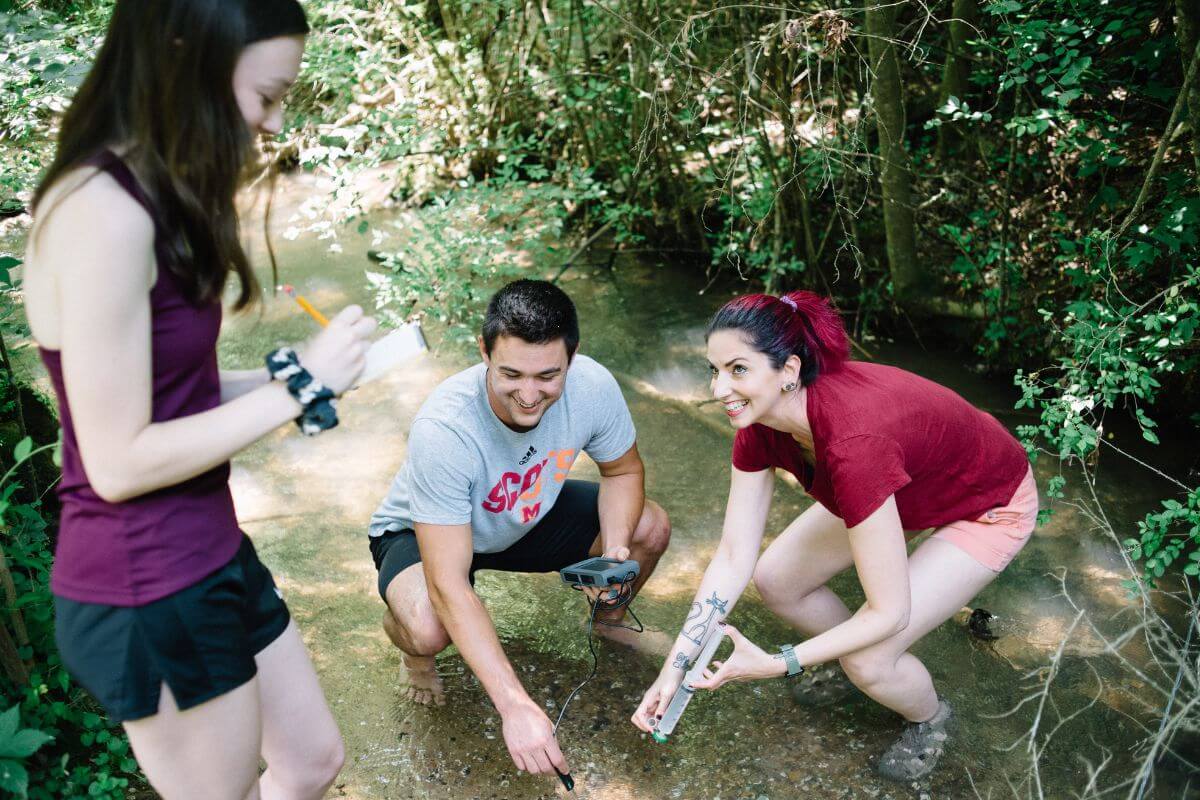
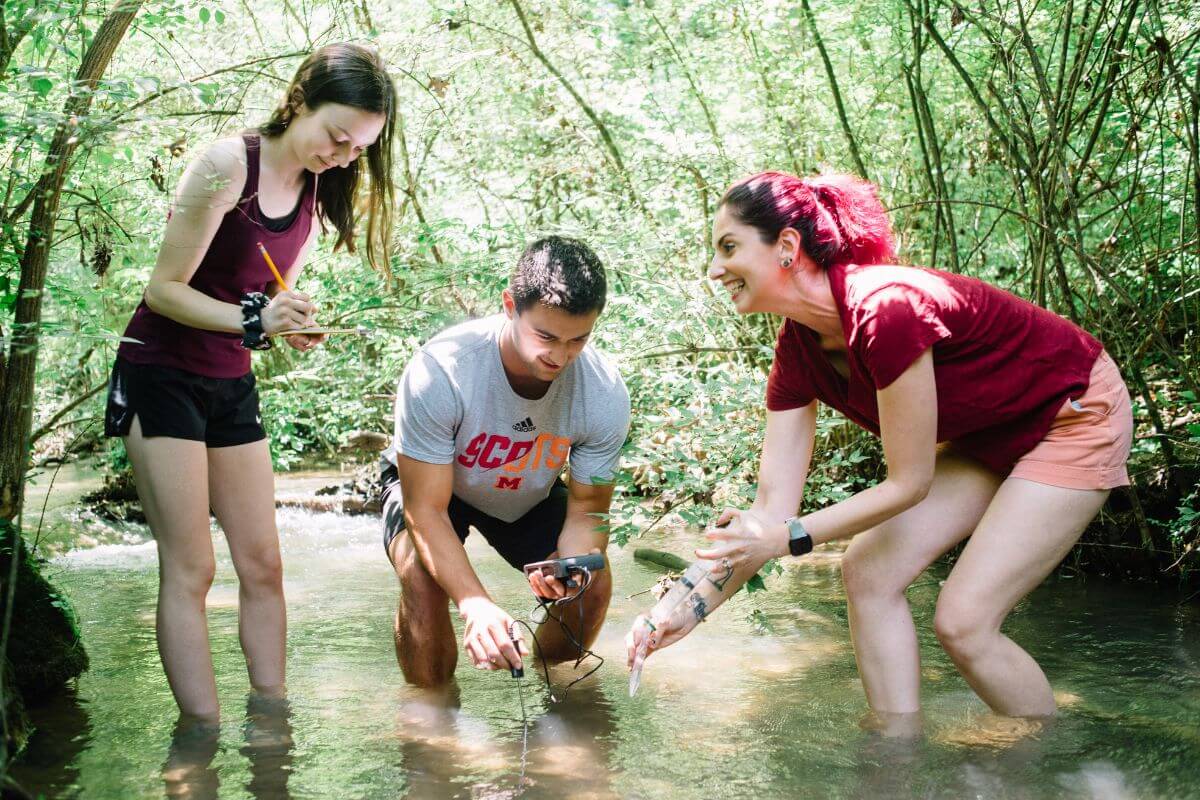
In addition to a courseload that includes such classes as Organismal Biology (BIO113), Principles of Environmental Science (EVS101), Bioinformatics (BIO349), Earth System Science (EVS310) and Principles of Microbiology (BIO112), Buongiorno continues to remain actively involved in areas of research that have piqued her interest and fascination since she was an undergraduate herself.
Most recently, she co-authored a research piece published in The ISME Journal — a multidisciplinary collection of papers focused on microbial ecology that’s part of the Nature family of scientific journals. While the journal may not be one casual readers know well, among scientists, it’s a respected publication, and it allowed Buongiorno to bridge the gap between microbiology and geology, she said.
“That’s where I’ve lived throughout my academic career and in my post-doc — where biology meets geology,” she said. “It’s the study of life and what happens when you integrate that into plate tectonics and how the earth evolves. One of the questions that we’re trying to answer with these projects is, how do earth processes like tectonic subduction impact communities of organisms and microorganisms in the subsurface?
“The team of researchers I work with have uncovered for the first time the unexpected role that microbial metabolism plays on carbon cycling associated with geology and tectonics. The microbes that live in the subsurface at these places derive their chemical energy from rocks to turn CO2 into little microbial bodies. This is analogous to how plants and algae on the surface of the earth photosynthesize, where the energy is received from sunlight and water instead of rocks.”
The article — “Chemolithoautotroph Distributions Across the Subsurface of a Convergent Margin” — was published on Oct. 18 and examines how such microbial bodies capture volatile compounds like CO2 that slough off of subducting tectonic slabs. In a sense, such a geobiological process creates a subsurface carbon sink — a specific environment determined by its ability to absorb CO2, and exploring that process in The ISME Journal with her peers is an honor, Buongiorno added.
“This journal is extremely prestigious in the scientific circles I run in, and I collaborated with some amazing colleagues,” she said. “It’s an opportunity for a wider band of researchers to read your work, and it’s very well-respected.”
Processes both earthly and stellar
Almost as well-respected is the work she’s doing in areas of science on and beneath the surface of other planets. During her post-doc work at the Carnegie Institution, she was part of a research team on the NASA Astrobiology Institute project “Evolution of Nanomachines in Geospheres and Microbial Ancestors,” or ENIGMA for short. Because of her continued interest and research in the field of astrobiology, NASA named her as a priority invitee to an Oct. 13-15 workshop held in Denver, Colorado.
Titled “Ocean World Analog Field Site Assessment Workshop,” the invitation-only event brought planetary and Earth scientists from NASA and other institutions to discuss “what constitutes a quality terrestrial analog for potentially habitable planetary bodies outside of Earth,” Buongiorno said.
“The idea is to pick sites or list the criteria of sites on Earth that would be good analogs or places to study that could tell us about other worlds that are not Earth — specifically, that are different from both Earth and Mars in that they’re not terrestrial, rocky planets,” she said. “We’re talking about worlds that are entirely made up of oceans, and there are a lot of them — like Europa (one of the moons of Jupiter), that are buried underneath kilometers of ice.
“We have a very limited understanding of what’s happening in these ocean worlds. Is there life there? Are there organic compounds? These are outstanding questions my colleagues are writing proposals and asking, and so we were wanting to build a framework for scientists interested in studying these kinds of questions to assess the fidelity of their potential field sites as good analogs.”
In other words, where on Earth could scientists find a similar environment that could theoretically substitute for an off-world expedition? Such sites, Buongiorno said, exist primarily in extremely remote polar regions: Antarctica; the Canadian Arctic; Svalbard, Norway; Russian Siberia; Northern Alaska. The training scientists have to undergo, as well as the bureaucratic hurdles they have to overcome, in order to visit these places has necessitated an interest by scientists like Buongiorno in finding more hospitable analogs — as well as ones that don’t require a massive carbon footprint to access.
“If you’re studying the impacts of climate change, but it takes four flights and a helicopter to get to a dig site, it’s kind of contradictory,” she said. “We have to be mindful of the communities we’re entering, and we’ve already been having open conversations with indigenous folks living there. We’re attempting to understand their needs and what they see as potential threats of climate change, and we have to be respectful of their time and the places we go into.”
A liberal arts approach to science
And so for nearly three days in Denver, geologists, earth scientists and planetary scientists from NASA and institutions across the United States met to determine what made for acceptable criteria for a substitute field site. And one team that included a professor from Maryville College came up with a framework that will help guide decision-making about analog sites in a more environmentally conscious way moving forward.
“I was invited specifically to represent scientists who do astrobiology work at primarily undergraduate institutions,” she said. “There were a handful of researchers who came from smaller institutions where we don’t have as much time to write huge research grants, but they wanted to listen to my perspective on how we engage and incorporate undergraduates in this type of research.
“We came up with a rubric we hope to publish in two different ways, but the idea is writing a white paper to NASA to impress upon them a needed shift to be better environmental stewards. It will contain our rubric and the justifications behind them so it can be cited by people who write NASA proposals in order to guide these field site selections. And one of the criteria in the rubric focuses on the inclusivity of undergraduates in determining these sites.
“It takes thousands upon thousands of dollars to get an undergraduate to the Arctic, but it may only take a couple of hundred bucks to get them to a site in the U.S. that’s drivable,” she added.
And if her Maryville College experience has taught her anything, it’s that the inquisitive young minds who come to science through a liberal arts perspective are invaluable in the field. Already, Maryville College graduates in STEM majors have earned national and even international reputations as individuals literally doing good on the largest possible scale, to borrow a phrase from College founder Rev. Isaac Anderson, and while Buongiorno’s work is rooted in her own scientific interests, she’s insistent on making room at the table for anyone who wants to join her there.
“I think for a very long time people wrote off primarily undergraduate institutions and small liberal arts colleges where research can get done,” she said. “By showing up and presenting research I’ve done with students to a wide audience in my field, it gives the clout I think Maryville College needs and deserves. It’s great to show the region how strong we are, but I came here with one of my goals to put Maryville College on the map.
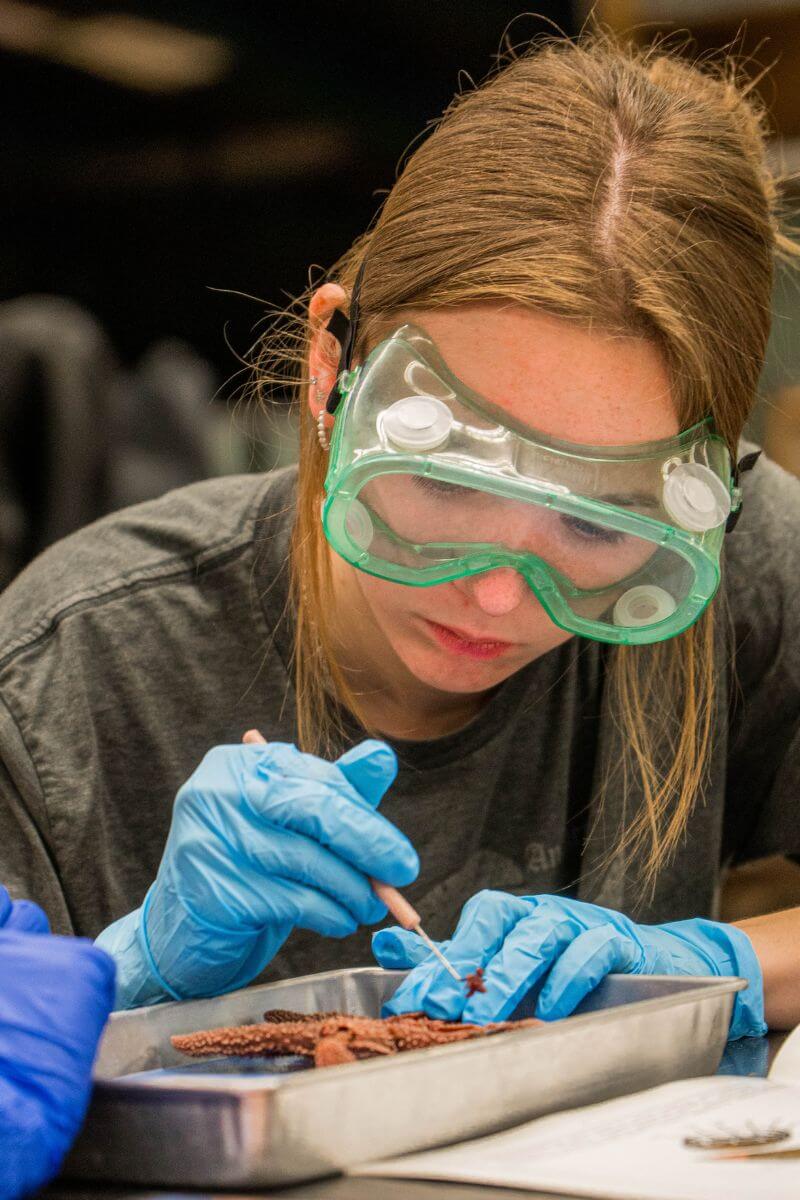
“The students here are exceptional. The questions they ask, and the level of empathy they show not only to each other but their professors, have exceeded my expectations. Students get such a good education here, and they have a lot they can contribute to the lab and the field, and I’m just grateful I can be a part of that.”