


Maryville College welcomes Holocaust survivor Mark Schonwetter for Tuesday talk that’s open to the public
Oct. 17, 2025
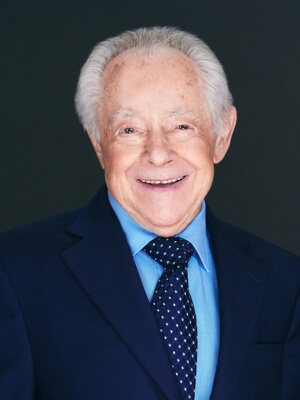
On Sept. 1, 1939, Mark Schonwetter’s life was thrown into chaos, and next week at Maryville College, he’ll recount a harrowing childhood on the run from the Nazis.
Schonwetter, the namesake of the Mark Schonwetter Holocaust Education Foundation, is on a speaking tour that takes him through East Tennessee, and earlier this year, Associate Director of Community Engagement Jamie Webster took advantage of an opportunity to make Maryville College one of his stops.
The opportunity to hear Schonwetter, now 94, will take place at 1 p.m. Tuesday, Oct. 21, in the Harold and Jean Lambert Recital Hall of the Clayton Center for the Arts. The program is free and open to the public.
During her time as the Maryville College interim campus minister and director of interfaith ministries, positions she held until earlier this year, Webster developed a professional relationship with Alison Vick, the historian and program director for the Tennessee Holocaust Commission.
“When the commission made plans to bring Mr. Schonwetter to Tennessee to speak, Alison reached out to me to see if we at Maryville College would like to host a visit,” Webster said. “I think it’s important for students — and anyone who wishes to come — to attend the presentation for a number of reasons: At 94, Mr. Schonwetter is one of only a few living Holocaust survivors remaining, which makes this likely a once-in-a-lifetime experience for us.”
Born in Brzostek, Poland, Schonwetter’s early childhood was bucolic … until the day Germany invaded Poland. It wasn’t long before the Nazis arrived in Brzostek. They were uprooted from their farm, and three years later, Schonwetter; his mother, Sala; and his younger sister, Zosia fled 15 miles in the middle of the night, seeking refuge in the Debica Ghetto. Three months later, they were forced to flee once again and spent the remaining years of World War II hiding out in the home of kind countrymen during winters and in the Polish forests during warmer months.
Although they survived the Holocaust, their lives under the subsequent Communist regime were nothing like before, and in 1957, they emigrated to Israel. Four years later, Mark reached out to an aunt in the United States, who agreed to sponsor him; he arrived without knowing a word of English and only $5 in his pocket, working his way up at a jewelry factory and enrolling in school to learn English.
By 1971, he was able to purchase a wedding ring manufacturing company of his own, and over the next 40 years turned it into a nationally recognized wedding ring and bridal brand. Since retiring, he’s dedicated his life to speaking out about Holocaust remembrance, establishing the foundation that bears his name with his wife of 55 years, Luba, and his two daughters, Ann and Isabella.
“He has quite a story to tell and has a reputation as being a very good storyteller,” Webster said. “We learn from one another’s stories, and people who are willing to share their stories, like Mr. Schonwetter, help us understand history in a personal and easier-to-empathize-with and easier-to-live-into way. When we know our history, we are better equipped to make good decisions in the present.”
“In our own age of anti-Semitism and other kinds of persecutions, it’s all the more important that we hear from the remaining survivors of the Holocaust,” added Dr. Dan Klingensmith, professor of history at Maryville College.