


All creatures great and small: Maryville College’s Dr. Phillip Sherman examines the animals used in Biblical passages
March 6, 2025
There is, at Maryville College, an expectation of excellence when it comes to the education students will receive.
The faculty members who provide it rise to the occasion, year in and year out. Their classroom commitment is steadfast, but it’s only part of the work that they do. They’re scholars as much as they are teachers, and their work outside of the classroom not only provides intellectual stimulation of the things they teach within it, it also enhances the reputation of MC as a place of academic rigor, populated by educators who routinely submit work to publications across the academic spectrum.
Throughout the course of the 2024-25 academic year, a number of Maryville College faculty members have been recognized for their contributions to academia. This is part five of a six-part series spotlighting those individuals and their accomplishments.
Dr. Phillip Sherman
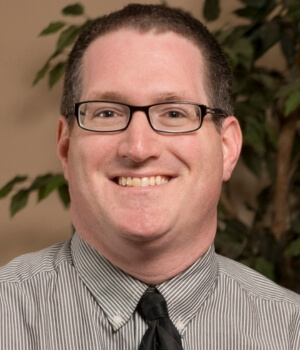
Dr. Phillip Sherman — professor of religion and chair of the Division of Humanities at Maryville College — has been exploring how the interdisciplinary field of Animal Studies might contribute to his own field of Biblical Studies. He has offered courses on Animals and Religion and a seminar about “The Biblical Lives of Animals,” and last summer, he traveled to Europe to deliver a paper at the International Meeting of the Society of Biblical Literature.
The organization, founded in 1880 to foster biblical scholarship, held its 2024 international meeting in Amsterdam. Sherman was invited to present a paper entitled “‘I Am a Worm and No Human’: Animality and Abasement in the Psalms.”
The presentation examined the significance of self-identification with animals as a recurring rhetorical device in Biblical and ancient Near Eastern petitionary prayers, he said. The presentation was part of a unit at the conference that brought together scholars of the book of Psalms to explore animal imagery in the Hebrew Bible’s most quoted book.
Sherman’s presentation was a specific exploration of Psalm 22, and even more specifically, verse 6: “But I am a worm, and no human; a reproach of men and despised of the people,” according to the King James Version.
Sherman argues the phrase “I am a worm and no human” is a “liturgical declaration of abasement. It is a kind of strong medicine intended to draw the attention of the deity by abnegating one’s status: a self-animalization from human to worm. It is the opposite rhetorical strategy of another claim in the Psalms: the surprise elicited by the speaker in Psalm 8 that the God of Israel pays any attention to human beings at all and yet, he has made them a little lower than angels.”
Sherman is currently scheduled to give another paper at a virtual conference sponsored by scholars at the University of Edinburgh and Université Laval this March. “Houses full of Owls: Strigine Imagery in the Book of Isaiah” will explore how to identify the Hebrew terms often translated as “owl” in the Bible and explore the meaning of select passages in light of the deeper set of cultural assumptions about owls.
“I could not have imagined my professional interests taking this direction when I first came to Maryville College,” he said. “Animal Studies is a radically interdisciplinary field of study — drawing on sociology, history, psychology, and the natural sciences. Maryville College, with its liberal arts focus, has allowed me to research and teach across the curriculum in ways that simply would not have been possible in other places. I try to bring this broad understanding of education to every class I teach.”
Sherman is currently working on a larger work, “A Biblical Bestiary: An Introduction to the Bible and its Animals.”