Where it all began: 150 years of baseball at Maryville College’s Scotland Yard
March 18, 2026
By all accounts, John Alfred Silsby was one of those indispensable Scots whose energy seemed to touch every corner of College Hill. Though he inexplicably never graduated, his time as a Scot in the mid-1870s was remarkably fruitful.
His classmate, the Rev. Samuel Tyndale Wilson (1878), credited Silsby with first proposing the establishment of a YMCA chapter on campus — a seed that would eventually grow into Bartlett Hall. According to Wilson, “the first printed student publication” at Maryville College, The Maryville Student, was “edited, printed and published in 1875-1876” by Silsby and Wilson themselves, who operated as “partners in a job printing office in Memorial Hall.”
Silsby later taught mathematics during the 1882-83 academic year, and in 1887, newly ordained as a Presbyterian minister, he sailed for China, where he would serve as a missionary for more than four decades. When he died in 1939 at the age of 81, he was laid to rest in the Maryville College Cemetery — a short walk from what may be his most enduring earthly contribution as a Scot: Scotland Yard, the baseball field that became home to the College’s first team, born from an idea shared between Silsby and his Memorial Hall roommate, George Samuel Moore.
That field did not simply appear. After their early conversations about forming a team, Silsby and his classmates cleared and tamed a patch of ground not far from Anderson Hall — itself only six years old at the time — deliberately shaping it into a baseball diamond where bats would crack and dust would rise.
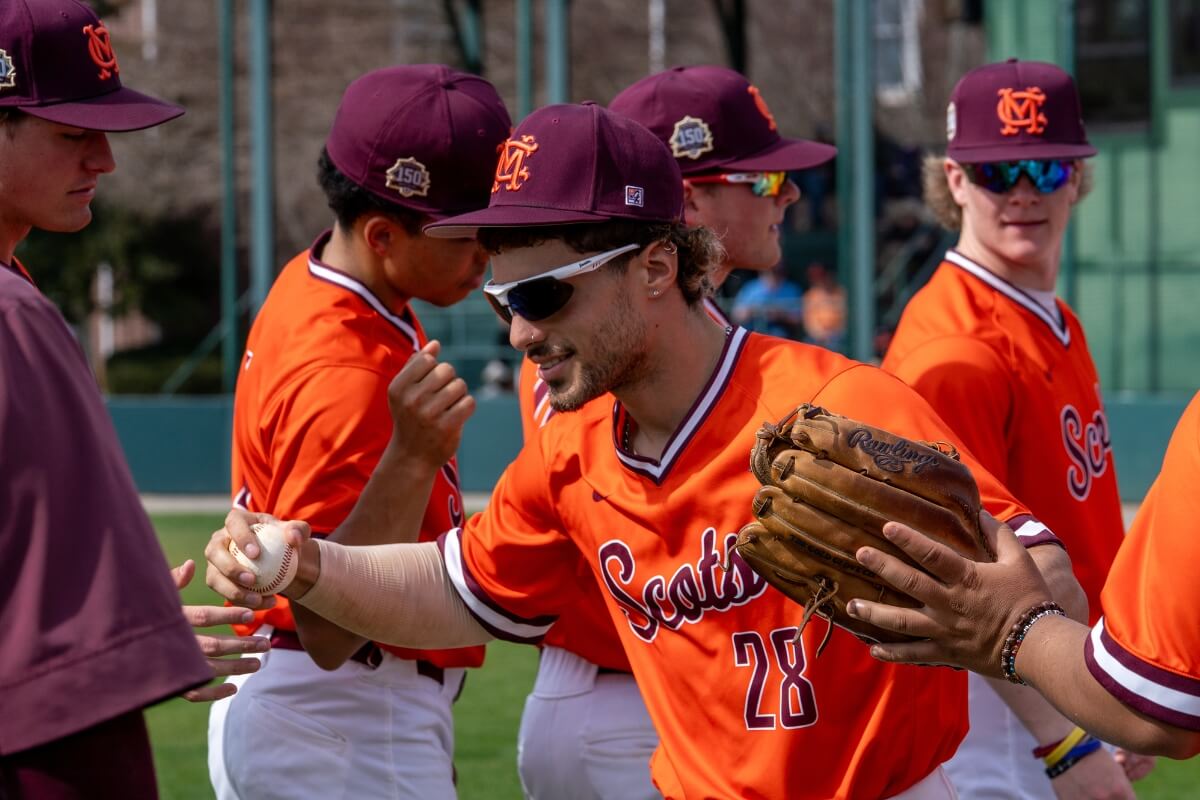
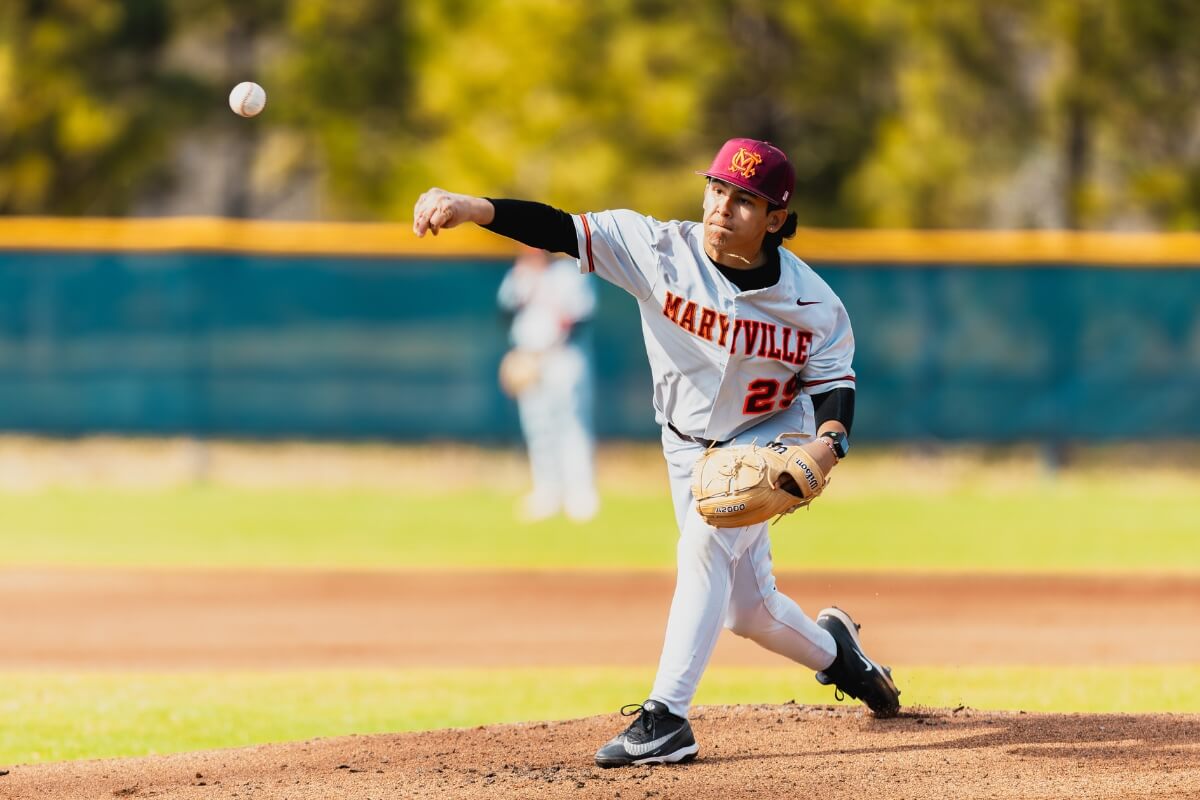
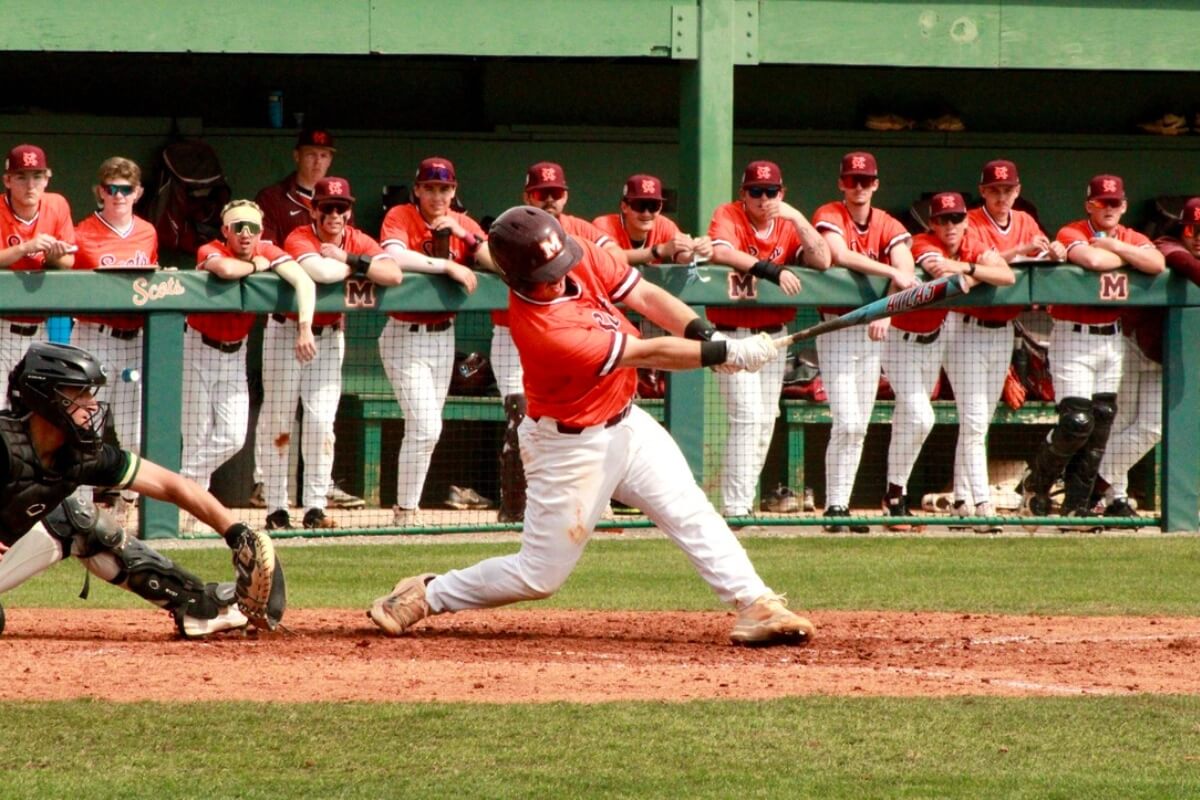
Now, as the sesquicentennial of that founding is observed, Maryville College celebrates not merely the passage of years, but the endurance of a vision. Throughout the season, the anniversary will be honored at every home game and marked by special events that proclaim, with justified pride: Maryville College baseball stands among the oldest athletic traditions in East Tennessee, and the field where the boys in orange and garnet compete remains one of the oldest continuous-use baseball diamonds in the world.
A legacy takes root
“One hundred fifty years of baseball — especially given that we believe it has been played continuously at the same site — is incredible,” says Dr. Andrew Wu, director of athletics at Maryville College. “The sport itself is not much older, and if we are right about the history of our field, it would make it the second-oldest continuous-use baseball field in the world, and the oldest in the continental United States. This is a milestone that’s been reached by fewer than 20 of the nation’s colleges and universities.
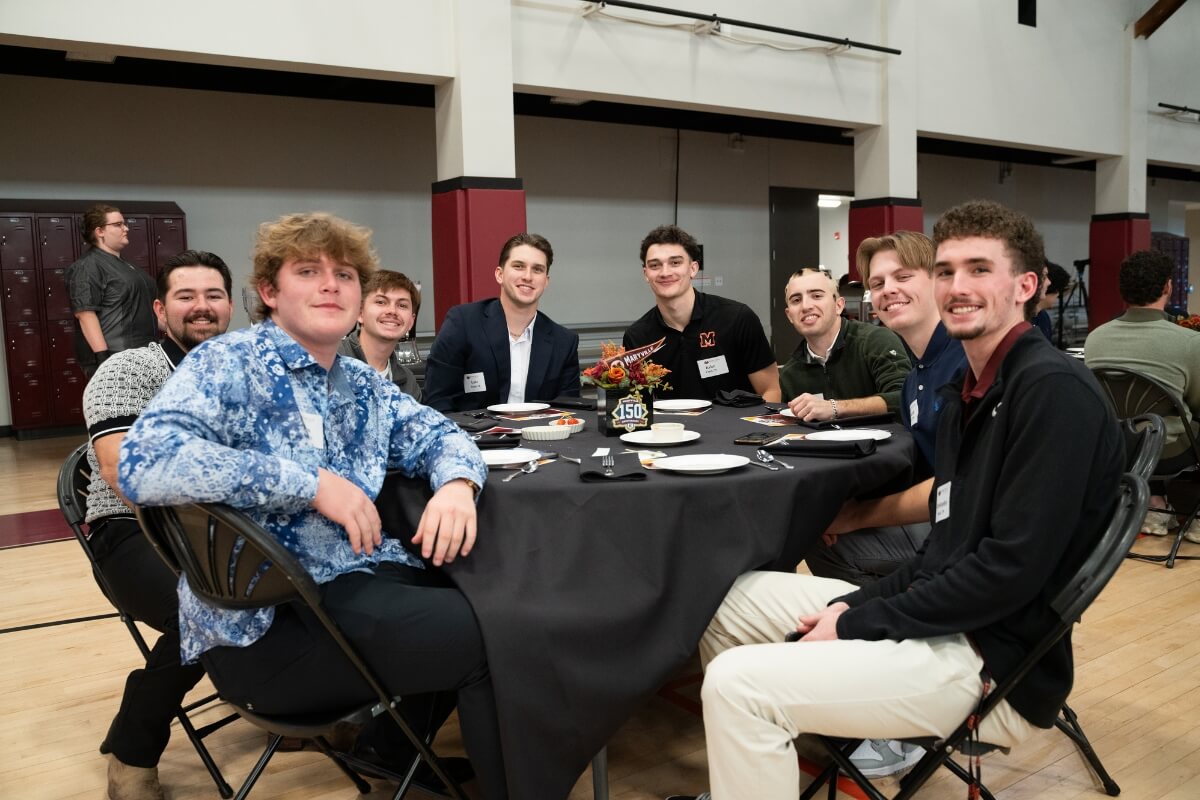
“We had a fantastic banquet on Feb. 7 celebrating 150 years, with eight decades of Maryville College baseball represented. We’ll unveil a new scoreboard in March and continue celebrating at all of our home games this year. We also hope to receive approval soon for a historical marker to be placed in front of Scotland Yard.”
Among those in attendance at the Feb. 7 “First Pitch Banquet” was Clint Helton ’11, who has spent 16 years with the program — first as a player from 2007 to 2011, then returning three years after graduation as an assistant coach. In 2019, he was elevated to head coach. Leading the team at this pivotal moment is a twofold honor, he says: in addition to the 150th anniversary, the Scots entered the season ranked first in the Collegiate Conference of the South after closing out 2025 as regular-season champions and earning a bid to the NCAA tournament.
“East Tennessee is home to me, so I am extremely grateful to be in this position,” Helton says. “As a program, our goal is to keep moving forward. As a team, we have a saying — ‘leave it better than you found it.’ To us, that’s what legacy is all about. We are part of something much bigger than ourselves and much bigger than baseball.”
That legacy began, according to Maryville College Archivist Amy Lundell ’06, on Feb. 7, 1876 — exactly 150 years before this season’s First Pitch Banquet — when a group of students “met in the dorm room of (Moore) and (Silsby) in Memorial Hall to organize a College baseball club,” she writes. Their chosen name: the Reckless Baseball Club.
Where the inspiration originated is anyone’s guess, but it’s not difficult to imagine baseball fever sweeping through East Tennessee, as it was across the nation. The sport, believed to have originated in England, evolved in the United States beginning in the 1830s, and the match recognized as the first “official” game in this country took place in 1846. Using the Knickerbocker Rules as a guide, baseball clubs formed around the country, and after the Civil War, Lundell notes, the game’s popularity exploded.
In East Tennessee, the first mention of a “base ball game” appeared in a May 1867 edition of the Knoxville Whig. By 1875, according to Paul James writing for the Inside of Knoxville website in April 2025, “baseball action extended to the university campus on what was then called College Hill, where ‘The Riverside’ (sometimes called the Knoxville Reds) team enjoyed a fine reputation.”
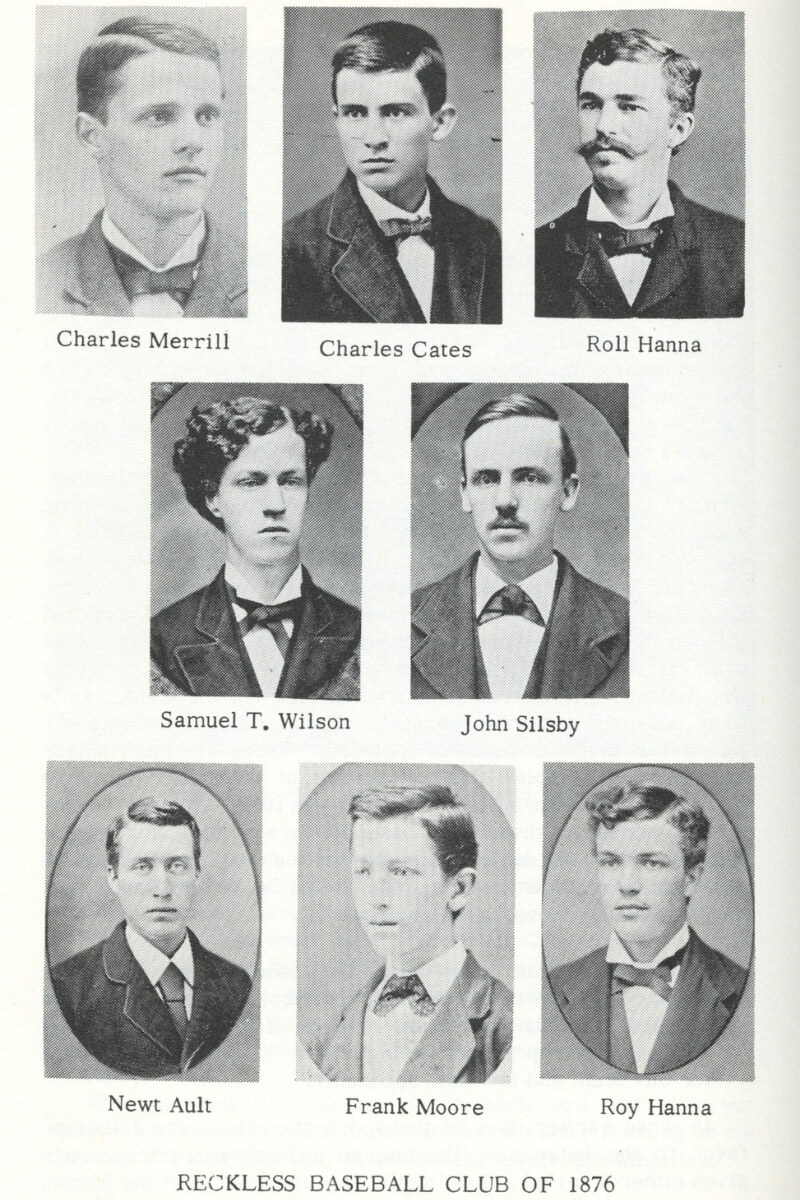
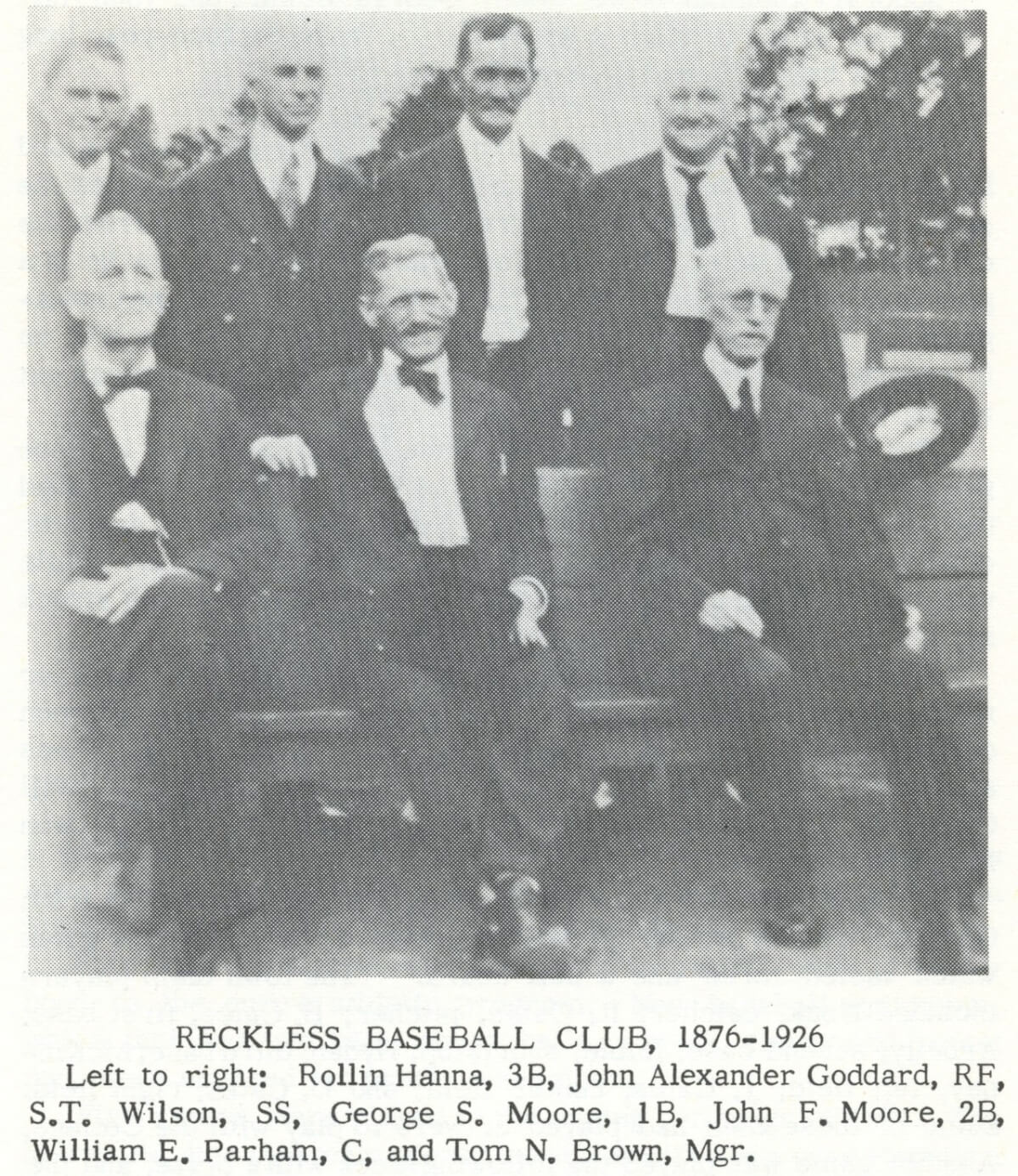
A year later, the National League was officially established as the country’s first professional baseball organization, and the boys of Reckless were eager to join the local action. The inaugural team — named by Wilson, who would later become Maryville College’s fifth president — consisted of nine players and several substitutes, ranging in age from 15 to 21: Wilson at shortstop; Moore, the captain, at third base; his brother, Frank Risdon Moore, as pitcher; first baseman John Craig Hart; catcher William Edmund Parham; left fielder George Chalmers Stewart; center fielder Samuel Anderson McCampbell; right fielder John Alexander Goddard; and second baseman John Fielding Brown (1880). Silsby substituted for McCampbell for the second game, Lundell notes, and Thomas Nelson Brown (1877) “acted as manager of the Reckless Baseball Club but played on the opposing team during intramural matches.”
(Many students enrolled in those days, Lundell adds, attended Maryville College and were active Scots, but did not graduate, hence the lack of a commencement year after their names. And given the proliferation of players named John, the players leaned into the College’s Presbyterian roots and affectionately christened Silsby as “First John,” Brown as “Second John” and Goddard as “Third John.”)
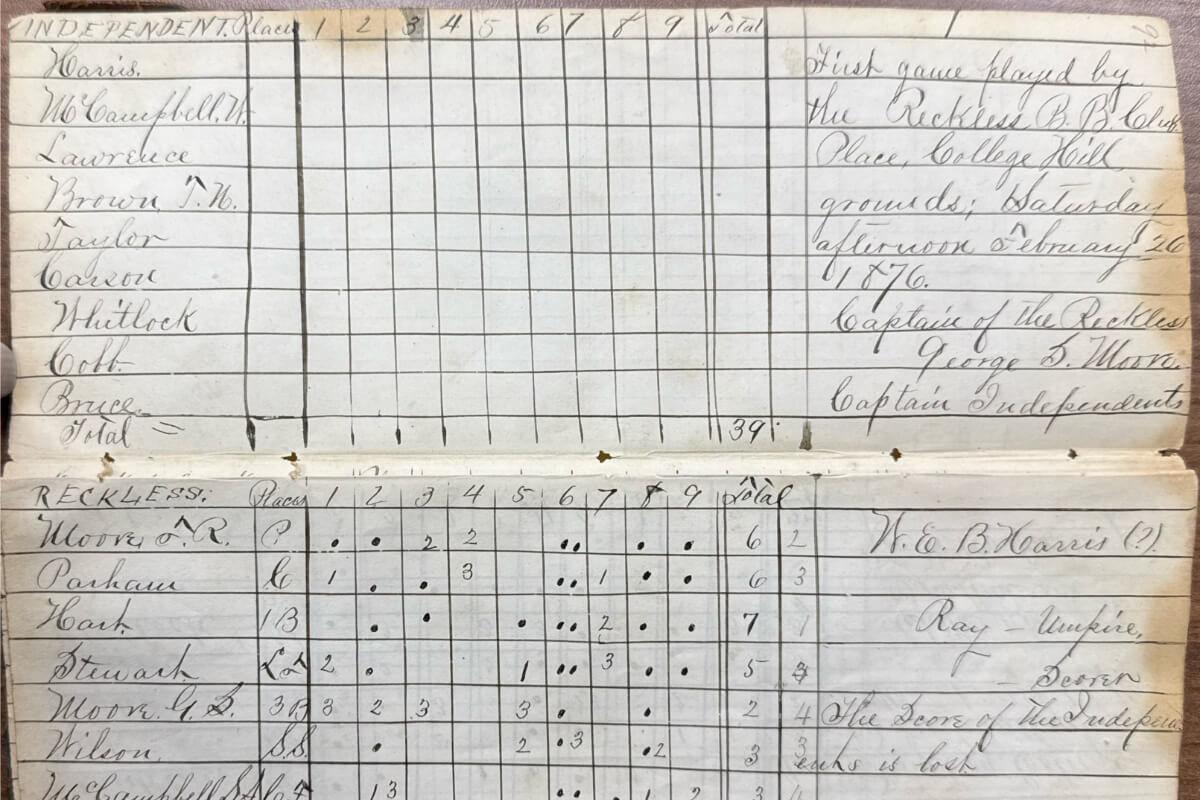
In the Archives, Lundell safeguards the minute book of the Reckless Baseball Club, which chronicles every aspect of its first two years — from housekeeping notes to scorecards. From the outset, the young men were intent on making Reckless a legitimate student organization. At their first meeting, they elected officers and appointed committees to draft a constitution and organize a schedule. The first two games were intramural contests against a team known as the Independents.
“This team was likely a group of MC students who liked to play baseball but didn’t want to be part of an official team,” Lundell says. “Five of the members of the Independents in those two games were Black students: Job Childs Lawrence, Charles Polk Whitlock, John Solomon Cobb, Samuel Martin Bruce and William Henderson Franklin (1880), who later umpired Reckless games.
“The first game ended in a 39-39 tie, and the second was a 30-27 win. Games were often high-scoring at the time because it was standard practice for the batter to call the pitch, resulting in a greater number of hits. In addition to intramural matchups, the Club played local teams such as Crooked Creek and Sweepstakes.”
That inaugural season stretched from February to October (with a break for summer), and Reckless finished 8-2, earning what Wilson described as the title of “Blount County champions.” Until 1889, he wrote, baseball was the “chief athletics on the Hill,” and one local newspaper observed that students played “baseball every afternoon on the Hill back of the College.”
That first decade, the boys of Reckless, along with their successors, competed chiefly against other campus teams and local squads, but competition was difficult to come by, and records of many of those early seasons are scarce. Interscholastic competition resumed in 1889, however, and the following year the MC Athletic Association was formed to oversee campus sports.
By 1892, college spirit and athletic enthusiasm were becoming part of the institution’s identity. In a story that year about the choosing of school colors, the creation of the College Yell and the establishment of a campus field day, a writer for the Maryville Times declared: “There can no longer be any doubt about true ‘college spirit’ existing here in Maryville. Nor is there any doubt about Maryville taking the front rank among the colleges of the South. Among the most favorable omens which point to future prosperity is the rapid growth of ‘college spirit’ and interest in athletics. The fact is now evident to all that man’s physical nature demands attention and cultivation as well as do his mental and moral natures.”
Just as it has been for teams across a century and a half, camaraderie among ballplayers proved unparalleled. In his diary, Wilson described how, upon his return to Maryville for the fall semester in 1878, “the other members of the (Reckless Baseball) Club donned their uniforms, boarded his train as soon as it stopped in town to welcome him back, and escorted him to his dorm room where they talked for hours to catch up from the summer,” Lundell recounts.
Generations of Scots carry the tradition
As the Reckless boys graduated and went on to “do good on the largest possible scale,” their successors carried those traditions forward. In 1889, player Frank McGill — a senior expected to graduate that spring — died after being struck in the head by a baseball during a game. He is buried in the Maryville College Cemetery and was posthumously awarded a degree.
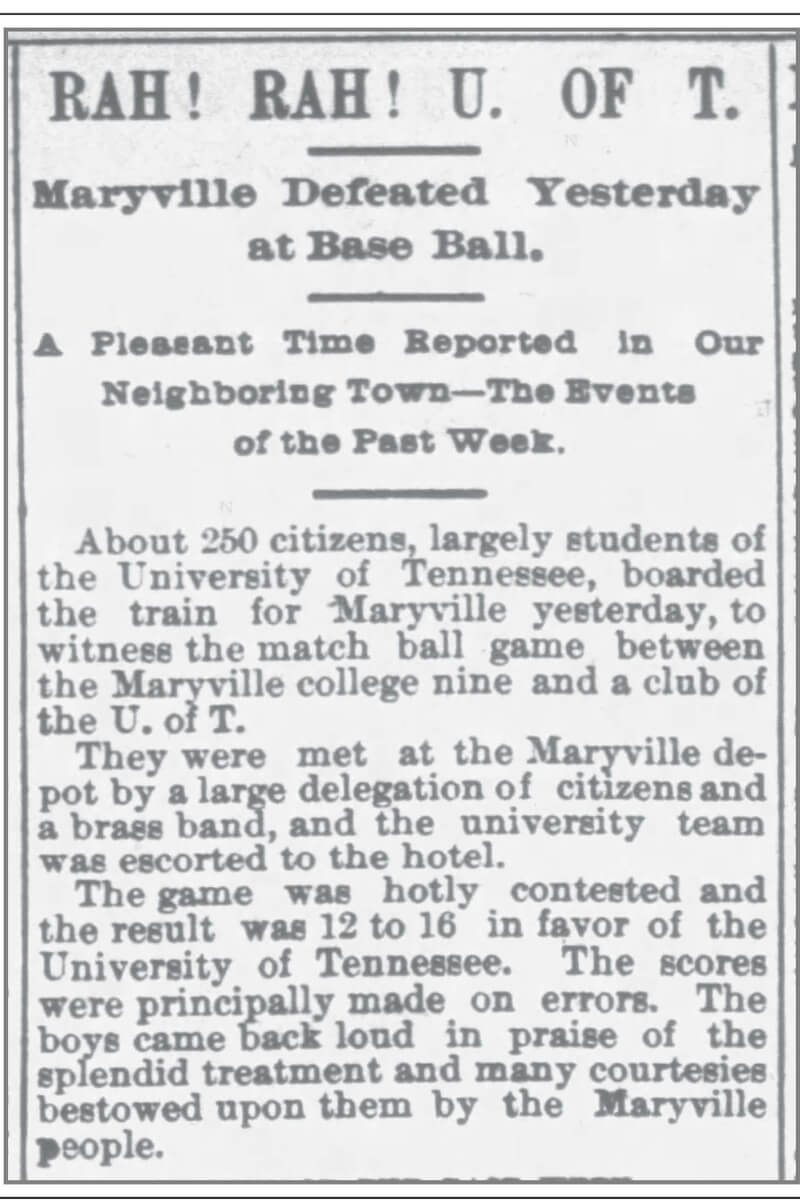
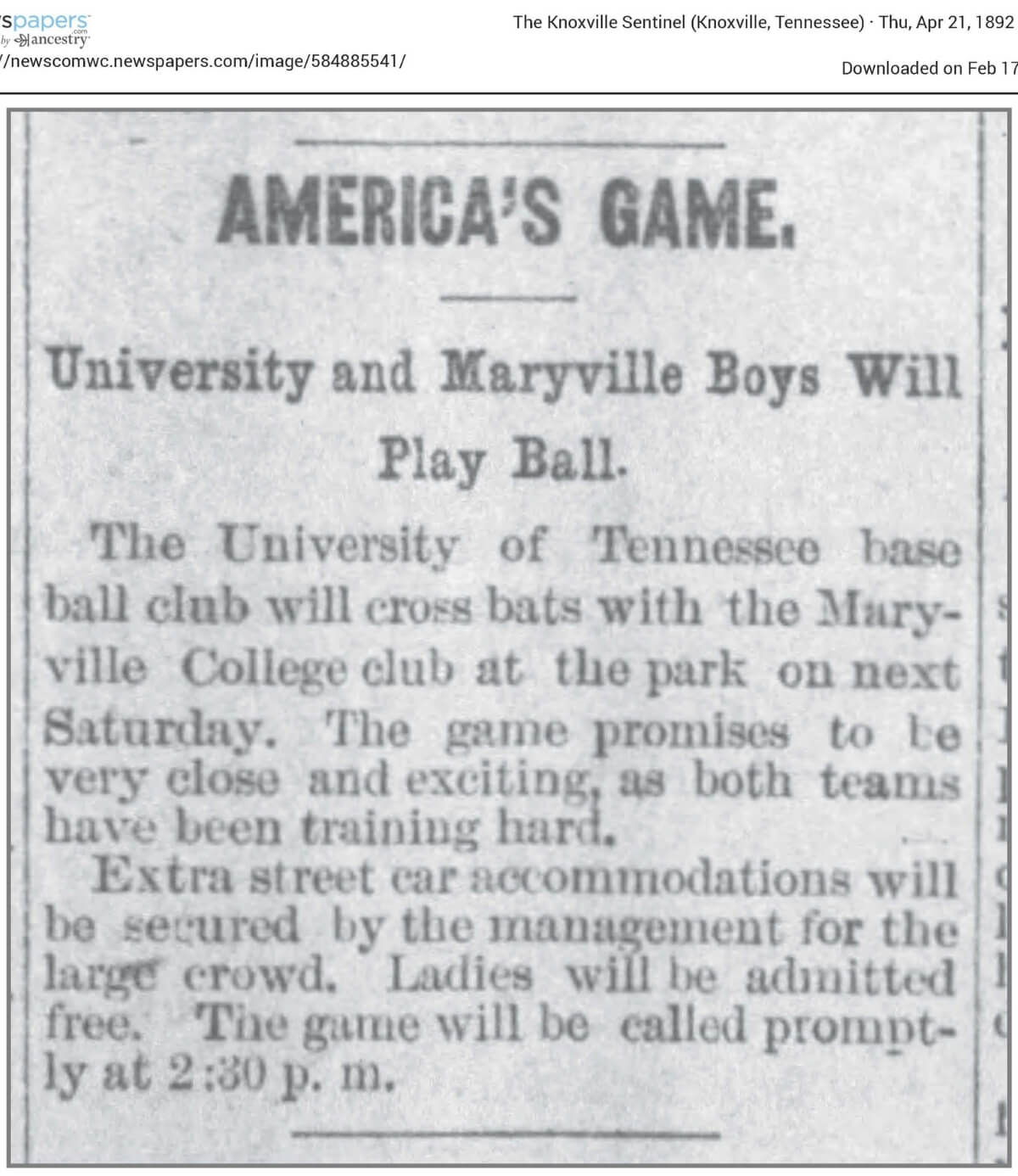
Beginning in 1892, Maryville College’s interscholastic schedule included games against the University of Tennessee-Knoxville. Although the Scots lost both contests that year, the rivalry would endure for decades.
In 1910, Oscar “Pap” Moore, a first-year student, pitched the first no-hitter in MC history. Just three years later, beginning in 1913, the Scots found themselves testing their mettle against Major League Baseball teams.
As part of their spring training schedules, the New York Giants, the Brooklyn Dodgers and the Boston Red Sox faced local college squads, including Maryville. The first such matchup came in 1913, when the Giants squared off against the Scots at Chilhowee Park in Knoxville. The professionals prevailed, 9-1, but Giants players praised their opposition as worthy competitors, and “the entire MC student body was granted a half-day off to travel to Knoxville to cheer on the team,” Lundell recounts.
The 1920s ushered in a new era of structure and leadership. Lombe Honaker arrived at MC in 1921 and went on to serve as director of athletics as well as head coach of both the baseball and football teams. In the baseball program’s earliest decades, teams had largely been student-led; the first recorded hired coach, Lundell notes, was S.A. “Diamond” Lynch in 1903, who coached baseball in the spring and football in the fall.
Talent on the field continued to grow. In 1925, first-year student John Stone ’28 helped lead the Scots to two victories over UT (12-7 and 3-2) and a 5-4 win against Ohio State. After graduation, Stone became the first Maryville College baseball player recruited by the major leagues. He went on to play 11 seasons with the Detroit Tigers and the Washington Senators, finishing his career with a .310 batting average.
While Stone was among the few Scots to sustain a lengthy major-league career, others had their moments on the professional stage. Orlie Weaver, who spent two years as a prep student (1904-06), was a pitcher for both the Chicago Cubs and the Boston Rustlers from 1910-11. Art Ruble (1921) made his Major League debut in 1927 with the Tigers. Earl Baxter Williams, who played for the Scots from 1921 to 1924 before leaving for independent league ball, spent a week with the Boston Braves in 1928. Tom Saffell ’44, injured on the football field, turned his athletic focus fully to baseball at MC and was later called up for parts of four seasons with the Pittsburgh Pirates and the Kansas City Athletics.
More recently, Nick Dean ’14 was drafted by the Los Angeles Dodgers in 2015. Still more Scots stepped down from Scotland Yard and onto minor-league and semi-professional teams across the nation, and continue to do so to this day. Some of those Scots include Chuck Yates ’98, Glen Cullop ’96 (whose claim to fame is that, as a pitcher, he gave up a home run to NBA legend Michael Jordan during Jordan’s short tenure as a minor league baseball player), Adam Rosen ’97, Mark Morales ’11, Joe Jones ’17, Anthony Rodriguez ’20, Derek Hurt ’20, Gabe Lopez ’23, Mitchell Grannan ’25 and many, many more.
And when former ball players who go on to enjoy a career in baseball even if their role isn’t on the field — such as Scott Cline ’92, recently named the NCAA’s Atlantic Coastal Conference Supervisor of Umpires; and Junior Valentine ’10, who umpired in last year’s Major League playoffs — are included in the legacy of Maryville College baseball, it’s easy to see how the program’s impact stretches far beyond the sacred grounds of Scotland Yard.
There were, of course, lean years. When the draft sent many Scots overseas to fight in World War II, there were no official MC baseball teams from 1943-45. Intramural games still took place, and Army personnel stationed on campus during the war organized their own games at Scotland Yard. Although they weren’t affiliated with the College, a number of those soldiers would go on to stellar Major League careers, including Bill “Bullfrog” Dietrich, who spent 15 years pitching for the Philadelphia Athletics, the Washington Senators and the Chicago White Sox.
The postwar decades brought both milestone victories and seasons of rebuilding. Intercollegiate ball resumed in 1946, and in 1959, Coach Honaker notched his 400th and final career win against Carson-Newman, closing a remarkable tenure on the 83rd anniversary of baseball on the Hill. A year later, Boydson Baird ’41 assumed leadership of the program. The 1960s proved uneven in the standings, though individual excellence flourished and the foundation for future success quietly took shape. By decade’s end, the Scots were rediscovering their rhythm at the plate and preparing for a breakthrough.
That breakthrough defined the 1970s. Under Baird’s steady guidance, Maryville posted seven consecutive winning seasons and earned its first NCAA National Tournament appearance in 1974. The Scots became known for disciplined offense and reliable pitching, building a competitive identity that carried the program into its second century. In 1977, first-year head coach Bill Henry propelled his 20-win squad to the NCAA Southeast Regionals, signaling that Maryville baseball intended not merely to endure, but to contend.
The 1980s were marked by flashes of brilliance amid instability. Coaching changes and roster turnover produced eight consecutive sub-.500 seasons, yet the decade was rich in individual achievement — including All-Americans and record-setting hitters who kept Scotland Yard lively even when championships proved elusive. That tension between promise and consistency would ultimately give way to renewal.
Stability returned in 1993 with the elevation of Eric Etchison ’88 to head coach, ushering in one of the most successful eras in modern program history. Competing as an NCAA Division III independent before becoming a charter member of the Great South Athletic Conference in 2000, the Scots posted multiple 20-win seasons, set school offensive records, defeated nationally ranked opponents, and captured the inaugural GSAC championship.
Back-to-back conference tournament titles in 2000 and 2001 affirmed the program’s resurgence, while victories over ranked competition reinforced Maryville’s growing regional reputation. By the time Etchison earned his 280th and final victory in 2006, his teams had compiled nine 20-win seasons and restored sustained competitiveness to Scotland Yard.
One field, one standard … then, now, always
Under Coach Daniel Washburn (2007-2011), the Scots won the GSAC title in 2007 and 2009, and after a several-year drought, Helton returned the Scots to a place of prominence with regular-season Collegiate Conference of the South (CCS) championships in 2024 and 2025, and a tournament championship trophy in 2024.
“It’s important for us to recognize the former players and coaches who have paved the way for us,” Helton says. “We focus on the daily process and how every day is our opportunity. Our goal is to continue to move our baseball program forward. By our commitment to the process and our work ethic, we hope to honor Maryville College and our baseball alumni.”
Across eras — from Honaker’s 400th triumph to conference championships and NCAA appearances — the pattern is unmistakable. Periods of rebuilding gave way to renewal; individual excellence matured into collective achievement. The names on the roster changed, the conferences shifted, and the game itself evolved, but the standard endured. At Scotland Yard, winning has never been accidental.
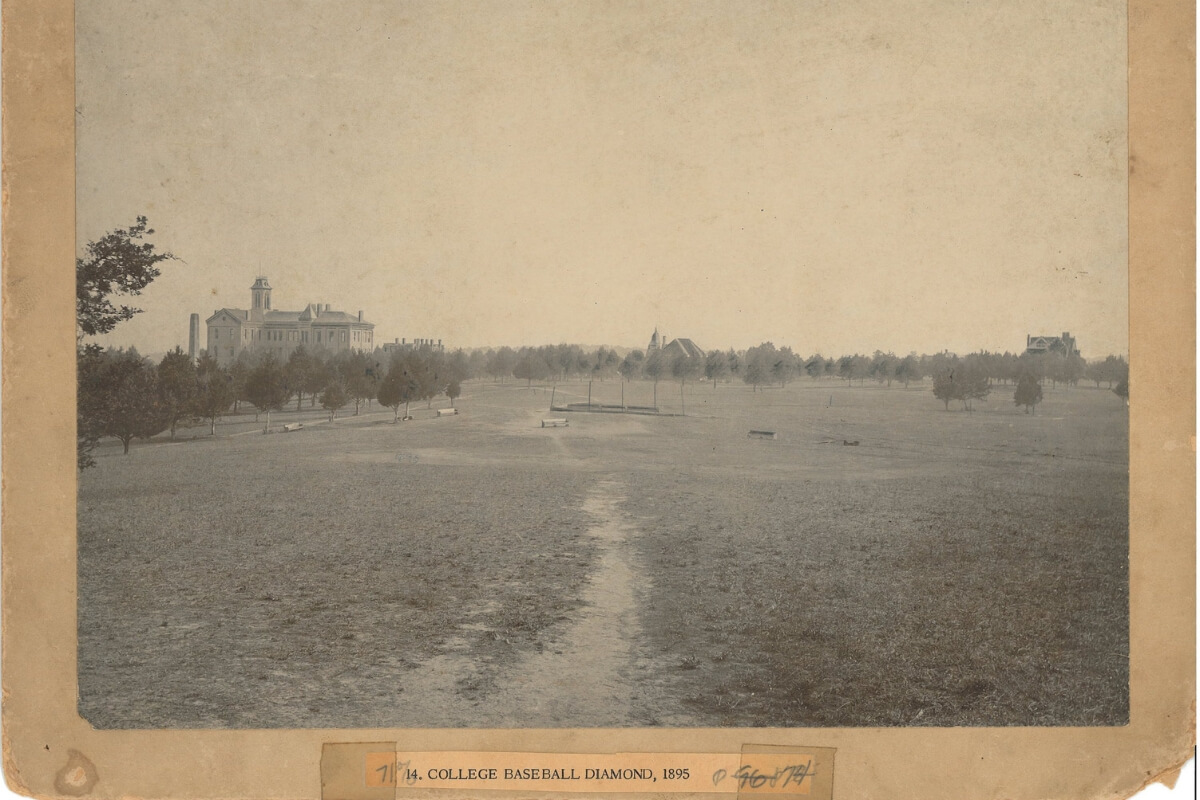
It has been cultivated — season by season, generation by generation — on the same ground first cleared by the Reckless boys nearly 150 years ago. Scorecard notes from the very first game on Feb. 26, 1876, notes that it was played “on the College Base Ball Grounds.” Based on written descriptions of the field’s location … and an 1895 photograph that predates the construction of Bartlett Hall … Lundell and others are almost certain that those grounds correspond with the current location of Scotland Yard.
“We believe that the baseball field has not moved location since its creation,” she says. “With the baseball field being in use by the College and local community consistently since 1876, we believe that it may be one of the oldest baseball fields in continuous use in the country.”
And that, Helton adds, makes every game played on it this season all the more special.
“Since 1876, Scotland Yard has been in the same location, making it one of the oldest in continuous use (fields) in the world — that in itself makes it incredibly special,” Helton says. “So many great athletes have competed on this field (including) several players who have played Major League Baseball, including players like John Stone.
“So many other great athletes who have played professional baseball, or have been named All-American, All-Region, or All-Conference. I believe when we play at Scotland Yard, we play for those who have put on the orange and garnet before us, and those who will wear it after us.”
This season, he says, feels almost sacred, especially as players and fans come to understand its historic nature, and the impressive wonder of Scotland Yard as a field where ghosts gather in the gloaming and the crack of bat against ball seems to be a year-round accompaniment to life at Maryville College. His team, Helton says, feel that more keenly than anyone else, and he wouldn’t have it any other way.
“For the last five years or so, we have been talking with our players about the history that surrounds them since 1876,” he says. “We are so blessed to be able to be a part of college baseball, but even more so for one of the oldest, continuous baseball organizations in existence.
“Our guys know how special this season is for sure, because we talk about it all the time. Our goal is to continue to keep our program to a high standard so we can pay respect to those before us and pay it forward to those coming after us.”