Maryville College silent film course an example of the way personalized teaching leads to specialized learning
April 28, 2026
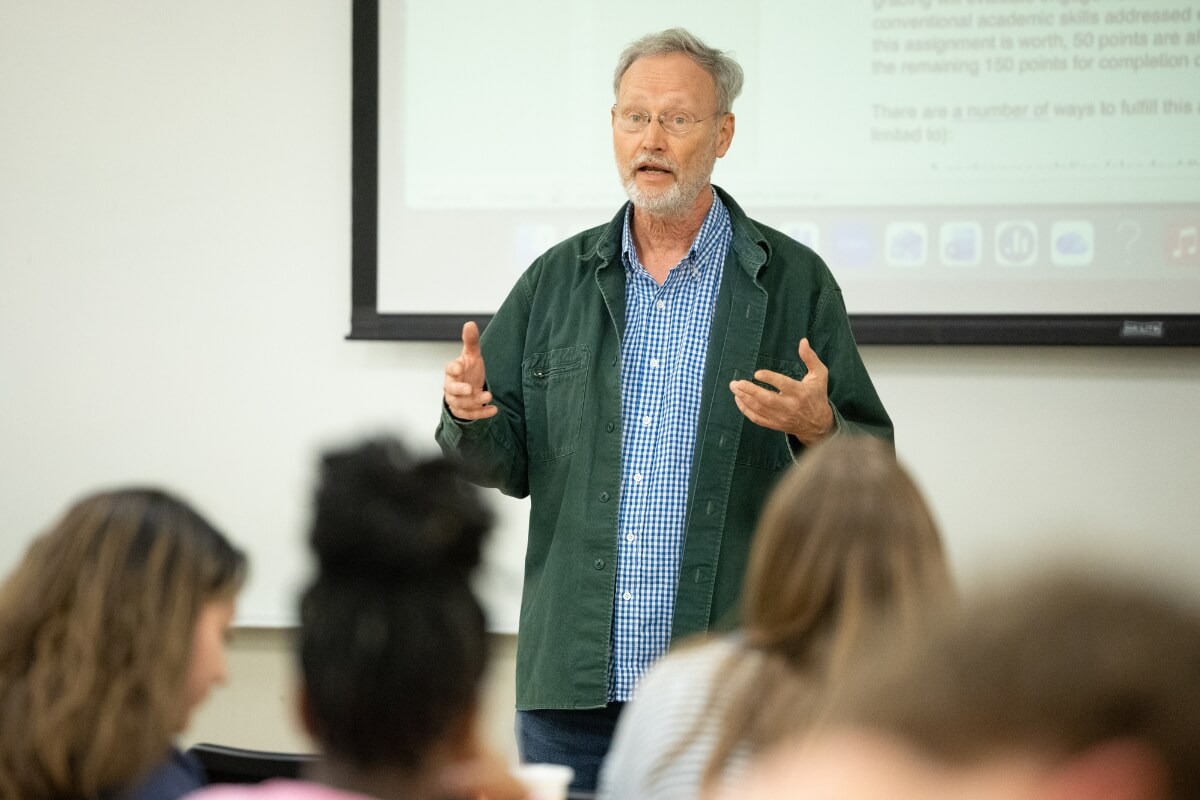
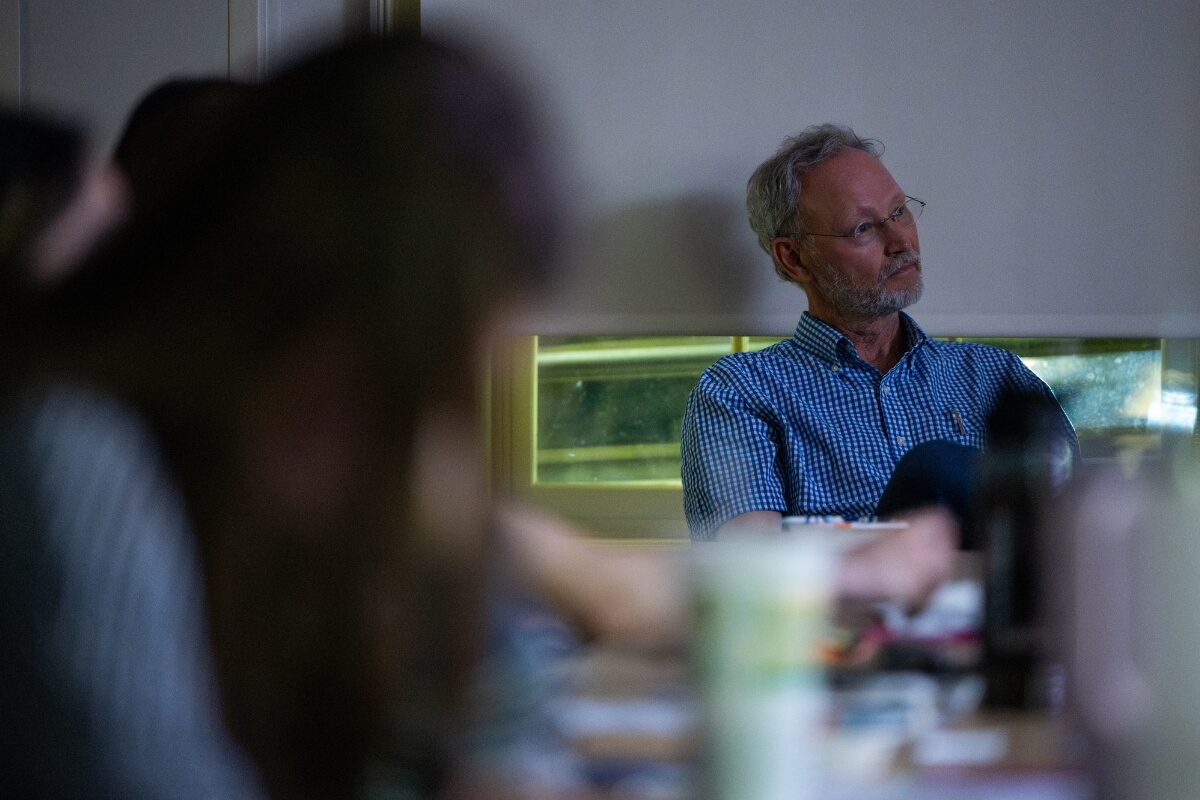
At Maryville College, students are given the opportunity to learn about a multitude of unique and invigorating topics that go above and beyond traditional academic expectations. This opportunity for unique and specific knowledge is exactly what Professor of History Dr. Dan Klingensmith has provided his students with in his spring semester history course, “The World Through Silent Film.”
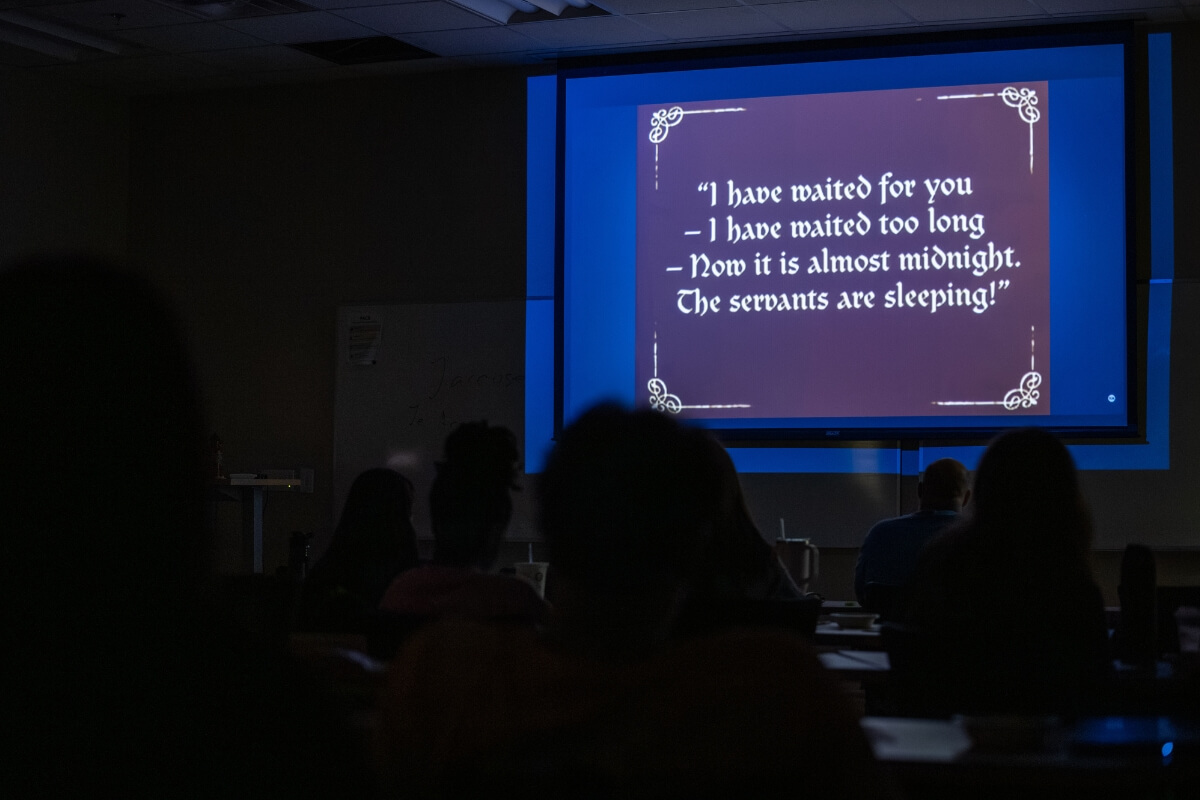
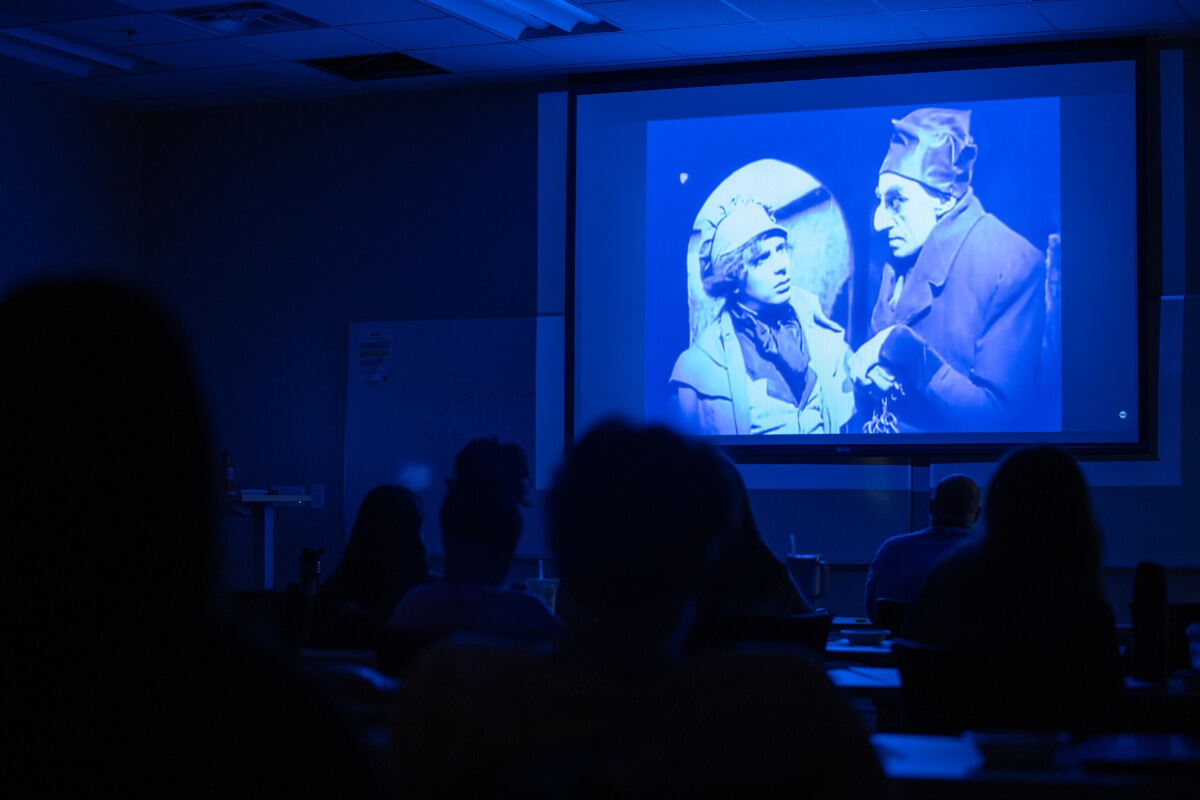
According to Klingensmith, “The World Through Silent Film” is an introduction to early 20th-century history, using movies that primarily preceded the first “talkie” — “The Jazz Singer,” which debuted in 1927 . Despite the course’s unique media, the historical reasoning credit required for all Maryville College students remains intact.
“There are other ways I could teach early 20th-century history,” said Klingensmith, who returned to the classroom in the fall of 2024 after a five-year term vice president and dean of the College. “We could read a bunch of novels; we could look at art; or we could just look at a bunch of documents. But what silent film allows us to do is look at history through what was a very new medium at the time.”
According to the students in the class, courses like this contribute to their education in ways a more traditional history class would not be able to.
“I think it offers something beyond just facts,” Allyson Parker ’26, a student enrolled in Klingensmith’s course, said. “It gives you a detailed, human narrative from the people who actually lived through those moments. History can sometimes feel distant or abstract, but watching real faces and real struggles makes the difficult parts much harder to look away from. I think that discomfort is necessary for genuine understanding and compassion.”
A sick day treat
The films Klingensmith shows do not shy away from the darker side of history. The class has watched a myriad of controversial films, such as “The Italian,” by Reginald Barker, which is about immigration, and “Where Are My Children,” by Lois Weber and Phillips Smalley, which is about abortion and the use of birth control.
Klingensmith’s own introduction to the world of silent film took place when he was a boy.
“When I was a small child, if I was too sick to go to school, my mom would allow me to watch a program that had some silent comedies, probably Charlie Chaplin or Buster Keaton comedies,” Klingensmith said. “I don’t know what it was called — she just called it ‘The Funny Man’ show.”
That early love for Chaplin and Keaton films carried over into Klingensmith’s adult life.
“It’s hard to pick just one favorite silent film,” Klingensmith said, “but right now I would say ‘Steamboat Bill, Jr., ‘ by Buster Keaton. I really love the short comedy films made by Keaton, Chaplin and Harold Lloyd, three very different comedians who were working in the late 1910s and the 1920s.”
Despite his decades-long relationship with silent film, Klingensmith is still actively studying and analyzing films, both historical and contemporary.
“I am becoming a film buff, particularly regarding silent films,” Klingensmith said. “But there are so, so many of them and just not enough hours in the day for me to be able to say that I’m really a film buff.”
According to Klingensmith, this class is a prime example of the ways Maryville College encourages its faculty members as much as it does its students, giving them a space to teach their personal interests.
“It’s one of the things that I love most about my job,” Klingensmith said. “If I want to learn something in my field, one way I can do that is by offering a course. There is nothing that helps you learn something better than being responsible for teaching it. I learn, I research and I show up to help students make sense of history.”
Example: The class, after being shown the film ‘It’— a 1927 romantic comedy starring Clara Bow — came to understand Klingensmith’s affection for silent comedies. The film quickly became a class favorite for the 24 students enrolled.
“I think it’s the most accessible film we’ve watched,” Klingensmith said. “It’s a good mix of elements that would be very familiar to us today, and other things that seem quite strange.”
Silents from all genres
But comedies aren’t all that Klingensmith teaches.
“Over the past few weeks, we’ve looked at race, gender and socioeconomic class in America through the lens of several different films, exploring the different views, tensions, debates and anxieties in the form of a story,” Klingensmith said.
Apart from “It,” some of the films that have been shown so far include “The Call of Cumberlands,” “Within Our Gates” and “The Big Parade,” which will segue into the next section of the class covering World War I.
Despite the lessons these films are teaching, the absence of dialogue can be unfamiliar to students, perhaps even eliciting discomfort. But Klingensmith has developed learning tools to get his students used to the silence.
“I tried to start with accessible films before moving into more unusual stuff,” Klingensmith said. “But it’s important to note that silent films were never silent, in that there was always musical accompaniment. I have been lucky to find a lot of films online that have good musical accompaniment.
“The best ones are the ones that use music expressly composed for the film. The music helps with the storytelling and helps keep people engaged. But yes, I think some students still find the idea of a movie with no audible dialogue to be a little alien.”
For Parker, consuming silent media has been a helpful learning experience.
“It makes me pay more attention to nonverbal communication, because silent film forces you to pay close attention to facial expressions, body language and mood shifts to infer what characters are feeling and implying rather than being told directly,” Parker said. “Also, I think it’s helpful to counteract the short-form media that most of us are consuming, like reels, TikTok, Shorts, etc. With silent film, you have to stay engaged to get the full story; I can’t just press play and walk away. I like to think it’s made me more present with the media I’m watching.”
For people interested in diving into the world of silent film, Klingensmith recommends starting with short silent comedies, such as Keaton’s “One Week,” Lloyd’s “Safety Last” and Chaplin’s “Easy Street.”
The course takes place from 7-10 p.m every Thursday, and will be offered again during the fall semester of the 2026-27 academic year.
— Written by McKenna Marr ’28