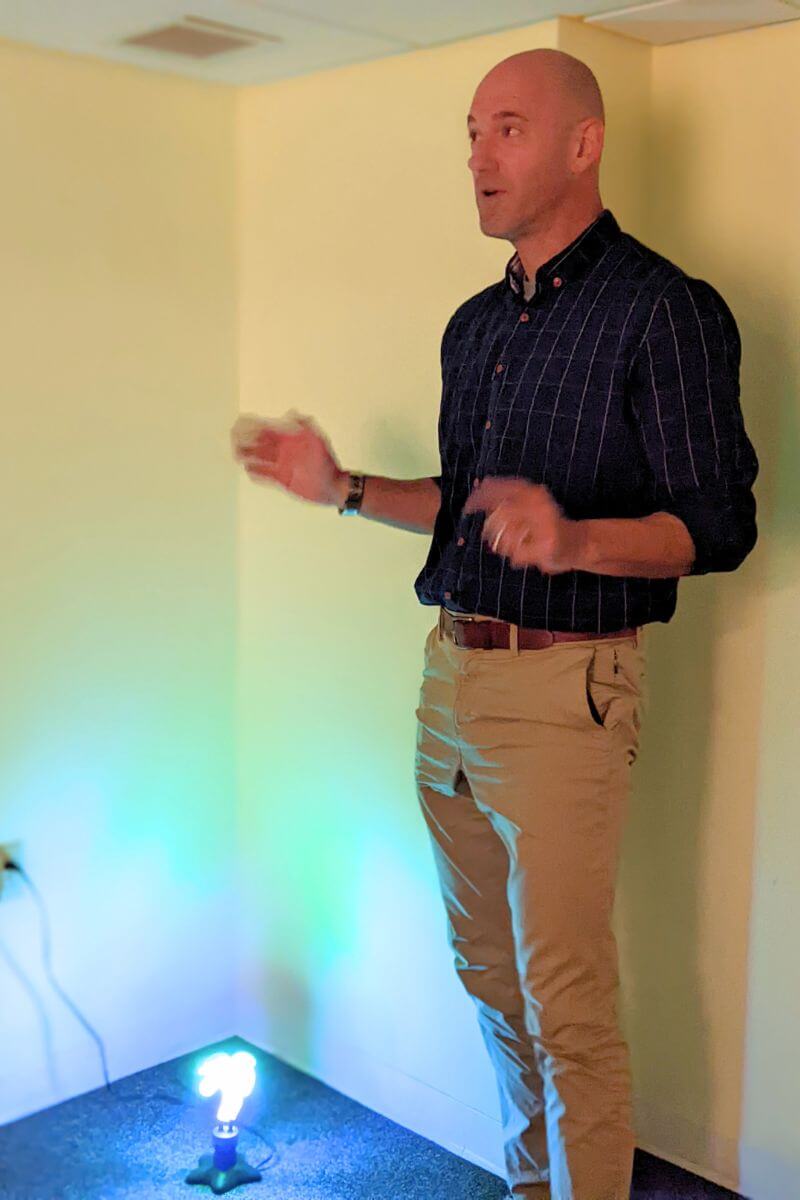
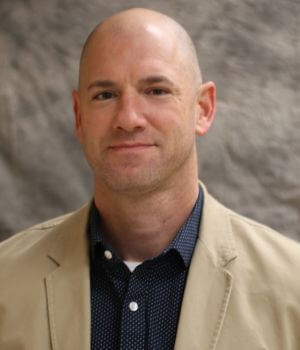
As newly promoted director of Academic Success, Noah Bowman teaches and coaches from personal experience
June 30, 2023
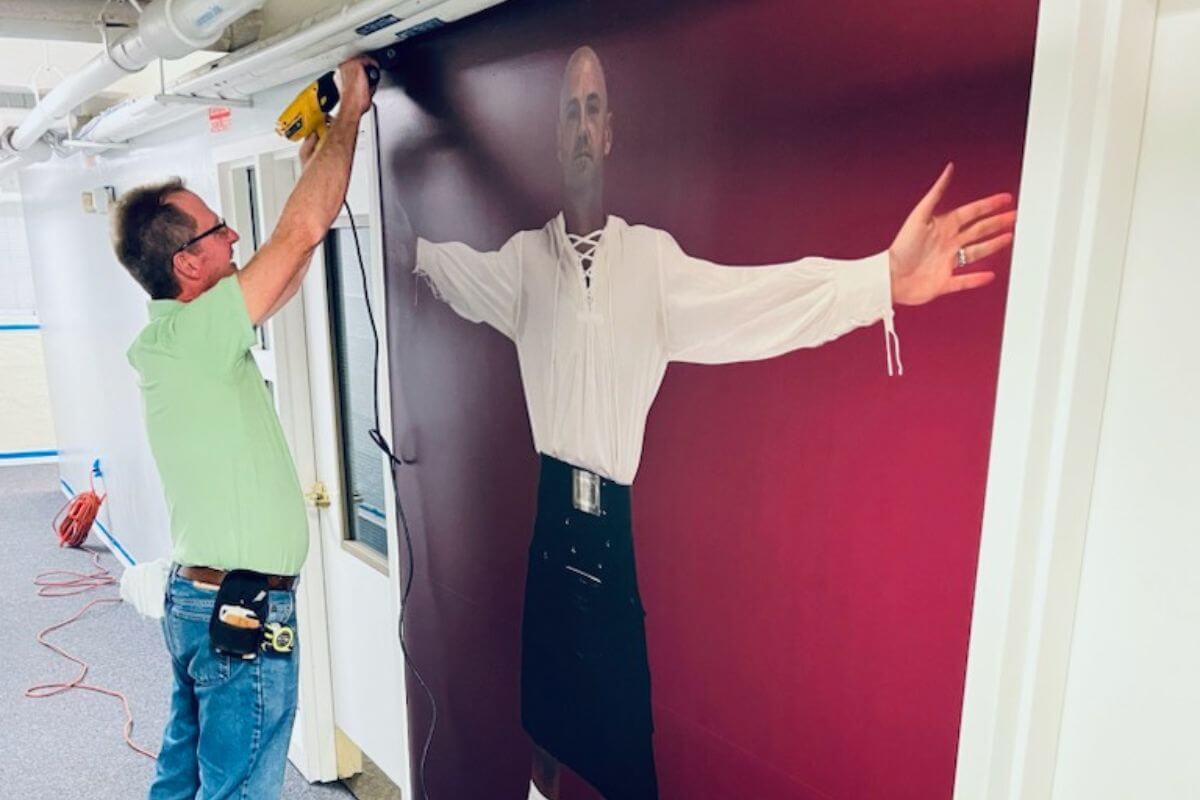
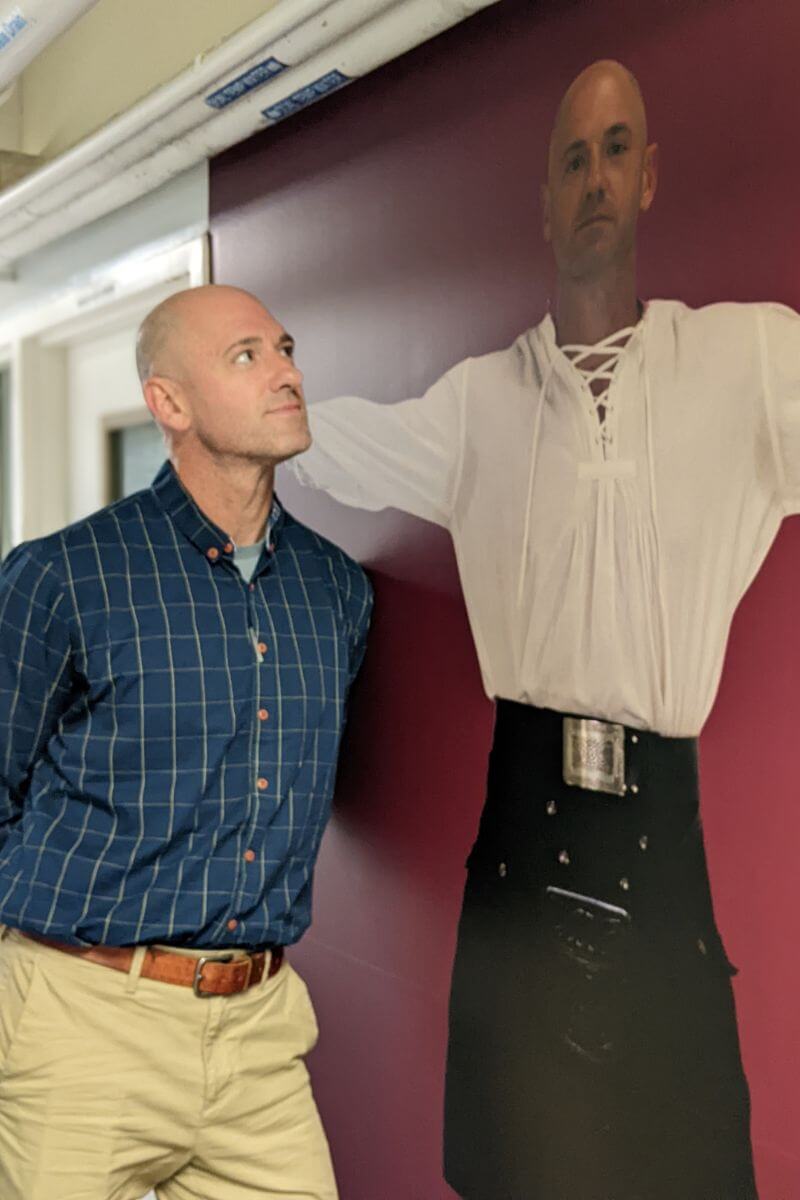
Down on the garden level of Maryville College’s Thaw Hall, there’s a larger-than-life wall mural of the new director of Academic Success, dressed in full Scottish regalia, arms spread wide.
It makes Noah Bowman cringe a little every time he walks the halls of this out-of-the-way center he’s helped transform over the past nearly 15 years into the academic oasis it is today. The painting, along with an accompanying art piece that stretches the length of the hallway, was a surprise from Maddie Taylor ’23 and other recently graduated members of the MC Student Government Association, a token of their affection for Bowman, but more importantly recognition of the enthusiasm and passion with which he so mightily advocates for struggling students.
That he’s been recently promoted from interim to permanent director makes the journey, and the results he’s accomplished along the way, even more of a blessing, he said.
“I try to bring out the best in and assume the best in everyone,” Bowman said. “I try to bring out their strengths and address their weaknesses. Academic Support was a very small program when I started, and I’ve held five positions in this program over the past almost 15 years. My first position was a brand new one, academic support specialist, in which I was brought in to work with a lot of marginalized high-risk students. And from there, it just began to grow as I began to build programming.”
Self-made academic success
Bowman’s passion for elevating the academic success of students who struggle is a direct reflection of his own experiences. His mother, he said, moved frequently during his upbringing, often in the middle of the school year. As a result, he never developed scholastic roots until high school, and even then, he barely managed to get a diploma.
“If it weren’t for English and art courses, I would not have graduated. As it was, I couldn’t get into any actual four-year universities with my grades,” he said. “So I went the route of getting my associate’s degree first, at Santa Fe Community College (in Gainesville, Florida), and that was the hardest degree of all my degrees. That one was the toughest, because I had to become an actual student and hold myself accountable.”
It took him three years, in fact, to earn his associate’s, after which he transferred to the University of Central Florida. There, the tools necessary to succeed fell into place, and despite the lack of academic support, he found himself tapping into the exceptionalism he firmly believes lies within every college student.
“For the first time, I was achieving on an academic level, making the dean’s list and getting all sorts of awards and things,” he said.
After graduating with a degree in English language and literature, he landed a teaching position at the Orlando Marine Institute, a level-two juvenile offender program where he found his niche working with at-risk young people.
“I was working with court-ordered juvenile offenders in small classrooms, and I was creating a curriculum that involved a lot of behavior management in addition to academics, and over the next three years, we were winning all sorts of awards and accolades,” he said. “I was connecting with the students who were retaining information and were receptive to learning, and it was a really powerful experience.”
While there, he met the woman who would become his wife — Dr. Alayne Bowman, vice president of Admissions & Financial Aid at Maryville College. After a sojourn to South Florida where he served as director of operations for another level-two program, the Palm Beach Marine Institute, the couple moved to East Tennessee, a change of scenery that led both to MC.
A Scot inspired
While his wife made her College debut in the Office of Admissions, Bowman went to work in the corporate world, a successful move but one that left him ultimately unfulfilled. An opportunity to enroll at MC to obtain his teacher’s license led to his introduction to Dr. Lee Davis, a former member of the Division of Languages and Literature faculty.
“He was teaching linguistics, and we just connected. I started to run programs with him, because he understood that there were students that needed more help than they were getting,” Bowman said.
Bowman credits Davis with narrowing the scope of his own ambition and helping him find his MC calling. The mentor-mentee relationship between the two men, Bowman realized, could be applicable to the College’s small academic support operation, which at the time was becoming outpaced by an increase in student enrollment. The value he found in his relationship with Davis, he understood, could make a bigger impact on students struggling to make academic connections during the transition from high school to higher ed, and so he set out to implement a form of positive peer modeling when College administrators offered him a full-time position.
“At the time, Academic Support was combined with Disability Services, so I took an entry-level job as an academic support specialist, because this is where I wanted to be,” he said. “I was in this small office in Bartlett Hall, and I didn’t even have a desk, but I had a caseload.”
In the beginning, there were roughly 10 to 15 conditionally admitted students whose struggles weren’t intellectual, he pointed out. Every one at the time, and every student he’s helped mentor since then, could keep up with the academic standards set forth in the Maryville College curriculum with the right set of tools and a softer landing into higher education than he and so many others have.
“Some aren’t emotionally ready to take on what is required to be successful in college,” he said. “I wasn’t emotionally ready. Sometimes it takes a summer, and sometimes it takes real-life experiences, but I think the program we’ve built here, if they apply it and work with an individual academic mentor or academic coach and put in the time. can work for all of them.”
And so Bowman began to transform Maryville College’s academic support model from the inside. In 2011, he was named academic support coordinator, and four years later as the assistant director for Learning Services. In 2022, he was tapped as the interim director of Academic Support, and by that time, the program had moved to the bottom floor of Thaw Hall, and a robust set of parameters had led to a sea change in the College’s approach to academic support, as well as the culture of the program itself.
That transformation became a part of Bowman’s own continuing education: In 2014, he obtained his master’s degree in education from Goddard College, applying his MC experiences toward his thesis, which was titled “Academically Supporting the First Year College Student-Athlete Identified as Underprepared.”
“My goal, as a guy coming from a place of privilege, is to earn students’ trust, to help them realize a paradigm shift so that they realize that the quicker they trust this process and this program, the more likely they’re going to be able to survive,” he said. “Some students are ready to accept it and buy into it on day one. Some take a semester, some take a year, and others contact me three or four or five years later after they couldn’t make it and tell me, ‘I get it now. I get what you were trying to do.’
“And I always tell them, it doesn’t matter how many times you get knocked down. What matters is how many times you get back up. And at Maryville College, we don’t want to lower our standards, but we’ve got to be flexible with them.”
Noah Bowman forges academic weapons
Along the way, he’s earned buy-in from faculty, staff and administrators who understand the old adage that a rising tide lifts all boats. He helped launched the Cooper Success Center for Student-Athletes, along with other areas where students can receive academic coaching in specific areas such as mathematics or the humanities. He’s cultivated a legacy class of student mentors who work in the Academic Success Center as part of their scholarship requirements, and along the way that assignment has helped blur the lines between MC students on both ends of the academic spectrum.
More than anything else, he works to meet those who utilize the center’s services wherever they are, offering guidance and support through the vision of someone who understands through personal experience the challenges they face.
“For example, I run an evening guided study hall, meaning that we’re not just sending a bunch of students punitively into a room and saying, ‘Hey, study for three hours because you’ve got bad grades,’” he said. “That doesn’t work. It didn’t work with me, so this guided study hall is something I created right off the bat when I first started here. It’s interactive; it’s not silent, and peppered throughout the entire class or space are high-achieving mentors who, if they’re not helping anybody, are modeling academic success.
“They’re showing students what it looks like to be successful at the Maryville College level, because Maryville College is uniquely rigorous. This place would have chewed me up with the mindset I had when I was seeking my undergraduate degree, but with the help we can provide, anybody can make it here, if they have what it takes to sustain good academic habits. My message is that if you have a plan that you follow, if you’re working with an individual academic mentor, if you’re coachable, if you’re working at this full-time and utilizing the resources that are available to you, then the sky’s the limit.”
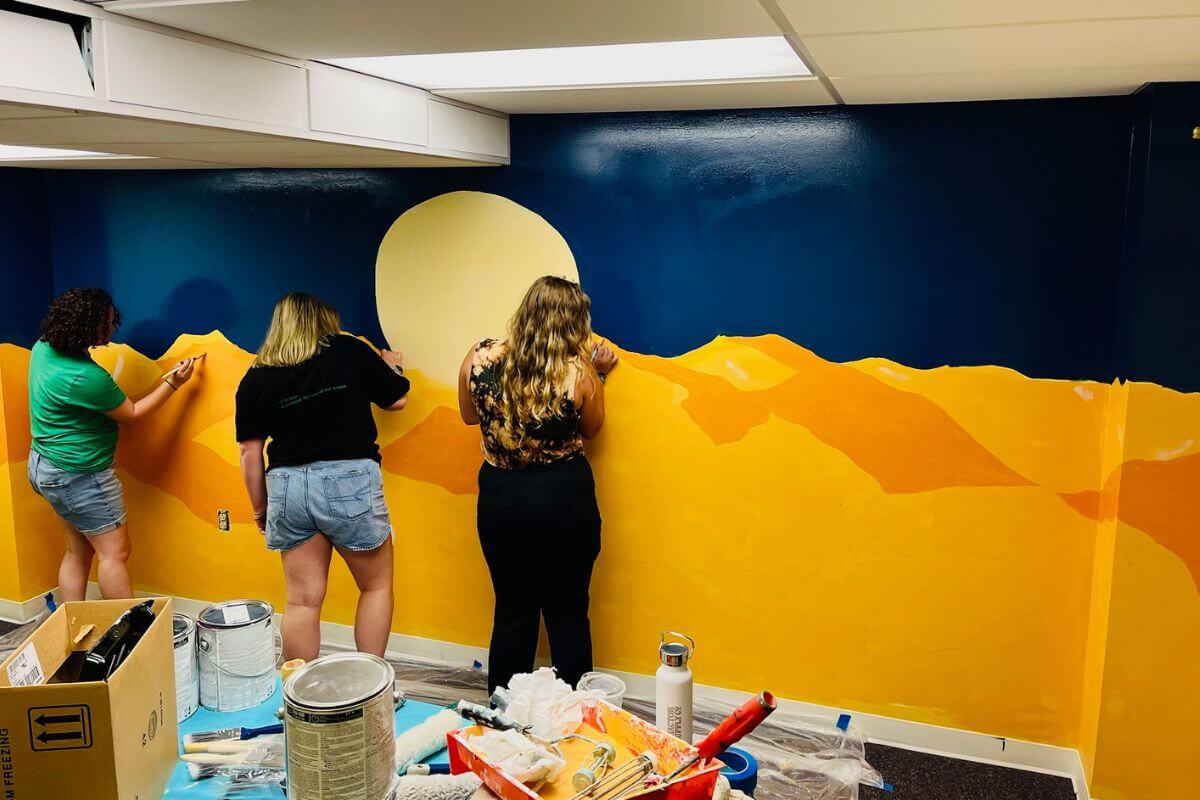
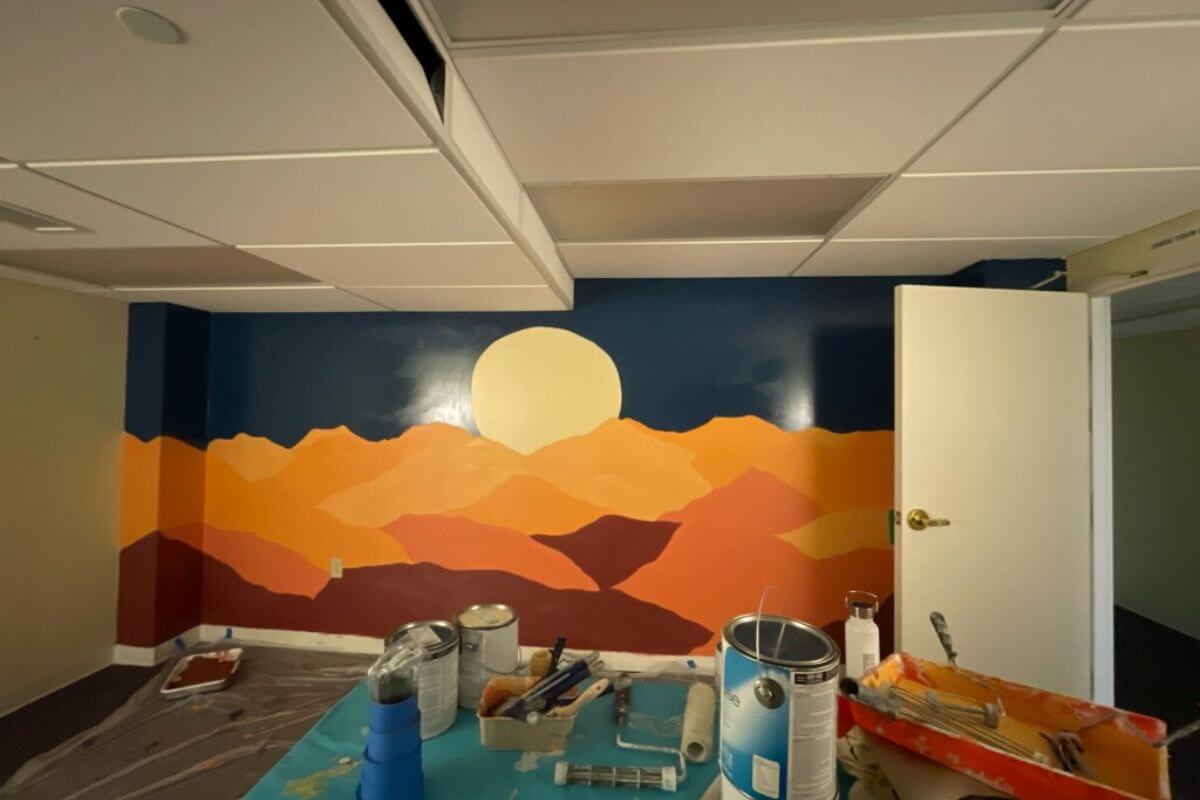
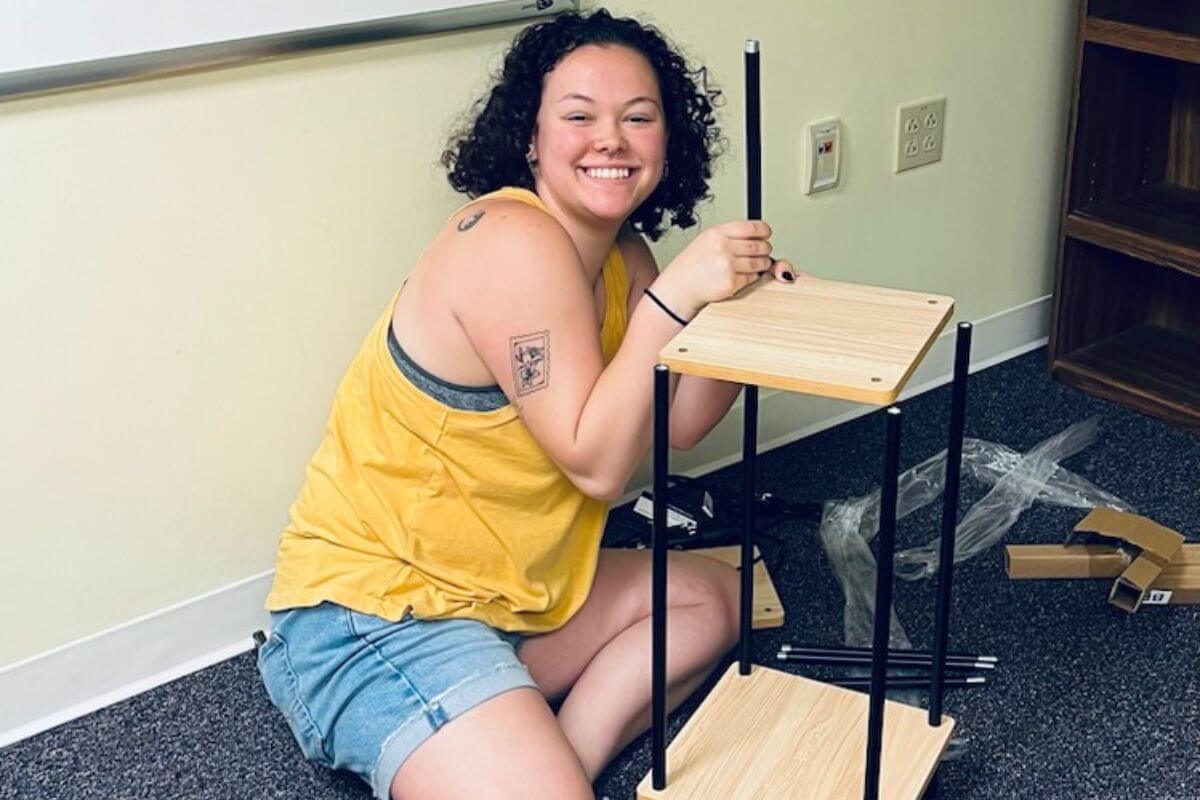
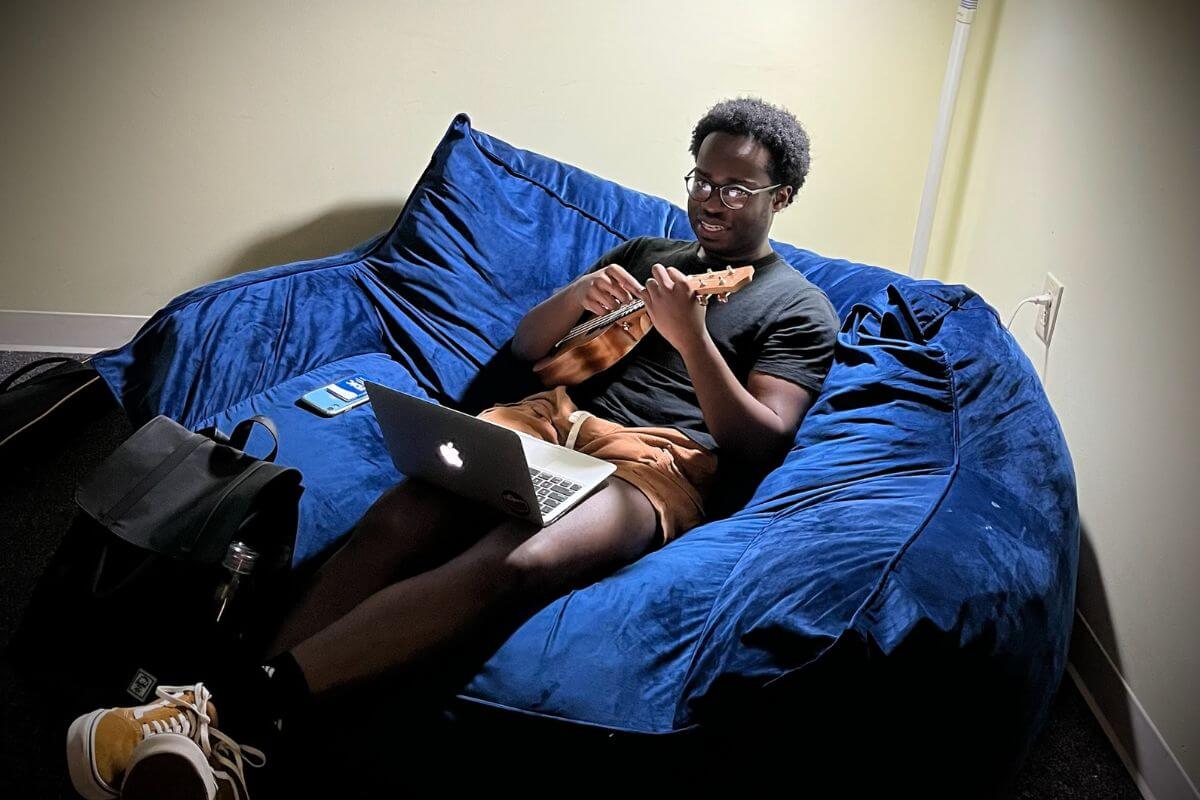
As the newly named director of Academic Support, those resources, he added, will continue to grow in scope and size. Last spring, newly elected Student Government Association President Kelton Bloxham ’24 helped initiate funding for the first wave of improvements in the center after crafting a bill in 2022 to purchase bean bag chairs and a sofa to maximize student comfort. Over the summer, September Wilson ’24 is working to turn one of the rooms in the center into a sensory study room, where overstimulated students can go to escape outside distractions and focus on their studies. Its origin, Bowman added, is solely the result of always remaining teachable.
“I remember a bunch of the students were in a room like this, studying with the lights off, and my initial reaction was, ‘What are they doing? They can’t study like that!’” he said. “But they were! They were thriving! And that made me realize, what do I know? Who am I to tell them, ‘No, you have to study with the lights on in a traditional classroom setting!’
“The whole idea of the Academic Success Center is to meet these students where they’re at. I want this to be not just a place to work on academics, but a safe place. A place to hang. A place to build community. That’s it — that’s the calling. That’s what fills my cup and keeps me happy, working with students like this. I say it all the time: The best thing about my job is working with these students.”