‘Angels in America’: An MC Theatre senior’s final project becomes an emotional look at similarities between past and present
March 25, 2025

A botched government response to a deadly epidemic. A marginalized community afraid for its future. The growing-ever-closer connections between religion and the state. The hypocrisy of the ruling elite.
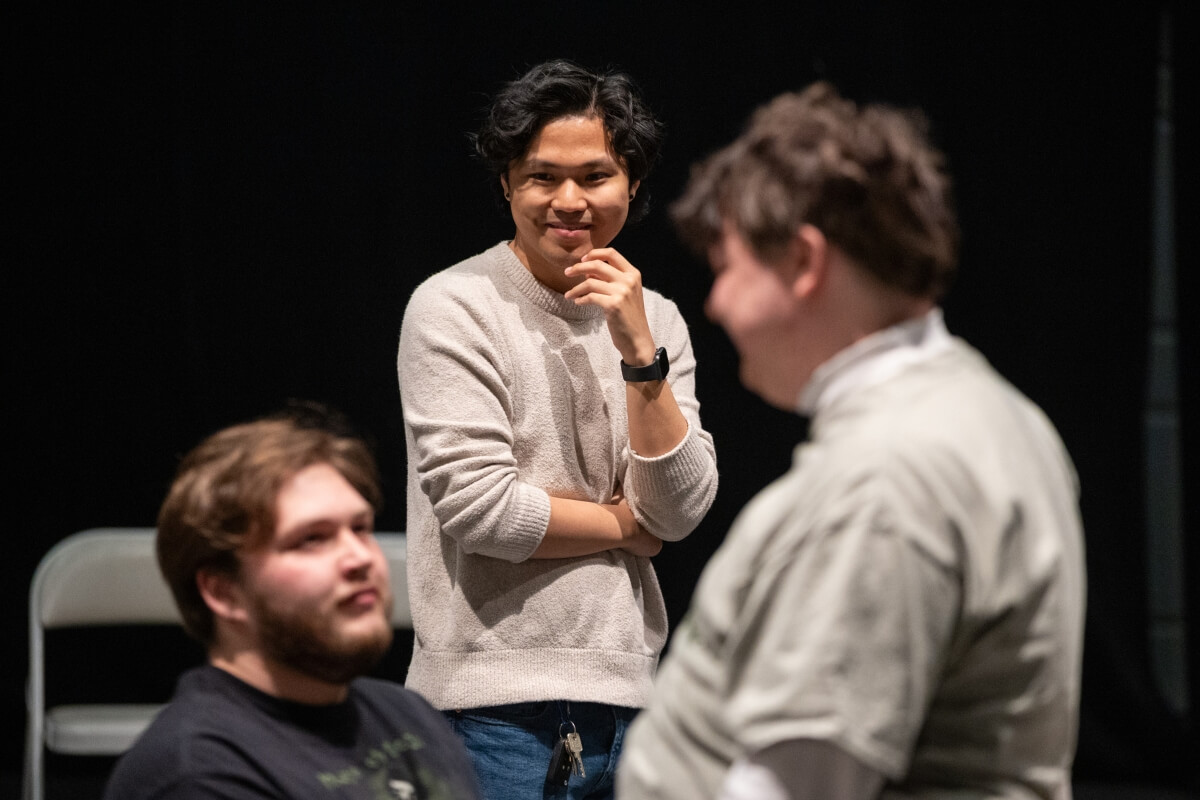
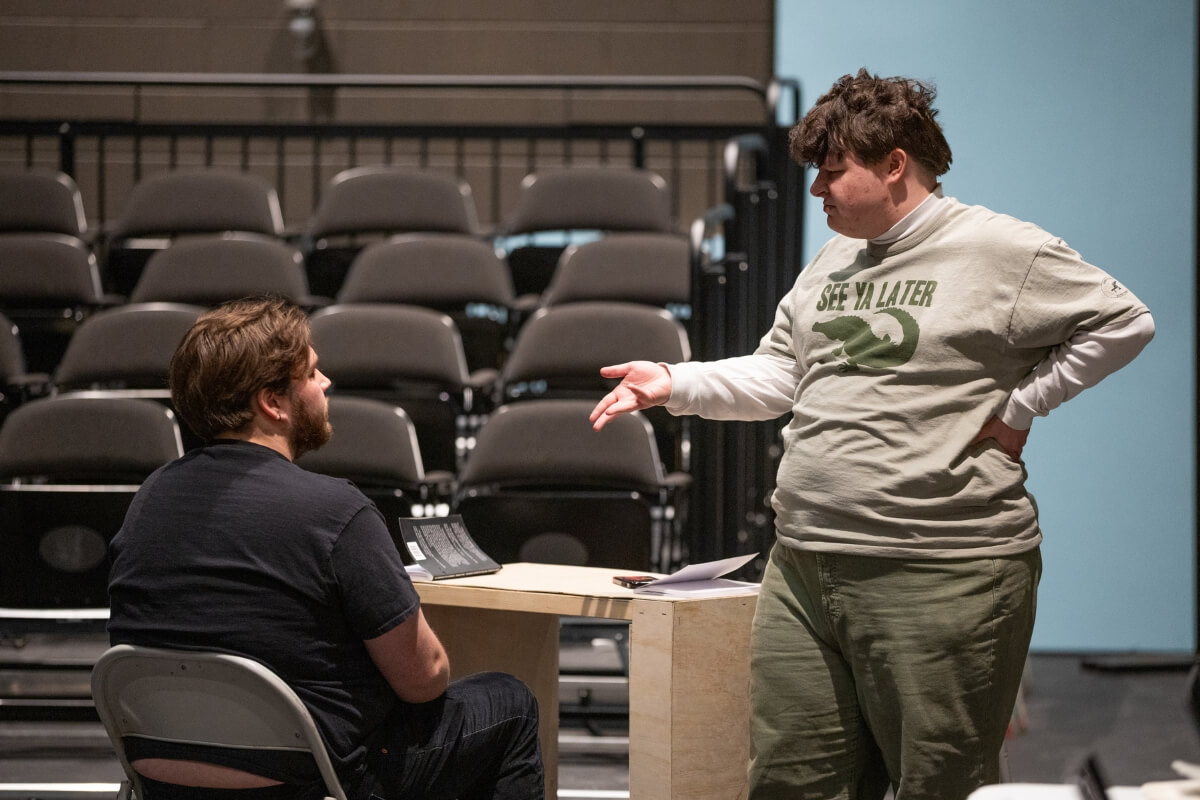
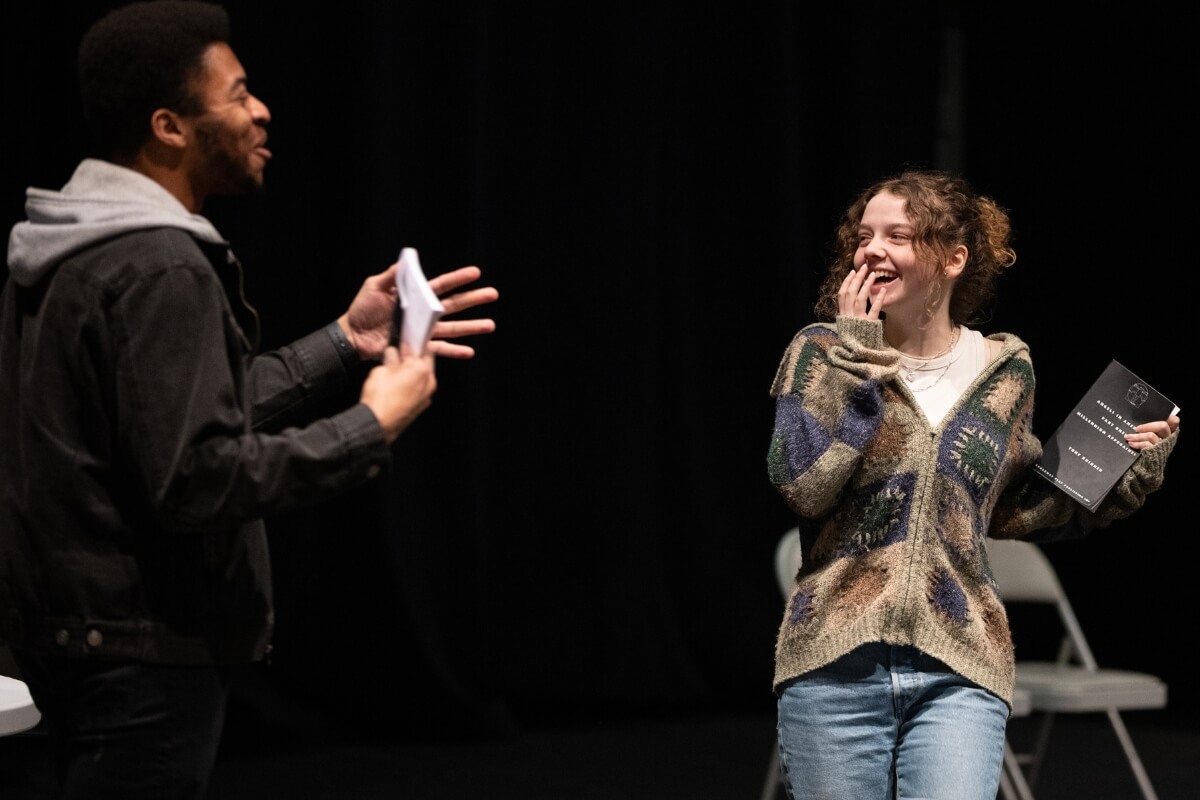
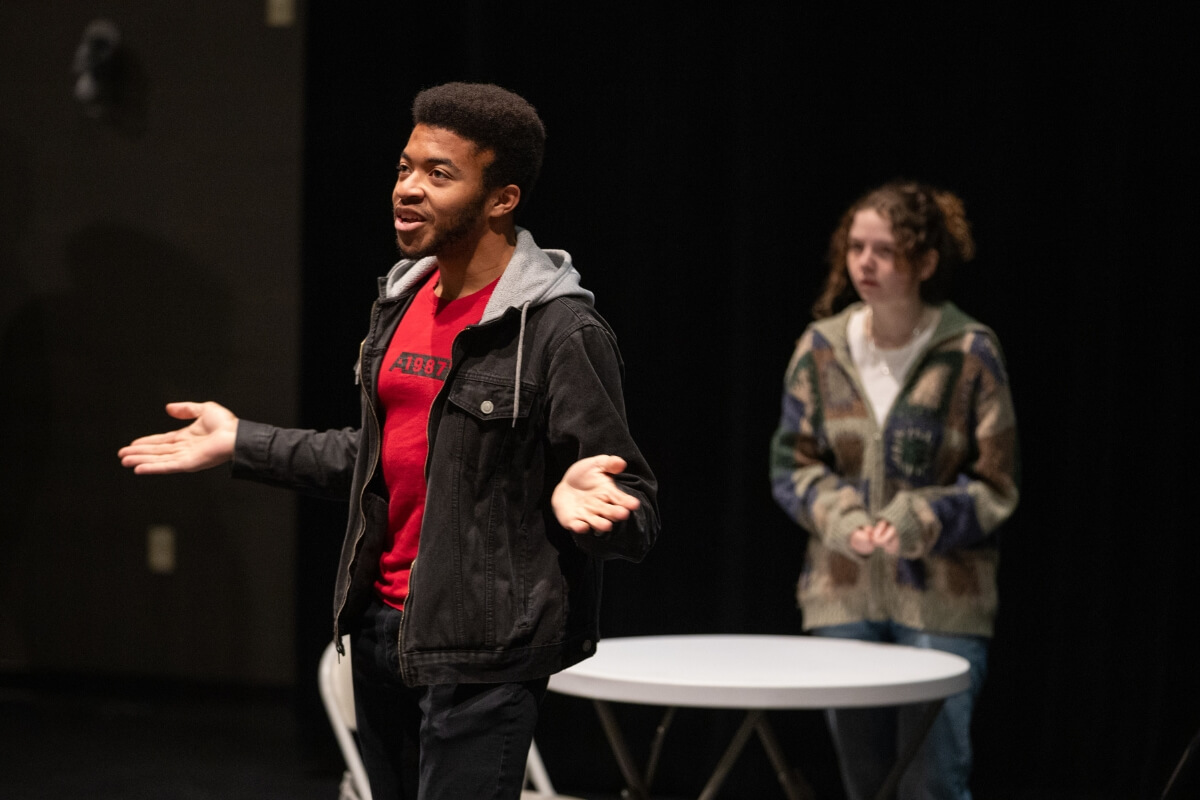
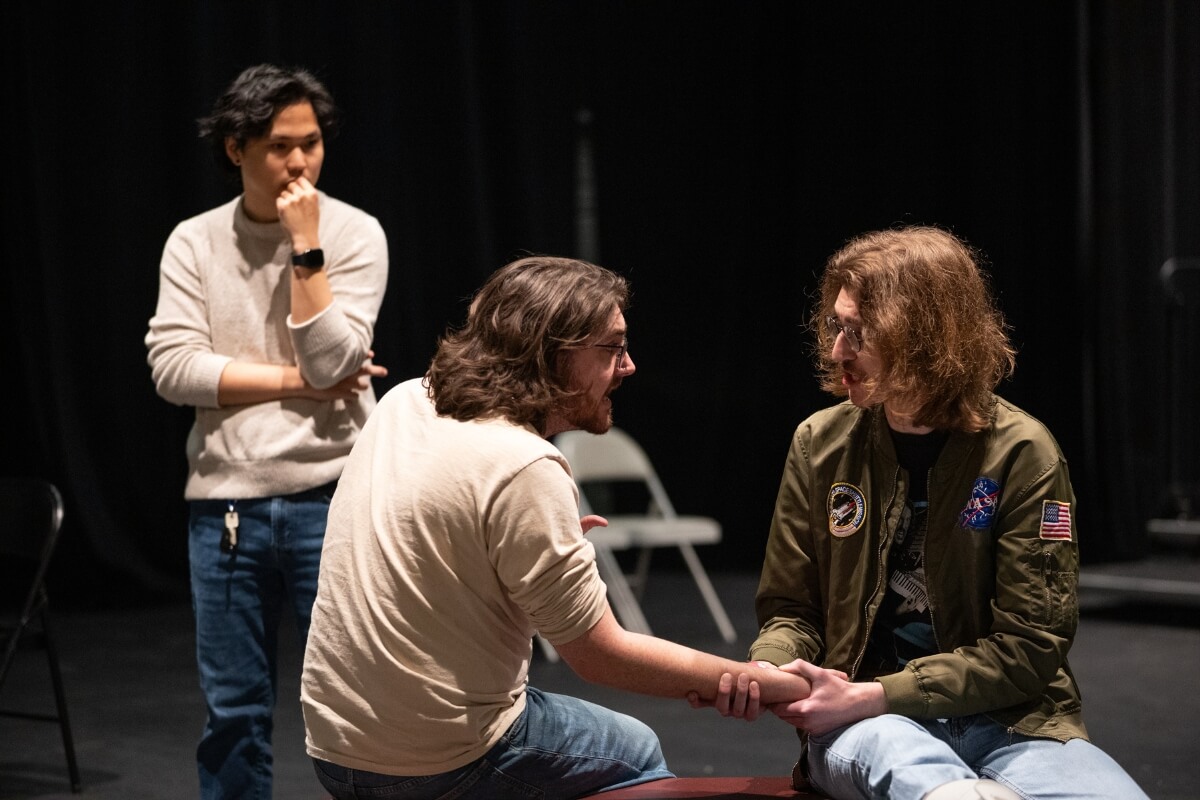
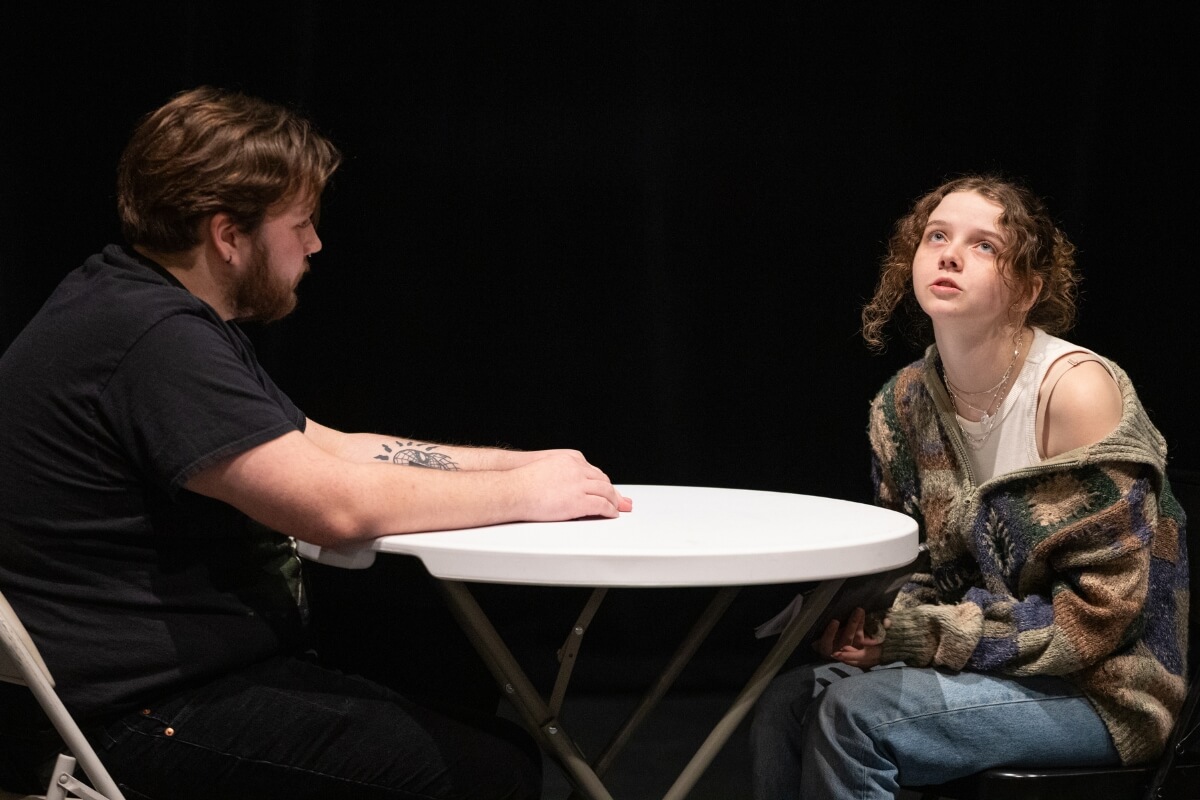
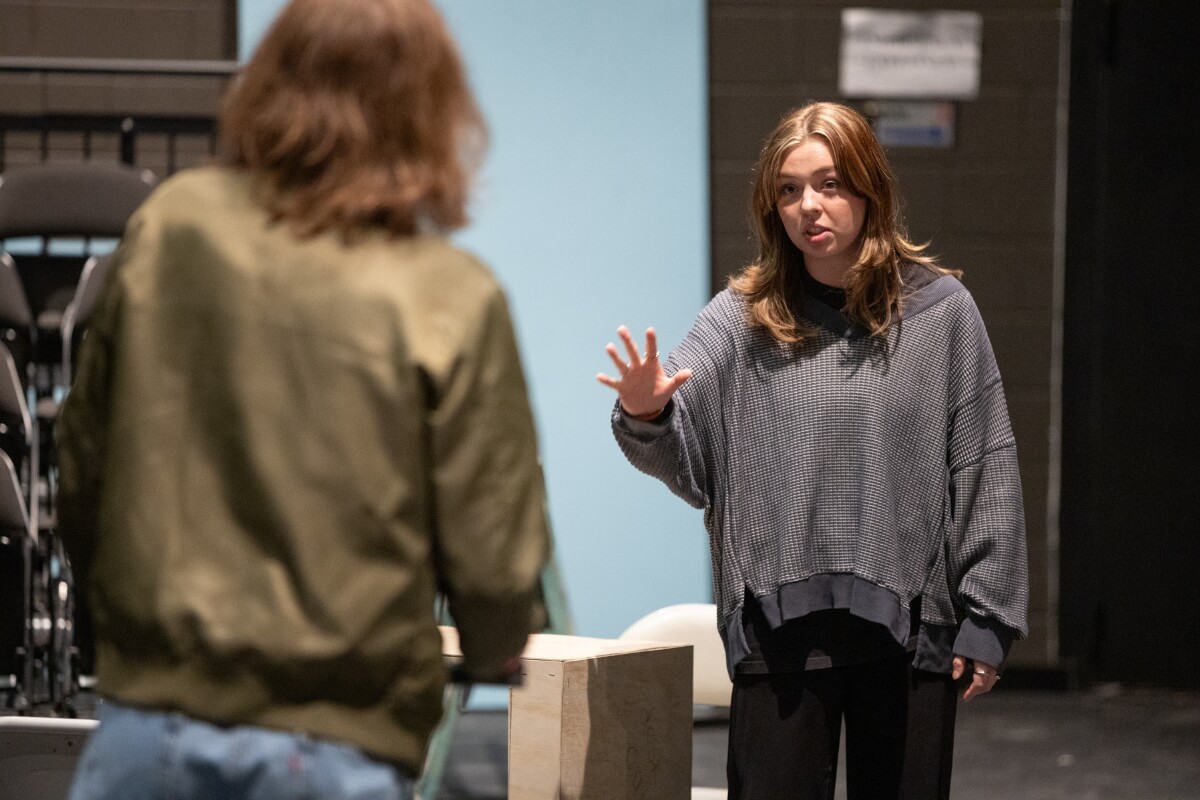
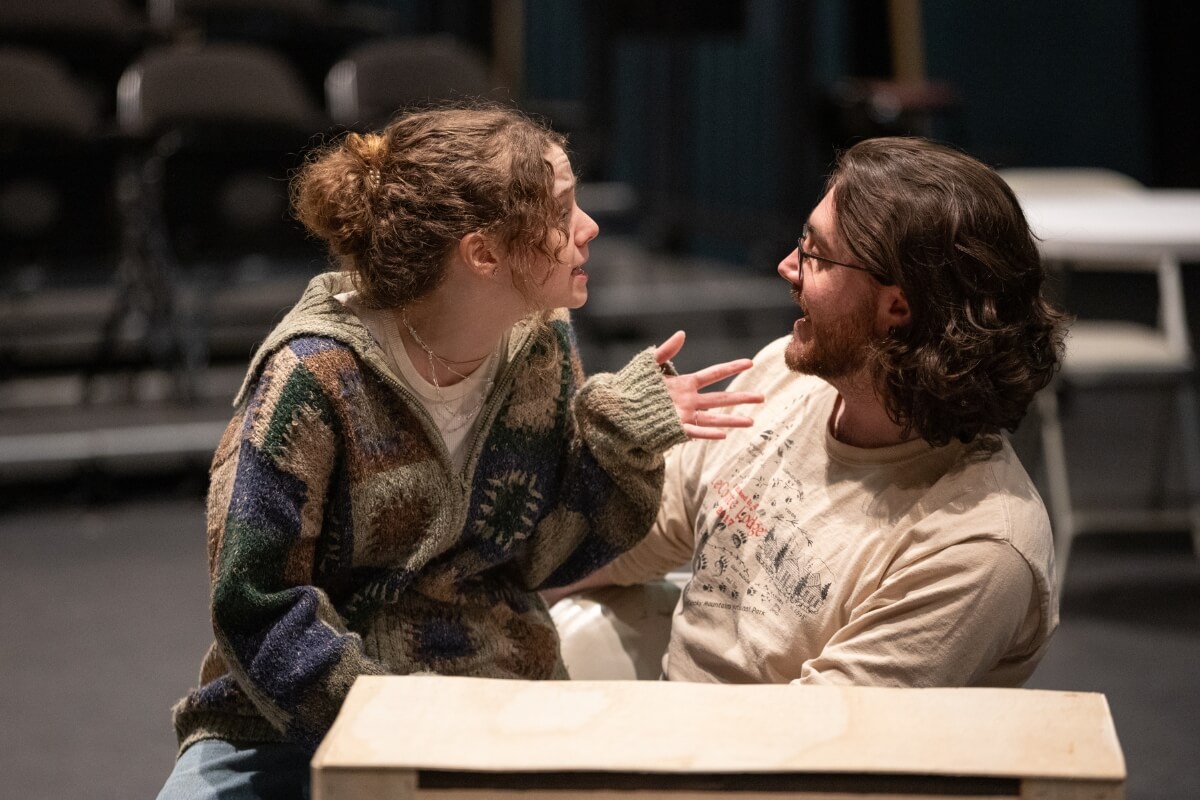
For Maryville College senior Andrew Hastings ’25, a Theatre Studies major who’s directing “Angels in America” as part of his senior thesis — an endeavor that’s also the Senior Study work for several of his peers — those concerns aren’t just contemporary. They’re identical, almost, to life during the AIDS epidemic during the Reagan era 40 years ago, which is exactly why the play coming up April 10-13 at the Clayton Center for the Arts feels so painfully relevant.
“It’s been 25 years since the beginning of the new millennium, over 40 since the onset of the AIDS epidemic, and it seems the world is just as chaotic as it was back then,” Hastings said. “So much has stayed the same, it seems — the political turmoil, the fear of viruses, and even the search for hope in uncertain times. This play often reminds us that history is not linear, and that change is slow, painful and requires immense courage.
“We cannot, though, cling onto this idea of a distant good past. It can seem easy to stay with comfortable familiarity, but just as the 1980s and the 2020s have taught all of us, we have to change, we have to forge ahead — the world only spins forward.”
Originally a single play in two parts, “Angels in America” was written by Tony Kushner as a metaphorical and symbolic exploration of AIDS and LGBTQ culture in the 1980s. Populated by characters whose paths cross in unexpected ways, it includes real-life characters (like Roy Cohn, a prosecutor during the “Red Scare” of the 1950s who died of AIDS after denying it and his sexuality) and supernatural ones, and it would go on to win the Pulitzer Prize for Drama, the Tony Award for Best Play, and the Drama Desk Award for Outstanding Play. It’s been called “a turning point in the history of gay drama, the history of American drama, and of American literary culture,” and Hastings first became aware of it during his role in “The Laramie Project,” produced by the Maryville College Theatre Department in the fall of 2023.
“In the play, it was described as this taboo production that was super explicit, dealt with LGBTQ themes, and was one of the main conflicts for the character Jedadiah Schultz,” Hastings said. “This immediately captured my attention and stuck with me. The next semester in my Acting II class, I was partnered to do a scene study of one of the scenes from ‘Angels In America’ with my friend and classmate, Meredith Wynn ‘26.
“In preparation for this scene, I had finally decided to read ‘Millennium Approaches’ (part one of ‘Angels in America’) and was immediately captured by the struggle of all of these characters and how it directly spoke out against the inequalities of the time. The play deals a lot with the themes of expression in the Reagan presidency and the ineptitude of the administration during the AIDS epidemic. I was immediately able to see the parallels between their time and now. The show had an immediate need to be heard, and I was hooked.”
Eerie parallels brought to life
Much has been written about the Reagan administration’s response to the AIDS epidemic, including the facts that the president never mentioned the disease publicly until 1987 (after 21,000 deaths), even though it was first identified in 1981, and that in 1985 and ’86, his administration’s proposed federal budget to combat the virus was smaller than that of the City of San Francisco’s. The play addresses those shortcomings through the agonizing health spiral of the character Prior Walter, a gay man who is eventually heralded as a holy emissary.
While the story continues in the second half of “Angels in America” — titled “Perestroika” — the two aren’t required to be performed together, Hastings pointed out.
“‘Millennium Approaches’ runs about 3 1/2 hours, while ‘Perestroika’ runs about 4 1/2, so it would have been very difficult to find actors and audiences who would be willing to commit to an eight-hour play,” he said. “Given that, I had to choose which part of the play to do. ‘Millennium Approaches’ explored how our relationships crumble in dark times, and how the decisions being made at the top affect ordinary people, all while being an hour shorter — so the answer was clear.
“I want to make it clear, though, that while this is part of a bigger work, it still is not simply part one of the story. ‘Millennium Approaches’ and ‘Perestroika’ are stories in and of themselves, providing different answers to the themes explored.”
And “Millennium Approaches,” he added, gives him plenty of room as the director to move the various components of the play into positions that will illuminate a narrative he feels is critically important to contemporary audiences.
“I had known for a long time that I wanted to direct for my senior thesis, but I wasn’t exactly sure what my artistic voice was at the time or what play to even do,” he said. “I knew, though, whatever I was going to direct needed to speak about the time that we live in. I was really inspired by ‘The Laramie Project’ and knew I wanted to engage the community the same way that production did. I brought a few plays to my thesis advisor, (Visiting Lecturer of Theatre) Andy Vaught, in the spring of 2024 and included ‘Angels in America’ as a sort-of throw, not expecting him to give it the green light.
“The show has a reputation and can be extremely hard for colleges to produce, from not only a social aspect, but a technical standpoint as well. Fortunately, Andy loves to push his students to produce art that inspires them, so he said he would support it every step of the way. I brought the play to some other students, and once they were on board, we decided to produce the play through Alpha Psi Omega, the theater honors society at Maryville College.”
Scots who are collaborating with Hastings on the production, and making their work part of their own Senior Study — a project in one’s chosen degree field, conducted under the guidance of a faculty supervisor, that encourages research and practical experience using the liberal arts approach that’s built into the MC curriculum — include Emi Tippens ’25, who serves as the dramaturg, or literary advisor, on the production and is conducting a Theatre Senior Study in dramaturgy; Colin Hood ’25, whose role as Roy Cohn will serve as a Theatre Senior Study in acting; Anthony Fraser ’26, the play’s lighting designer who is documenting his progress to create a journal for a Theatre Senior Study in lighting design; and Trevor Morency ’26, an English major whose Senior Study in language analysis focuses on themes of identity, he said.
“My thesis project is a paper that analyzes the use of language in Kushner’s ‘Angels in America,’ Mart Crowley’s ‘The Boys in the Band,’ Richard O’Brien’s ‘Rocky Horror Picture Show,’ Jonathan Larson’s ‘RENT,’ and Moisés Kaufman’s ‘The Laramie Project,’” Morency said. “The goal is to compare these works to determine how language has evolved in queer theater since the production of Crowley’s play in 1968. The analysis focuses on themes of identity — both personal and political.
“How does the representation of queer characters change over the course of 30-plus years, and how does that change reflect the respective social and political climates of their times? How do the playwrights show that with words? These questions are the heart of my paper.”
For Hood, combining the historical knowledge of Cohn with his own interpretation has been a journey of empathy. While his posthumous reputation is less than stellar, Hood was able to find some humanity in the saga of a disbarred lawyer who kept his condition a secret even while pulling strings to get into clinical trials of the first anti-HIV drug.
“Apparently, he was very tender and soft in his personal interactions, a stark contrast from his big, tough public persona,” Hood said. “I’m able to acknowledge how revolting of a person he was as a hateful, ignorant individual and a literal criminal, while also realizing he was deeply insecure and terrified of losing everything he’d built in his lifetime. He was a very tragic man.”
Exploring the duality of humanity
And therein lies the heart of “Angels in America,” Hastings pointed out: Serendipitous connections to another time filled with so much anxiety and uncertainty, populated by characters whose dark natures and tragic events are unable to overshadow the glimpses of light from within them.
“Theater has the ability to not only entertain, but to inspire thoughtful discussion and push people to social action,” said Hastings, who plans to continue his theatrical pursuits after graduation and is in the process of applying to various apprenticeships and fellowships around the country.
“It has a unique way of engaging with the audience like no other art form,” he added. “I truly learned how to not only collaborate with my fellow artists better, but the community as a whole. To hit the social aspect of this play, I ended up partnering with a local nonprofit based in Knoxville, Choice Health Network, that continues to provide support for and battle stigma against those living with HIV/AIDS.
“They plan on speaking before the performances in which 30% of the ticket sales will be going to help address the physical, mental and emotional needs of those living with HIV/AIDS in East Tennessee. The partnership has taught me how to interact with community organizations to create a more equitable society for us all.”
“Angels in America: Millennium Approaches,” presented by Alpha Psi Omega, will be staged at 7 p.m. April 10, 11 and 12, and at 2 p.m. April 13, in the Haslam Family Flexible Theatre of the Clayton Center for the Arts on the Maryville College campus. General admission tickets are $15, and senior and area students will receive a $5 discount. Maryville College faculty, staff and students will be admitted free, but a ticket is required to reserve a spot, as seating is limited. For more information, call the Clayton Center box office at 865-981-8590.