Why study Mathematics at MC?

Mathematics is the language of science, technology and engineering and, in a technology-driven society that is generating billions of pieces of data every day, it is also the language of business and communication. Learning about mathematics teaches you to develop logical arguments and solve problems, essential skills for a wide variety of careers. While those who work in jobs requiring mathematical skill earn high salaries and report great job satisfaction, there aren’t enough college graduates with those skills to meet the demand.

Mathematicians work in fields from finance and insurance, to business analytics, biotechnology and national security. We analyze market data for large corporations, develop climate models to predict environmental changes, improve internet search engines and social media, design clinical trials with medical researchers, attack cryptographic problems for the National Security Agency, and develop better airline security systems.

At Maryville College, mathematics majors explore topics in pure and applied mathematics, including statistics, computer science and physics. The quantitative abilities they develop are complemented by the liberal arts core, resulting in well-rounded students with a marketable mix of skills. Our majors enjoy small class sizes and close relationships with their professors and are participating in competitive summer research programs at Oak Ridge National Lab and around the country. If you enjoy mathematics and are excited about the wide range of career opportunities for people with these skills, we’d love to have you join us!

The importance of mathematics to the educated person has been established since the Middle Ages, when arithmetic and geometry were recognized as two of the seven liberal arts constituting the traditional course of study at a university.  Mathematics is even more vital to liberal education today, when every citizen must be equipped with the quantitative skills needed to navigate our technological and data-driven world. The increasing demand for well-trained professionals in science, technology, engineering and mathematics (STEM) fields is well-documented, and all of these require knowledge of mathematics. In addition, students interested in teaching at the middle- or high-school level can continue their studies at MC after graduation and earn a Master of Arts in Teaching (M.A.T.) Secondary STEM degree in only one year.

The curriculum in mathematics develops a student’s ability to think analytically and construct logical arguments, building a foundation to support advanced study in mathematics, but also providing a gateway to the expansive, diverse career opportunities in the mathematical sciences.  The program provides students a range of experiences in both abstract and applied mathematics, as well as in the partner disciplines of computer science and physics.

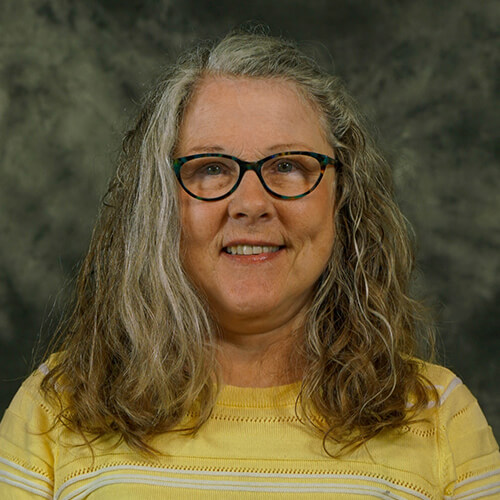
Photo of Jorge Estrada Martinez

Jorge Estrada Martinez

Hometown: Knoxville, Tennessee

Within a 30-minute drive of his home, Jorge found a welcoming and respectful environment at MC. Drawn in by class sizes smaller than ones at most universities, he said of Maryville: “It’s easier to build strong connections with professors, and you’re not just another face in a lecture hall of hundreds.”


As a Mathematics major, Jorge enjoys the structure and creativity in the subject and the constant challenges to his way of thinking. He also helps his fellow students as a tutor in the STEM Success Center.

His post-graduate plans include pursuing a master’s degree in engineering with a focus on robotics, hoping to develop innovative robotic systems that can assist in medical treatments or that can take on high-risk tasks in dangerous environments.


Photo of alumna Megan Pogue who graduated with a degree in Mathematics

Megan Pogue ’21

Currently: Senior Quality Technician at Beehive Industries

Originally intent on pursuing a degree in Biology, Megan changed her major to Mathematics after enjoying a course in that subject in her first semester. During her sophomore year, Megan co-founded MC3D, the College’s 3D printing club, which played a key role in putting her on her current career path.

Specializing in additive manufacturing (3D printing), Beehive Industries designs and manufactures components for the aerospace, defense and power generation industries. As a senior quality technician, Megan is responsible for ensuring all products meet internal specifications, customer requirements and engineering prints.


“The supportive faculty, challenging coursework, and collaborative environment helped me develop the technical and problem-solving skills I rely on today for my role in quality,” she said of her MC experience.

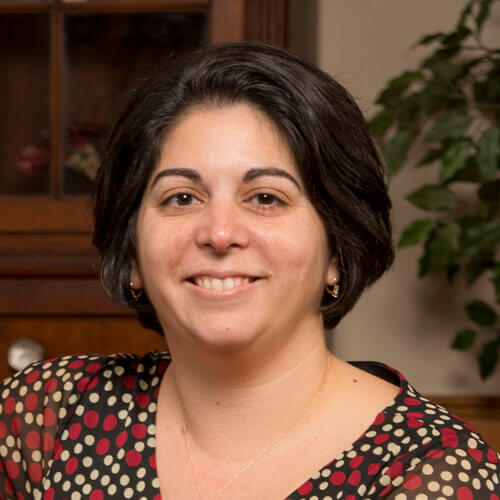
 

Chair, Division of Mathematics & Computer Science, Professor of Statistics
Dr. Jeff Bay
Chair, Division of Mathematics & Computer Science, Professor of Statistics
More Info
Faculty Chair, Professor of Mathematics
Dr. Maria Siopsis
Faculty Chair, Professor of Mathematics
More Info
Associate Professor of Mathematics
Dr. Dan Ross
Associate Professor of Mathematics
More Info
Associate Professor of Computer Science
Dr. Barbara Johnson
Associate Professor of Computer Science
More Info
Senior Lecturer in Mathematics
Angela DeLozier
Senior Lecturer in Mathematics
More Info
Assistant Professor of Mathematics
Dr. Jesse Smith
Assistant Professor of Mathematics
More Info

Two distinct major programs are offered. The Major in Mathematics provides a broad curriculum for students planning careers which require mathematical skill and problem-solving ability. Students may enter graduate school programs in mathematics, statistics, or related disciplines, or pursue careers in a variety of fields such as actuarial science, biomathematics, operations research, teaching, or finance.

Graduate School Placements

Clemson University
Florida State University
Georgia Tech
LMU DeBusk College of Osteopathic Medicine
Miami (of Ohio) University
North Carolina State University
University of Nebraska
University of North Carolina
University of Tennessee

United Way of Blount County
University of Tennessee College of Engineering
Auburn University College of Engineering
Tennessee Technological University College of Engineering
Vanderbilt University School of Engineering

Students successfully completing the program of study will have achieved:

  • Communicate mathematical ideas with precision and clarity in both written and oral form.
  • Develop expertise in appropriate technology for their desired career paths.
  • Understand and apply mathematical concepts in both theoretical and applied areas.
  • Use mathematics to model real-world problems by choosing appropriate mathematical tools, representing the problem abstractly, and obtaining and interpreting results.
  • Evaluate the correctness and validity of solutions.
  • Experience the application of mathematics to other disciplines through appropriate related courses.


The Bachelor of Arts in Mathematics consists of 51/52 hours in mathematics and related fields.

Required courses include:

Major and Major-Related Courses

MTH 125: Calculus I (MR) (4 hrs)
MTH 225: Calculus II (4 hrs)
MTH 232: Linear Algebra (3 hrs)
MTH 235: Calculus III (4 hrs)
MTH 236: Ordinary Differential Equations (3 hrs)
MTH 347: Junior Research Seminar (1 hrs)
MTH 353: Senior Study (3 hrs)
MTH 399: Senior Research Seminar (1 hrs)
CSC 130: Introduction to Computer Science and Programming (4 hrs)
CSC 231: Discrete Structures (3 hrs)
CSC 299: Professional Practices in the Mathematical Sciences (1 hrs)
PHY 201: General Physics I (4 hrs)
STA 120: Introductory Statistics (4 hrs)

One of the following courses:

CSC 225: Data Structures (4 hrs)
MTH 221: Inferential Statistics w/Data Visualization (3 hrs)
MTH 222: Regression Analysis (3 hrs)
PHY 202: General Physics II (4 hrs)

One of the following courses:

MTH 302: Abstract Algebra I (3 hrs)
MTH 315: Introduction to Real Analysis I (3 hrs)

One of the following courses:

MTH 305: Mathematical Modeling (3 hrs)
MTH 321: Probability & Statistics I (3 hrs)

One of the following:

A MTH course numbered MTH 302 or higher (3 hrs)
Or
CSC 381: Theory of Computation (3 hrs)

For a MTH course numbered MTH 302 or higher: May include a second course from the choices given above but may not include MTH 309 Math Content & Instructional Methods or MTH 337 Mathematics Internship

Students desiring more depth in the related fields of Analytics, Computer Science, or Statistics are encouraged to complete a minor in one or more of these areas. Students are also encouraged to minor in a discipline where their mathematical expertise may be applied.


The Bachelor of Science in Mathematics consists of 61 hours in mathematics and related fields.

Required courses include:

Major and Major-Related Courses

MTH 125: Calculus I (MR) (4 hrs)
MTH 225: Calculus II (4 hrs)
MTH 232: Linear Algebra (3 hrs)
MTH 235: Calculus III (4 hrs)
MTH 236: Ordinary Differential Equations (3 hrs)
MTH 302: Abstract Algebra I (3 hrs)
MTH 305: Mathematical Modeling (3 hrs)
MTH 315: Introduction to Real Analysis I (3 hrs)
MTH 321: Probability & Statistics I (3 hrs)
MTH 347: Junior Research Seminar (1 hrs)
MTH 353: Senior Study (3 hrs)
MTH 399: Senior Research Seminar (1 hrs)
CSC 130: Introduction to Computer Science and Programming (4 hrs)
CSC 231: Discrete Structures (3 hrs)
CSC 299: Professional Practices in the Mathematical Sciences (1 hrs)
PHY 201: General Physics I (4 hrs)
STA 120: Introductory Statistics (4 hrs)

One of the following courses:

CSC 225: Data Structures (4 hrs)
PHY 202: General Physics II (4 hrs)

One of the following courses:

MTH 303: Abstract Algebra II (3 hrs)
MTH 316: Introduction to Real Analysis II (3 hrs)
MTH 322: Probability & Statistics II (3 hrs)

One of the following courses:

One additional MTH course numbered MTH 303 or higher (3 hrs)
CSC 314: Data Mining (3 hrs)
CSC 381: Theory of Computation (3 hrs)

For one additional MTH course numbered MTH 303 or higher: May not include MTH 309 Math Content & Instructional Methods or MTH 337 Mathematics Internship

Students desiring more depth in the related fields of Analytics, Computer Science, or Statistics are encouraged to complete a minor in one or more of these areas. Students are also encouraged to minor in a discipline where their mathematical expertise may be applied.


The Minor in Mathematics requires a minimum of 17 credit hours.

Required courses include:

Minor and Minor-Related Courses

MTH 125: Calculus I (MR) (4 hrs)
MTH 225: Calculus II (4 hrs)
MTH 232: Linear Algebra (3 hrs)
Six additional credit hours in mathematics above MTH 225

Six additional credit hours in mathematics above MTH 225: May include CSC 231

Note: The following courses may not be used to meet this requirement: Mathematics 309: Math Content and Instructional Methods for Elementary Teachers or Mathematics 337: Internship in Mathematics.


The Major in Mathematics for Teacher Licensure provides preparation for students planning careers as mathematics teachers at the secondary level and consists of 38 hours in mathematics and related fields and 42 credit hours in educator preparation courses.

Associate Professor Daniel Ross is Coordinator of Mathematics for Teacher Licensure.

Students successfully completing this program of study will, in addition to the outcomes listed above for the major in Mathematics, achieve the following learning outcomes:

  1. Understand and be prepared to use a variety of appropriate mathematical instruction and assessment methods.
  2. Understand the mathematical content and processes of secondary mathematics.
  3. Make appropriate connections between postsecondary and secondary mathematics.

Required courses include:

Major and Major-Related Courses

MTH 125: Calculus I (MR) (4 hrs)
MTH 225: Calculus II (4 hrs)
MTH 232: Linear Algebra (3 hrs)
MTH 235: Calculus III (4 hrs)
MTH 301: Principles of Geometry (3 hrs)
MTH 305: Mathematical Modeling (3 hrs)
MTH 321: Probability & Statistics I (3 hrs)
PHY 201: General Physics I (4 hrs)
STA 120: Introductory Statistics (4 hrs)

One of the following courses:

MTH 302: Abstract Algebra I (3 hrs)
MTH 315: Introduction to Real Analysis I (3 hrs)

One of the following:

One additional MTH course numbered 303 or higher (3 hrs)
Or
CSC 381: Theory of Computation (3 hrs)
One additional MTH course numbered MTH 303 or higher: May include a second course from the choices above but may not include Mathematics 309 or Mathematics 337

Educator Preparation Courses

PSY 101: Introductory Psychology (3 hrs)
PSY 218: Adolescent Development (3 hrs)
EDU 202: Educational Technology (3 hrs)
EDU 299: Contemporary and Professional Issues in Education (1 hrs)
EDU 300: Field Experience (1 hrs)
EDU 301: Models of Classroom Management & Instruction (3 hrs)
EDU 312: Instructional Strategies for Diverse Learners (3 hrs)
EDU 321: Disciplinary Literacy Methods (3 hrs)
EDU 333: Applied Pedagogy (3 hrs)
EDU 351: Senior Study I (3 hrs)
EDU 352: Senior Study II: Professional Seminar (3 hrs)
EDU 403: Clinical Practice for PK12/Secondary (10) (10 hrs)
EDU 411: Educational Assessment & Evaluation (3 hrs)

In addition to required courses for majors and minors, Maryville College students take classes in the Maryville Curriculum, a core program of general education. Consisting of 51 credit hours, the Maryville Curriculum ensures that students see their major in a wider context and develop the basic communication, quantitative, and critical thinking skills that are needed for success in college and career.

Apply

Request Info

Interested in this Program of Study at Maryville College? Submit your basic information and an Admissions counselor will contact you shortly to answer any questions you might have.

Loading…