Why study Philosophy at MC?
Studying Philosophy at Maryville College prepares you for life and the world. It will challenge and equip you to tackle the “big issues”: about what’s real and what isn’t; about what and who you are; about how we should live with one another and what makes life worthwhile.
To tackle those issues well, you will learn practical skills you can take with you wherever you go and whatever you do. For instance, our Philosophy classes teach you to read and listen carefully to others, to analyze ideas and test arguments, to see problems in their complexity and appreciate a range of solutions. You will also learn to make up your own mind, and to communicate your ideas with clarity and precision.
Studying philosophy can open up exciting and surprising career paths. Our faculty and professional career counseling staff can help you find the right opportunities for significant practical experiences that will deepen your sense of direction in life.
Philosophy equips you to pursue virtually anything your passion and interest draw you toward.
Come pursue Philosophy with us!
A liberal arts education is literally about the “arts of freedom.” To be truly free, requires one to question and to think for oneself. Philosophy, which literally means the “love of wisdom,” lies at the heart of a liberal arts education because it asks students to question, explore, and pursue truth wherever it may lead. In philosophy, rigor, honesty, and humility are requisite to exploring questions about reality and truth, justice and morality, life and death, language and culture, society and politics, and God and the meaning of existence. Students who major or minor in Philosophy learn to think and write critically, and to read and analyze texts carefully. Such skills are excellent preparations or professions in law, politics, business, education, ministry, and medicine.
ON CAMPUS OPPORTUNITIES
The Philosophy Club provides students with the opportunity to openly discuss philosophical ideas and take philosophy out of the classroom and into the world. In an informal gathering of friends, open to anyone who has an interest in philosophy, the Philosophy Club hosts regular discussions on a wide range of topics.
Meet a Current Scot

Steven Cope
Hometown: Bell Buckle, Tennessee
While academic rigor, athletics, and promising horizons drew Steven to MC, deep down he wanted to find a new place to call home, and MC has become that for him. A Bonner Scholar and member of the Cross Country and Track & Field teams, Steven is also involved in the College’s Philosophy Club.
Of his major, Steven said, “Philosophy both teaches you how to live and harmonizes you with the greatness of the world, history, people, and everything.” He credits the program for improving not only his writing, speaking, and comprehension skills, but also improving his quality of life. Steven’s goals for the future are to leave a positive impact through therapy or counseling. After working this past summer at a ranch in Colorado, he’s excited by the prospect of one day working in equine therapy.
Meet a Recent Grad
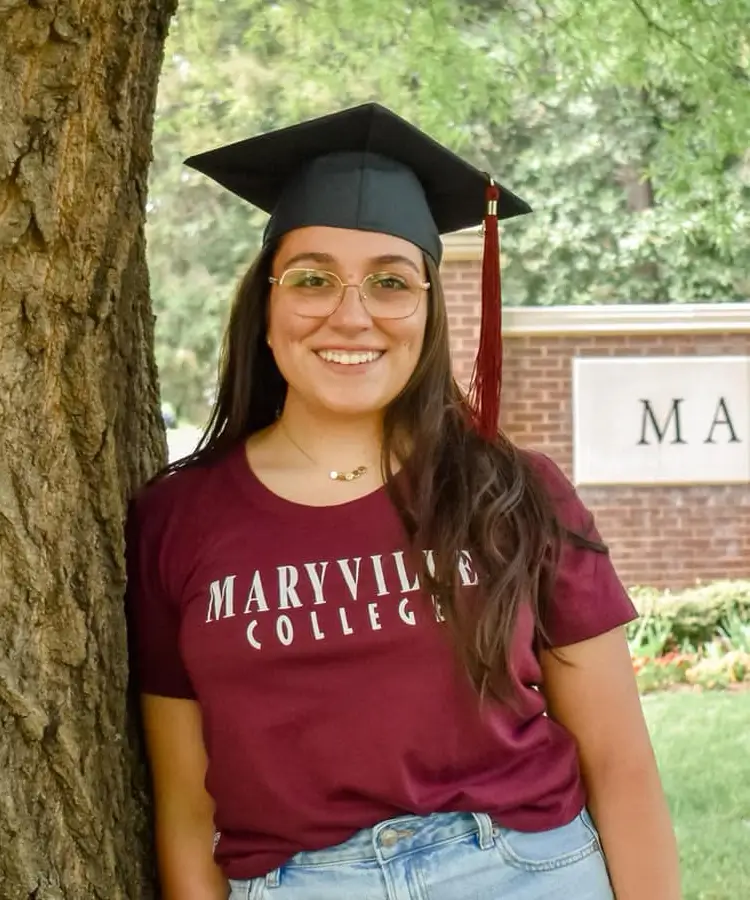
Alina Rosati ’23
Currently: Pursuing a Master’s Degree in Philosophy at the University of Tennessee
Alina credits MC’s Philosophy academics, the intimacy of the campus and the support of the faculty for allowing her to grow as a thinker. Continuing her education at UTK, she would like to become a professor and study political theory in the digital age. Already, she has served as a teaching assistant for the “STEM in Society” curriculum for the Governor’s School for the Sciences and Engineering.
“Philosophy is often scoffed at as an irrelevant pastime of historical ages, but everyone has a philosophy whether they realize it or not,” Alina said, adding that by learning about this discipline, we can recognize the philosophical touchstones in ourselves and others. “In an age where disagreement is increasingly received as threatening, it is essential to be sensitive to differing opinions while still maintaining your own resolve.”