


MC exercise science professor takes creative approach to hands-on learning during pandemic
April 22, 2021
During a typical semester, Maryville College’s PHR321: Physical Education and Recreation for Special Populations course includes hands-on practicum experiences outside of the classroom to complement the course content.
However, due to the ongoing COVID-19 pandemic, this spring semester is not typical – and Maryville College faculty continue to come up with innovative ways to present course material.
Dr. Jeremy Steeves, associate professor of exercise science at MC, said his PHR321 course is “designed to provide a basic understanding of various disabilities and the opportunity to master adapting physical education and recreation programs for exceptional children.” In addition to classroom instruction, the course usually provides students with many opportunities to interact with special needs students – specifically, weekly hands-on practicum sessions with special needs students from Eagleton Elementary School in the College’s Alumni Gym, as well as a service-learning requirement to volunteer at the Special Olympics Powerlifting Competition held annually at Foothills Mall in Maryville.
“Due to COVID restrictions, those community-engaged learning opportunities were not possible this spring,” Steeves explained.
Virtual Guest Lectures
As a participant in Maryville College’s Community Engaged Learning Cohort, he was motivated to develop new community engaged learning experiences for the class – that he hoped would lead to sustainable relationships long after the pandemic is over. He received funding from the cohort’s seed/project fund to cover the costs associated with his proposed project, which involves providing community engaged learning opportunities and bringing content experts to his course this semester.
“As a result, I identified alternative opportunities and content experts who would be willing to provide a guest lecture to my class about their experience as an individual living with or working with school-age children with special needs – ranging from intellectual, emotional and behavior disabilities, to autism spectrum disorder, visual or hearing impairments, Cerebral Palsy, amputations, and spinal cord disabilities in the field of sport, physical activity/education or treatment/rehabilitation,” Steeves said.
Guest lecturers included local experts, such as Shane Waters and John LaCava, who work in Special Education with Maryville City Schools. Steeves also invited national and international speakers to speak to his class, including Matthew Kinnie, an athlete who suffered a rock climbing accident that left him paralyzed from the chest down; now he is Canada’s top racer in the H2 handcycling category, gold medal-winner at the Parapan-Am Games in Lima, Peru, a Tokyo 2020 Summer Paralympic hopeful, and president of Parasport New Brunswick, Canada.
Leo Rodgers to Speak to Campus Community April 28; Virtual Event Open to Public
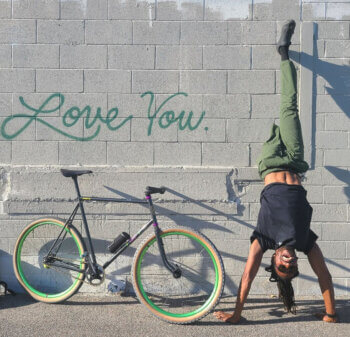
Steeves is teaming up with Maryville College’s Diversity Action Team, Student Programming Board, Healthy Scots Student Club, and Mountain Challenge to present “Leo Rodgers: Overcoming Adversity and Living Life to the Fullest” on Wed., April 28 from 8:30 p.m. until 9:30 p.m.
The event, which is open to the MC campus community and members of the public, will feature Leo Rodgers, an amputee cyclist who lost his left leg in a motorcycle crash. He is the world record holder in the 200m time trial in the US Paralympics and a community activist, and he was recently featured on the CW’s All American Stories: Leo Rodgers: What The Bike Can Bring.
After a short video introduction, Rodgers will speak about overcoming adversity and living life to the fullest, and a Q&A session will follow. Due to COVID-19 guidelines for on-campus gatherings, an in-person viewing event will be limited to 30 students at Crawford House on the Maryville College campus (students must register in advance online; a limited number of spots are still available).
Other members of the campus community, as well as any community members who are interested in the topic, may participate online, via Zoom. All participants are asked to register in advance; registration and Zoom details can be found online.
Practicum Experiences
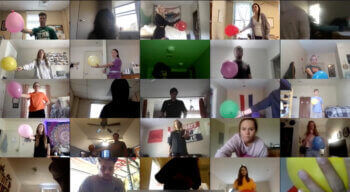
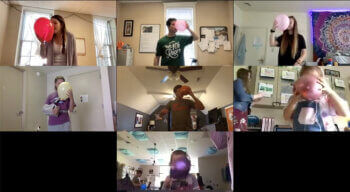
As part of the PHR course, Steeves’ students developed and delivered instruction of an adapted activity or game to their peers over Zoom, in preparation for their work with elementary students. After receiving feedback about their teaching topic and completing training – including learning about the different disabilities they would be interacting with, hearing from a special education teacher at a local school, and participating in an observation and introduction session with elementary school children – students in the class were responsible for leading special needs students from John Sevier Elementary School and Foothills Elementary School through physical activity sessions. The 20-minute sessions, held over Zoom during six Wednesdays in March and April, included a warm-up activity, main activity and cool down.
MC students in the class also fostered relationships with the elementary students by writing “pen pal” letters throughout the process to offer praise, feedback and encouragement, as well as previews of upcoming sessions to generate excitement.
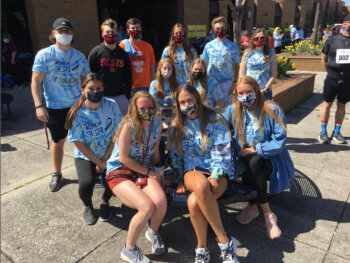
On March 21, students volunteered at Race 3.21 for Down Syndrome Awareness at West High School in Knoxville. Steeves said the experience was “designed to help students have a greater understanding and respect for the experiences of a diverse and socially marginalized group.”
At the end of the semester, MC students will complete a project consisting of designing Special Olympics events and stations, which will be submitted to Special Education staff at John Sevier Elementary and Foothills Elementary for use in the schools’ end-of-the-year Special Olympics day.
“Hearing from the content experts/guest speakers, but more importantly, the practicum experience, in which they teach one or more individuals with disabilities, brings the course to life and is highly relevant to students meeting the learning objectives of this course,” Steeves said. “The practicum provides the students the opportunity to develop an in-depth relationship with one or more young people, assess a student to identify goals and objectives, gain exposure to Individual Education Programs, and interact with, motivate and manage one or more students.”
As MC students learn more about the elementary school students, they are able to tailor lesson plans to help the younger students reach objectives, Steeves said.
“On the first day of class this semester, I surveyed my students to determine their experience with individuals with physical, behavioral and developmental disabilities,” he said. “The majority of my students had little experience with any of these three groups.”
Contact theory has shown that “personal experience changes attitudes toward people with disabilities in a positive way, and that educating students about lifestyle, experiences, expectations and issues of the population prior to this exposure lays a stronger foundation for attitude change,” Steeves said (citing Wozencroft et al., 2015). “Experiential learning such as this practicum experience in combination with focused reflection has been shown to develop knowledge, skills, values and people’s capacity to contribute to their communities, as well as provide an improved atmosphere for making ethical decisions, building relationships, and promoting critical thinking and problem-solving skills.”
Student Feedback
Anya Dunn ’21, a senior biochemistry major from Winston, Ga., said she thought it would have been “really easy for a professor to look at the prospect of teaching college students to teach children with special needs over Zoom during a pandemic and just say, ‘we can try again next year.’”
“Instead, Dr. Steeves chose not to underestimate us, even when we might have doubted ourselves,” Dunn said. “We were given the opportunity to take the lessons we learned each week about adaptability and modification and apply them to our journey of teaching over Zoom. Week by week, it became less about focusing on the diagnosis that we learn about in our textbook and more about the journey of forming relationships with these kids and watching them grow.”
“I’ve never seen a grown man hop down quite so fast and begin acting like an airplane just to make a kid feel more comfortable,” she added. “It would’ve been easy to underestimate all of our abilities. Instead, those kids are teaching us more than we could ever teach them. In a world where we are all learning how to navigate new barriers, these kids are seasoned pros.”
Parker Owens ’23, a sophomore health and wellness promotion major from Caryville, Tenn., said this semester’s course has allowed him to gain exposure to special populations and the people who work with them.
“Through various guest speakers and getting to engage with local students through Zoom, I have been able to gain greater understanding and appreciation for who they are as individuals and the challenges they face,” Owens said. “Our adapted Zoom lectures and volunteering at a local Down Syndrome awareness race have given us this firsthand experience to really see what some of these kids are capable of, and it really changes your assumptions and attitudes towards them. We talked about this idea of contact theory during our first week of class when discussing the University of Tennessee’s Camp Koinonia, and how that through personal exposure to these ideas and individuals you can make an impact on people’s perception, and through this class I can attest to that.”