Passionate ASL interpreting skills make MC alumna a TikTok sensation
June 14, 2022
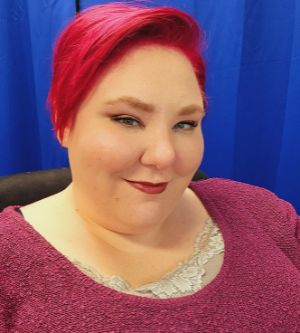
If a hard rock or a metal show coming to Thompson-Boling Arena on the University of Tennessee campus requires a Deaf interpreter from the school’s office of Student Disability Services, Kristi Moody Pearson ’10 is the first to volunteer.
It is, she said, an opportunity to combine two of her lifelong loves: music, and using her degree in American Sign Language-English Interpreting and Deaf Studies from Maryville College to make a concert experience more inclusive for Deaf and hard-of-hearing fans.
“I knew it was part of the UT interpreter experience when I originally applied for it, but it was a little added bonus for me,” she said. “I love my educational work, but I’m also a theater nerd from the word go, so to be able to have those aspects of performance be a part of my job adds a little bit of joy and ignites that spark in me. I love being a part of that.”
Before she came to Maryville College, Pearson had some familiarity with special needs populations: Her father, she said, had been legally blind for most of his life, and as a girl, she was so fascinated by the life of Helen Keller that she found a sign language ABC book and taught herself the alphabet. As a high school student in Washington, D.C., she took sign language as her foreign language requirement.
“That’s when I realized what beauty and culture were included in it,” she said. “I took it through most of my high school career, and I became aware it was something I could do as a profession and could actually do for the rest of my life. I looked at different colleges that had specific Deaf interpreting majors, and Maryville College was one of the top ones on my list. I came to campus, fell in love with it, and the rest is history.”
Part of a distinguished legacy
Maryville College developed the first bachelor’s degree program in interpreting for ASL, spoken English and English-influenced forms of sign language in the United States in 1974, and the school has long accepted ASL as the fulfillment of the foreign language requirement. Pearson chose to double major in both interpreting and Deaf studies, and both programs of study gave her a broad experience in both the classroom and the field, she added.
“I got to experience it all, whether it was through class or being encouraged to volunteer or through interactions with the Deaf community,” she said. “We got to experience and got exposed to everything. In class, we studied all the different aspects of the interpreting platform, from music to education to medical to everything in between.
“Throughout that program, I knew exactly what the field looked like, and I had a true understanding of where I wanted to work, and areas that wouldn’t be a good fit. I was aware of the entire profession upon leaving Maryville College, and having options was a huge benefit.”
She started out as a contract employee with UT before becoming a full-time member of Disability Services, and although her original plan was to work there for a couple of years before going home to D.C., the roots she planted began to grow deep. She made lasting connections in the local Deaf and interpreting communities, but more than that, she found fulfillment as an employee in higher education, where she spends her days in college classrooms and around campus.
No two days look alike, however.
“There is no typical day, and that’s kind of what is exciting about it,” she said. “We are primarily here for the students, and their schedules and needs for access take priority. We’re primarily in the classroom, but depending on the semester and how many students we have, you can be jumping from a first-year English class to a Ph.D.-level social work course to a junior/senior-level science class. We go to class throughout the day and interpret for Deaf and hard-of-hearing students, and when we’re not, we’re back in our offices, preparing for classes and assignments and working on community presentations, seminars and performances sponsored through the university.”
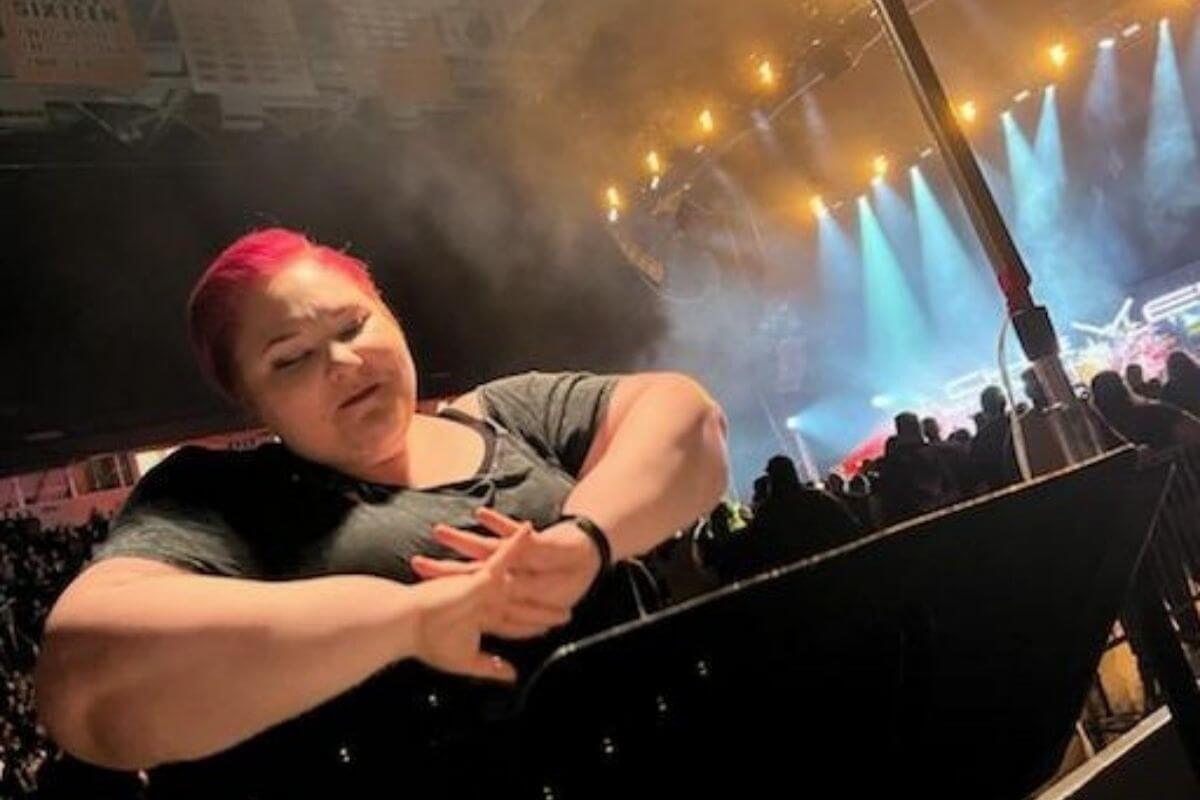
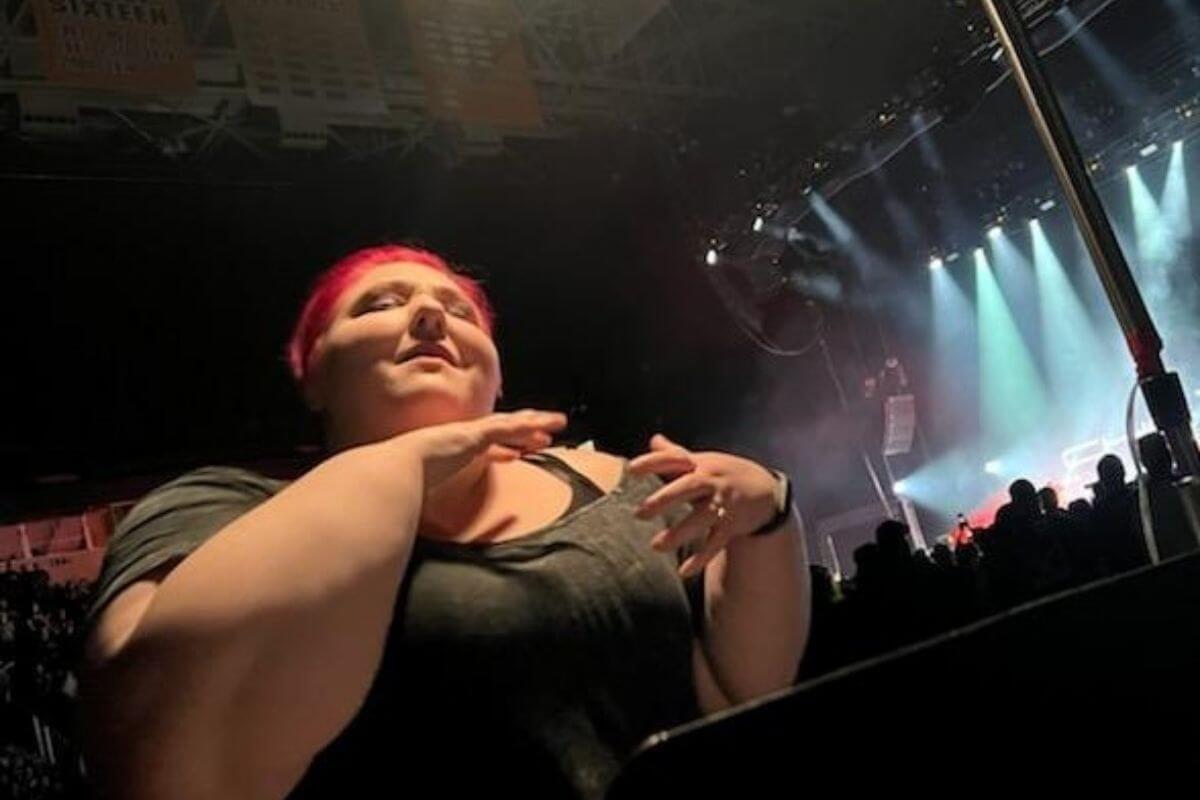
Not every concert requires an interpreter, but as mandated by the Americans with Disabilities Act, if one is requested, accommodations must be made. And because Thompson-Boling is part of the UT system, those interpreters come from Pearson’s office. It was at a recent concert by Korn that she was thrust into a spotlight that was new for her: a video of her interpreting the band’s ferocious lyrics, set against a sea of moshing bodies and a wave of screaming guitars, went viral: Uploaded to TikTok by user @_cortland_21, it’s been liked by 4.8 million people, shared more than 41,000 times and has more than 26,000 comments.
When it took off, Pearson was taken aback, but given the passion with which she approaches her job, she understands the appeal.
So much more than simple signs
“It’s never just the lyrics: It’s the entire vibe, the feel of everything,” she said. “One of my favorite parts of every concert is when you can watch an entire audience all headbanging at the same time, with all the lighters or cell phones in the air, everybody swaying and screaming. There’s something so energizing, it’s electric in that room, and being able to provide access to that electricity is such an amazing opportunity.”
It’s also a task that takes a great deal of preparation: The pacing almost demands that Pearson and her fellow interpreters familiarize themselves with as much of a performer’s catalog as possible, and every experience begins with some detective work. By consulting websites such as setlist.fm and internet reviews of concerts on the same tour, the staff can whittle down to a collection of songs that are anywhere from 75 to 90% certain to be played, she said.
“Even before we start diving into it, I end up setting up Spotify playlists for a solid month before and just listen to that performer on loop to get a feel for their discography,” she said. “The biggest challenge is not having any prep material, and the challenge of being able to hear them and make out the lyrics and then be able to sign them in those moments without having a list ahead of time is often the hardest.
“For most interpreters, the dreaded moment is that brand new song, or a change to the setlist at the spur of the moment. Being a fan always helps, and I think that’s also why I went to interpreting to begin with, because I have so many interests. I’m able to jump from a subject I know much about to one that I don’t, because I enjoy being challenged.”
Those challenges amount to physical ones as well: Interpreting can be a physically demanding task, and Pearson works in tandem with a team in order to tag in and out after 20 to 30 minutes. After that, an interpreter’s cognitive and physical abilities to process what’s being heard and relay that into ASL begin to decline, and they need to be switched out by their teammates.
Because, she added, it’s about so much more than simple translation of words.
“Something that also attracted me to sign language to begin with is the drama and the very visual nature of it, just like we have with verbal communication,” she said. “For example, there are 16 different ways of saying ‘I’m fine’ — some of them neutral, some of them good, some of them dangerous! To be able to express that under what we call non-manual markers means using facial expressions, eyebrows, your mouth, and that’s what I have so much fun with.
“I think so much can be expressed in a smirk, in that little eyebrow raise. For some bands, the lyrics are not very complicated, and therefore what I’m interpreting is not linguistically complicated — but that’s what I loved about it. It’s so much more than just the signs or the words, and when you have some of those more simple songs, if you will, it makes it that much more fun, because you can add a little more you and a little more performance into it.”
And that, she added, is something the audience members for which she interprets are grateful — but that gratitude is a two-way street.
“My ability is because they shared their language, their culture, and allowed me to be a part of that,” she said. “All of this stems from that acceptance, and I continue to learn every day. I just love the opportunity, and sometimes that love goes viral.”