Maryville College’s Jonathan Yost ’26 explores viability of marigolds as a defense against crop pests
Aug. 13, 2024
EDITOR’S NOTE: This is the seventh and final in an ongoing series spotlighting summer research projects and internships by Maryville College STEM students, made possible through a $645,000 Fund to Improve Post-Secondary Education (FIPSE) grant, administered through the U.S. Department of Education. The grant was earmarked for the expansion of MC’s Scots Science Scholars program and build on STEM initiatives provided by the College to “increase access to hands-on experiences and industry exposure, with a focus on addressing emerging technologies and scientific innovation in natural sciences, computational science and engineering.”
It’s been a rough year for farming. Just ask Maryville College’s Jonathan Yost ’26, a Knoxville native and Environmental Studies major struggling to get his crops to cooperate with his summer research project on marigolds.
The original proposal was for Yost to “examine the impacts of marigolds on vegetative growth and harvest of vegetables yet to be studied for impact after marigold exposure.” Scientific studies (including one by a Maryville College student) have demonstrated that marigold plants can act as a natural insect repellent, thereby providing protection to crops in gardens and on farms.
Yost, who worked as an intern at Rocky Park Farms in nearby Friendsville last spring, was familiar with marigolds, and in talking with Biology Professor Dr. Drew Crain, his interest in the effects marigolds might have in a controlled setting grew. The idea was to grow selected vegetables with and without marigolds in order to evaluate both vegetative health and productivity.
The unpredictable nature of East Tennessee summers, however, have not been his ally.
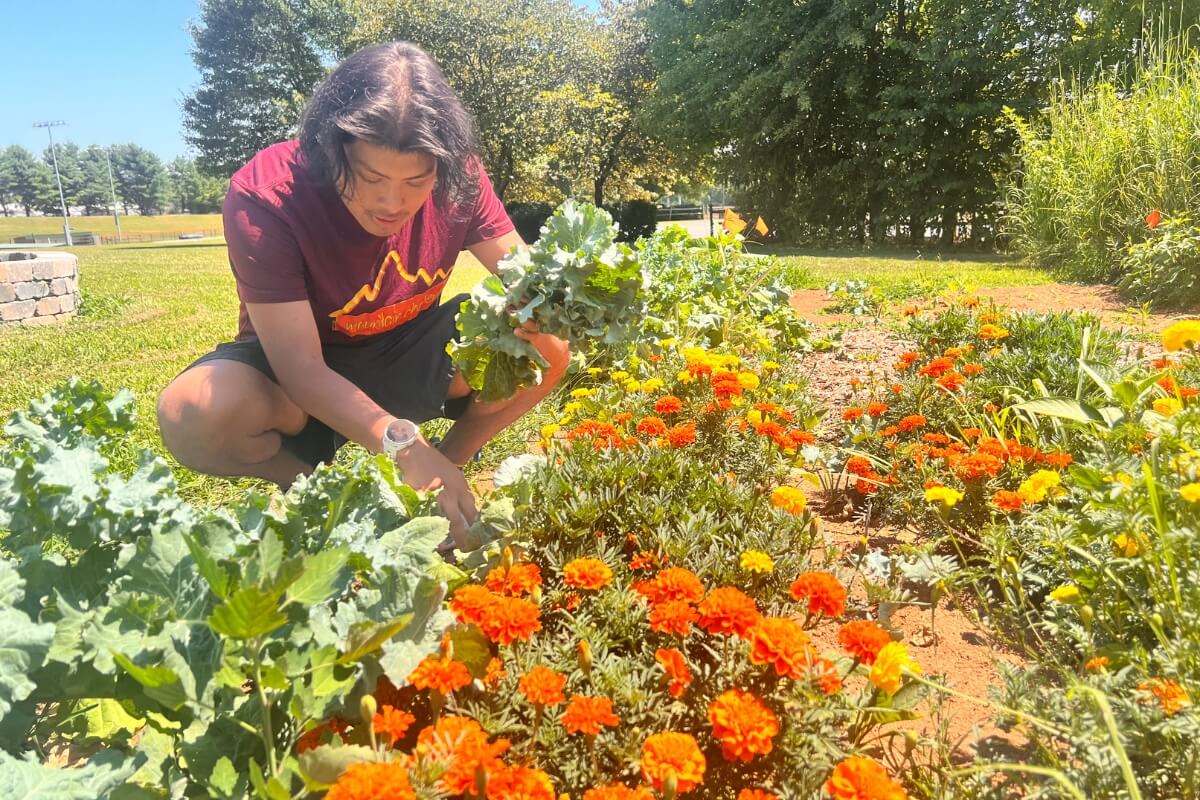
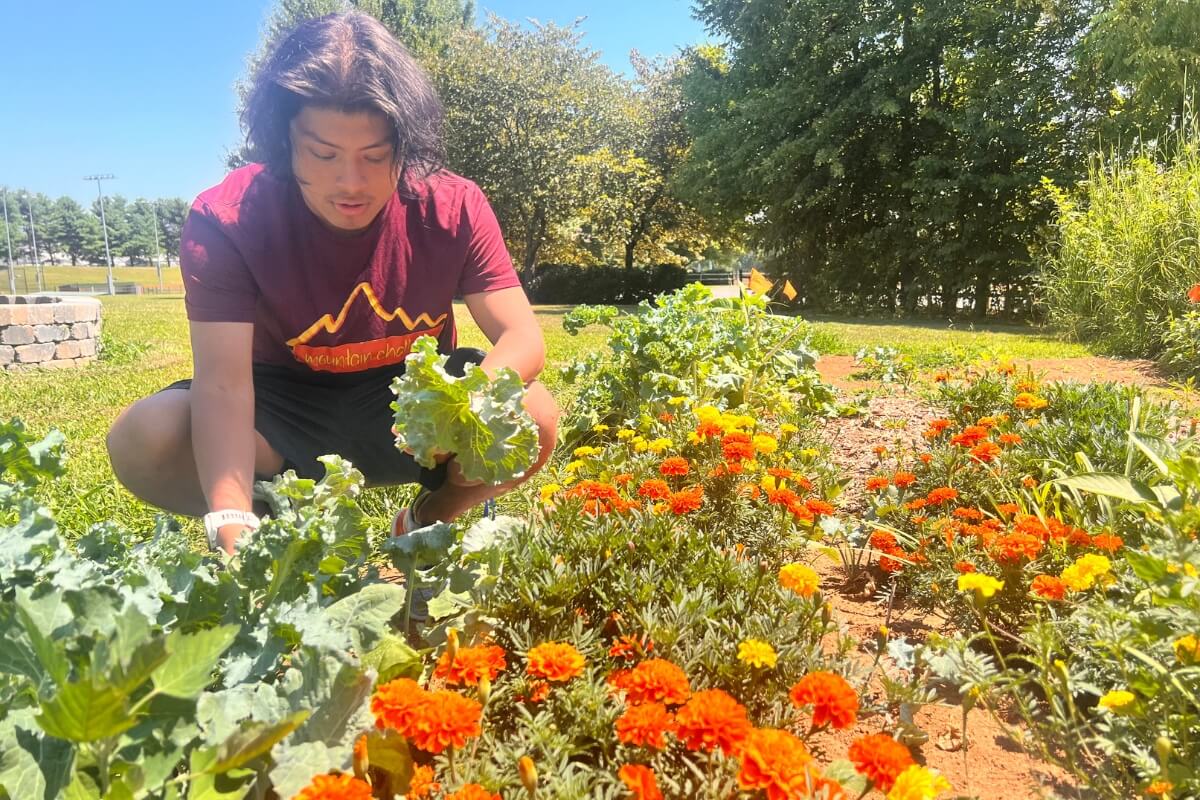
“Right now, I am still working on getting things to grow,” Yost said. “I started with 36 sweet potatoes plants planted evenly in two identical 3×3 meter plots. One plot was planted with 60 marigold plants. Kale and zucchini were also planted at the same time. Unfortunately, after the first month, rabbits had eaten all the sweet potatoes. Both the kale and zucchini have done better but still struggled to come up.
“Pumpkins were planted in late June. Both the zucchini and pumpkins are proving to be better. Every two weeks I count the number of plants in the plots. I plan to compare leaf growth and produce size to measure the effectiveness of the marigold. I also look for any sign of disease and note it.”
During the coming fall semester, Yost will compile figures and statistical analyses to determine the impacts the marigolds had on the test crops.
“I helped Jonathan design the study, and we routinely meet to discuss the progress,” Crain said. “I’m excited to see the results of this study, as it will impact how we plant the Crawford House gardens in the future. While there is a good bit of anecdotal evidence that marigolds help garden productivity, there are few scientific studies. I’m especially interested in the impact of companion marigolds (or not) on leaf-based vegetables like kale and lettuce.”
Thanks to the FIPSE grant, Yost receives a modest salary for the hours spent on his research, as well as $500 to spend on supplies for it. It’s an opportunity to explore his interests and connect with a faculty member whom he admires, he added, and it’s paving the way for a future that he hopes will include graduate work in environmental and planetary sciences.
“For me, Maryville College allows me to have a personal connection to my professors and have opportunities like this research,” Yost said. “If I had gone to a bigger university, I would be just one out of a dozen faces, but at Maryville, I feel like I am seen.”