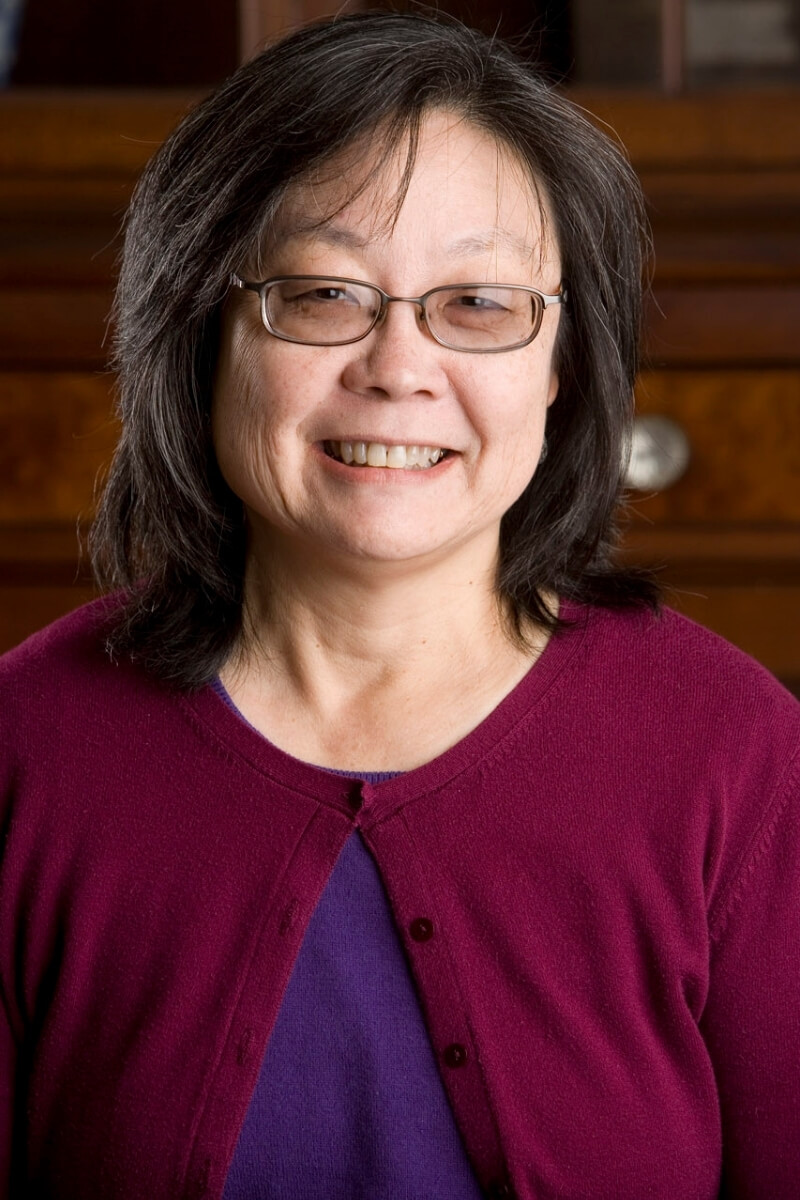
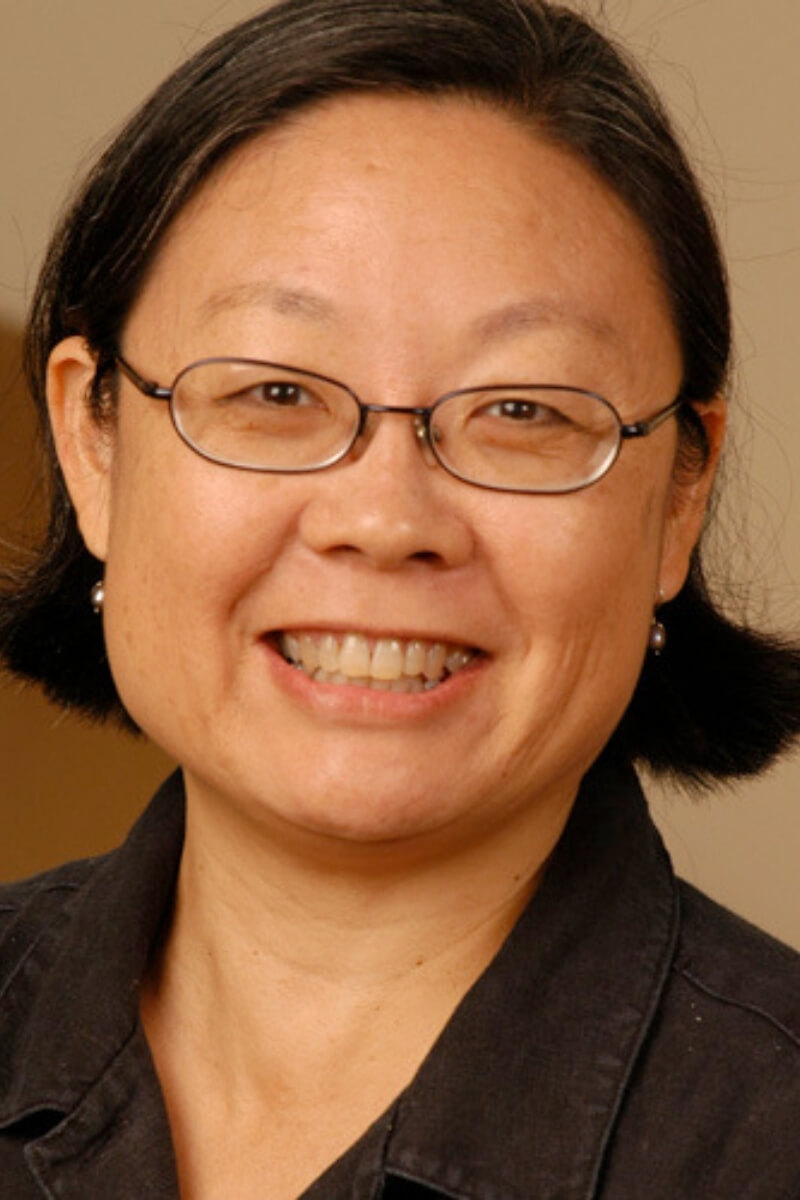
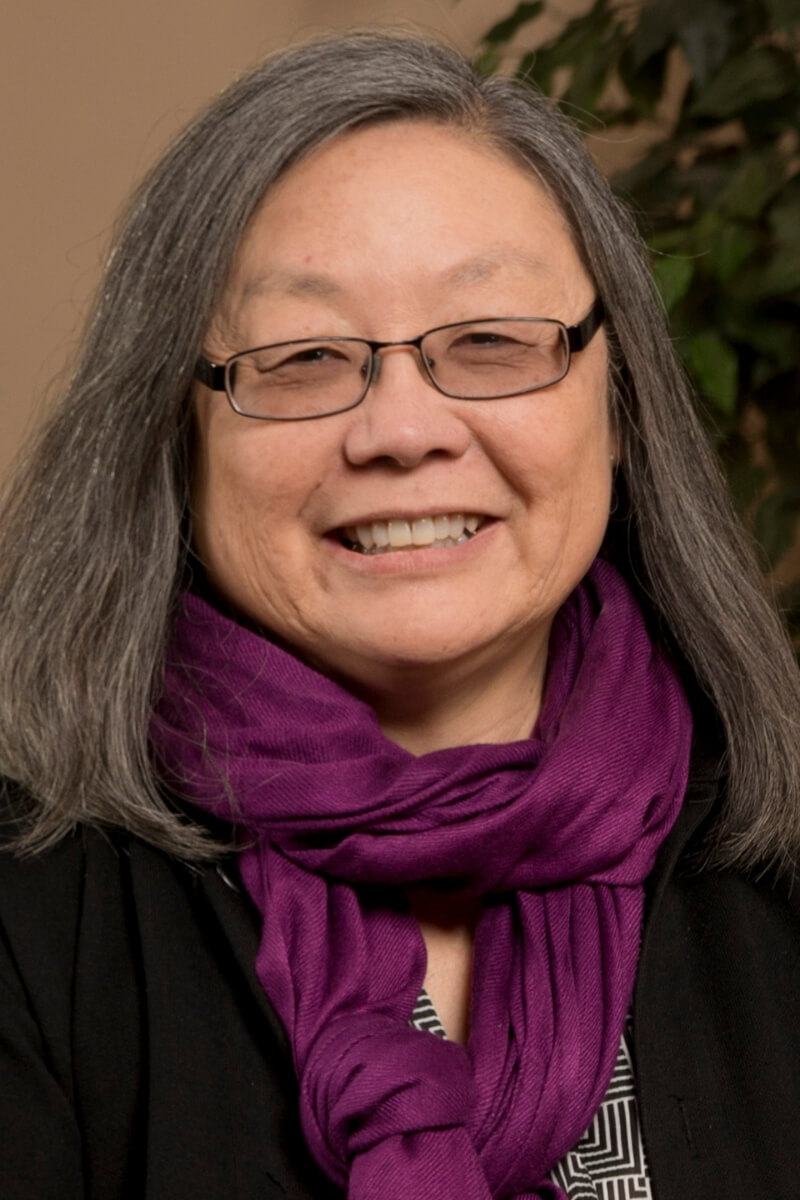
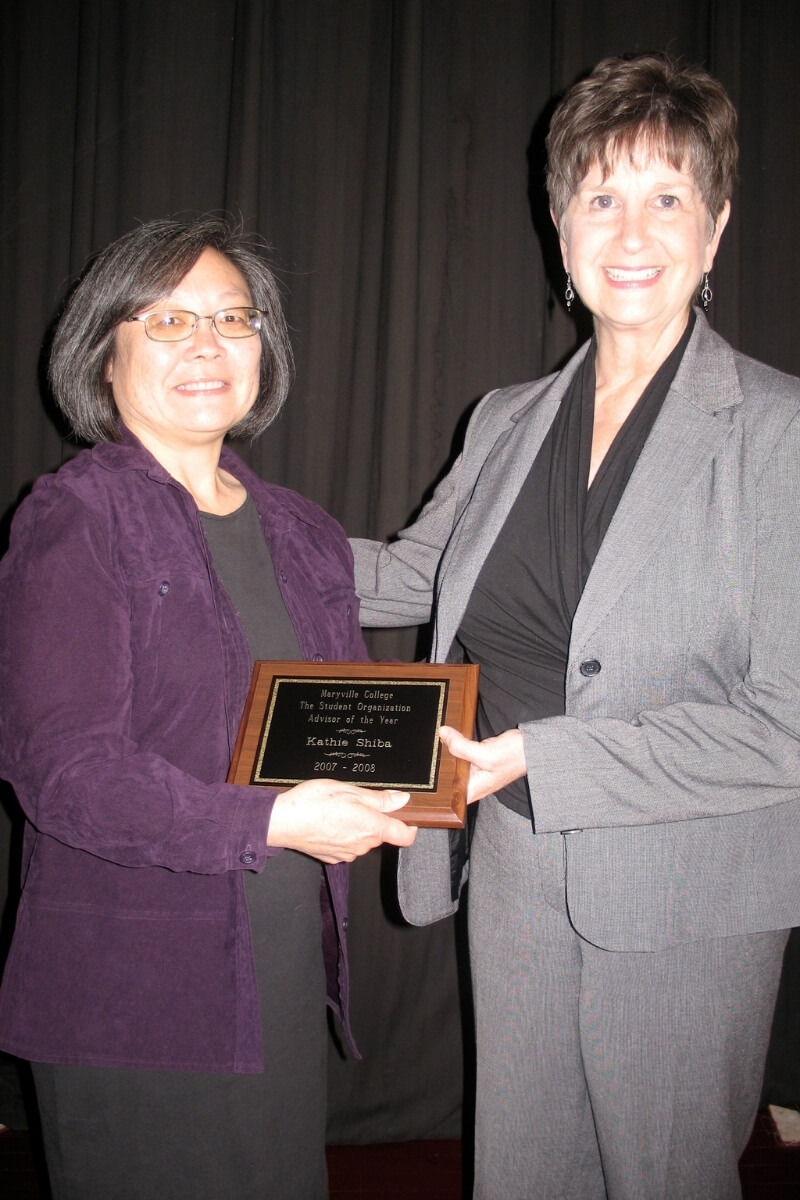
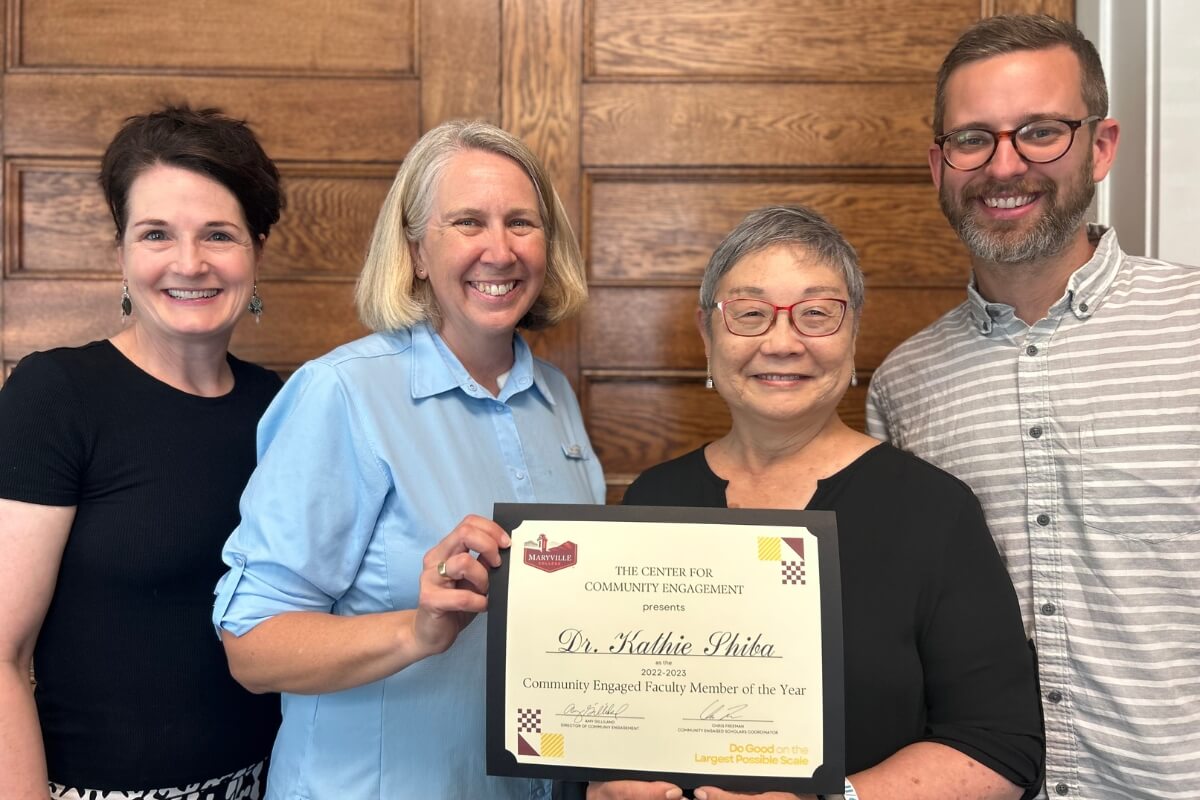
‘Peacekat’ out: After more than three decades at Maryville College, Dr. Kathie Shiba announces retirement
Nov. 12, 2025
In some ways, landing at Maryville College fresh out of her Ph.D. program at the University of California-Riverside was a head-spinning culture shock for Psychology Professor Dr. Kathie Shiba.
Her predecessors in the Division of Behavioral Sciences, she says, told her that she was the first professor from California to join the faculty, and even then, they worried about whether the Asian-American single mom would find her place in a bucolic Southern small town where sushi was only served at high-end restaurants and grocers looked at her funny when she asked for hummus and pita bread.
That was more than 30 years ago. On the eve of her retirement, Shiba smiles at the memories, quaint though they might be, because despite the lack of diversity and the occasional specter of racism raising its ugly head, she found her people. At Maryville College, she joined a group of like-minded colleagues who would steer the division toward exciting new initiatives, and in the community, she found those who shared her passion for social justice and embraced the woman they came to know as “Peacekat.”
“It’s a nickname that’s been with me from my adult life onward, both because I’m very passionate about peace and social justice, and because I love cats, too,” she says. “It came from my cohort in graduate school, and they always saw me as someone who was devoted to peace, and they encouraged and supported me in all of that work. And from the beginning, my intention was to stay at the same place for the long-term.
“Looking back at the cohort of those who graduated from the psychology program at UC-Riverside the same year that I did, all of us are at the same place we went to after graduation except for one. We all knew that we wanted to teach, and that’s what we decided to focus on, whether it was at an R1 research institution or a small, private liberal arts college.”
Diving into the deep end
At the latter, Shiba was welcomed as the fourth faculty member of the Division of Behavioral Sciences. Dr. Lori Schmied, professor emerita who retired in the spring of 2022 after more than three decades at MC herself, was one of Shiba’s predecessors, and bringing the Californian on as a tenure-track professor in developmental psychology was a welcome addition to a quickly growing field of study, Schmied says.
“The number of majors in our department was rapidly increasing, especially with demand in our child development with teacher licensure program,” Schmied says. “The Psychology Department had three full-time faculty members (Jerry Waters, Sally Jacob, and myself) and this position would be the fourth. We literally had hundreds of applicants, but Dr. Shiba’s application easily rose to the top of the group of finalists.
“Jerry took the application to the dean, Dean Boldon, to call and to extend an invitation for an on-campus interview. I remember Jerry coming back to us saying that Dean was impressed with his phone conversation but had reservations about spending the money required to bring Dr. Shiba for the interview, because surely no one from California would ever move to Tennessee. Fortunately, we easily persuaded him that she was our top choice.”
Shiba, Schmied adds, brought a new perspective to the department and “built upon the long tradition of experiential education at MC by integrating community-engaged learning into the classroom and forging community partnerships.” One of the first projects outside of the classroom in which she engaged was Project LEAD, an after-school program born out of her adolescent development classes.
“Middle school-aged kids would come to the College, and the students would work on developing programs for them,” Shiba says. “I worked with Dr. Ariane Schratter, who brought younger kids to campus, and that collaborative work, while also giving students real hands-on opportunities for development and projects and interacting with families, was very satisfying.”
It was, she adds, a way of marrying her two passions: education and community activism, and it wasn’t long before her enthusiasm spread to other parts of the College. Faculty and students in the Division of Fine Arts developed the program’s logo, and when an opportunity came up to attend the Appalachian Studies Association’s annual conference in the summer of 1995, Shiba was dispatched to attend.
“I found it fascinating, thinking about how I could contribute and fit in as a developmental psychologist, and when they invited those of us interested to stay after and discuss how to move forward with research in the region and engage with communities, I volunteered,” she says.
They called it “service learning,” and through working with the organization, she came to better understand her new home through work with Dr. Stephen Fisher, founder of the Appalachian Center for Community Service at Emory and Henry University; Dr. Guy Larry Osborne, now a professor emeritus at Carson-Newman University; and Dr. Susan Ambler, sociology professor emerita at MC. It wasn’t long before she was involved in establishing a nonprofit called Just Connections, which gave area faculty, educators and community members an outlet for community-based research.
“During this time, I also became more involved in multiculturalism, and I worked with Larry Ervin ’97 (retired director of the Center for Community and Belonging), who was a great leader, mentor and supporter who invited me to help with what eventually became the ALANA Scholars (minority scholarship recipients who show interest in contributing to campus diversity),” Shiba says. “I loved it, especially with what we were able to do with BIPOC students and create a space where we could talk about real issues that were important. That helped me with my research lab, which focused on positive psychology and brought in different groups to ask about their experiences on campus and how they coped.”
A reciprocal relationship
For all of the attention Shiba’s work brought to Maryville College, it gave to her just as much. She had never traveled internationally before joining the faculty, she points out, but over the past three decades, she’s had the opportunity to attend workshops and accompany student Study Abroad trips to Brazil, Mexico, Vietnam, Japan, Austria and more. She credits her mentors with giving her the confidence to pull it off – not the traveling, but the supervising of young adults, many of whom were also traveling internationally for the first time.
“It was so helpful, working with another colleague or several colleagues in that way, and I’ve always liked that collaborative work,” she says. “I’ve been really fortunate to have had those opportunities and the support to do that, especially the trips to non-English speaking countries, where the students could see what it feels like to be in the minority.
“For many of them, it was life-changing to be in a situation where they had to communicate in other ways than the language and be open to challenges to what they thought was normal behavior.”
And then there were the other summer trips organized by former Campus Minister the Rev. Anne McKee. McKee, Shiba and other faculty members loaded up roughly 15 students in a passenger van with a trailer and traveled for six weeks to Western national parks like Yellowstone or Grand Teton, working with rangers and truly roughing it in the wilderness.
“Her commitment to experiential education meant she took students into the wider community to learn firsthand, whether it was camping in the Rocky Mountains to learn about environmental issues, hearing the Dalai Lama speak about happiness in Atlanta, travel-study to Vietnam and Brazil, or to our Southern border to learn about migration,” Schmied says.
More recently, she arranged “Road to Justice” trips that took students to some of the biggest battlegrounds in the Civil Rights movement: Selma, Birmingham and Montgomery, all in Alabama, or to the Southern border in 2019, where students gazed upon the fences and forlorn landscapes and better understood the reasons why migrants would risk so much for such a perilous crossing.
Those students haven’t forgotten such lifechanging journeys, or the woman who made them possible.
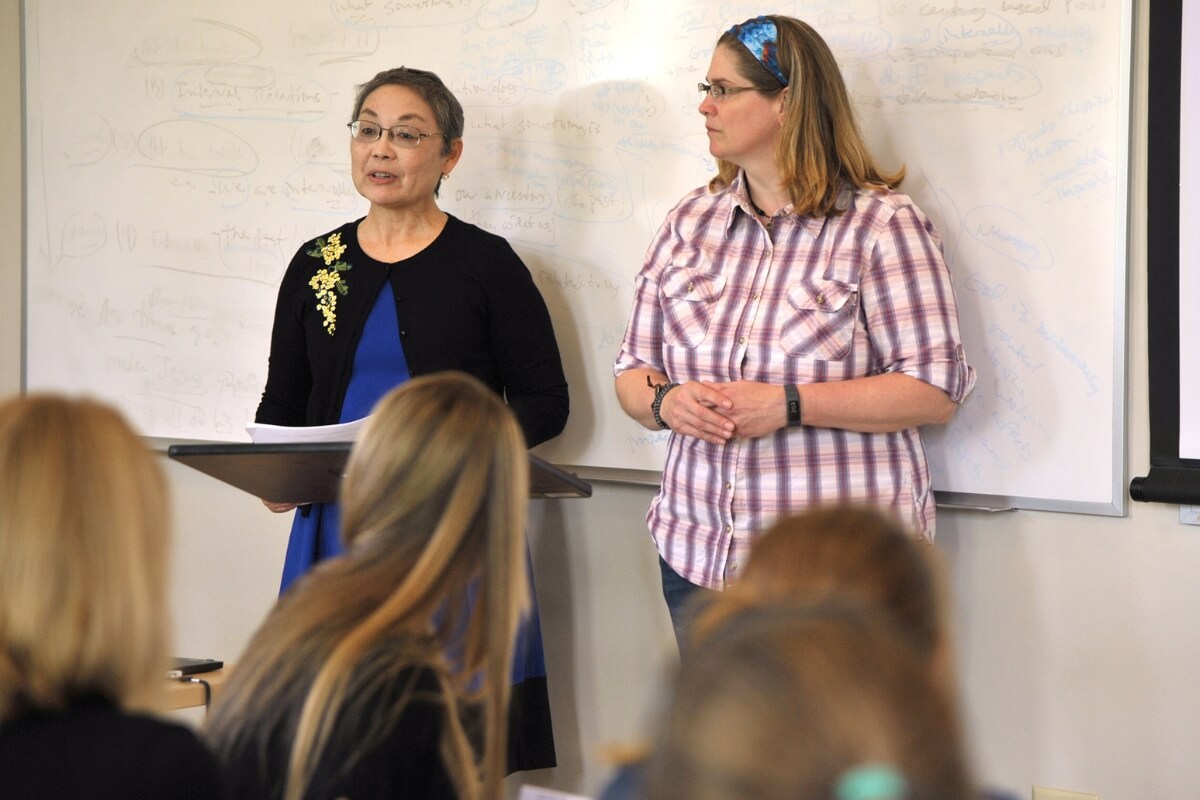
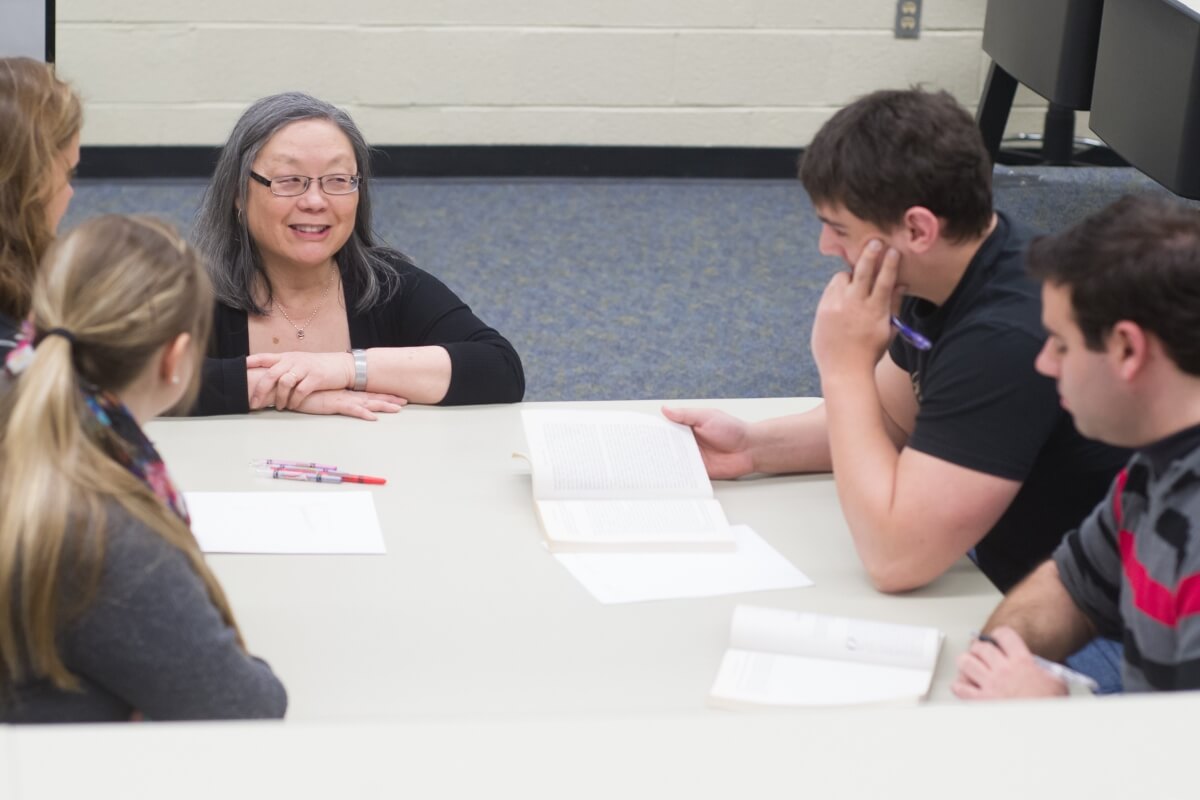
“For more than 30 years, Dr. Shiba has shaped generations of Maryville College students and mentored faculty and staff colleagues with calm wisdom, deep integrity and genuine empathy and compassion,” says Dr. Crystal Colter, professor of psychology and current chair of the Division of Behavioral Sciences. “In planning a celebration of her retirement and her legacy, I’ve been deeply moved by the stories alumni have shared – of feeling seen, supported and empowered by her presence. It’s clear that her classroom has been not just a place of deep learning, but a space of belonging and courage.”
These days, Shiba pulls double duty as both a psychology professor and as the assistant dean for faculty development. As Colter’s predecessor, she steered the division through the rocky adjustments to COVID-19, and her work as part of the College’s administration has given her an opportunity “to model what wise, compassionate leadership looks like,” Colter says.
“Her legacy is one of quiet strength, her influence is woven into the fabric of the MC community, and her impact will echo for years to come,” Colter adds.
A final farewell
Colter is one of the organizers of a reception that will honor Shiba’s impending retirement at the conclusion of the fall semester. It will take place from 3-5 p.m. Thursday, Nov. 20, in the Scots Learning Commons within Thaw Hall, and it’s open to Maryville College faculty, staff, students, alumni and members of the community.
Afterward, Shiba will spend her last few weeks putting a bow on a career that’s changed lives, and just as importantly, changed her. Maryville College, she says, gave her more than a career: It gave her a family, and the exhortation by the College’s founder, the Rev. Isaac Anderson, to “do good on the largest possible scale” was exactly what she needed all those years ago.
“I found friends and colleagues who have been life-giving to me, and this has been a very safe place to raise a family,” Shiba says. “I met my husband after I came here, and it’s been a very safe place to raise a family. It’s important to say, as someone of Japanese heritage, that I’ve also felt the pressure of being in the minority, so alongside all of these really neat things have been a lot of challenges. My ability to end my career as the assistant dean of faculty development has been very circular, because it gave me such joy to accept that position and do the kinds of things for the College that brought me here.
“The bottom line is that I encourage loving kindness. Several years ago, when I had leukemia, I had a stem cell transplant, and it changed the way I saw the world. It made me realize that one’s name isn’t important, because it’s eventually going to vanish … but how you treat people right now influences the way they treat other people with whom they interact, and so peace and kindness can ripple outward. If human beings can become more and more intelligent, we can learn to become more and more kind.
“In the end, I hope I’ve contributed to ways with which we can live together through diversity, where everybody can feel like they belong, and where we all support each other,” she adds. “Wherever you end up, it needs to be a place where you feel better about yourself when you leave than when you got here, and that’s what Maryville College has done for me.”