Maryville College Theatre’s presentation of ‘The Crucible’ opens Nov. 6 at the Clayton Center
Oct. 30, 2025
Four centuries separate Salem from the social media age, but in many ways, the witch hunts never really stopped.
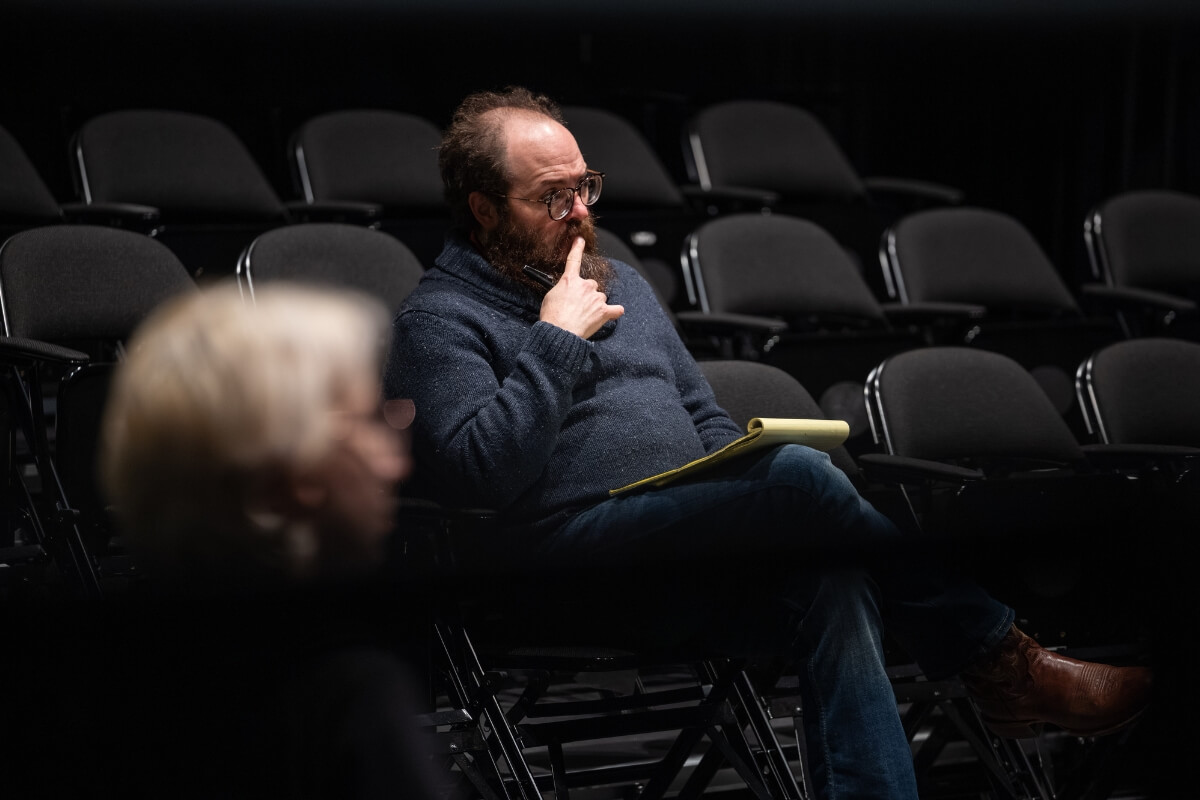
That’s part of what makes Maryville College’s staging of “The Crucible” so urgent, says Director Andy Vaught, who calls it “a play about people making a stand.” For Trevor Morency ’26 — the actor playing the part of John Proctor — and his castmates, that stand feels personal: A test of truth, conviction and what it means to rise up and be courageous in uncertain and fearful times.
“This has always been America, and people standing up to fanaticism and intolerance have always been a part of America,” said Vaught, an assistant professor of theater at MC. “What I love about this play and what we’re talking about is that it reminds us that even in dark times, when there’s so much uncertainty and fear — which a lot of people are feeling today! — the choice to do so becomes necessary and heroic. Just by choosing to uphold our own beliefs, it becomes an act of heroism that’s accessible to everybody, and at its core, this play shows us how we can all be heroes ourselves by standing up for what we believe.”
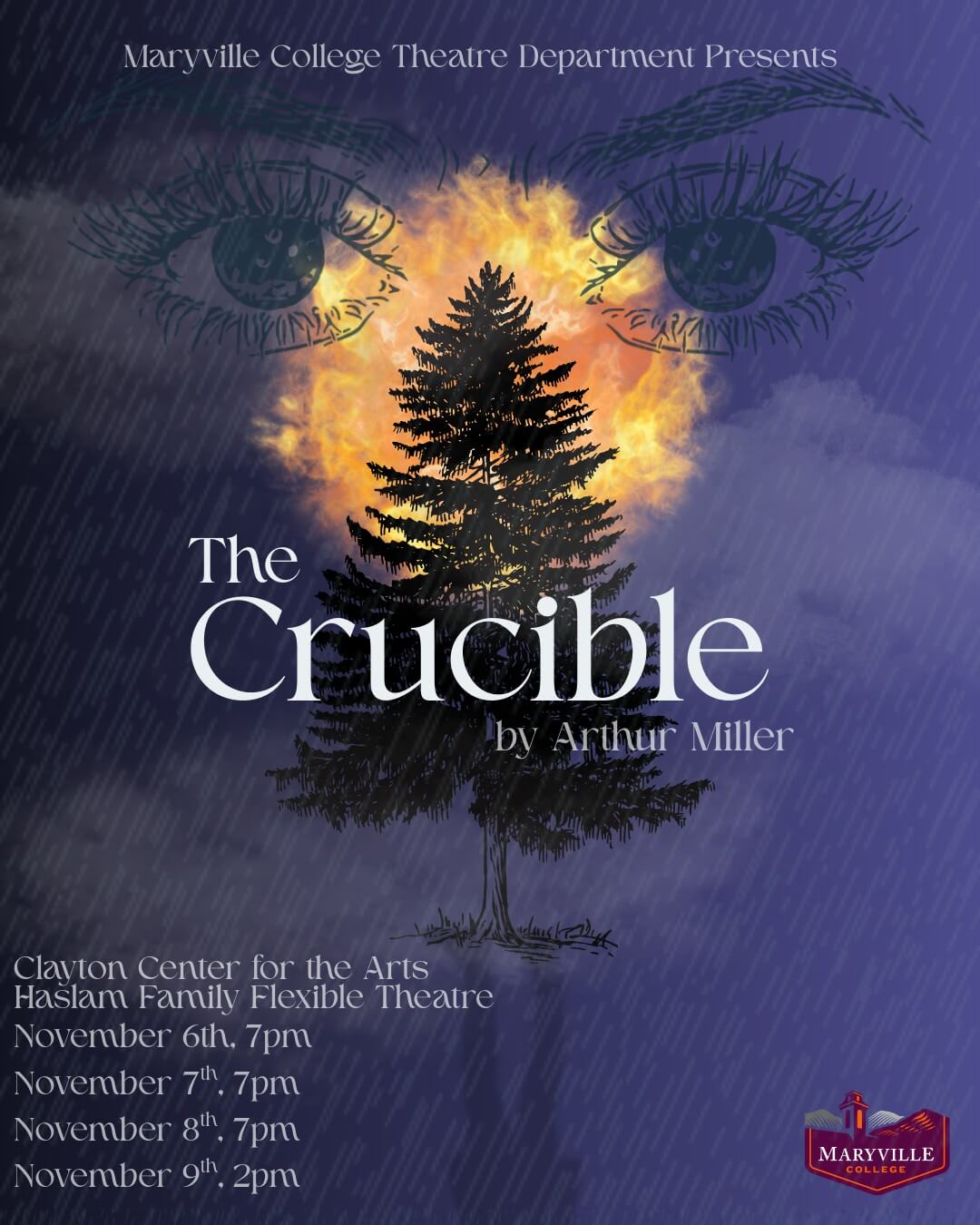
First staged in 1953, Arthur Miller’s “The Crucible,” which the Maryville College Theatre Department will perform Nov. 6-9 at the Clayton Center for the Arts, uses the Salem witch trials of the late 1600s as an allegory for McCarthyism — the era when fear of communism led to blacklists, accusations and careers destroyed by rumor. The play centers on farmer John Proctor, whose refusal to join the frenzy of false confessions pits his integrity against a community consumed by hysteria. Seven decades after its debut, Miller’s warning about the dangers of fear-driven politics still feels hauntingly current — a portrait of what happens when truth becomes a casualty of overzealousness and partisanship.
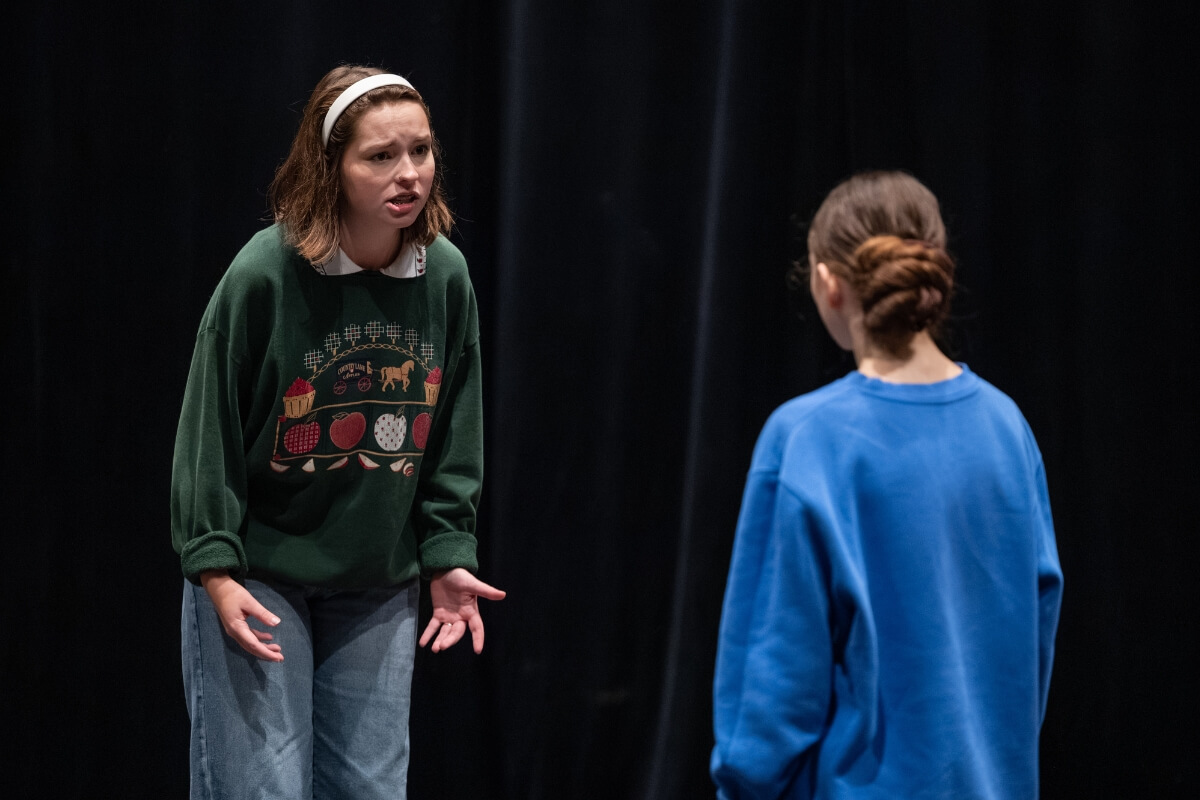
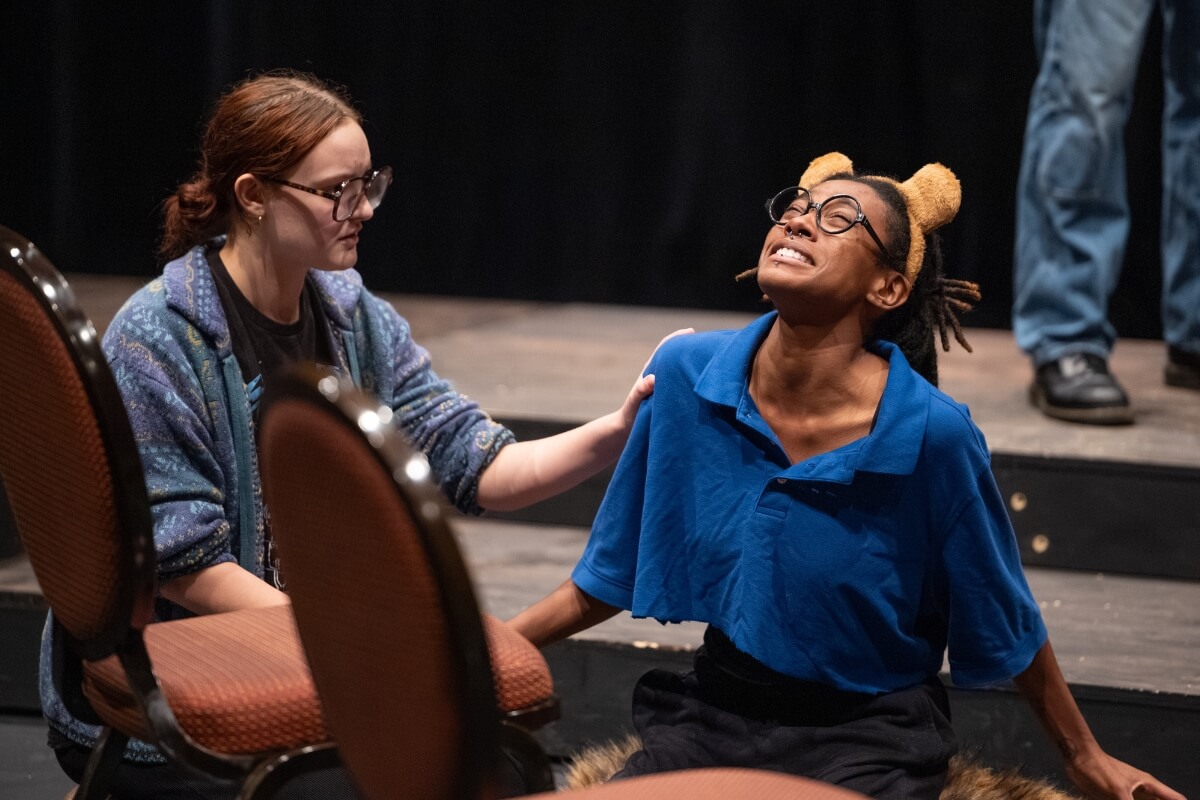
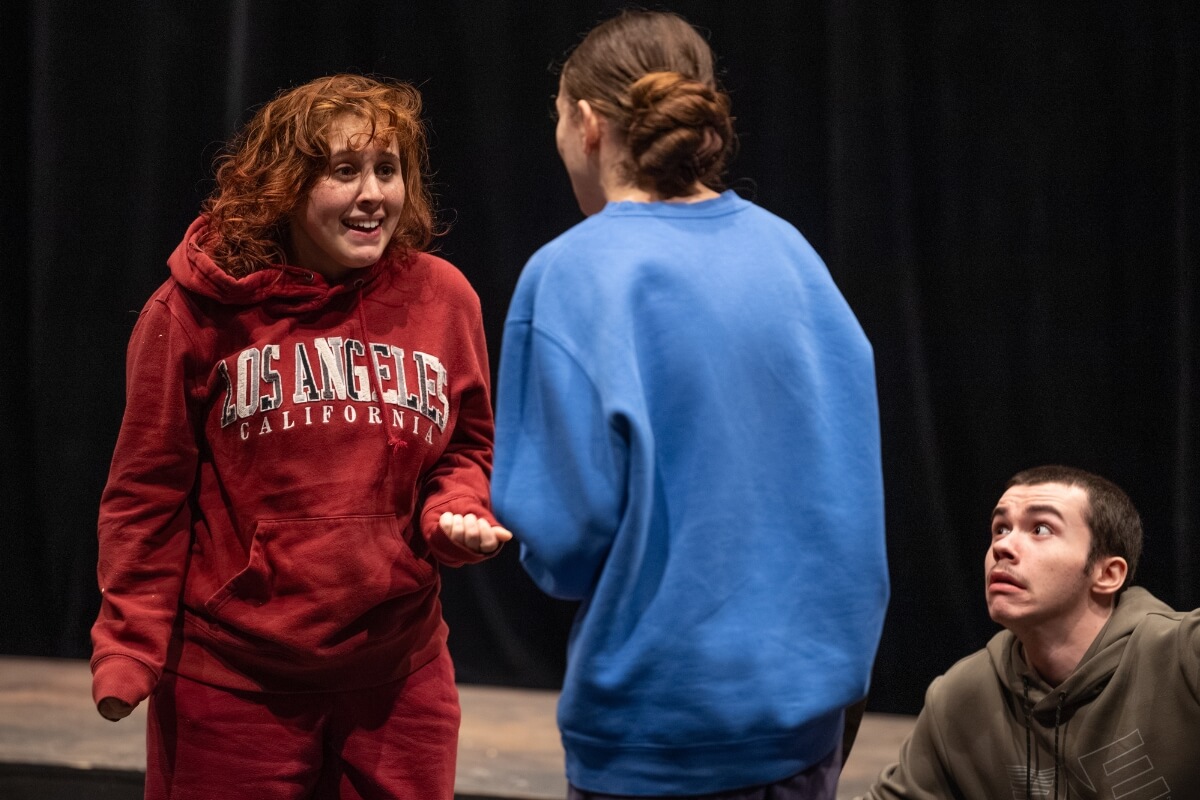
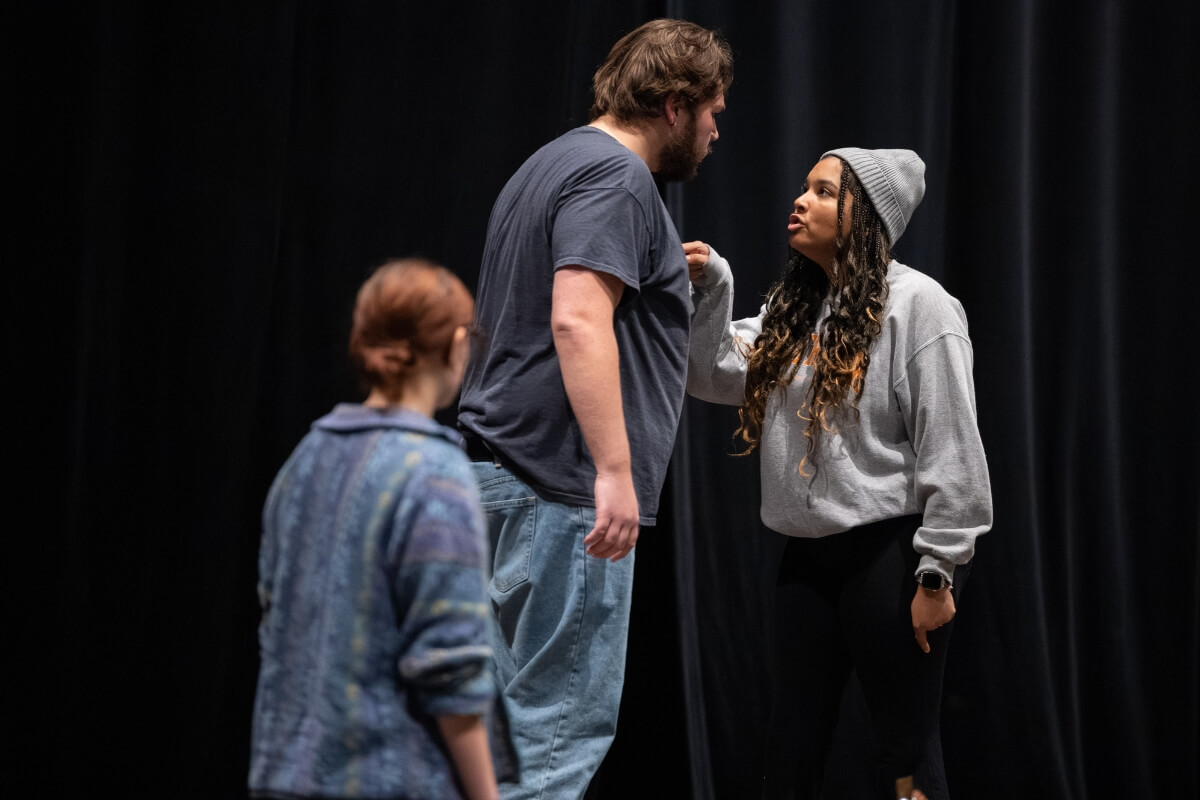
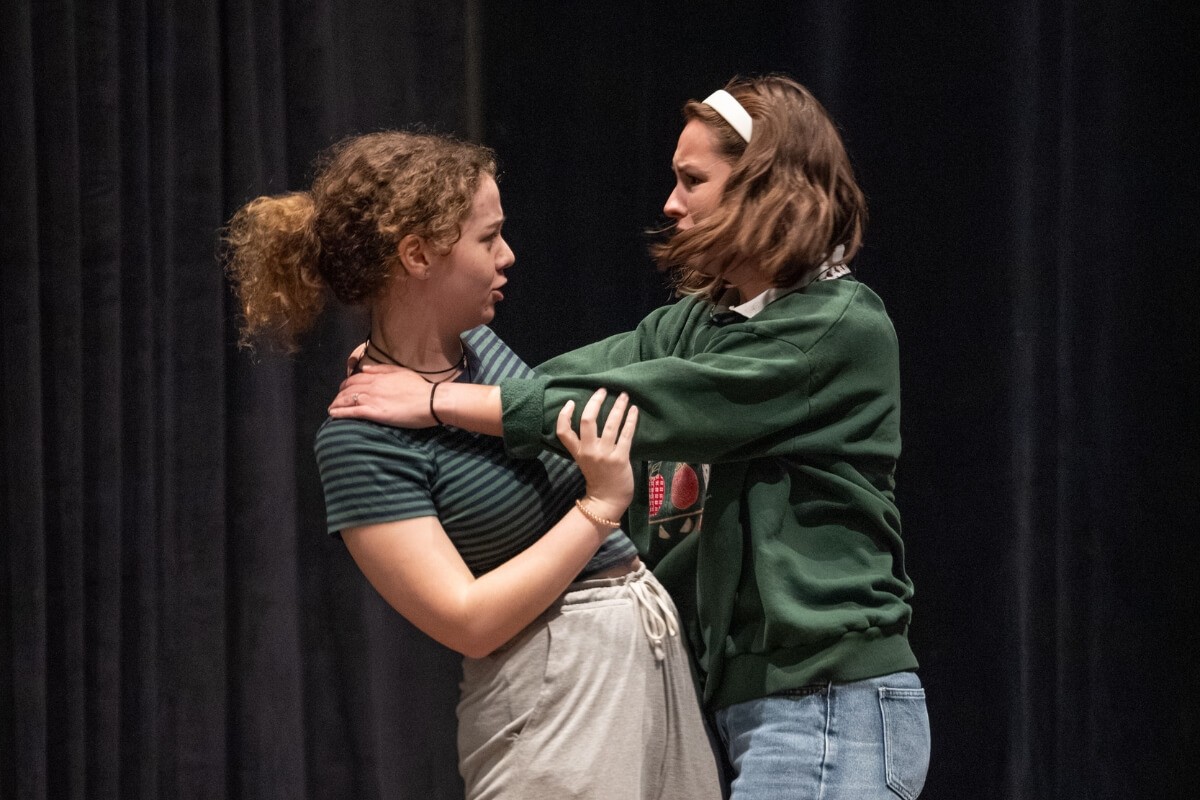
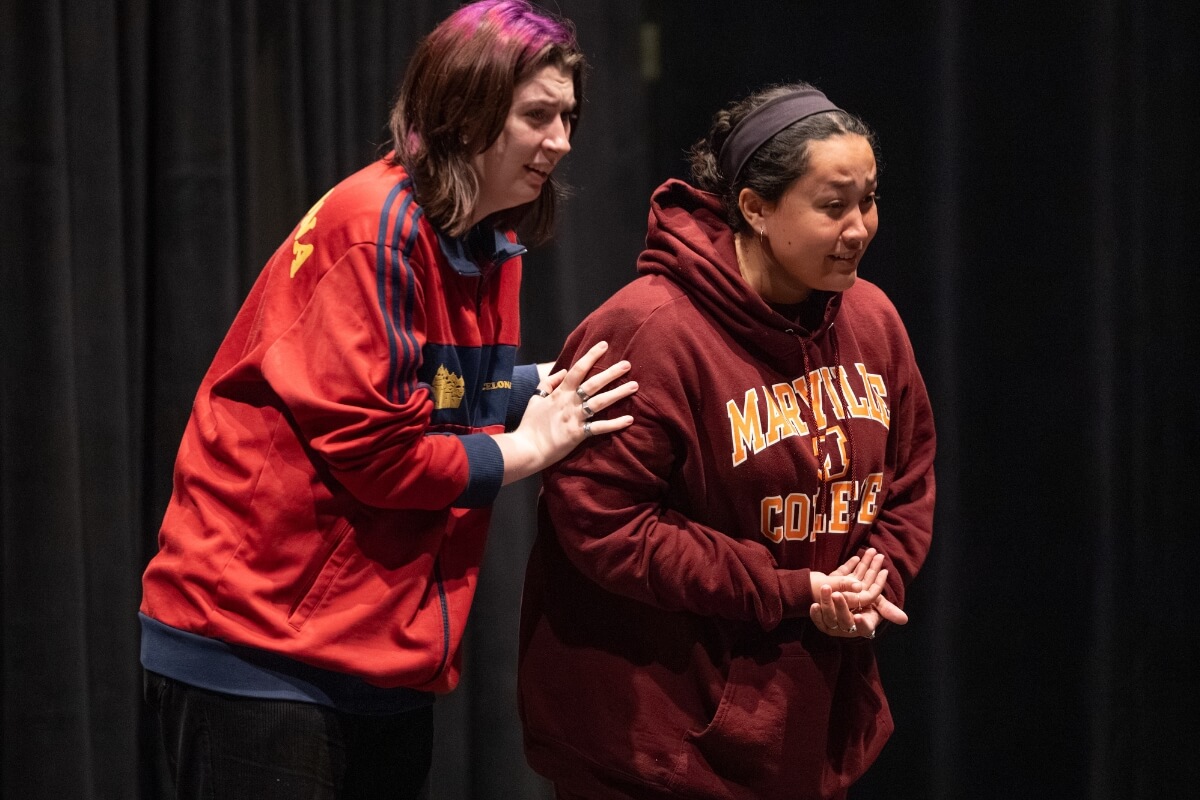
Those moral dilemmas and the fluttering fear that accompanies the integrity of standing for what’s right isn’t lost on the cast, a blend of seasoned student actors and first-timers, including Sasha Hoenie ’26 as Abigail Williams, Meredith Wynn ’26 as Elizabeth Proctor, Sarah Christy ’26 as the Rev. Hale, Julius Hobbs ’29 as the Rev. Parris, Leilani Carden ’27 as Rebecca Nurse, Tristan Hall ’29 as Judge Danforth and Megan Cooper ’26 as Mary Warren.
All of them, Vaught said, have embraced both the weight and the humanity of Miller’s masterpiece, but he’s gone to great lengths to emphasize the light amidst the play’s darkness, encouraging them to explore moments of levity and the flashes of humor and life that make the tragedy hit harder.
“We’re definitely trying to mine the humor, because there are parts that are funny,” Vaught said. “You don’t have a play this long-lasting if it’s a slog-fest. There’s levity in it, even if it’s about people taking a stand, which is a lesson I think we all need to learn. And what we’re doing is actually learning history through these characters, as well as the ideals we need to strive for.”
For Morency, a senior English major who once considered a Theatre Studies degree, taking on the role of Proctor has been both a homecoming and a challenge. He first encountered “The Crucible” in high school English class, reading the lines of Reverend Hale from behind a textbook. Now, under the lights of the Haslam Family Flexible Theatre, he’s breathing new life into one of American literature’s most tormented heroes and drawing on contemporary angst that he feels would have inspired Miller to write it today, had he been born in 1988.
“Every day feels like a metaphorical witch hunt,” Morency said. “Miller wrote this in response to McCarthyism, but it could have been written today. The play still speaks to what happens when fear takes over reason — and when people are punished for simply being themselves.”
That relevance isn’t lost on Vaught, who sees deep connections between the play’s moral conflicts and the college’s own Presbyterian heritage.
“There’s a Calvinist spirit that runs through these characters,” he said. “I think the story plays into this moment of intense synchronicity and idea of going out and making this world better by who you are and what you choose to be. I mean, that’s what we talk about when we quote (Maryville College founder Rev.) Isaac Anderson, right? ‘Do good on the largest possible scale.’ There just a whole lot of intense resonance that’s happening with this work right now, and a whole lot of import, whether we like it or not.”
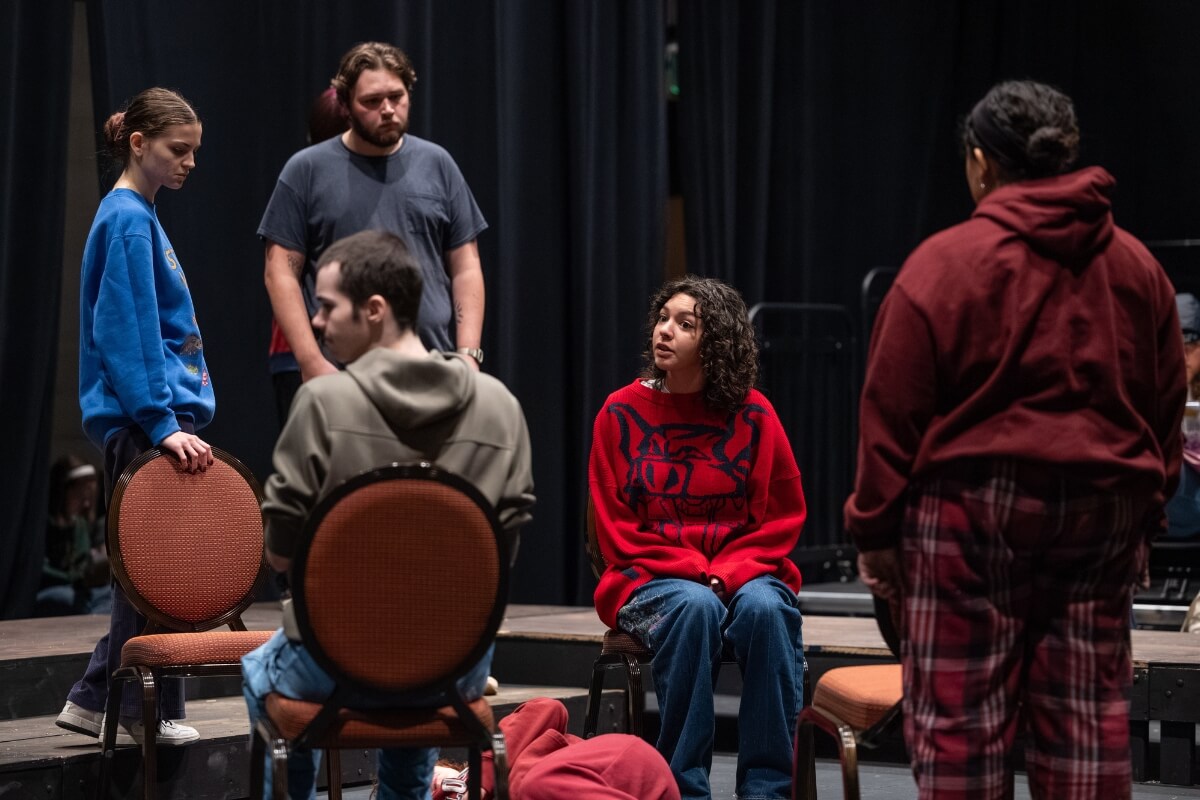
The result is a production that’s as immersive as it is introspective. Students from across campus — not just theater majors — have joined the effort, building sets, designing costumes, and embodying characters who must decide what they truly believe in. It’s a reminder, Vaught said, that theater at Maryville is a “team sport,” one where collaboration and conviction matter more than budgets or résumés.
“The MC Theatre Department is full of so many talented, hardworking individuals who all fervently chase other dreams and ambitions, yet everybody still puts their all into each of these plays,” Morency said. “This definitely draws me in, and I think the department sees that non-majors can be just as passionate about their programs of study as they are for acting, lighting, carpentry, costuming, directing and more.”
And in a play like “The Crucible,” when so many of his fellow cast members feel such seething frustration with the uncertain socio-political climate beyond the campus gates, the ability to put themselves into the individuals they portray on stage is a way of standing firm on their own convictions, Morency added.
“If the audience is to leave with some thoughts, I hope they see a reflection of current events in the cruelty wielded by those in power; an understanding of the importance of both social and scholarly education; and a message that there are others who will fight back alongside you,” he said.
And that, Vaught added, is at the heart of the Maryville College Theatre production of “The Crucible”: That integrity in a world that rewards conformity, and the stance taken when bankrupt persecution threatens to overwhelm, still matter and can still be found.
“That’s what this play encourages us to do,” he said. “It doesn’t leave us feeling broken; it leaves us feeling brave.”
“The Crucible” will be staged at 7 p.m. Thursday, Nov. 6, through Saturday, Nov. 8, and at 2 p.m. Sunday, Nov. 9 in the Haslam Family Flexible Theatre of the Clayton Center for the Arts. Tickets are $12.50 plus tax for general admission and free for Maryville College faculty, staff and students, although a printed ticket from the Clayton Center box office is required for entry.
For more information, call the box office at 865-981-8590.