Maryville College unveils renovated Archives to preserve and share 200-plus years of history
March 16, 2026
For years, Maryville College’s history lived in the shadows — tucked into a cramped basement room in Fayerweather Hall, where handwritten sermons, century-old letters and museum-quality artifacts competed for space with filing cabinets and folding tables.
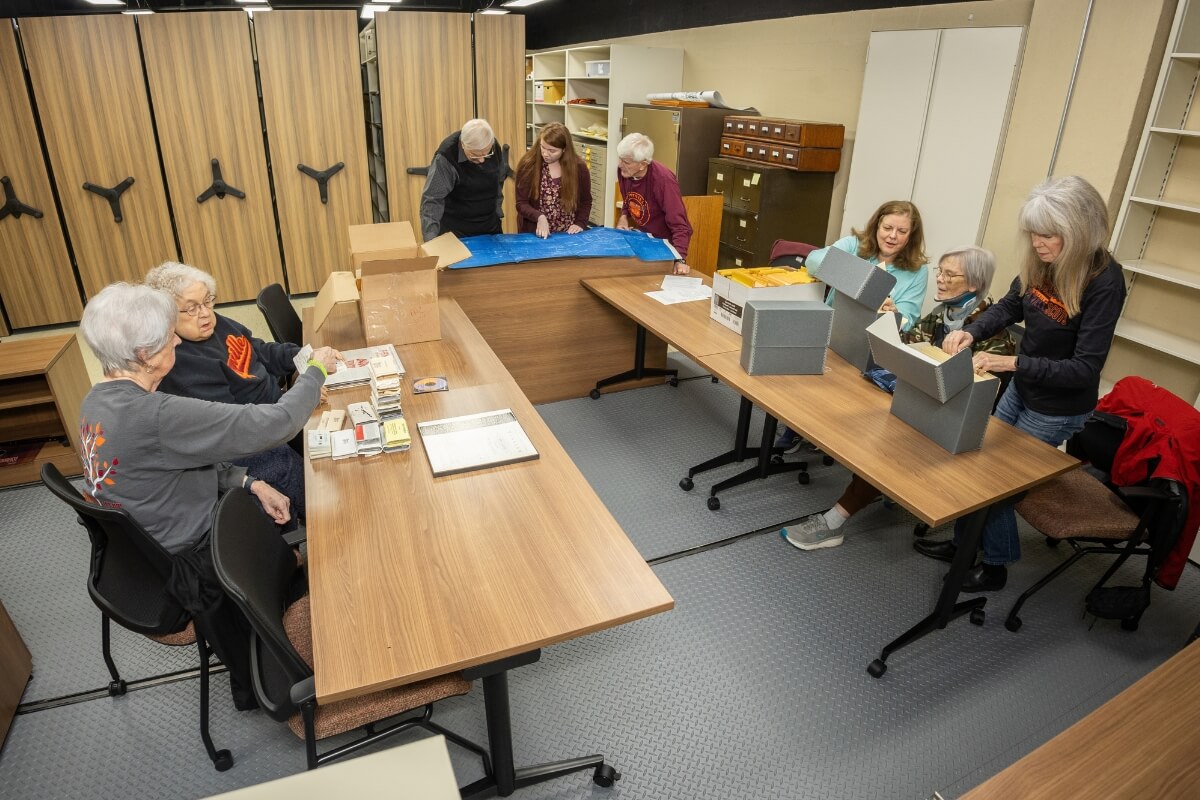
This summer and fall, that changed, as the College completed a full renovation of its Archives, transforming the once-overflowing room into a modern research space designed to preserve, study, and share more than two centuries of institutional memory. The renovation, which took place during the fall semester of the 2025-26 academic year, reorganized the Archives’ physical footprint and reimagined its purpose.
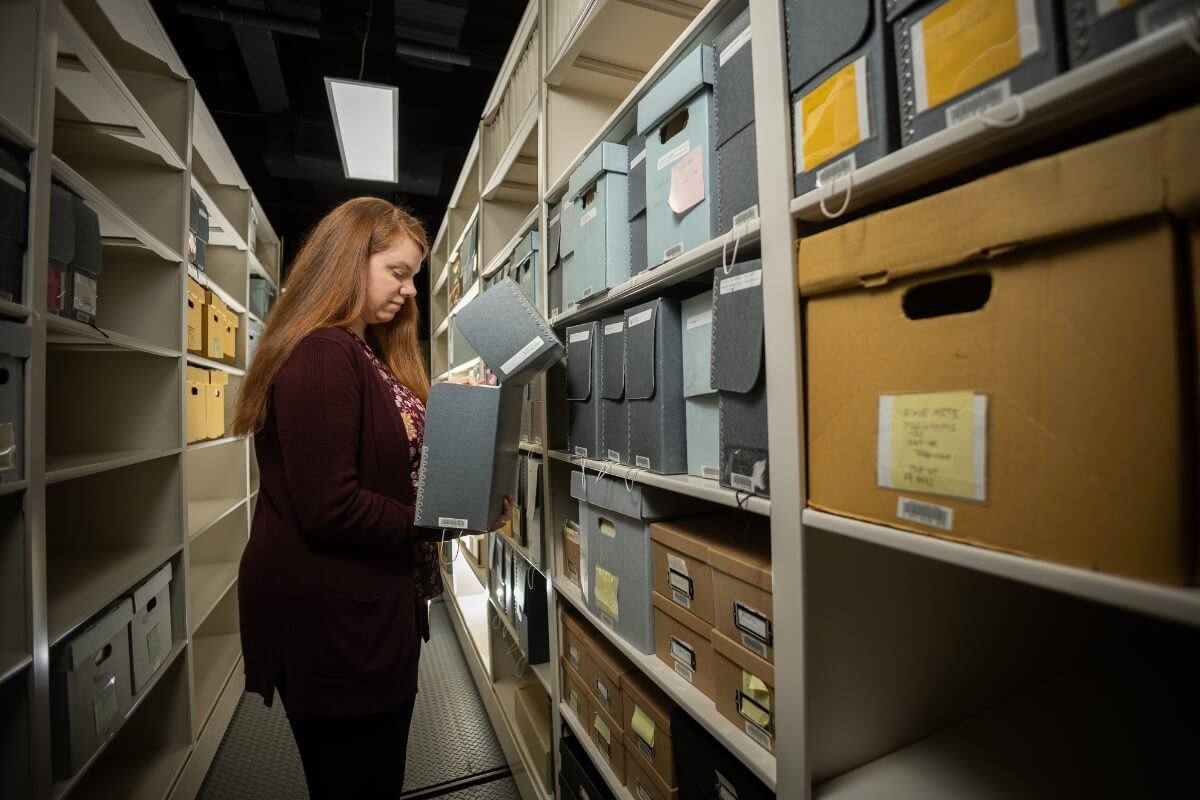
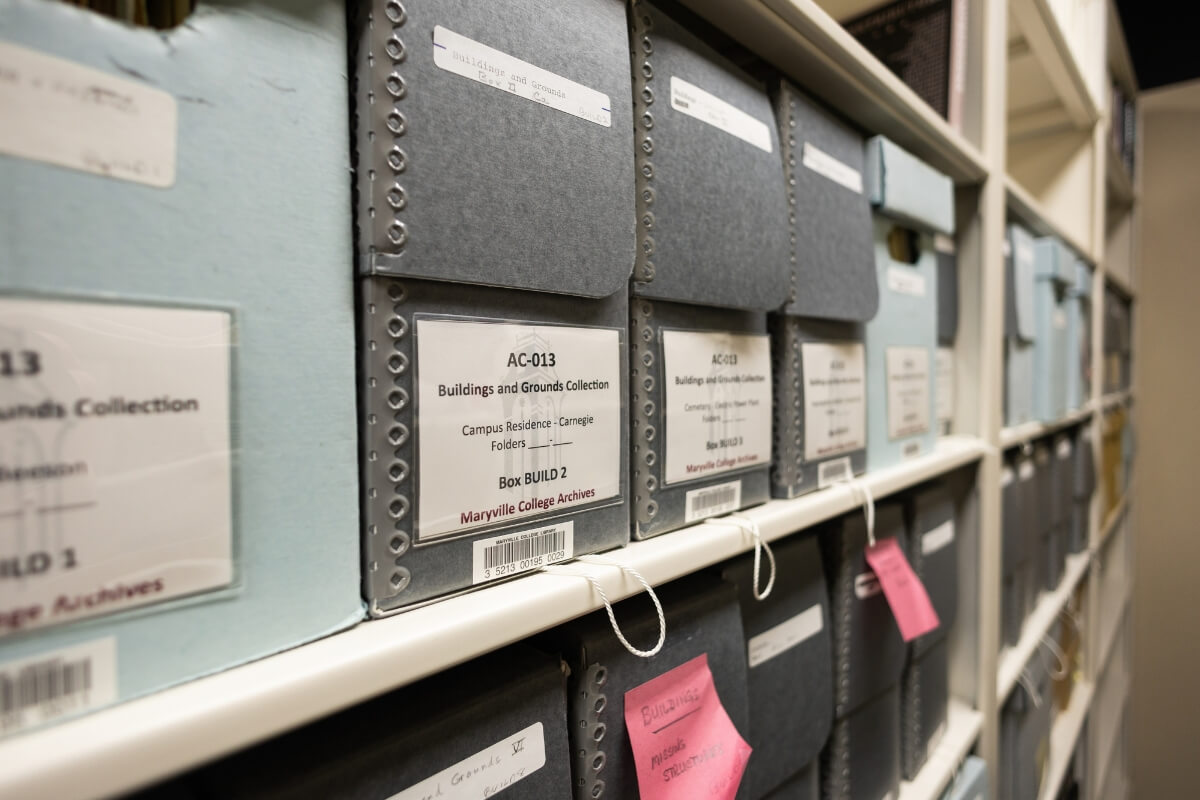
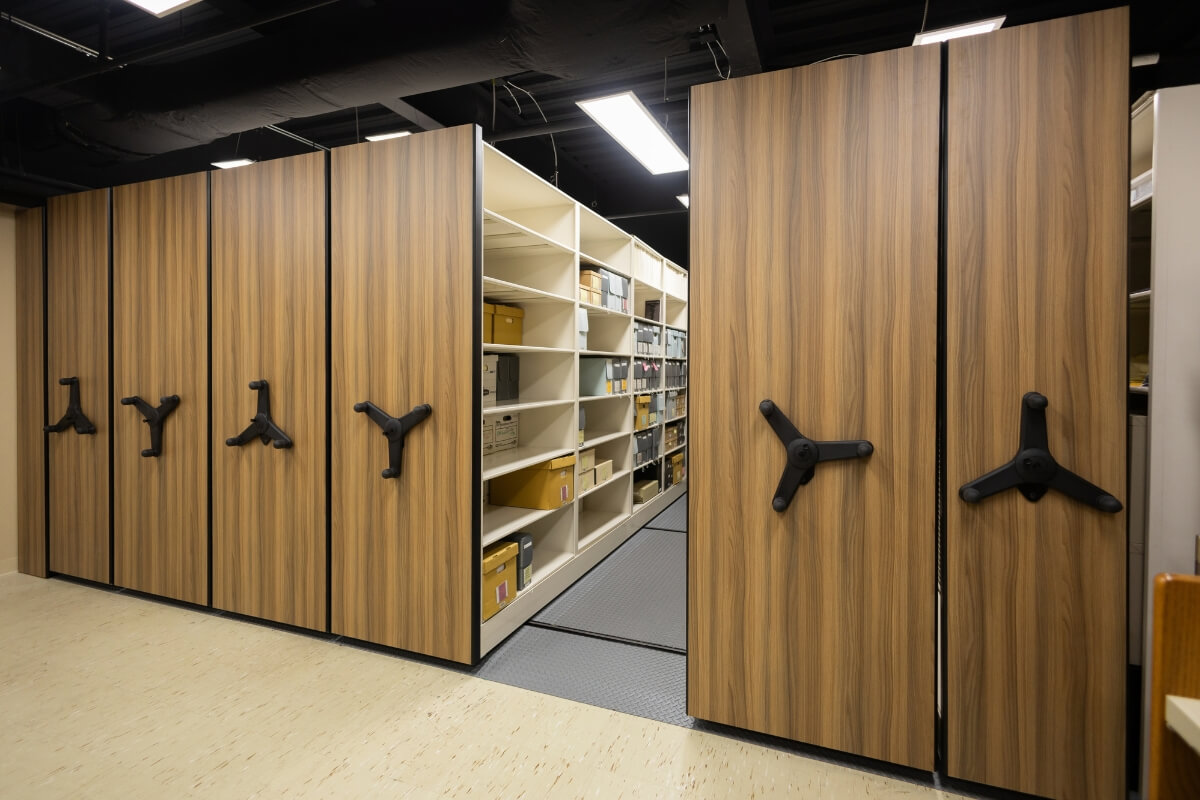
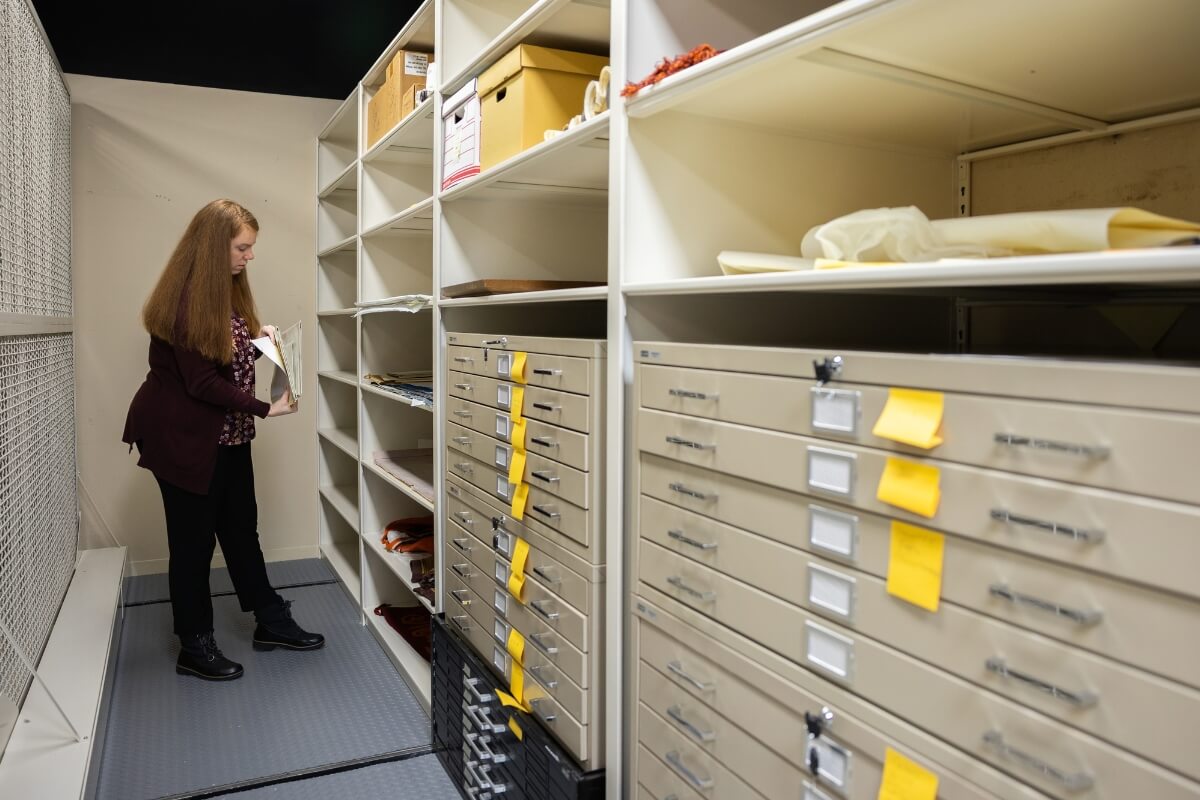
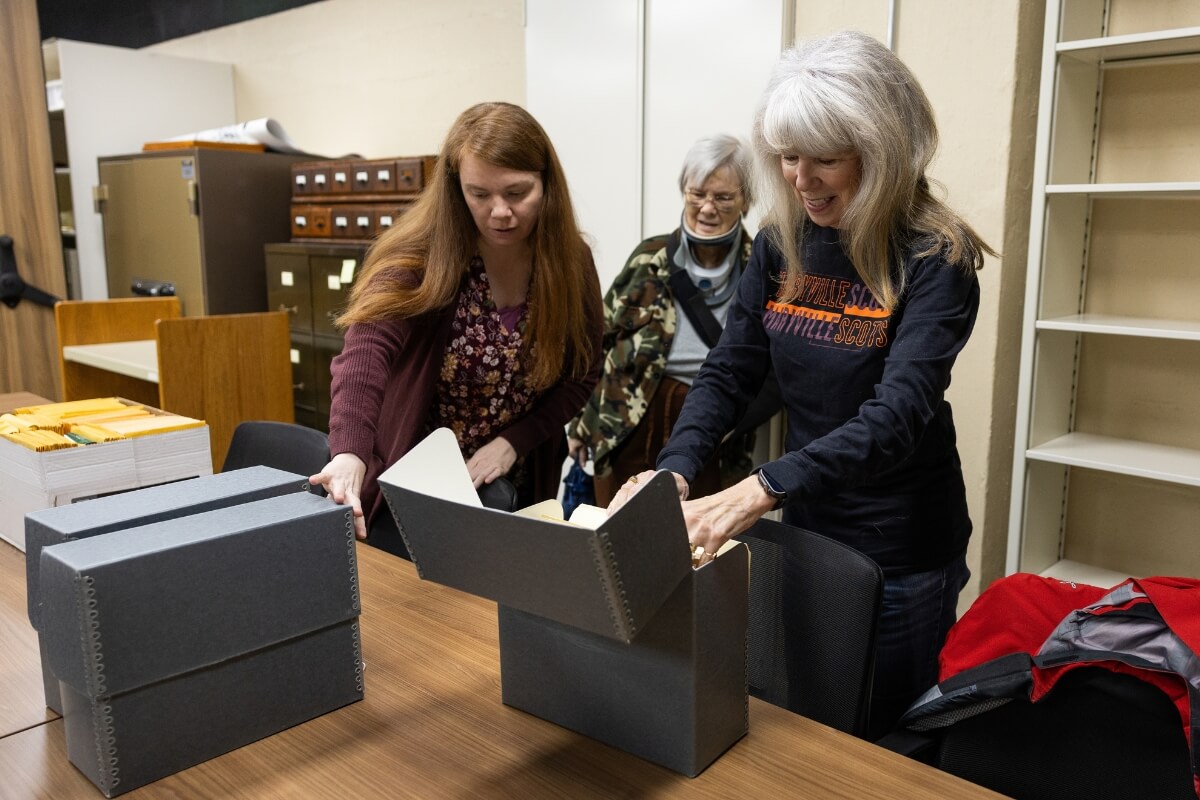
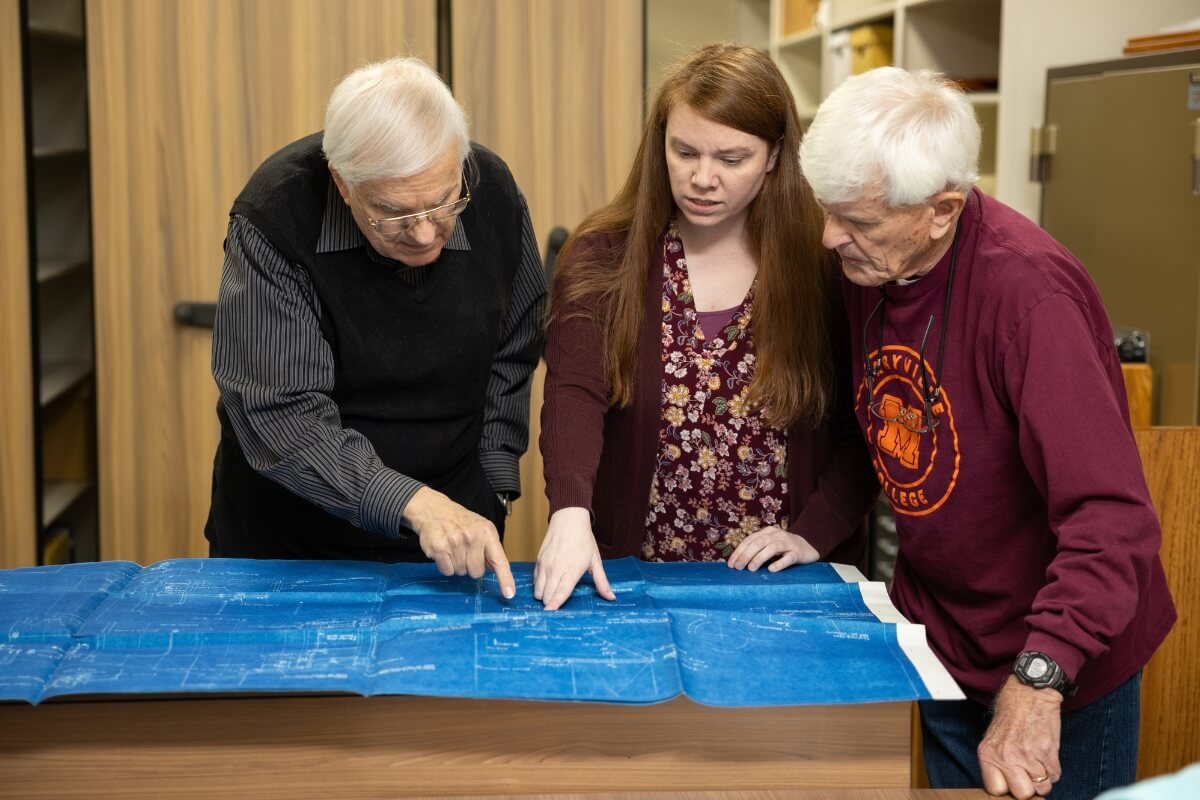
What was once a tightly packed storage room is now a flexible research space with compact shelving, improved lighting, dedicated work areas for staff and volunteers, and room for classes, researchers and visiting alumni. For Maryville College Archivist Amy Lundell ’06 — the first professional archivist in the College’s history — the transformation reflects a long-overdue investment in both preservation and access.
“We have so much more space to move around and work!” Lundell said. “Everything that was stored on both sides of the room now fits into the new compact storage on one side of the room. This allows me to have a dedicated personal workspace, a workstation for volunteers and a flexible space for classes, researchers and processing work. New LED lighting makes it much easier to see and work with our collections. I’ve had a few research appointments, and our new large TV screen helps greatly with sharing our digital collections.”
The growing necessity of historical preservation
Historical preservation wasn’t always intentional; many early records and papers were held as personal papers of men like College founder the Rev. Isaac Anderson. When Anderson’s home caught fire in 1856, his extensive personal library was a victim of the conflagration, and Anderson’s personal papers, along with the majority of the administrative records of the College’s early years, burned as well. During the Civil War, the institution was used as a troop garrison, and any remaining administrative records were lost and destroyed because of the conflict, Lundell said.
“What remains in our collections from the early years of the College came from alumni who donated material after the Civil War, a handful of early records not in the Anderson home and kept safe during the War, and Presbyterian Church Synod minutes,” she said. “Our fifth president, Dr. Samuel Tyndale Wilson (18)78, began compiling the historic records of Maryville College while writing the first published history of the College in 1916 (“A Century of Maryville College 1819-1919: A Story of Altruism”).
“His final act as president before retiring in 1930 was the commissioning of a vault in the Registrar’s Office in Anderson Hall to house the historic records, as he realized that they could no longer be safely stored in the president’s office. Over the years, as the collection grew, there was no longer enough room in the vault, and material began to be stored in the basement of Anderson Hall and other locations on campus.”
After Fayerweather Hall was struck by lightning and burned in May 1999, College officials moved the Registrar’s Office into the rebuilt Fayerweather, and the historical records into a room in the basement, Lundell added. There they continued to grow, managed primarily by alumni volunteers until planning began for the College’s 2019 bicentennial celebration. The College needed, administrators decided at the time, a professional archivist to oversee and care for those documents, and in 2018, Lundell was hired.
“I have been fascinated by history since I was a child, and this led me to major in History here at Maryville College and go on to obtain graduate degrees from (Middle Tennessee State University) and the University of Maine,” said Lundell, a legacy Scot whose parents, David ’76 and Laura Dance Lundell ’76, graduated from MC, along with a grandmother, LaVonne Heard Lundell ’48, and an aunt and uncle, Barbara Lundell Peters and Thomas Peters, both members of the Class of 1978.
“Following nearly a decade of working as a contract archivist with the National Park Service, I became the first professional archivist at MC in 2018,” she continued. “Being a third-generation Maryville College graduate, I grew up hearing stories about MC history from my family and spent many evenings, weekends and summers on campus. My work as the MC archivist is not only a professional position in a field I love, but it also grants me the ability to help preserve and provide access to historical material to which I have a personal connection.”
It’s a responsibility she feels keenly — not just the oversight of the College’s historical collections, but in using them to share the story of an institution that has impacted countless lives for more than two centuries.
“I love being able to share the fascinating history of our institution with alumni, students, faculty, staff and members of the public,” she said. “There is also a great sense of responsibility in helping others understand all aspects of MC history, from the celebratory to the uncomfortable. Some of my favorite interactions are with our students. To see them begin to understand different historical eras in context or make connections that help them place themselves in the MC story is always exciting.”
In addition, numerous families have found greater connectedness thanks to historical context provided by her knowledge of the College’s historical records. Members of the public frequently reach out to inquire about a distant relative who was discovered to have graduated from Maryville College, she said.
“As we research their family members, I can see their interest in the College as a whole grow, and many of them have become friends of the College,” she said.
Knick-knacks, bric-a-brac and treasured trinkets
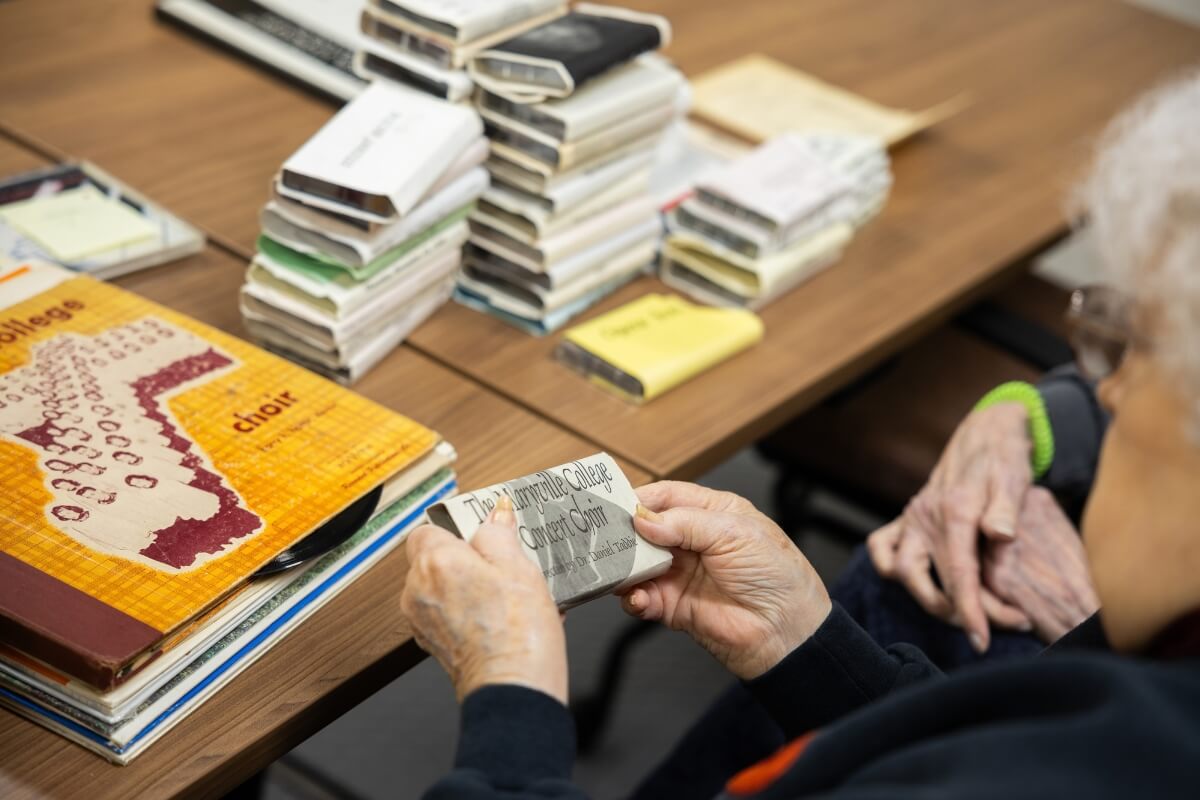
Papers, books, documents and letters, she added, aren’t the only items in the Archives. Anderson’s powder and shot horns are part of the collection, along with various oddities that seem, at least on the surface, macabre: A lock of braided hair from the deceased sister of an alumnus, photographs of family members gathered around a deceased loved one (a Victorian-era mourning tradition, she added), and a pair of life-sized baby dolls whose eyes open and close at random that belonged to Susan Wiley Walker, the wealthy widow of a Pittsburgh, Pennsylvania, industrialist and sister-in-law to the MC chaplain at the time who oversaw construction of RT Lodge.
Some of the oldest items include the letters of Rev. Dr. Robert Henderson that date from 1807 to 1820. A founding member of the College’s board of directors, he was a Presbyterian minister who founded a number of churches in East and Middle Tennessee, but as crucial as those letters are, they pale in comparison to Anderson’s own handwritten sermons and letters, his traveling communion set, and his original daguerreotype photograph.
“These provide a tangible, personal connection to the man who not only founded Maryville College but poured his heart, soul and physical health into the College,” she said. “Secondly, I would also consider the personal diaries of (Wilson) as some of our most valuable items. A few years prior to his death in 1944, Dr. Wilson donated his diaries to the College.
“These diaries are a nearly complete set from 1876-1939. Through these diaries, we see a Maryville College student become an MC faculty member, MC staff member, MC president and MC president emeritus. From founding the first baseball team to teaching Spanish to planning for the Centennial to building relationships with major MC donors, Dr. Wilson’s diaries provide a detailed glimpse into over half a century of MC life.”
And the collection continues to grow. One of the items of which she’s most proud to have personally procured for the collection is the Sophirodelphian Society Minute Book. The Sophirodelphian Society, Lundell explained, was one of the first two literary societies on campus and was established around 1828; four years ago, an East Tennessee antique book dealer came across the tome in a collection he had recently purchased; recognizing its value to Maryville College, he reached out to offer it at cost.
“As this was a missing piece of our antebellum history, we were happy to do so,” Lundell said. “The minute book is in excellent condition and covers the weekly meetings of the society from 1829 to 1837. It provides us with not only the details of various meetings but also additional names of students that we did not have on our compiled list of pre-Civil War students. With the majority of pre-Civil War records destroyed in the 1856 fire at Dr. Anderson’s home and the Civil War, this is an invaluable piece of MC history.”
In their own way, each piece of paper is invaluable, given its proper place and context in the grand and complex story of Maryville College. For Lundell, the work is ultimately about connection to that story — between past and present, memory and meaning. Every diary, letter or artifact preserved in the Archives carries a story waiting to be rediscovered, whether by a student encountering the College’s history for the first time or an alumnus seeing their own experience reflected in a longer continuum.
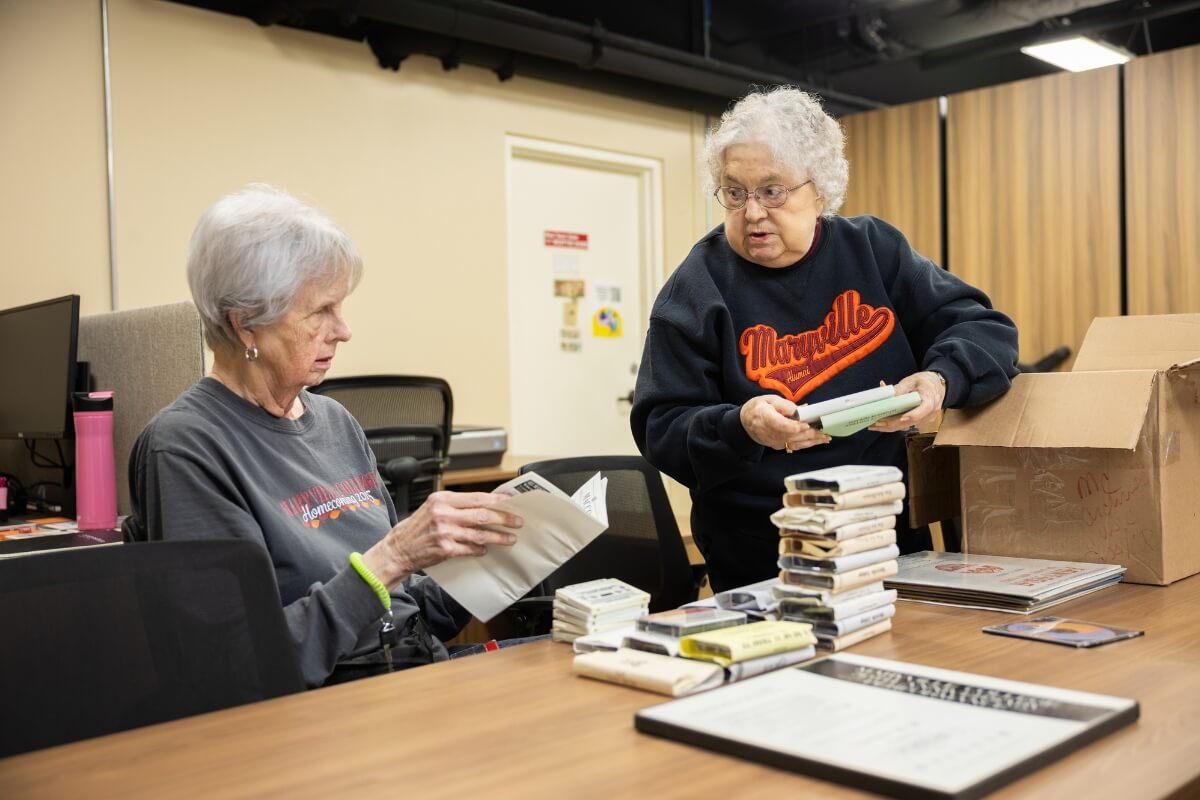
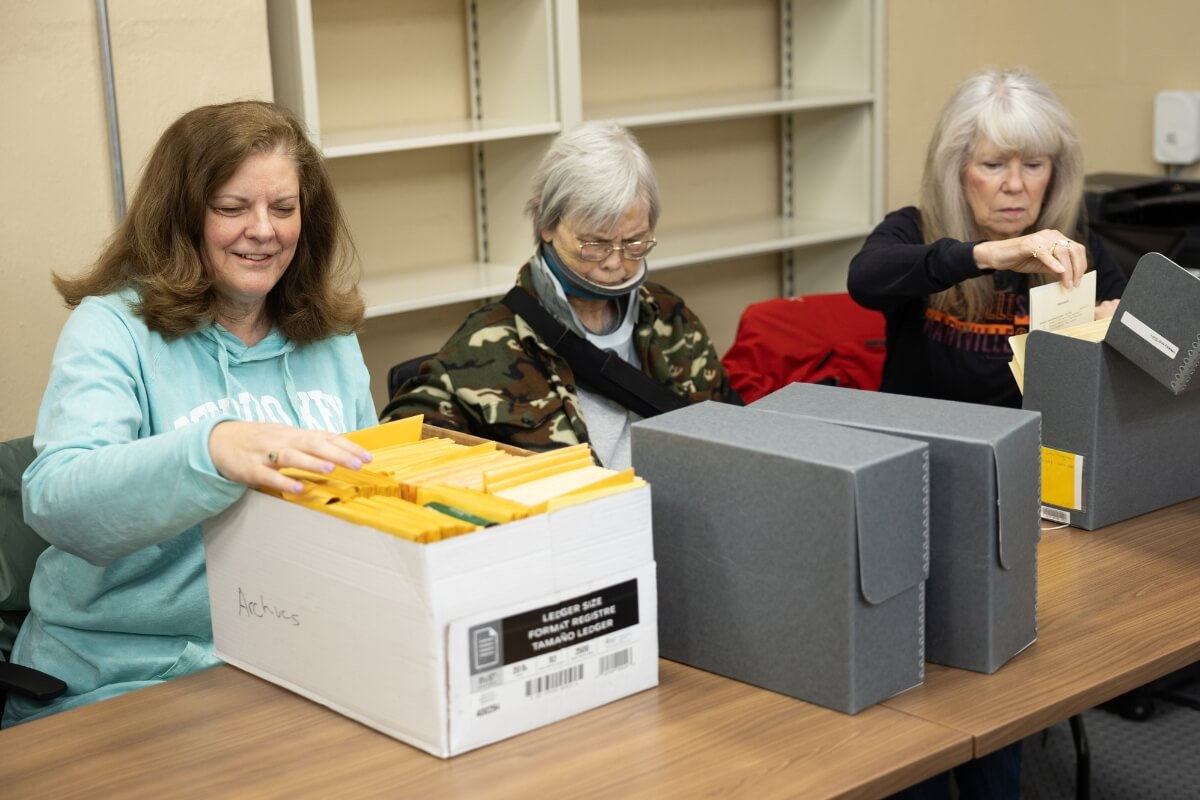
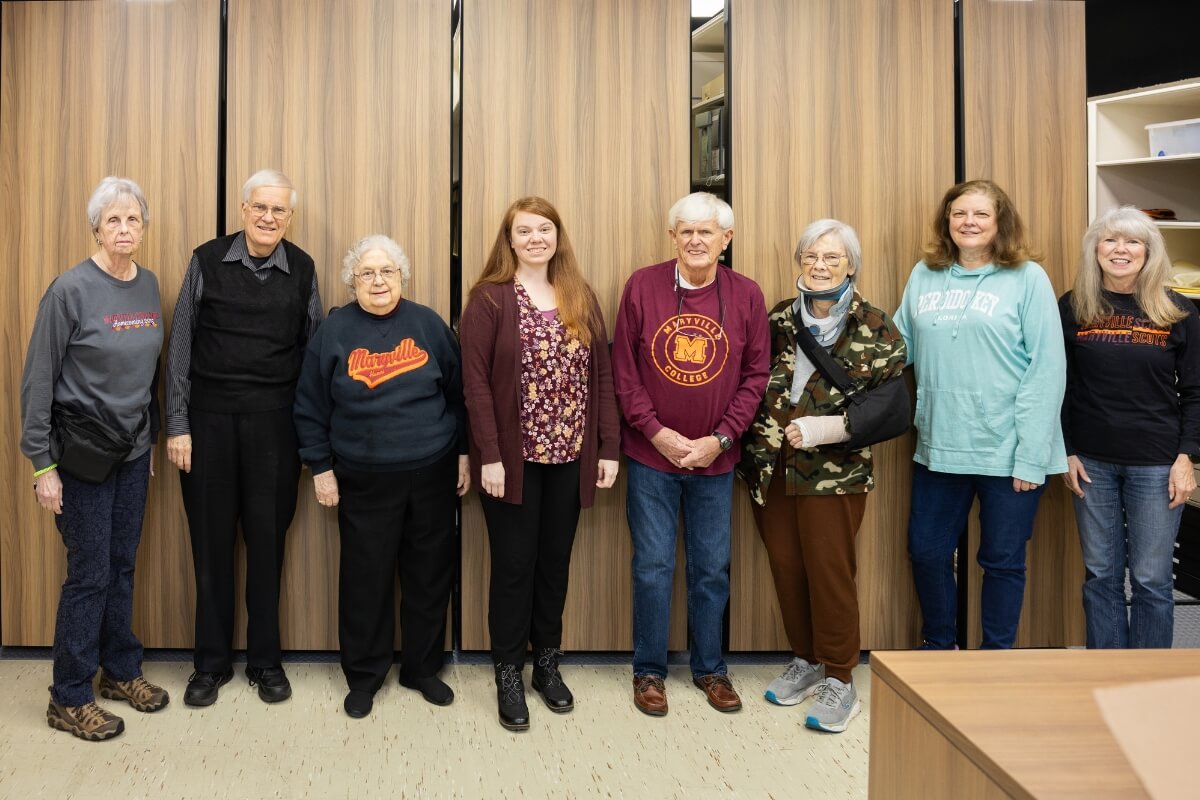
In a newly renovated space beneath Fayerweather Hall, Maryville College’s history no longer sits quietly in the shadows; it is being carefully tended, thoughtfully shared, and carried forward, and the dedicated volunteers who show up weekly to assist Lundell in cataloging and cleaning, digitizing and documenting. For Julia Bird Cooper ’72, volunteering to work in Archives during KT Days — the College’s annual give-back program that brings alumni back to College Hill to donate their time and labor in sprucing up the institution’s grounds and its archival collections — was the beginning of a relationship that helped occupy idle time and most recently allowed the Coopers to fund a portion of the costs for renovation of the Archives space.
“I didn’t even know it existed!” said Cooper, whose husband, Robert Cooper ’71, retired first and began volunteering hours during KT Days to various outdoor projects. “I would come to KT Week for a couple of days before I retired, but then we started coming for the whole week, I didn’t want to work outside where it’s so hot, so I volunteered to work in Archives. I don’t think anybody who’s a student here now understands why the Archives are so important, and I get it: When you’re young, you don’t appreciate it.
“When you’re first out of school, you don’t have any money, but over time, you start to understand that it’s important to support and give back to things in life that are important to you, because if you don’t, they’re not going to be there. We’re lucky we’re in a place now where we can do some philanthropy like this to support the College.”
The work is rewarding, she added, and fascinating as well: Despite being an alumna, she’s learned more about MC through her work in Archives than she ever did as an undergraduate — like how the Northern benefactors of some of the College’s most prestigious buildings (Thaw Hall, specifically) never set foot in the buildings that bear their names. And then some of the old materials, she said with a laugh, demonstrate that in many ways, life during the College’s early days mirrors the way current Scots and their parents get along today.
“There was one family that lived on a farm in Delaware, and the parents had three kids who came to Maryville College,” Cooper recalled. “The mother would write these really long letters filled with angst, just worrying about them, on and on, and the dad would just write, ‘If you need money, let me know.’ It’s just so interesting to me how people’s perceptions were back then.”
Like the Coopers, so many of the volunteers who donate their time to assist Lundell recall their undergraduate years as some of the most formative of their lives, and volunteering their time and energy during their retirement is a way to renew bonds with an institution they loved and continue to. And like Cooper pointed out, age brings with it a renewed sense of appreciation for and interest in their alma mater.
“While processing collections, they are able to learn about those who came before and after their time at MC, which helps to build those connections,” she said. “Several of my volunteers have deep MC roots, so their knowledge is helpful to identify people, places and events in College history. Prior to the renovation, our available workspace was very small and scattered about the room, so no more than two people could work together on a project.
“With our new flexible research space, we can have more than two working on a project at a single time. All the volunteers can more easily interact as they will be working in the same area instead of being spread about to wherever we could find space in random corners of the room. I’m so very thankful for all the support, financial and otherwise, from our alumni for making this possible!
“Without our alumni, this renovation would have remained a pipe dream,” she added. “Between the generous individual gifts from alumni like Robert and Julia Cooper, and gifts from the estates of MC alumni Jack Randall Rosensteel ’60 and L. Jane Huddleston ’49, this dream of a modern, accessible archive has come true.”
For more information about the Maryville College Archives, including accessing the office’s digital collections, visit the website at https://library.maryvillecollege.edu/archives/. For research assistance, to schedule a research appointment, or to find out more about the donation process, contact Amy Lundell at amy.lundell@maryvillecollege.edu. For alumni who live outside of East Tennessee but would like to contribute as a volunteer, a virtual Archives project is available for registration as part of KT Global, the month-long give-back program during which alumni across the country and around the world can “do good on the largest possible scale” by signing up for various community improvement and beautification efforts.