Maryville College and community peers celebrate national Carnegie Classification designation
May 13, 2026
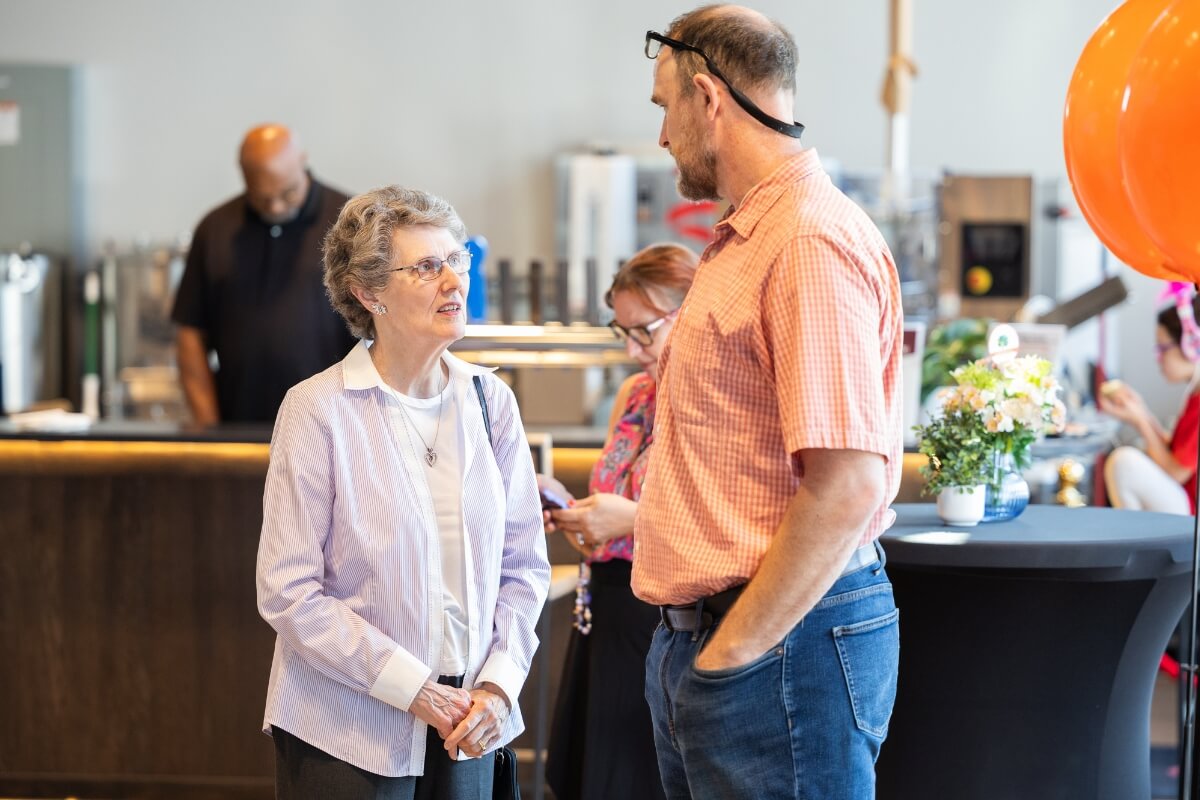
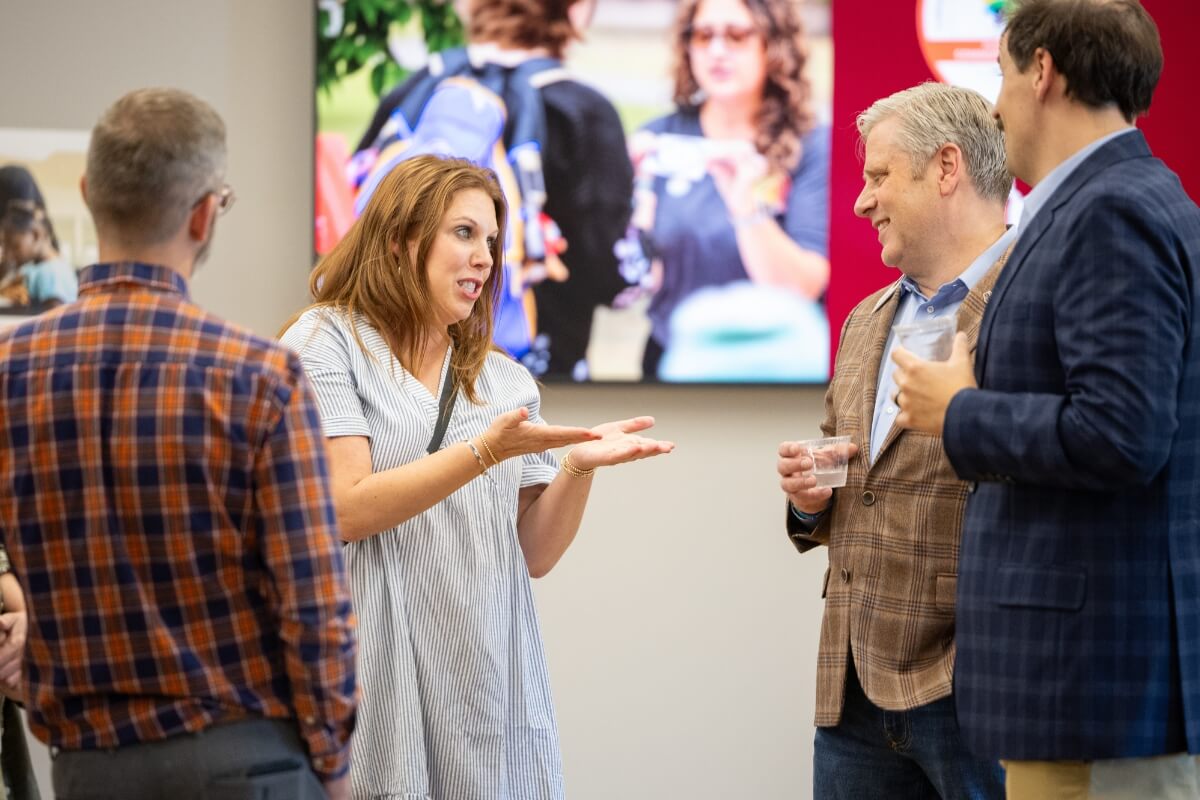
Maryville College announced its reaffirmation of the Carnegie Community Engagement (CE) Classification in January, but College leaders and faculty and staff members waited until April 23 to celebrate the achievement with a reception at the College’s Downtown Center — and celebrate with the partners who made the distinction possible.
Awarded by the Carnegie Foundation for the Advancement of Teaching and the American Council on Education (ACE), the CE elective designation highlights an institution’s commitment to community engagement. Maryville College was first recognized by the Carnegie Foundation in 2020.
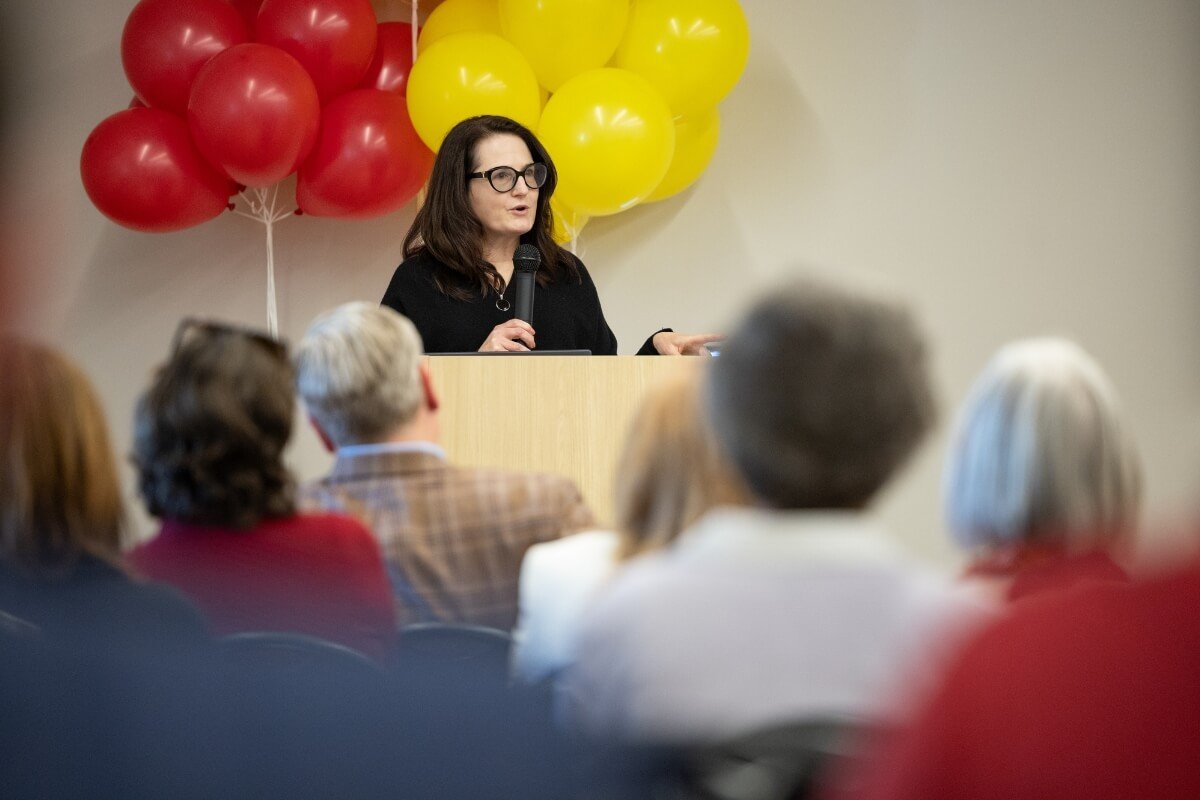
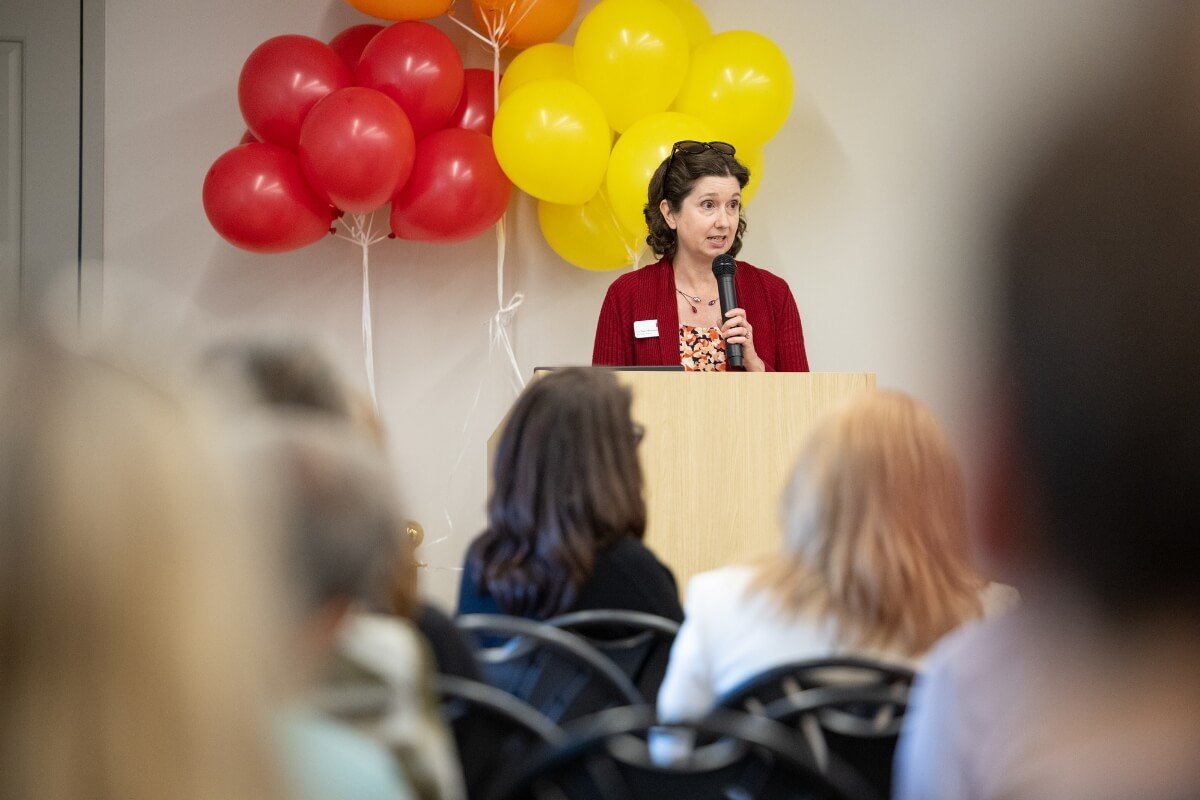
Opening the program, Dr. Ariane Schratter, professor of psychology and liaison for community-engaged learning at the College, highlighted both the significance of the designation and the two-year effort behind it that involved data-gathering, assessing the impact of community-based projects and partner feedback.
“I’m proud to report that, in a country with nearly 4,000 degree-granting colleges and universities, Maryville College is one of only 279 to hold the Carnegie Classification for Community Engagement,” she said. “This national designation recognizes colleges where community engagement is woven into teaching, research, service and the life of the college.
“We pursued this reclassification not for the recognition, but to hold up a mirror to our work within the community and challenge ourselves to find ways to do it even better,” she continued. “We had a big yet simple goal: Tell the story of how Maryville College lives out its mission beyond the classroom.”
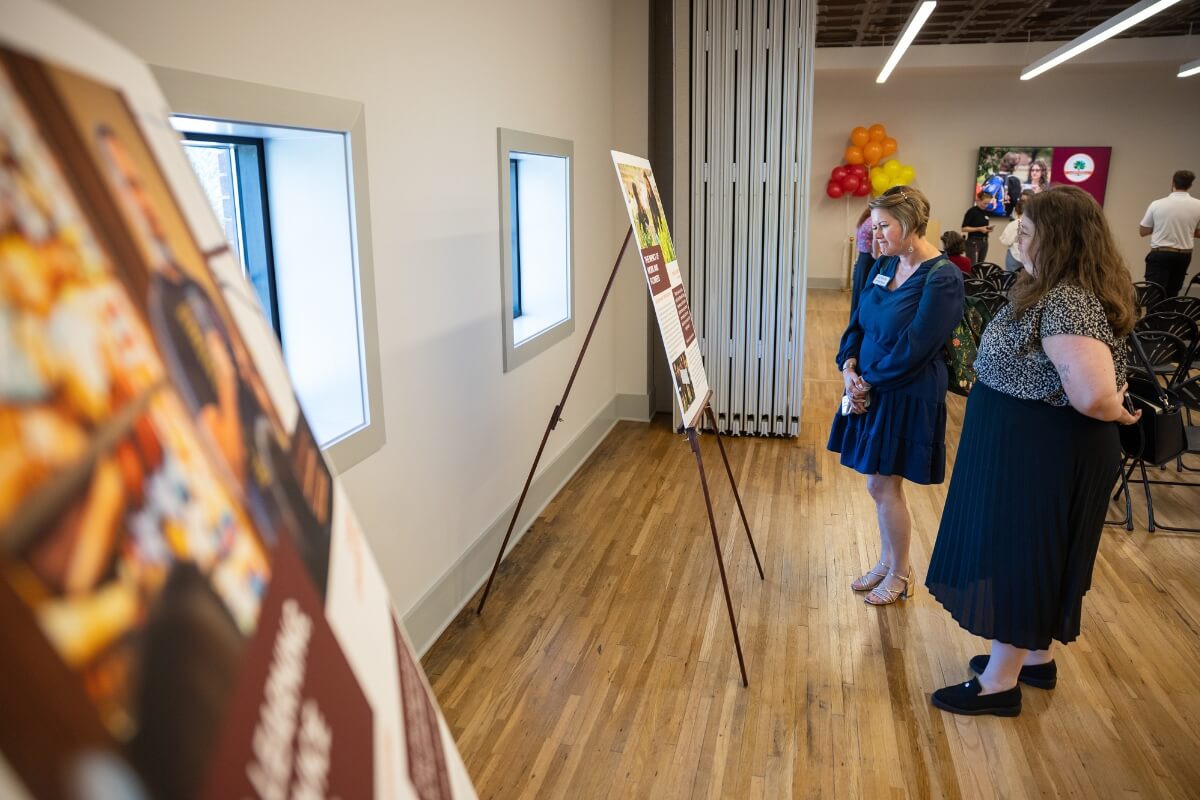
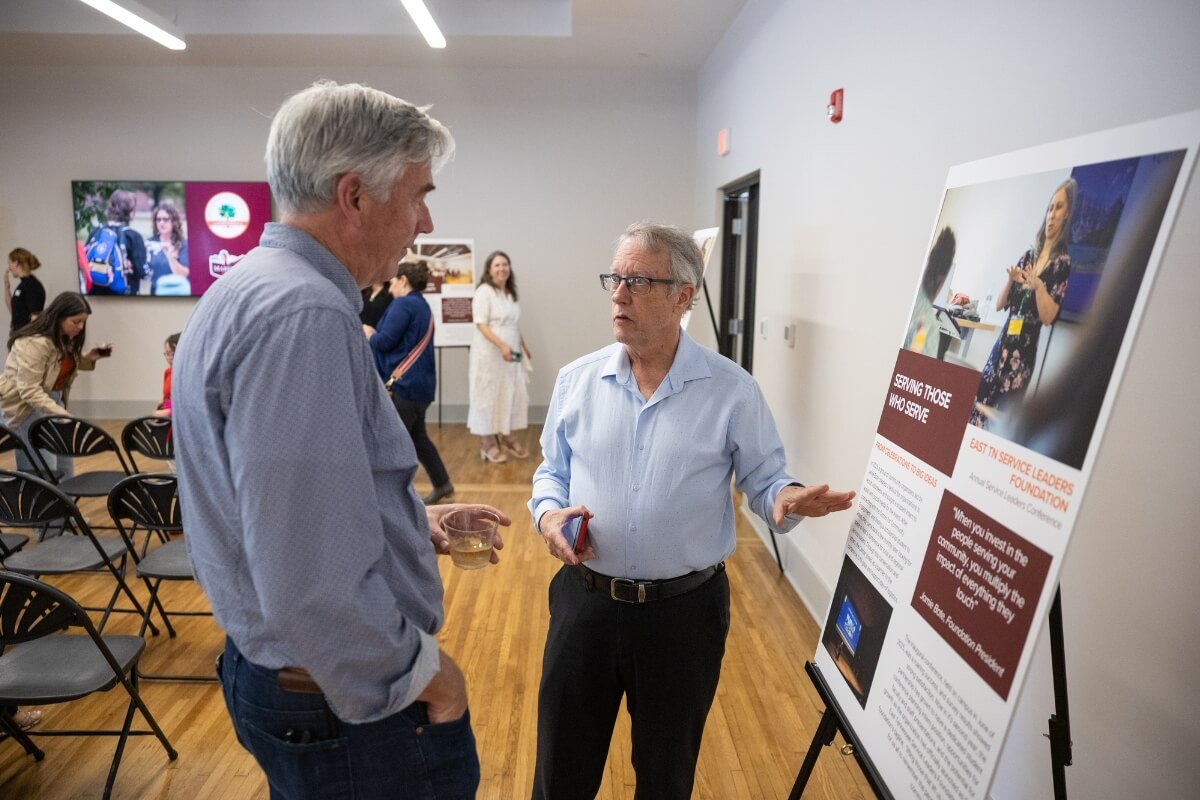
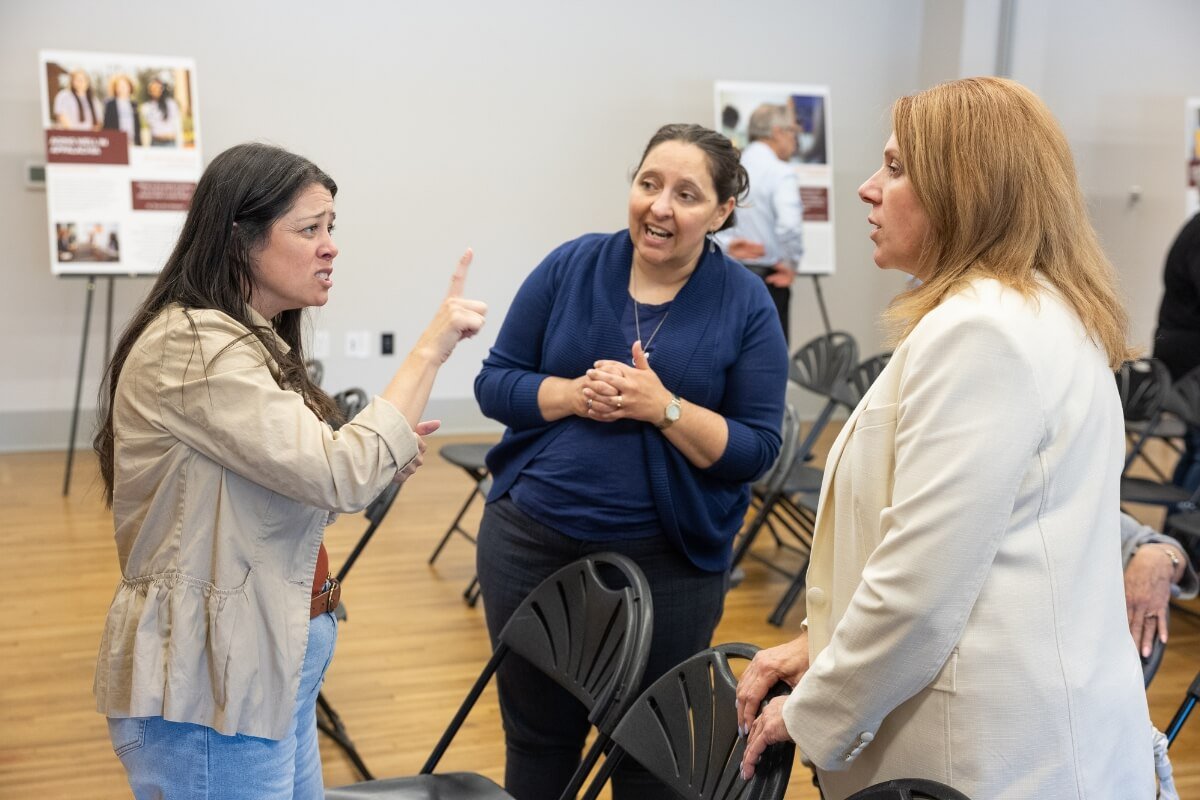
Positioned around the Downtown Center reception space were 12 presentation boards highlighting the service and research that members of the Maryville College community provides for entities like the City of Townsend and the Blount County Juvenile Court.
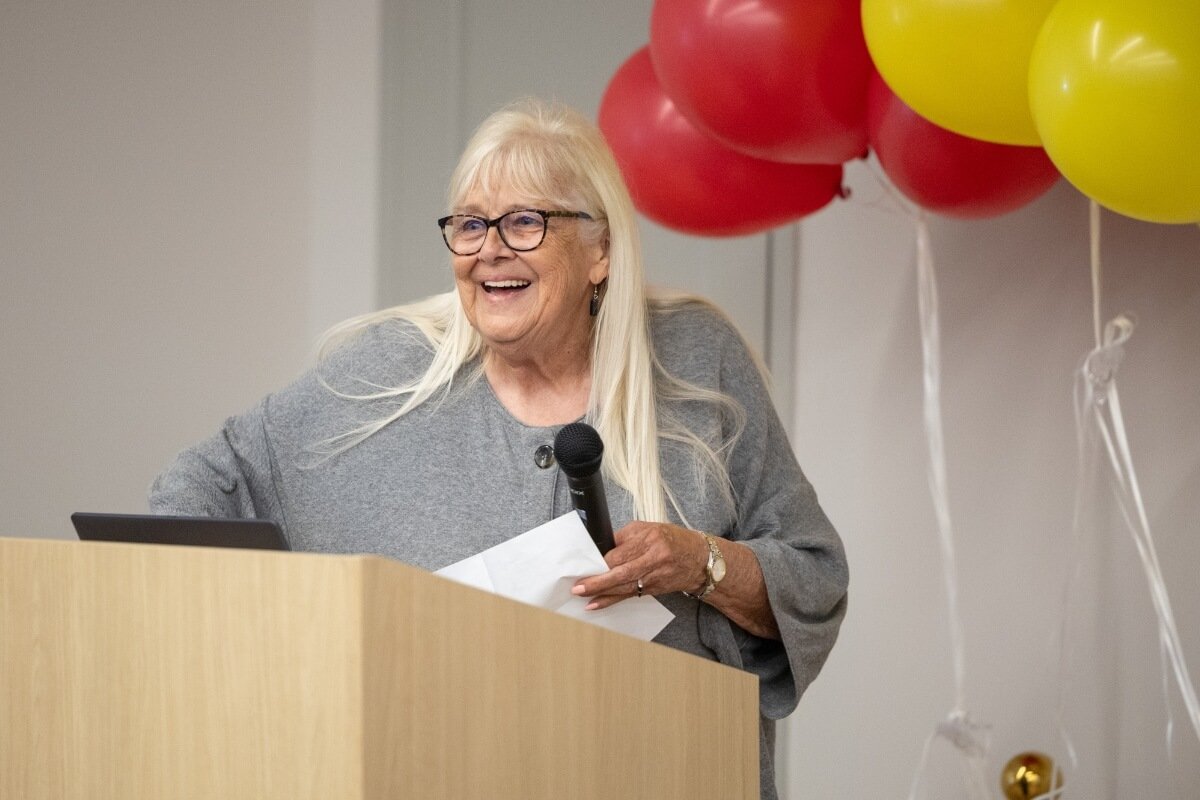
“I’ve had a lot of fun, great duties as a college president, but putting on waders on a Sunday afternoon and heading up into the [Great Smoky Mountains National] Park with some of our really engaged students and testing for water quality is something you just don’t forget,” said Maryville College President Dr. Bryan F. Coker in his remarks to attendees, referring to the College’s partnership with the City of Townsend for regular testing of the water in the Little River. “Connections with our region and our community have been in our DNA since our earliest days when we were founded probably less than 100 yards away, right here in downtown Maryville.”
Coker thanked partners for the opportunities given to students for real-world learning, pointing out the imperative of collaborations.
“… private colleges, I believe, must increasingly act in the public interest,” the president said. “And as a college that endeavors to support our community and region, I just cannot imagine a better framework for this work and a better designation than the Carnegie Classification. I’m so grateful for all the work that went into this. This really is a milestone moment for us.”
Partners share success stories
Juvenile Court Judge Kenlyn Foster was one of two partner representatives who spoke at the reception, calling attention to Schratter’s efforts to enlist Maryville College faculty and students in assisting the local child welfare system. Foster explained that court-ordered supervised visitation often creates financial hardships for families, which can result in infrequent visits. Children then struggle to form meaningful connections with their parents, she said.
“Dr. Schratter has worked with the Supervised Visitation Network to have students trained to be supervisors for these visits,” Foster explained. “You have gotten fabulous grants to make and build out trauma-informed spaces to provide a more home-like setting for children to engage with their parents. And this also offers students real-world opportunities to experience what it’s like in the social sciences arena, in psychology, in child welfare.”
Debra Skyler, family resource center director for Maryville City Schools, spoke of the impact Maryville College students have had on the school’s homework assistance program at Maryville Housing Authority over the past decade. Serving as tutors and mentors, the MC students have helped the younger MCS students improve their grades, gain confidence, and learn to trust, she said.
“My main goal with Maryville College students is for them to develop relationships,” Skyler explained. “You don’t have to be able to teach phonics, you don’t have to know what fractions are, just develop a relationship.
“When you can relate to a student, then the reasoning, the chemistry in their brain changes, and they can actually move forward in their learning. And that’s the feedback I get from the people in the schools who tell me ‘These children are raising their hands in class to ask questions now. They’re participating.’ That didn’t happen before.
“I can’t tell you how much the parents appreciate what Maryville College is doing at Maryville Housing,” she added. “So, thank you so much.”
Future work expands community engagement
Dr. Liz Perry-Sizemore, vice president and dean of Maryville College, shared information about four new academic initiatives that will enhance the school’s commitment to community engagement: The Myrtle Coker Wilkinson Honors Program that will see high-achieving students contribute to the community through focused research and leadership; the Ellis Center for Faculty and Student Excellence that will support faculty scholarship and development and student collaborations; and the Parks Cowan Liberal Arts Award and Job Childs Lawrence Award that will support curricular development and scholarship, much of which involves community engagement.
“What attracted me to apply for my job was the College’s intention to ‘do good on the largest possible scale,’ and then graduate students who were committed to the same,” said Perry-Sizemore who started at the College in 2024. “This is a school that gets — in the most complete way – why it is here, and it has been committed to this work for over 200 years. Every day at Maryville College, I better understand and appreciate just how we do this.”
Chris Freeman, the College’s director of community engagement, brought the program to a close, explaining that community engagement is supported by three pillars: Student volunteer programs; the Community Engaged designation of courses in the curriculum; and the Community Engaged Scholars Program, which includes Bonner, Bradford, Brahams, and Kyle scholarship recipients, all 70 of whom do at least 90 hours of work per semester with defined community organizations.
“The Carnegie Classification tells us that we do these things well, but also calls for us to keep improving, to go deeper, and we hope that you’ll join us on that journey,” he said. “As we talk about being a College ‘of and for the region’ and ‘doing good on the largest possible scale’ as our founder urged, we want to invite you to be a part of that work as well. As the saying goes, a rising tide lifts all ships.”
For more information on community engagement at the College, contact Chris Freeman at Chris.Freeman@maryvillecollege.edu or 865-981-8299.