


Sondra and Dorsey Ellis Center for Faculty and Student Excellence awards and grants ignite innovation across disciplines at Maryville College
April 22, 2026
Despite its relatively young status, the Sondra and Dorsey Ellis Center for Faculty and Student Excellence at Maryville College is already proving to be a catalyst for innovation — fueling a wide range of faculty-led initiatives, from mindfulness training and international peace studies to hands-on STEM instruction, environmental fieldwork and immersive business simulations.
The first round of faculty awards from the Ellis Center underscores the wide range of disciplines and teaching approaches represented in its initial projects. Two Ellis Innovation Awards and four Ellis Instructional Innovation Mini-Grants were recently awarded to support projects designed to enhance teaching, expand curricular offerings, and create more immersive learning experiences for students. The selected initiatives reflect the College’s liberal arts mission in action, pairing disciplinary expertise with hands-on, real-world application — from developing new courses and instructional models to pursuing specialized training and global research opportunities.
For faculty members, the support represents more than funding; it creates space to rethink what happens in and beyond the classroom. Whether through integrating emerging technologies, building field-based learning experiences, or deepening student engagement through research and reflection, each project is rooted in a shared goal: preparing students to think critically, adapt creatively and apply their knowledge in meaningful ways.

“I am very grateful for Ellis gifts that will allow us to pursue professional development that we may not have the opportunity otherwise,” said Dr. Gabie Kerr, associate professor of management who received an Ellis Mini-Grant for “Development and Pilot of the Integration of a Strategic Management Simulation.”
“I think it allows us to be intentional about where we devote our time and ways to enhance the classroom,” she added. “I will be diving into in-class simulations and technology that will support student engagement, and part of the funding will help cover the cost for student licenses for the first pilot year.”
The simulation, she continued, will be built into the existing BUS-401: Strategic Management class, a senior-level capstone course required for all Maryville College business majors and offered every semester. The purpose of the course is to integrate students’ “prior learning in management, marketing, finance, operations and organizational behavior, emphasizing case analysis, team-based work and experiential learning,” Kerr said.
“This instructional innovation will enhance a portion of the course by introducing a technology-based business simulation that allows students to make strategic, financial and operational decisions in a dynamic and competitive environment,” she added.
Such simulations, she pointed out, provide a well-rounded learning experience that can’t be replicated through classroom lecture and traditional case studies. The plan calls for students to work in teams that respond to current market conditions, analyze competitors and evaluate the outcomes of their decisions over time. It’s geared toward undergraduates “in a way that is realistic, accessible and sustainable,” according to Kerr.
In the end, Kerr wants the project to enable students to make real-world decisions in the moment, so that they can carry the confidence of doing so with them into the workforce. To do that, the goals of the project include:
- Increased student engagement through experiential, technology-enhanced learning;
- Improved ability to integrate strategic, financial, and operational concepts;
- Stronger teamwork, leadership, and decision-making skills; and
- Enhanced career readiness and confidence in strategic thinking.
Kerr plans to commit herself to the program’s development over the summer through research and comparison of various management simulation platforms and the evaluation of undergraduate suitability, learning outcomes, cost and accessibility.
“I will also participate in professional development related to experiential learning and simulations, such as resources or events offered by the Association for Business Simulation and Experiential Learning (ABSEL) Conference, (Association to Advance Collegiate Schools of Business)-related faculty development opportunities, and vendor-supported training workshops,” she said. “This preparation will ensure thoughtful selection and sustainable implementation of the simulation within BUS401. And because BUS401 is a required, recurring capstone course, this instructional innovation will benefit multiple cohorts of students beyond the initial pilot.
“Once a simulation platform is selected and refined, it will hopefully be sustained through departmental planning, potential institutional licensing, or modest student-cost models if appropriate.”
Other recipients of an Ellis Mini-Grant and their plans include:
Dr. Sarah McDowell
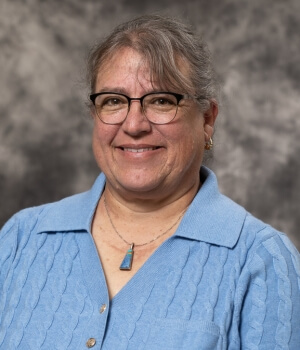
An assistant professor of education, Dr. Sarah McDowell’s proposal is titled “Science at the Center: Preparing Preservice Teachers for Integrated STEM,” and the plan for it is to give pre-service teachers more hands-on experiences in teaching science through STEM (Science, Technology, Engineering and Math) courses.
“I am building a module in EDU324 to help them learn to bring science, engineering and technology together in meaningful ways … (and) the goal is for pre-service teachers to feel more confident leading inquiry-based lessons and better prepared for STEM-focused teaching jobs when they graduate,” She said.
McDowell was inspired by recent Maryville College graduates who were offered STEM teaching positions shortly after receiving their diplomas, even though they chose other areas of teaching. Those job offers, she noted, was proof of the demand for STEM teachers, and by tailoring her project to better prepare future Education majors for a STEM teaching career, she and her Division of Education colleagues can help pre-service teachers build the necessary skills and confidence to do so.
The Ellis funding, she added, will enable the purchase of tools and materials that support hands-on learning, “like KidWind kits, Snap Circuits or Micro:bits.”
“These aren’t just nice extras; they’re what make it possible for students to actually experience the kind of teaching we’re talking about,” she said. “It takes the learning from theory to practice. This project is really about putting science at the center of STEM teaching. By modeling what good, integrated instruction looks like, we’re helping future teachers feel more prepared, and that has a ripple effect on the students they’ll teach down the road.”
And the Ellis Mini-Grant, she added, gets the credit for making that happen.
“The Ellis Center allows faculty to try new ideas and improve courses in ways that really matter for students,” she said. “It supports innovation and helps us stay current with what schools actually need, which ultimately benefits both our students and the classrooms they’ll be teaching in.”
Dr. Cynthia Gardner
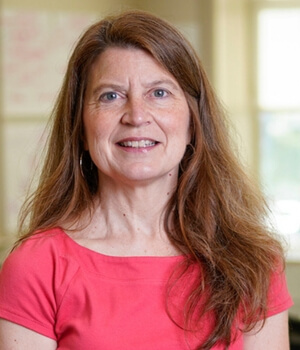
A professor of education and chair of the Division of Education, Dr. Cynthia Gardner will use her Ellis Mini-Grant to build out “A Field-Based Model for Environmental Education,” according to her grant proposal. Over the summer, she plans to redesign an existing course, EDU211: Foundations of Environmental Education.
“It will be taught each fall semester beginning (this fall),” Gardner said. “While the course is a requirement for Elementary Education majors, it is hoped that it will appeal to other Maryville College students interested in informal education, such as Outdoor Studies, Environmental Science and Environmental Studies majors.”
The course will require participants to develop a foundational knowledge of environmental education, articulate issues in teaching about the environment, critically examine local environmental issues, plan and implement environmental education lessons for both formal and informal audiences, and design assessments for environmental education lessons.
“These goals will be met by engaging students in direct, hands-on experiences,” she said. “Research shows this teaching approach is an effective way to teach students how to think rather than what to think, which has been a key aspect of environmental education since its early beginnings. Additionally, by engaging directly with the environment, students will be better equipped to facilitate hands-on activities with learners of various ages.”
Gardner’s own experience in and background teaching environmental education has led to recent collaborations with the Tennessee Environmental Education Association, and that collaboration inspired her to overhaul EDU211, she added.
“I want students to be equipped to lead environmental education activities with different age groups and have a foundational knowledge of environmental education concepts,” she said. “Funds will be used to support training (for those students enrolled) in the three major environmental education curricula (Project WET, Project WILD, and Project Learning Tree), field trips, and guest speakers. It also provides funds to purchase supplies needed for hands-on investigations.”
Dr. Bethany Campbell

An assistant professor of biology, Dr. Bethany Campbell will use her Ellis Mini-Grant to develop the course “Research Methods in Cell and Molecular Biology,” in which students will complete semester-long research projects about the functions of various genes important for cell growth and division, “which are essential processes required for proper cellular function and development,” she said.
“Depending on students’ individual interests, students will study genes that give rise to cancer and developmental diseases when mutated,” she added. “This course will allow students to acquire individual, hands-on research experience embedded within a structured class.
“Although research experience is commonly required for competitive graduate and medical school admission, Maryville College does not currently offer a research methods course for laboratory-based science. As such, this course would provide an avenue for students to gain this requisite laboratory-based research experience on site at Maryville College.”
Because it’s not easy or even logistically possible for students to gain research experience outside of class, the opportunity to build a class around it intrigued Campbell, who hopes that this new course will “even the playing field to familiarize students with the process of conducting research.” The idea behind successful completion of the course will be that participating Scots are better prepared for their Senior Study projects, a centerpiece of the MC experience in which every degree candidate works with a faculty supervisor to expound upon scholarship and ideas in their respective degree fields.
By applying abstract, theoretical knowledge of cell biology to concrete, hypothesis-driven projects that students design under Campbell’s guidance, the hope is that they will develop a deeper understanding and appreciation for the intricate workings of cells required to sustain life, and become proficient in common research techniques used in the field of cell biology.
Such an ambitious course, however, requires a great deal of work to execute, which is where the Ellis Mini-Grant comes in, she added.
“(It) will provide me with a summer stipend to compensate me for the time and planning it will take to design this course,” she said. “Additionally, as laboratory-based research requires expensive reagents and supplies, the Ellis Mini-Grant will help me purchase these supplies.”
It’s a difference-maker that wouldn’t normally have been available, but thanks to the Ellis Center, she said, faculty members can now apply themselves to the design and implementation of similar courses.
“I am excited to see the investments that the Ellis Center will make in faculty to help us provide our students with new and creative educational experiences,” she said.
Scott Steele ’90

Although he’s an associate professor of English, Scott Steele ’90 is stepping out of his role wrangling essays and composition exams to undertake something just as meaningful thanks to the Ellis Innovation Award he’s received.
“I’m getting formally trained to teach evidence-based mindfulness practices to college students,” Steele said. “The certification is through the Mindfulness Institute for Emerging Adults (MIEA), a program developed by psychiatrists at Duke specifically for college-aged students.
“I’m also completing training through Brown University’s Mindfulness-Based Stress Reduction (MBSR) program, one of the most widely recognized and researched mindfulness programs in the world. Together, they’ll allow me to bring evidence-based mindfulness practices into my teaching and develop new courses focused on attention, reflection, and well-being.”
Mindfulness has long been a part of Steele’s teaching philosophy over the past 30 years, but as Artificial Intelligence (AI) has gained a foothold in higher education, he’s seen students “struggle more with focus, stress and just being present,” he added.
“We tell them to ‘Be the Human,’ but we don’t always give them the tools to do that,” he said. “Mindfulness is one of those tools, and that’s what pushed me to get the formal training to do this right.”
The Innovation Award will cover certification, training, materials, retreats and licensing; while it’s a calling he likely would have pursued regardless, the Ellis Award “lets me do it right and do it now,” he said. Teaching students mindfulness, he added, provides them with life tools they can use outside of the classroom, and long after they leave Maryville College. The MIEA, after all, is affiliated with Duke University, and it targets college students. Now, thanks to the Ellis Award, Steele will be bringing back some of their techniques to College Hill.
“What the Ellis Center does is give faculty permission and support to try something new,” he said. “It’s not just funding a conference; it backs work that can change how we serve students. Having that kind of resource at a small college like Maryville is rare, and it means a lot.”
Dr. Andrew Irvine

A professor of philosophy and religion at Maryville College, Irvine’s Ellis Innovation Award will take him all the way to Belfast, Ireland, where he will spend three weeks this summer at Queen’s University, studying “Identity and Intergroup Relations in Divided Societies.”
“My goal is two-fold,” he said. “I aim to increase my own understanding of the connections between religion, social conflict and peace-building across cultures, and also make connections with people who might help me develop a Study Abroad course on ‘Religion and Culture, Conflict and Peace.’ I offered a course on that theme in May 2025 that took students to Chiang Mai, Thailand, and am offering it again in May ’27.
“Investigating the same theme, but in the quite different setting of Northern Ireland, hopefully will be accessible to students for whom Thailand seems out of reach. This project is a way to further infuse my teaching and the MC curriculum with a true liberal arts commitment. Students who take these study abroad courses address real-life problems from multiple directions and disciplinary perspectives, as opposed to approaching things abstractly, through the single lens of some narrow specialization.
“And the lessons to be learned about building peace can surely be applied here in our part of the world,” he added.
Throughout his academic career — and before he stepped into the classroom — Irvine has studied the ways that religion can serve as both a catalyst for peace and an agent of destruction, and through contemporary threats like climate change, he pointed out, challenges to the former are only going to increase … which makes the study of religion more important than ever. Using the Ellis Award to do just that, he added, is a gift.
“I couldn’t do this without the Ellis Award,” he said. “It would be a total non-starter.”
Irvine will also serve as the Coordinator of Teaching and Learning for the Ellis Center, and while it’s a new role, the opportunities for his colleagues are exciting ones, he said.
“I hope the Center becomes a hub that helps the whole faculty advance the cause, as our Statement of Purpose puts it, of ‘growth and liberation for adults of all ages.’ It will be a place that equips the faculty to work together in the ‘search for truth, growth in wisdom, and work for justice’ that is our mission.”