With the help of Dr. Jeff Kelly, three Maryville College students get their work published in a leading neuroscience journal
April 29, 2026
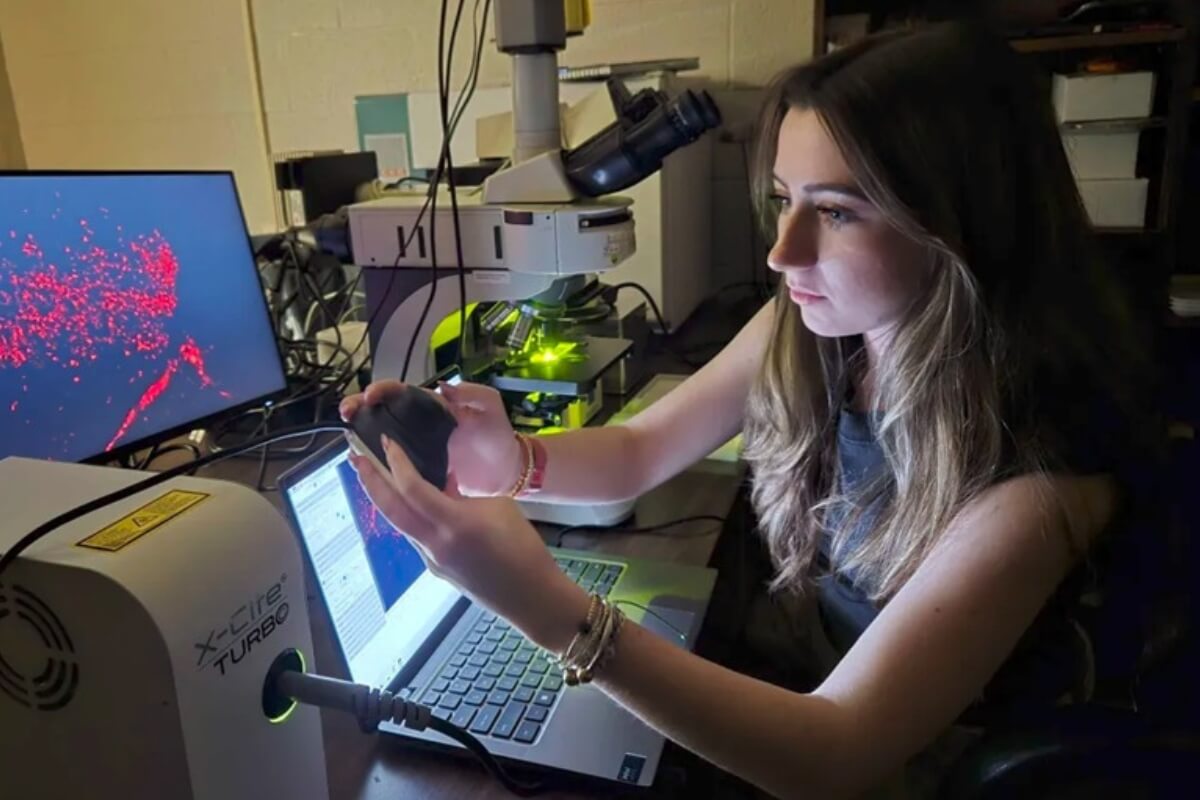
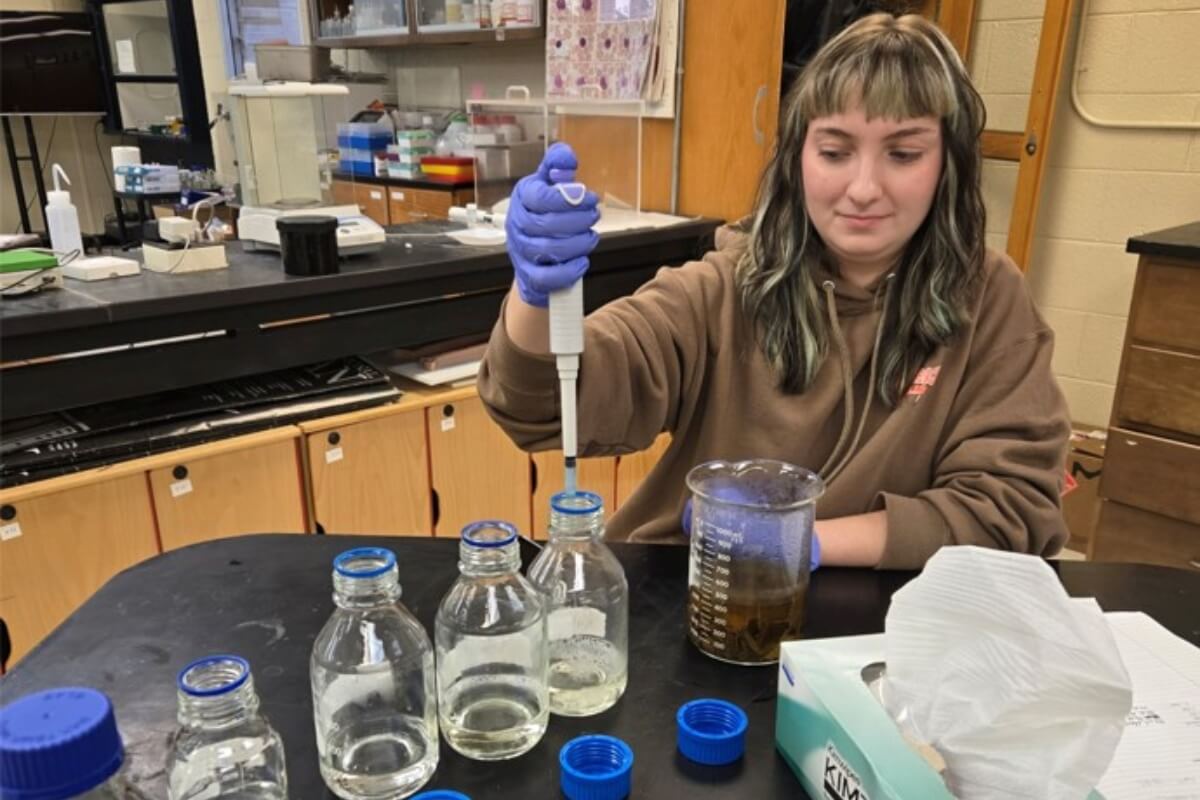
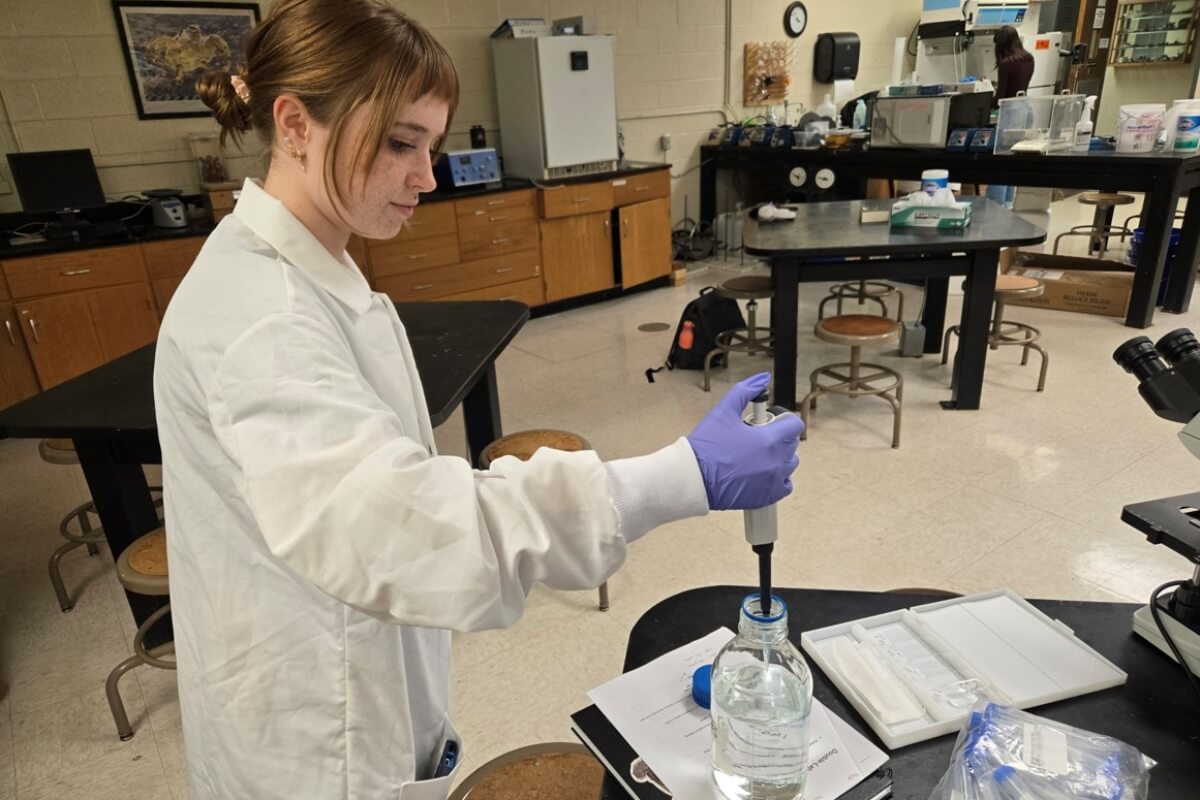
After working as research assistants under Dr. Jeff Kelly, three undergraduate students at Maryville College will have their work published in the scientific periodical Behavioural Brain Research, an interdisciplinary journal that features articles about the field of behavioral neuroscience.
The students — Psychology major Aryssa Kelsey ’26 of Townsend, Tennessee; Psychology major Lindsey Brasfield ’26 of Lenoir City, Tennessee; and Neuroscience major Grace Seal ’27 of Knoxville — conducted their work under the supervision of Kelly, an MC assistant professor of neuroscience, and titled their findings “Ketamine Metabolites Promote Anxiolysis and Hydrocortisone Stress Buffering in Zebrafish.”
According to the professor, zebrafish are a great model organism for mental health research, with robust responses to stressors and anti-anxiety drugs similar to humans, which is why they chose them for this study. The fish are received from a commercial research supplier, but all breeding is done in-house to maintain the small colony in the College’s Sutton Science Center.
“Essentially, the idea is to look at how the metabolites of ketamine may promote fast-acting resistance to stress and anxiety,” Kelly said. “We study ketamine metabolites as a potential legal, unscheduled and convenient alternative to ketamine in the treatment of anxiety-related mental health issues.”
Ketamine is an anesthetic that is known to produce dissociative and sedative effects. The study aims to create a ketamine byproduct that will remove harmful effects while maintaining the drug’s benefits to create a safe and legalized anti-anxiety treatment for humans and animals.
According to Kelly, many researchers are arguing for FDA approval, while still keeping it as a scheduled controlled substance to minimize abuse potential.
“I’m personally comfortable with it scheduled exactly where it is, under the category for having medical benefits, but also carrying the potential for abuse, which means a prescription would remain necessary,” Kelly said. “That’s a large part of why we’re studying metabolites instead of pure ketamine — they’re legal, unscheduled and currently seem to carry little to no abuse potential, as there’s no anesthetic effect associated with their use as far as we know.”
Currently, there are a few facilities locally that administer IV ketamine with a prescription. However, no one prescribes metabolites, which, according to Kelly, gives room for growth.
“Ketamine has been the topic of many mental health talks, since it does yield seemingly good benefits, especially when relieving depression and anxiety symptoms,” Seal said. “However, ketamine is illegal because of its psychoactive effects. The point of this study was to see if RANK, a legal and non-psychoactive metabolite of ketamine, can yield similar results. We hypothesized that it would decrease stress, and it turns out it does. The zebrafish showed fewer stress and anxiety symptoms when compared to the control group.”
To test this theory, the zebrafish were immersed in ketamine metabolite-infused water for 30 minutes as opposed to being injected with it, which would have added additional stress that can interfere with data collection, according to Kelly.
The students, alongside their professor, first proposed the study for a faculty development grant to internally fund the research in March 2025. They began data collection for it in September and concluded their work in February 2026. According to Kelly, follow-up studies are still ongoing.
“For me, it’s a first paper in a new research direction, which is always very exciting. But for the students, I think it’s much more,” Kelly said. “It really is rare to be a published scientist at their career stage, and I think having that publication and experience will be invaluable when applying to graduate schools and other professional opportunities.”
For these three students, the honor of this publication is certainly not lost to them.
“When I got the acceptance email, it was addressed to ‘Dr. Seal.’ I guess those addressing the email wouldn’t have assumed it would be a 19-year-old kid reading it,” Seal said. “At first, it made me laugh, but then I felt this sense of pride. I don’t think a huge number of people can say they got their scientific study published at 19 years old.”
According to Kelly, this experience has been valuable in preparing the three Scots for their future careers.
“They’ve all been able to gain some type of ownership over the project and meaningfully contribute beyond just being a second set of hands,” the professor said. “It’s been great to see them grow in confidence and capability in a short time, and gain new lab skills that will help their own professional development after graduating from Maryville College.”
— Written by McKenna Marr ’28