From a Maryville College classroom to the Medal of Honor: Five words that defied the Nazis
April 6, 2026
It was a simple question, one Pastor Chris Edmonds knew the answer to without hesitation: Why, an Israeli reporter on the other end of the phone asked him, did his father — Master Sgt. Roddie Edmonds, back when he was 25 years old in January 1945 as a prisoner of war in a Nazi camp — put his life on the line to save fellow POWs who were Jewish?
Why, when a member of the Third Reich’s Nazi high command pressed the barrel of a pistol to his head, did he utter five words — “We are all Jews here” — that have become synonymous with courage, sacrifice and brotherhood?
“Why did my father save those Jewish men? Because a Jewish man named Jesus saved him,” Edmonds said, reflecting recently on the long journey that began with a Maryville College history project in 2005 and ended earlier this year with his father posthumously receiving the Medal of Honor from President Donald Trump.
“History, in my mind, is simply ‘His story’ — God’s story, and He wants us to be a part of it, and my dad, in that POW camp, wanted to be a part of it,” Edmonds continued. “We wouldn’t have discovered this story without the providential miracles of God, and all I’ve asked is, ‘Let me tell the story the way You want it.’ Everything that’s happened, He orchestrated it.
“He knew there were 200-plus Jewish soldiers there when dad was under the threat of a gun, and he dared to stare down this Nazi who wanted all the Jewish soldiers to step forward. They all knew why, and it’s phenomenal and amazing that he, that all of those guys, did what they did. But it’s not anything I haven’t been preaching my whole life.
“We see these miracles every day, but often we don’t think about the unseen hand that guides all of us,” he adds.
An MC assignment starts it all
The story of Roddie Edmonds, which has been revived locally since the Edmonds family traveled to the White House in early March for a ceremony to recognize Roddie’s heroism with the Medal of Honor, begins in a Maryville College classroom, when Lauren Edmonds Mathews ’08, during her sophomore year, took “U.S. History in the 20th Century” from former History Professor Dr. Chad Berry.
(Berry would depart MC in 2006 and now serves as the vice president for alumni, communications and philanthropy at Berea College in Kentucky.) It was a difficult course, she recalled, and one assignment was a group project that required her and two partners to select someone they knew or were related to, and interview that person about their past.
“I cannot remember the specifics or requirements of the project, but I do remember talking with my group, Jesse Zabal ’08 and Josh Connor ’08 about ideas, and they couldn’t think of anyone,” she said. “From what I remember, neither of them was local to our area, so it would have been hard for us to do the project if we had used someone from where they were from. The first person to come to my mind was my grandfather.”
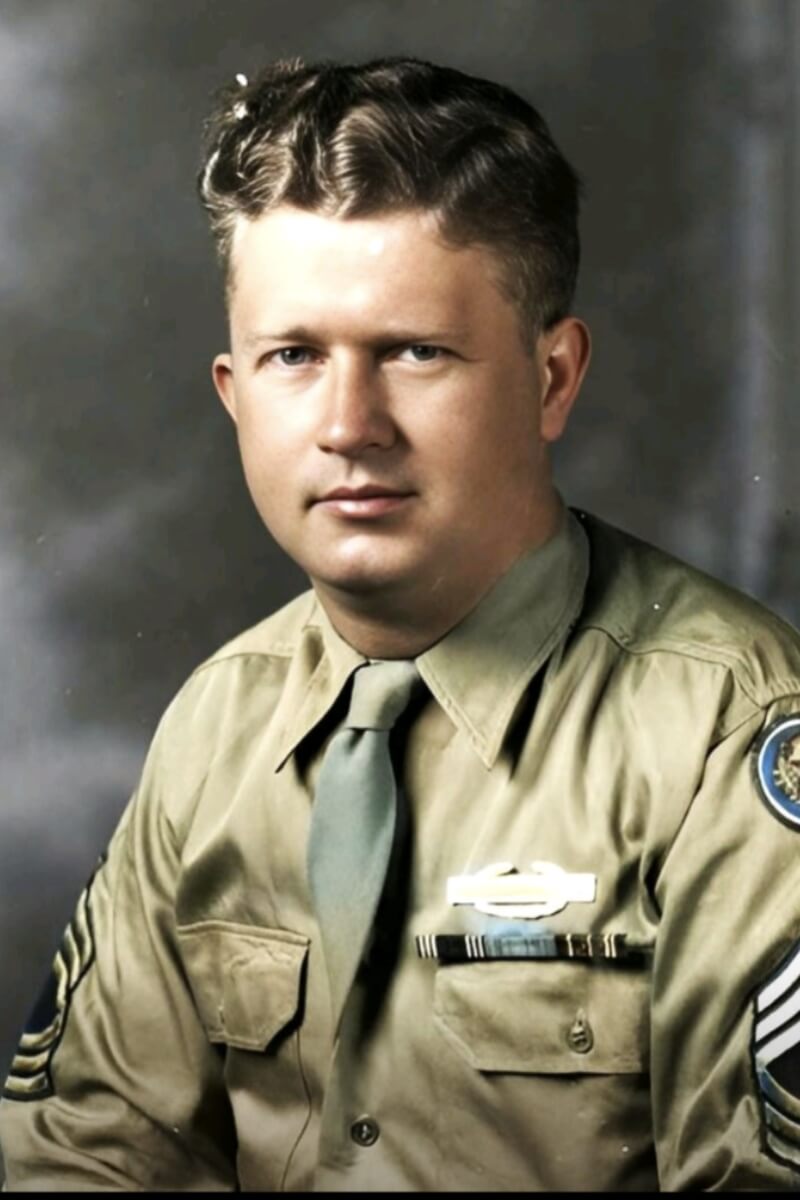
Born Roderick Waring Edmonds in 1919, he enlisted in the Army on March 17, 1941, and arrived in Europe in December 1944 as a master sergeant of the HQ Company, 422 Regiment, part of the 106th Infantry Division. Five days later, Nazi Germany, desperate to regain the upper hand in World War II, launched the Battle of the Bulge, a counteroffensive that overran the division. Roddie was captured and sent to the POW camp Stalag IX-B first before being transferred to another, Stalag IX-A, near Ziegenhain, Germany. As the highest-ranking non-commissioned soldier at the new camp, he was given command of the camp’s 1,292 American prisoners.
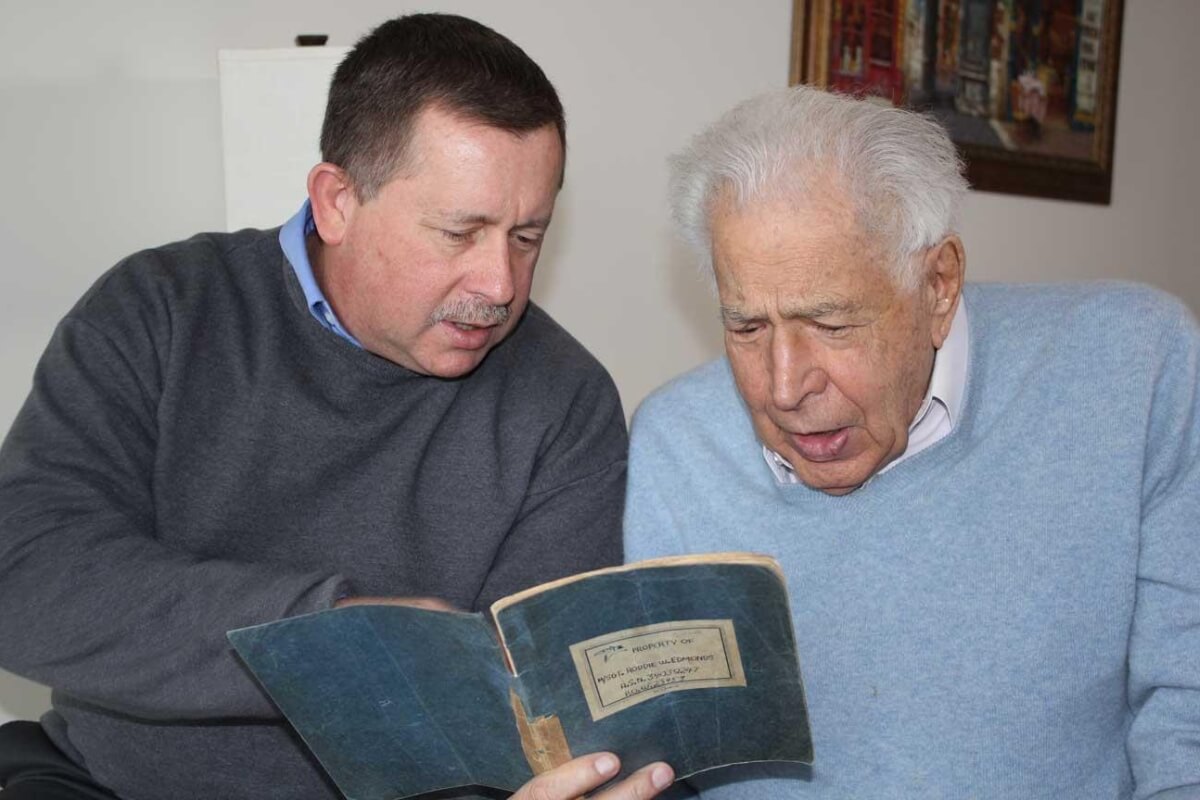
“I knew very little, nothing really, about my dad’s service, other than he was captured, got out and several years later went back to Korea,” Chris said. “He never pulled his diaries out, and I didn’t know anything about them until I discovered them when I was a teenager. I started asking questions, but he wouldn’t tell me anything, so this was an unknown area of his life, like it was for a lot of World War II vets.
“I knew he had done something good, but I didn’t know to what level. He kind of lived a lifetime before I was born. He was 39 when I was born, so he was an older dad, but very involved and active. He just didn’t talk about it.”
After Korea, Roddie worked in sales until his death in 1985. Lauren and her twin sister, Kristen Edmonds Wilson ’08, were only six months old, and throughout their lives, they only knew their grandfather through family stories.
“I always remember my grandmother, whom we called Nana, talking about my Papaw Roddie in a positive way,” Lauren said. “She would talk about how they met and how much they loved each other, and my dad also told us about how well my grandfather could sing, and how much he enjoyed singing at church. Other family members that loved my papaw and knew him well said he was a God-fearing man who loved others and always seemed calm in times of trouble.”
In approaching the assignment, Lauren remembered her grandfather’s diaries, which her grandmother had kept after Roddie’s death. When Lauren — she and her sister were commuters throughout their four years at MC — returned home, she told her father about the assignment, and he suggested that Roddie’s diaries might serve as something useful to complete it. Kristen, Lauren remembered, had completed a social studies project on Roddie while in elementary school and had used both the diaries and some paraphernalia from his time overseas to complete it; when Lauren presented the diaries to the members of her group, they sought permission from Berry to use those entries as a substitute for an actual interview, and he agreed.
“We were the only group that did not actually interview a living person; we only used my grandfather’s diaries,” Lauren said. “Another requirement was to make the interview into a movie, so Josh was the narrator. We recorded his voice while he read from my grandfather’s diaries, and we showed pictures of the war and my grandfather’s diary during the narration.”
The project led to a better understanding of her grandfather, Lauren said, but for Chris, it lit a fire of curiosity. As intimate as those diary entries were, they were also vague on details of what had to have been an incredibly dark, terrifying and trying time.
“They were basically war journals, with a little bit of narrative and a lot of names,” Chris said. “During his time in the camp, he designed an imaginary restaurant he thought he might open when he got back, and he included drawings, floor plans, even the menu. I imagine they were starving, so they were looking for ways to eat off an imaginary menu.”
But as revealing as they were, Chris wondered, what did the diaries leave out?
Additional exploration and a discovery
Looking back, Lauren remembers that the project was a difficult one, mandating hours in the library as the three Scots edited video, navigated copyright issues, added voiceover and more. The course itself, she added, “was the hardest college class I took,” and the video project “felt never-ending” and “very time-consuming.” However, it became the catalyst Chris needed to explore his father’s service beyond what the diaries contained.
“It was about a minute and a half, two minutes long with this music that was kind of dreadful and made you feel like you’re at war,” he said. “It was pretty cool the way they did it, and that’s what really moved me. When I watched that video and heard dad’s words related to his story, God inspired me to look further into his service in WWII.”
“I truly believe everything is on God’s timing and in His plan,” Lauren added. “It all happened for a reason and the way it was supposed to. God knew what He was doing when he gave my twin sister the idea to do a project about my grandfather in elementary school, which is what led me to do the project in college, and that led to my father Googling my grandfather’s name.”
It took a few years — Chris had a lot of “life stuff” to figure out, he said — and by 2009, Lauren and Kristen had both graduated from MC. Both women were intent on teaching elementary school, and both graduated with degrees in Child Development with a teaching licensure. Most of their careers were spent shepherding the youngest, most vulnerable students in kindergarten, and today, Lauren is at Eagleton Elementary and Kristen is at Mary Blount Elementary, both in the Blount County School District. This marks their 18th year as educators, and it was only because of MC’s Division of Education and reputation for turning out teachers who change lives that they found jobs immediately after graduation.
“We are respected in our schools and have leadership roles,” Lauren says. “We have been very blessed. Back then, we commuted every day and worked at an after-school program at a local school, so we were not very involved in much of the social life at Maryville College. Maryville College was a very busy time in our lives, (but) we are both very thankful for the time we spent there and for the experiences we were given.”
A year after they graduated, Chris redoubled his efforts to discover more information about his father’s service and began the way so many others do when seeking information: He Googled it. A search for Master Sgt. Roddie Edmonds led to a New York Times story from the 1980s about Richard Nixon. A New York attorney named Lester Tanner owned a townhouse at the time and agreed to rent it to Nixon. Given the former president’s disgraced exit from the White House, Tanner did what few landlords in New York were willing to do.
Tanner, however, thought that everyone — even a president who had resigned in shame — was worthy of respect, a lesson he told the Times reporter that he learned during his time in World War II, when his master sergeant … Edmonds … saved his life.
There it was in print, and reading it “stunned me,” Chris said, “because I didn’t know dad had saved anybody, much less a man like this.”
At the time, Tanner was prominent in New York society; that townhouse was sandwiched between one owned by historian and critic Arthur Schlesinger and another owned by a member of the wealthy Rockefeller family. Chris searched for ways to contact Tanner, and eventually the two connected in March 2013 in the Harvard Club of New York City. There, Tanner told Chris every detail of his father’s heroic story.
‘We are all Jews here’
Stalag IX-A held American noncommissioned officers, and it’s estimated that more than 200 Jewish-Americans were among the prison population. On Jan. 26, 1945, a ranking member of the German high command announced that on the following morning, only the Jews were to fall out for morning roll call, and anyone who disobeyed would be shot.
The intention was clear: In accordance with the Nazi policy of Jewish extermination, those prisoners were going to die. Edmonds refused to allow that to happen, and without hesitation, he told the other soldiers in his barracks: “We’re not doing that. Tomorrow morning, we all fall out,” and he sent word for the soldiers in the other barracks to do the same.
“That whole night, my father didn’t sleep. He lay in his bunk and didn’t want to talk about it,” Chris said. “Everybody else in the camp knew: ‘Whatever Roddie says, that’s what we’re going to do.’”
The morning of Jan. 27, 1945, broke bitterly cold, and as the Nazi commander approached, every American — nearly 1,300 soldiers — stood in sharp formation. The Nazi major was stunned and stormed to face off against the camp’s highest-ranking noncommissioned officer.
“They cannot all be Jews!” he said to Edmonds, who gave his now-famous reply: “We are all Jews here. According to the Geneva Convention, we have to give only our name, rank, and serial number.”
The major, now apoplectic, drew his pistol and pressed it to Edmonds’ forehead, demanding that he order all Jews to step forward … or be shot. Edmonds, the story goes, locked eyes and declared, “Major, you can shoot me, but you’ll have to kill all of us, because we know who you are, and you’ll be a war criminal when we win this war, and you will pay.”
The pistol wavered, and the Nazi, defeated by the resolve of more than a thousand prisoners and the determination of Edmonds to save them all, stormed off.
“I didn’t know he had saved anybody, because none of that was in the diary,” Chris said. “There were some notes about battles, and about his capture, and about the transportation — or lack thereof — to the POW camp, but there was nothing in his original journals other than dates and a chronological map of when things happened.
“When Lester told me this story, after I had stopped crying and recovered a little, he looked at me and said, ‘Your father is deserving of the Medal of Honor. Who’s your congressman? Go tell him your father’s story. He deserves the Medal of Honor.’ That day, this became my drive and my pursuit.”
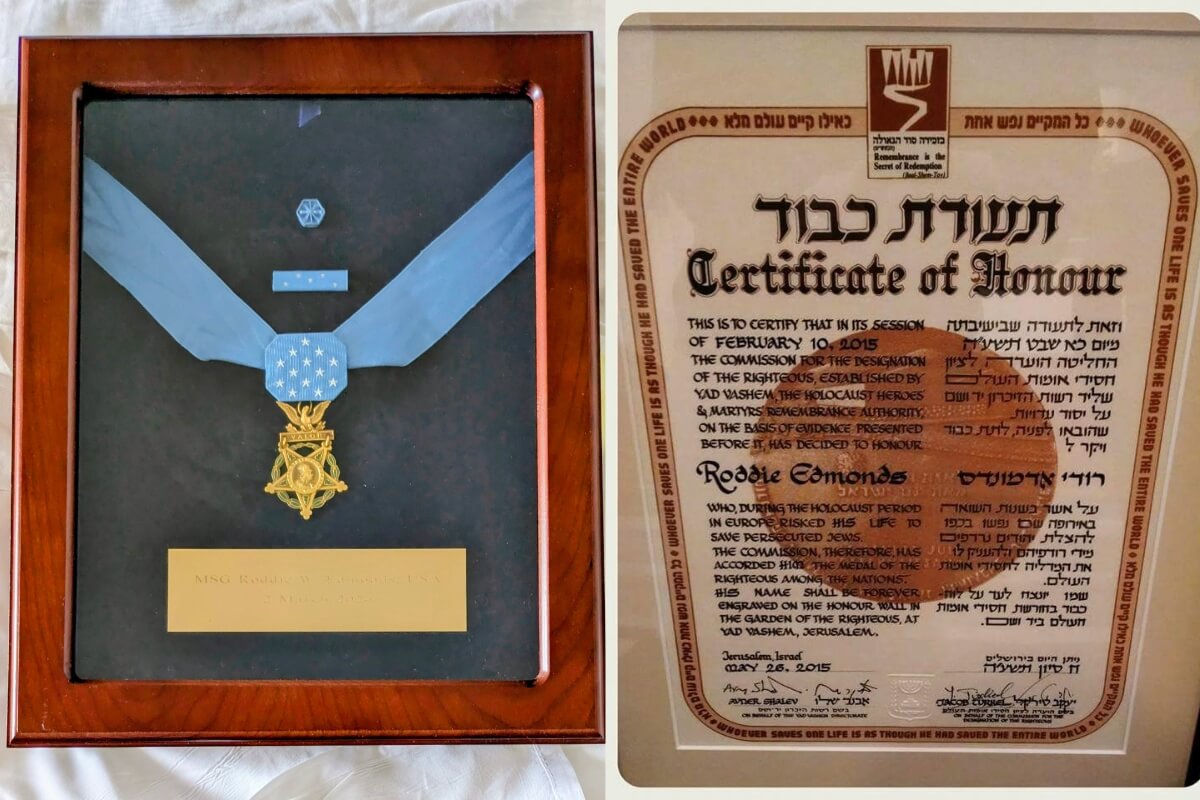
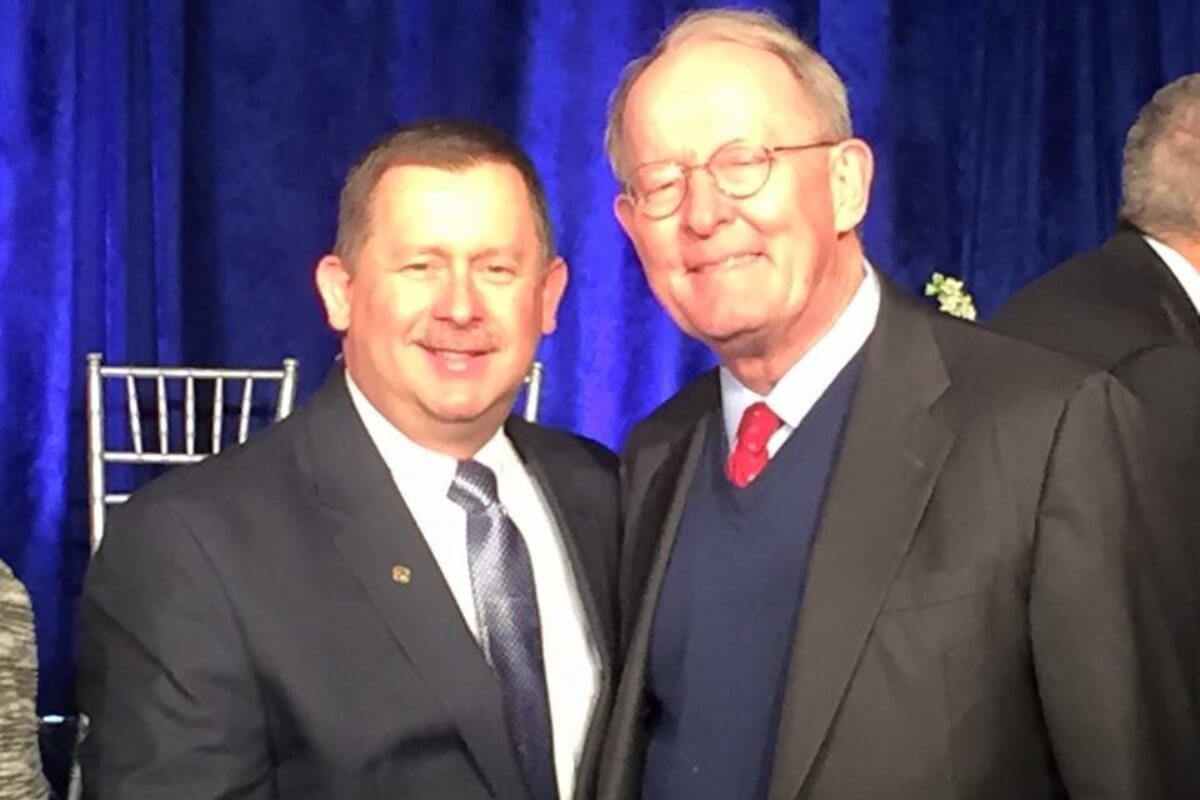
Back home, he contacted the office of then-Rep. Jimmy Duncan (R-Knoxville), who agreed with Tanner’s declaration. Duncan brought former U.S. Sen. Lamar Alexander and Sen. Bob Corker in, and together with key staffers put together a package nominating Master Sgt. Roddie Edmonds for the highest military decoration awarded by the U.S. government, given to those service members who distinguish themselves beyond the call of duty in combat. Twice, the application was rejected because Edmonds’ actions were undertaken as a POW, not an active combatant. Eventually, a friend of Tanner’s submitted it to Yad Vashem, the World Holocaust Remembrance Center in Jerusalem, the preeminent organization entrusted with Holocaust commemoration, documentation, research and education. Representatives contacted Tanner and other POWs who were there on that day and confirmed the details of Tanner’s story; roughly a year later, Edmonds was recognized as “Righteous Among Nations,” Israel’s highest honor for non-Jews who risked their lives to save Jews during the Holocaust.
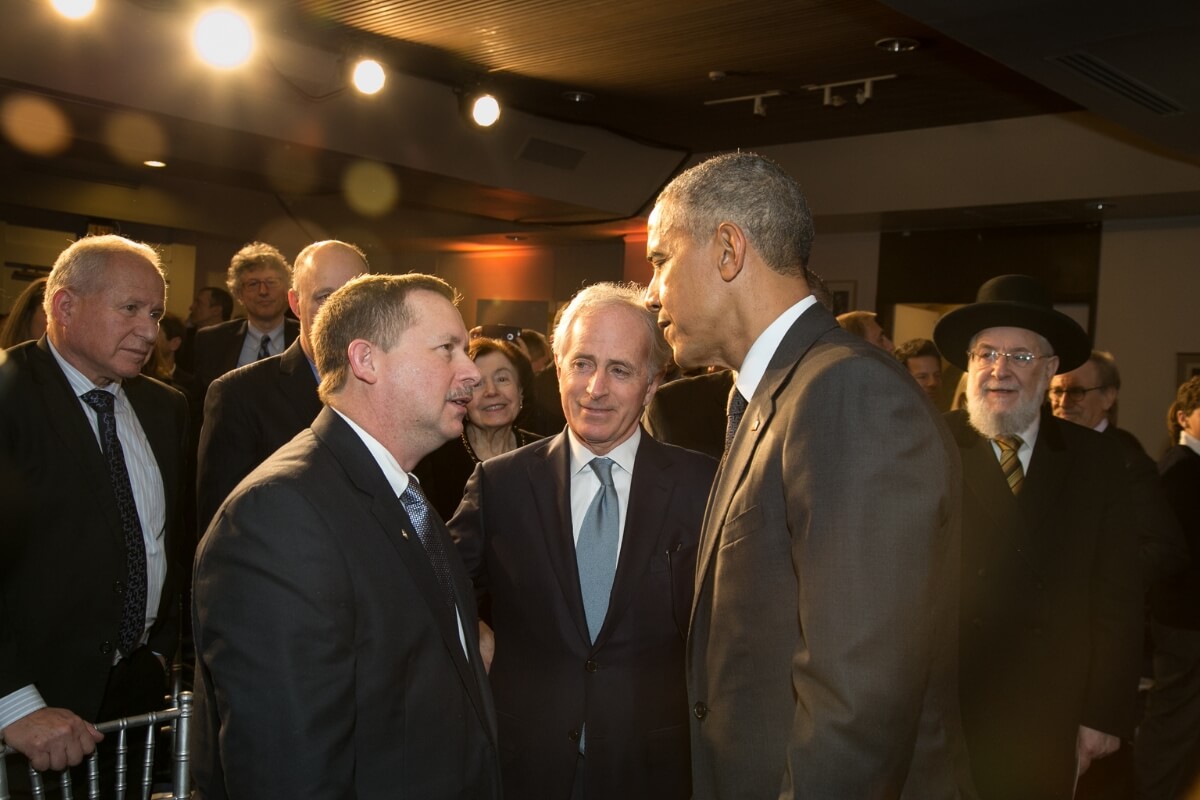
Seventy-one years to the day after Roddie’s heroic action, a ceremony was held at the Israeli embassy in Washington; then-President Barack Obama spoke and lauded the late master sergeant for his valor. Two years later, a documentary narrated by respected journalist Ted Koppel — “Footsteps of My Father” — was released, detailing Chris’ exploration of his dad’s experiences in Belgium and Germany. In 2019, Chris and co-author Douglas Century released the book “No Surrender: A Father, a Son and an Extraordinary Act of Heroism.”
In October 2019, Edmonds got a phone call from a reader.
“He said, ‘Is this Chris Edmonds? I’m (U.S. Sen.) Tom Cotton (R-Arkansas), and I wanted to call and thank you on behalf of your father for his service to this nation,’” Chris recalled.
Cotton went on: The previous week in Washington had been a tumultuous one, and as he prepared to fly back home, he wandered into an airport bookstore, seeking something to lift his spirits. He picked up a copy of “No Surrender,” read it and declared it “one of the most moving, powerful books I’ve ever read,” Chris said.
“He said, ‘As a soldier (Cotton served in the Army from 2005 to 2009), reading about your dad and what he did moved me, and I think your dad is at the top of the list for a Medal of Honor,’” Chris added. “He wanted me to know how moved he was by dad’s story, and he offered to help us navigate the waters of the Medal of Honor.”
Fast-forward to earlier this year: The Army called and told Chris to clear his schedule at a certain time, on a certain day, for an important phone call.
A man of honor and duty
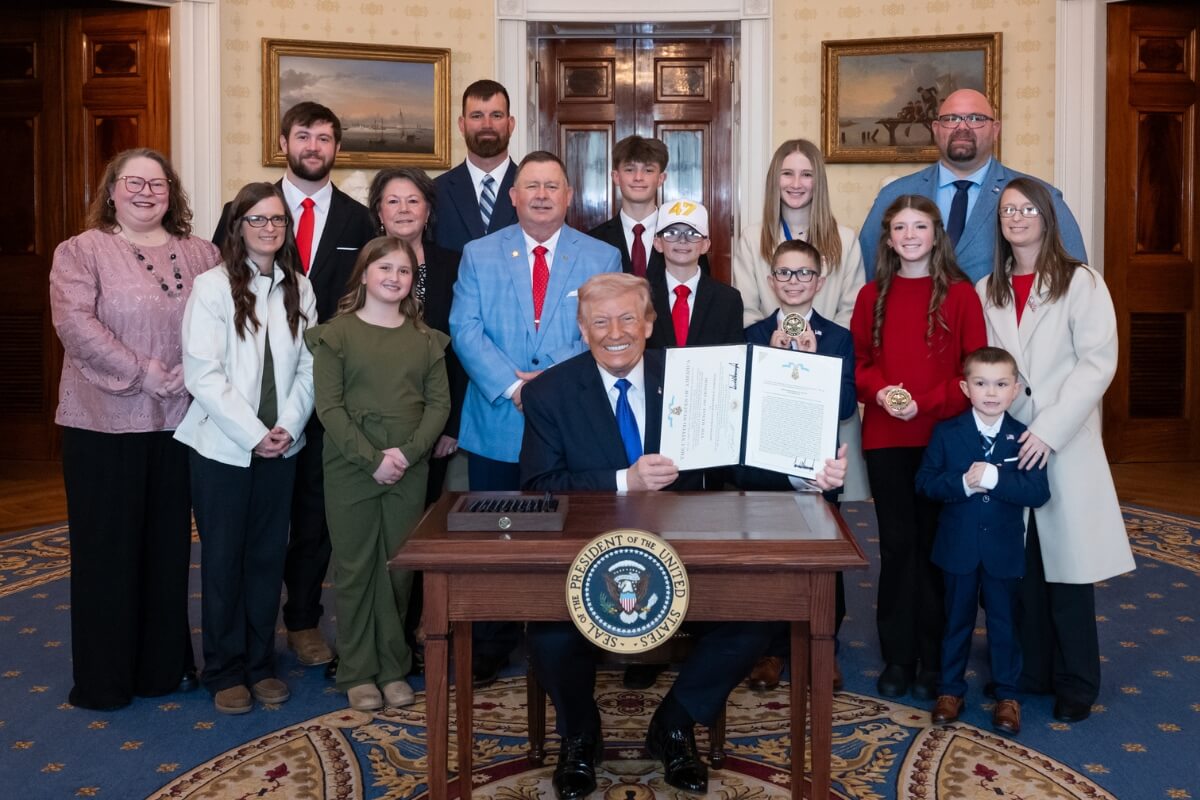
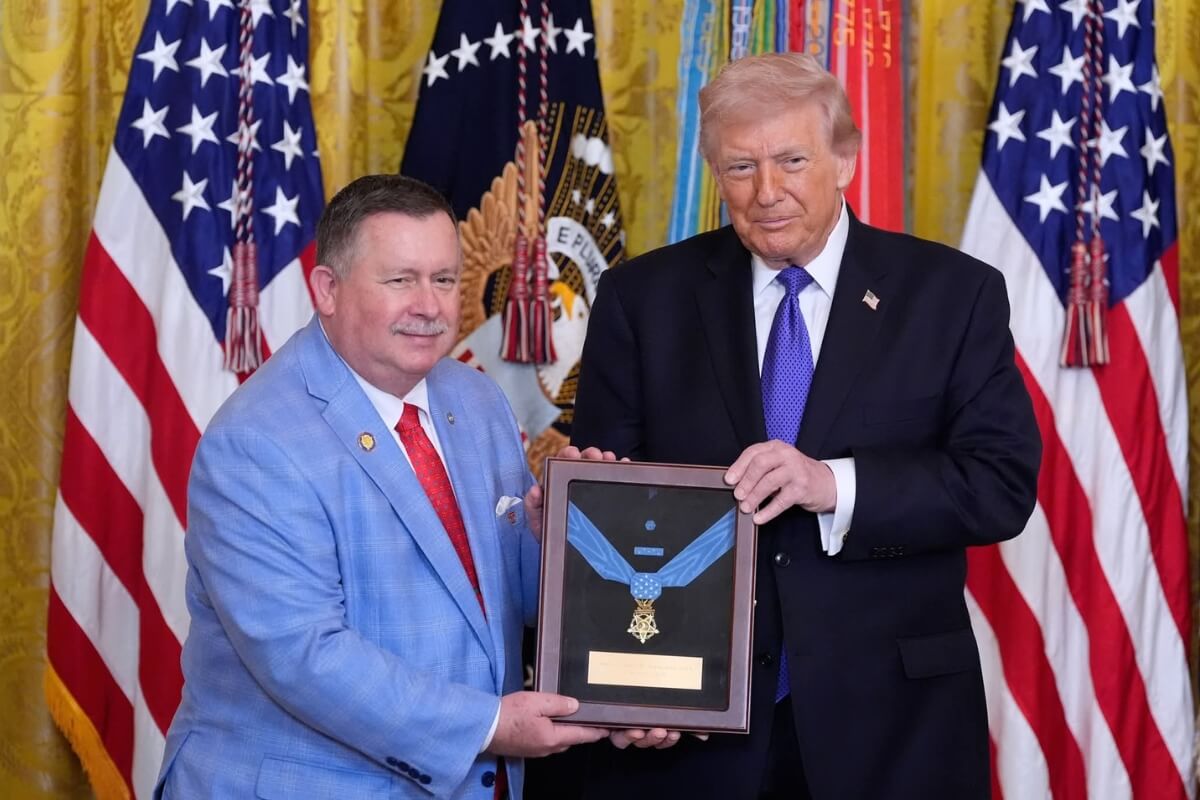
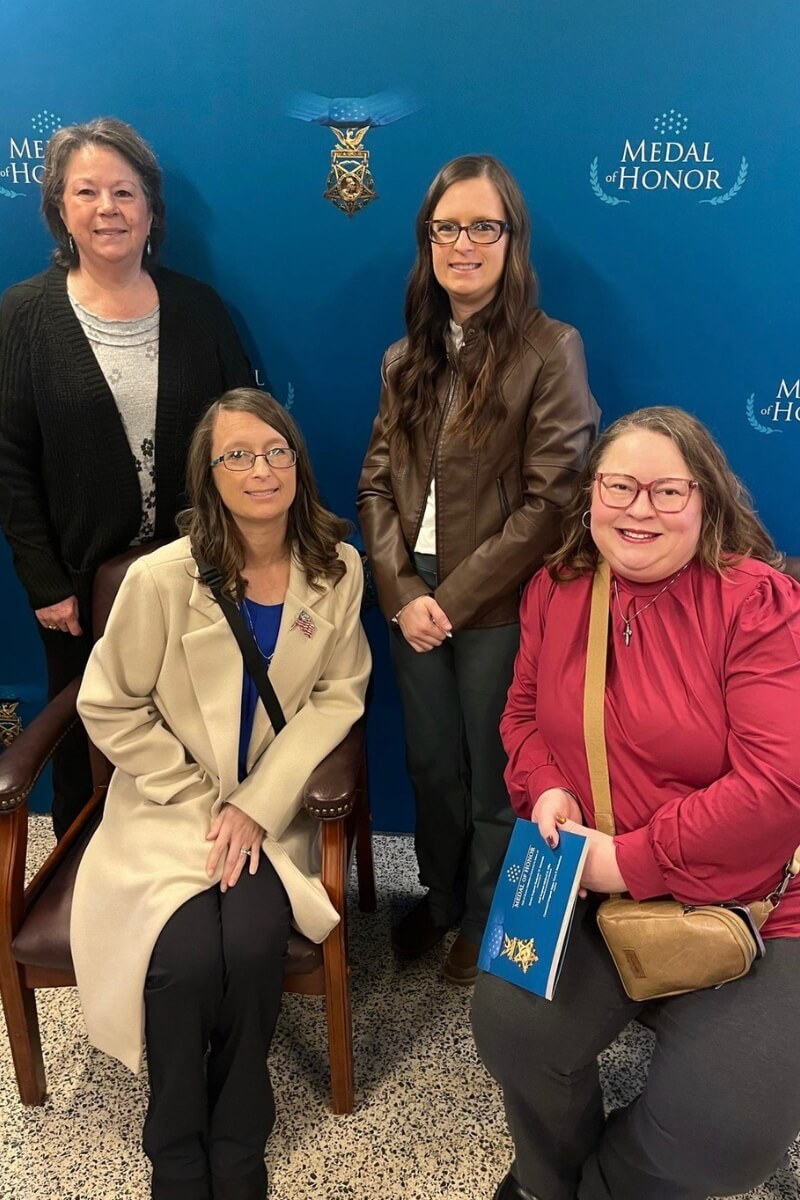
When it came, President Donald Trump told Chris that all of the work he’d put in was successful: Roddie Edmonds would receive the Medal of Honor on March 2, 2026. The family traveled together to Washington, and in a ceremony at the White House, Trump recounted the story once more.
“With total disregard for his own life, Roddie had saved over 200 of his fellow service members,” Trump said.
That act, it was noted at the ceremony, was part of a strategy of POW resistance that eventually forced the Nazis to abandon the camp. On March 30, 1945, the American 6th Armored Division arrived, liberating the prisoners and ensuring that those held there would return home.
Roddie never spoke a word about it to his family, and were it not for a Maryville College history project, his heroism may never have been discovered.
“All the events that led up to my grandfather receiving the Medal of Honor was in God’s time,” Lauren said. “We trusted God’s plan and had faith that it would happen one day, and it did.”
Chris has thought a lot over the years about how Roddie would react to it all, and undoubtedly, he said, he would demur all of the attention and wonder what the fuss was about.
“He said this to me as a college kid years ago,” Chris said. “He said, ‘None of us guys who came back are heroes. All the heroes are buried over there, because those are the guys who helped us get back by saving our lives. They deserve the honor.’
“And that really puts it into perspective. I believe dad would say, ‘I was just doing my job and what any other person would do in that situation — honor God, stand up to evil, and protect my men and my country.’”