Investing in those who teach: Parks Cowan Initiative strengthens the liberal arts at Maryville College
March 24, 2026
A professor’s work is rarely confined to the classroom.
It travels home in backpacks and briefcases heavy with blue books and yellow legal pads. It lingers at the dinner table in unfinished thoughts and ungraded papers. It surfaces in the small hours of the night as a better way to frame an argument or a new question worth asking. It is exhausting.
It is work that demands the intellect, the imagination and the whole of one’s heart, and Dr. Margaret “Peggy” Cowan knows this because she has lived it.
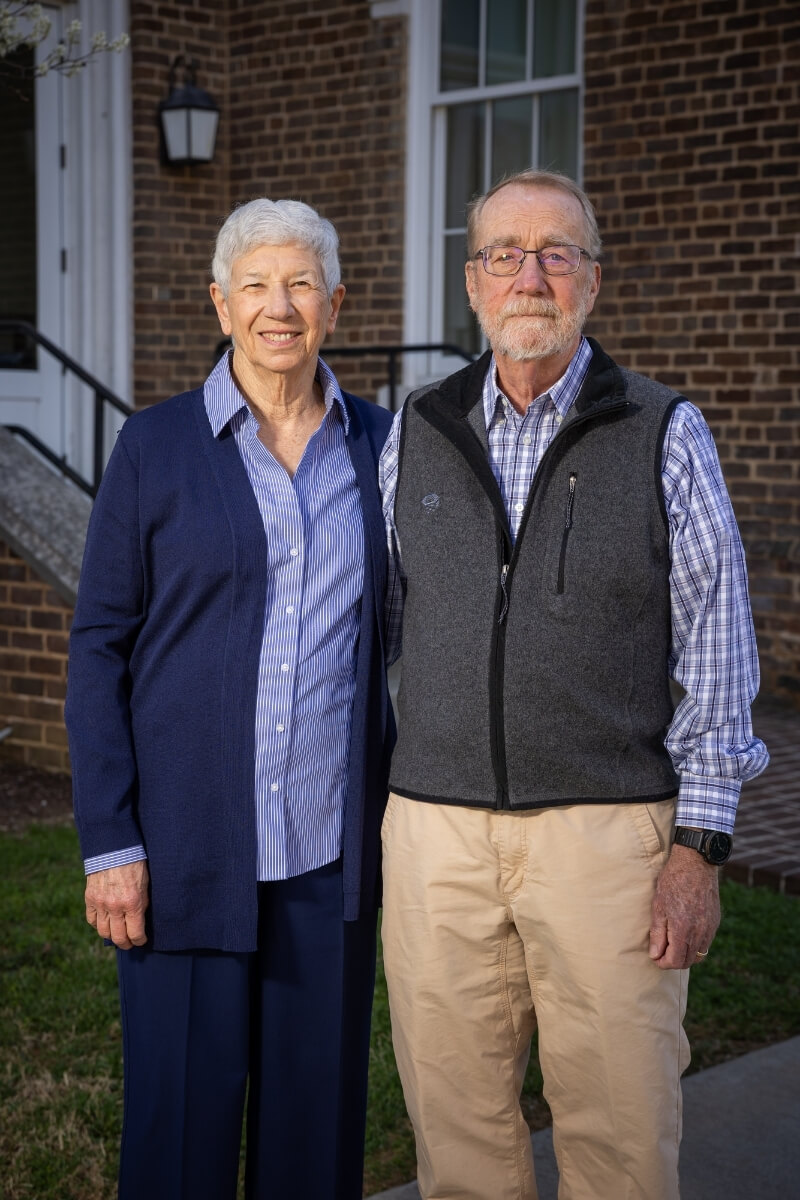
Now, she and her husband, John, have chosen to invest in those who continue that labor — establishing the Parks Cowan Initiative for the Liberal Arts, a transformative commitment designed to strengthen, support and sustain faculty development at Maryville College.
“Having served on the faculty at Maryville College, I understand the central role the faculty plays in providing students with the kind of educational experience that really matters,” Cowan said. “I truly value my faculty colleagues and appreciate the dedication they bring, the many hours they invest in teaching, and the hard work they do to support students. In a small college context, faculty development contributes directly to student learning.
“We did think about funding student research or scholarships more directly, but concluded that other initiatives are contributing to the college in those ways and that supporting faculty would provide the greatest impact for our investment. A lot of funding for faculty development supports research in specific disciplines. When I was a faculty member, I benefited most from faculty development projects that focused on teaching and/or the liberal arts.
“Since Maryville College encourages faculty to teach all courses — even disciplinary courses — within the context of the broader liberal arts perspective, I think it is important to provide faculty development that supports such work,” she added.
To Dr. Liz Perry-Sizemore, vice president of Academic Affairs and dean of the College, that development isn’t just important — it’s critical.
“It shows that we offer high-quality growth opportunities and that we want to see the faculty and students here thrive intellectually,” Perry-Sizemore said. “Gifts like these are tremendously respectful gestures of support and belief in the people and mission of Maryville College.
“Our faculty are both teachers and scholars, and they also serve by sharing their expertise with the broader community. Professional development and teaching and learning opportunities keep faculty current in, and contributing to, their fields. What faculty gain from these experiences informs their teaching, their scholarship, and their service, all of which help ensure that Maryville College offers a rigorous, relevant and impactful educational experience to our students.”
The true meaning of the liberal arts
Cowan first arrived at MC as an adjunct instructor in the spring of 1990, beginning a career that would span more than two decades teaching religion before she retired from both the classroom and the role as chair of the Division of Humanities at the conclusion of the 2011-12 academic year, earning the title of professor emerita. Today, she serves on the Maryville College Board of Directors, and her philanthropy has provided support for numerous College endeavors, from Mountain Challenge and Fit.Green.Happy.® to the columbarium in the College’s memorial garden.
The couple’s most recent donation, however, will be a game-changer for members of the Maryville College faculty, in that the Cowans provided a three-pronged strategy for its distribution. The gift will endow three separate initiatives: the Parks Cowan Sabbatical in the Liberal Arts, the Parks Cowan Faculty Scholar in the Liberal Arts, and the Dr. Dean Boldon Liberal Arts Core Award. The emphasis on the liberal arts, Cowan said, is very much intentional.
“We are very concerned about cultural attitudes toward higher education in general and the liberal arts in particular,” she said. “Increasingly, it seems that many people do not understand either what the liberal arts are, or why they are valuable. While electronic communications, social media, etc., have provided much in the way of faster and easier access to information and ideas, they have also brought a huge increase in the quantity of false or misleading information, and have encouraged people to focus on sources and groups that only promote views that are comfortable.
“A liberal arts education encourages people to consider different viewpoints and to search for truth instead of simply accepting what fits existing assumptions. It provides people with the tools to engage different sources of information and to deal with the ambiguity and complexities of our world. We are very concerned about the future of our country and our world if people are unable to navigate difficult issues and work collaboratively and creatively toward solutions.”
For the Cowans, the distinction is critical, because “liberal” too often carries a political connotation that doesn’t apply to discussions around the foundational educational theory that is the bedrock the Maryville College experience. The term “liberal,” Cowan noted — at least when applied to the liberal arts — is drawn from the Latin root of the word “libre,” which simply means free. The liberal arts, she said, originated as a form of education designed to be “freeing or liberating.”
“To live as a free person, one must be able to think for oneself, to distinguish truth from falsehood, to know when one is being limited by assumptions or preconceptions, and to avoid being controlled by a person or group or philosophy instead of one’s own values and commitments,” she added. “Gaining the skills of clear thinking, critical evaluation, creativity and careful assessment is essential if one is to be a good citizen in a democratic society, especially in a world where people are constantly bombarded by false claims, inaccurate information, and skewed perspectives.
“Second, people often think of the liberal arts as somehow in tension with preparation for work or career. I would argue just the opposite: a liberal arts education is the best preparation for work because it teaches the ability to learn new skills, to adapt to different contexts, to relate to people, to understand human interactions, to generate new ideas, to find solutions, and to make well-grounded decisions. Specific job skills are constantly changing, so education that is limited to specific work-related contexts may quickly become outdated.”
While specific training is, of course, vital to many jobs, it doesn’t replace the broad education that can provide a bedrock for building a lifelong career. That “whole-person education,” she said, is designed to enrich all areas of an individual’s life, and while she didn’t attend Maryville College, she believes the motto of her own undergraduate institution is still applicable: “vita abundantior,” a Latin phrase that means “life more abundant.”
“A ‘life more abundant’ is muti-dimensional and includes a rewarding work life, but also a life engaged in other endeavors and connected to family, friends and community,” she said. “So, while I would argue that a liberal arts education is the best preparation for work, I would also suggest that it is preparation for a full life in addition to work or career.”
Boldon Liberal Arts Core, Parks Cowan Sabbatical
The three initiatives powered by the Cowans’ gift will each play a part in promoting the value of a liberal arts education. The Dr. Dean A. Boldon Liberal Arts Core Award, in fact, already exists as the Liberal Arts Core Award, given to graduating seniors who have achieved the highest grade point averages in all of the College’s core curriculum courses. Fully funding the award while renaming it in honor of a beloved colleague is the least she and her husband can do, Cowan said, for a man who demonstrated such dedication to the core curriculum that is the heartbeat of a Maryville College liberal arts degree.
“Dr. Dean Boldon was the academic vice president and dean of the College for over a dozen years that were notable for two things: First, he worked diligently to hire and develop a superb faculty,” Cowan said. “Second, he worked with that faculty to develop a liberal arts core curriculum that was the curricular expression of the college’s mission.
“While the core has been revised over time, it maintains key distinctive features like an ethics course taken by seniors and taught by an interdisciplinary cadre of faculty, and a world cultures course required of all students and designed to introduce them to a culture very different from their own. Not only was Dean a leader in developing the core curriculum, but when he returned to the classroom, he taught these courses.”
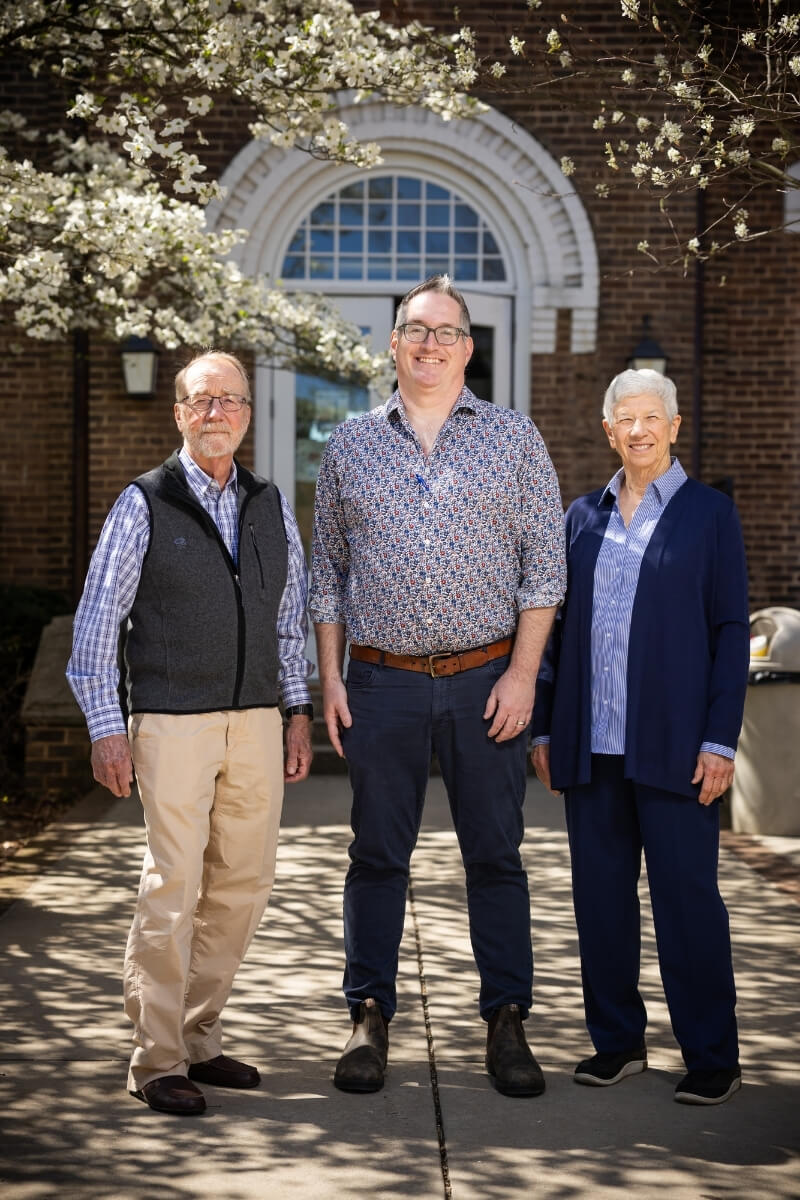
The Parks Cowan Sabbatical in the Liberal Arts will be awarded each year to one full-time faculty member from any academic division and will support the College in hiring adjuncts to cover a semester-long sabbatical for that individual. Awardees are required to use those funds to pursue professional development, research and creative opportunities in the field of the liberal arts and humanities. The inaugural recipient of the Sabbatical is Dr. Phillip Sherman, professor of religion and chair of the Division of Humanities at MC.
He plans to take his sabbatical in fall 2026 to continue work on a book project tentatively titled “The Bible as Bestiary: Imagining the Biblical Lives of Animals.” The monograph, Sherman said, will explore the “Hebrew Bible and its diverse understandings, representations and constructions of non-human animal life,” specifically from four vantage points: “Exploring the historical and cultural contexts of ancient Israelite attitudes towards animals; engaging the reception history of biblical ‘animal texts’ to track how they have shaped ideas about animals in the past and in the present; fostering interdisciplinary dialogue with modern zoology and other fields of study related to non-human animals; and contributing to ethical questions raised by the human-animal relationship.”
Before his sabbatical begins, Sherman will present his work at conferences in Canada (in May) and Belgium (in July), and the fact that Cowan was the first faculty member to interview him in the spring of 2006 — when he applied to serve as a sabbatical replacement instructor, no less — makes the award of his own sabbatical all the more serendipitous.
“From the beginning, she was a model for me of what it meant to be a member of the faculty of Maryville College,” he said. “It is truly humbling to be the inaugural recipient of Parks Cowan Sabbatical in the Liberal Arts — professionally and personally. (The endowment) is a transformative one, from my perspective. It both encourages and supports faculty as they pursue the kinds of interdisciplinary professional development essential for excellent teaching and mentoring in a liberal arts context.
“The Maryville College Statement of Purpose affirms that ‘Maryville College is, in essence, a community for learning.’ The Parks Cowan Endowment supports and deepens our work as a ‘community of learning,’ and my own project is a result of the interdisciplinary opportunities Maryville College has afforded me during my time on the faculty.”
As a faculty member, Cowan took advantage of several professional development opportunities herself, and each one led to a renewed passion for teaching and a greater understanding of her own field of expertise. Early on in her career, attending the week-long Lily Teaching Institute opened her eyes to teaching as an academic endeavor, she said, and as a result, the majority of her scholarly work afterward focused on the scholarship of teaching as she experimented with different student-engagement strategies in the classroom.
In 1998-2001, she said, she was selected to represent Maryville College in the Rhodes Consultations on the Future of the Church-Related College, a two-pronged approach that focused on leading conversations about what it means to be a church-related college, and taking part in conversations with representatives from a variety of other church-related institutions.
“Probably the most important outcome for Maryville College was that our on-campus conversations provided the background and impetus to develop the Statement of Faith and Learning that continues to be part of our understanding of our mission and identity,” she said.
Other faculty development opportunities included a Maryville College FIT (Faculty Instructional Technology) Fellowship in the early 2000s, which allowed her to develop online learning pathways with other faculty members, the result of which gave students in her Old and New Testament courses the opportunity to use interactive maps and other tools to enhance their study of biblical literature. In 2002, she chaired the Foundations of Excellence in the First Year Program, which worked to coordinate and enhance first-year programming on the MC campus; and in the spring of 2009, she took part in a sabbatical to develop strategies for teaching Hebrew Bible as a first-year liberal arts course through a set of short articles in lieu of a textbook filled with long readings.
Parks Cowan Faculty Scholar
For the Parks Cowan Faculty Scholar Award, one full-time faculty member from any academic division will receive funding to explore, innovate and lead projects that serve the liberal arts. This year, the first award has been given to Dr. Karen Beale, professor of psychology, whose project “What Does Teaching and Learning Look Like in an AI-Rich World?” grew out of a trend Beale noticed in her upper-level psychology courses, she said.
“My students are already learning in an AI-rich world, but they are doing so without much guidance about how these tools are shaping their thinking,” Beale said. “Some of them are using it as a product producer and don’t even read the output. Some of them use it as a grammar checker. Some use it as a double-check to ensure that their writing is what the professor is asking for. Very few if any, use it as a thought partner. Something that challenges them and helps them learn new concepts and skills.”
The project is centered in her Human Thought and Learning course, where students study attention, memory, motivation and “meaning-making,” and over the summer, she plans to engage in sustained inquiry into the ways AI-mediated learning environments interact with what psychologists know about the ways that people actually learn.
“Then I’ll substantially revise the course so that students don’t just use AI — they critically examine it,” she said. “They’ll compare AI-assisted and non-assisted learning experiences, reflect on cognitive effort, and apply learning theory to determine when AI deepens understanding and when it undermines it. My expectation going into this work is that AI is neither hero nor villain. I suspect it can enhance learning in meaningful ways, especially when it supports feedback, idea generation or clarification.
“But I also expect we’ll find that when AI reduces productive struggle or bypasses deep processing, it may weaken retention and understanding. My goal isn’t to ban or blindly embrace AI. It’s to help students develop judgment — to understand how they learn and to make thoughtful decisions in a rapidly changing intellectual environment.”
Through the Parks Cowan Liberal Arts Fellowship, she said, the most critical tool she requires to build her study — a “sustained, focused intellectual space” — is now possible, and it will anchor her work in the liberal arts tradition that is the backbone of all MC courses.
“Teaching is demanding, and thoughtful course redesign requires more than small adjustments during the semester,” Beale said. “This fellowship allows me dedicated time in the summer to deeply engage the scholarship on learning science and emerging technologies, rather than responding reactively during the academic year.
“It also frames this work explicitly within the liberal arts. This isn’t simply about adopting new tools or increasing efficiency. It’s about asking deeper questions: What does it mean to think well? What does it mean to learn in ways that shape character, judgment and professional development? The fellowship supports the kind of inquiry that connects psychology, education, ethics, and human development.”
Such an opportunity, she added, is one of the distinctives that make Maryville College such a rewarding place to work. Faculty development support recognizes that intellectual growth is not the sole domain of students, and it allows Beale and her colleagues to “remain engaged scholars who continually refine our teaching in response to cultural and technological shifts.”
For Cowan, nurturing that growth among those who teach in the same classrooms and walk the same campus she once did is vital — for the College, and for the students who are its lifeblood. She and her husband come from families that valued the liberal arts and long supported liberal arts colleges through financial donations and service positions. They graduated from liberal arts colleges and went on to successful careers, but also contributed to their communities through civic organizations, churches, political offices and military service … all of which were encouraged by the foundational nature of a liberal arts education. Giving faculty members an opportunity to enrich themselves intellectually will ensure that, at Maryville College, the liberal arts remain the most rewarding pathway for graduates to build well-rounded lives.
“(In the future) I hope that these awards will have empowered faculty to lead Maryville College into the future with renewed commitment to the liberal arts as a powerful tool for educating students for rich and purposeful lives,” she said. “I hope that faculty will have found Maryville College to be a particularly supportive environment in which to work. I hope that Maryville College will creatively engage the challenges that arise over the next 25 years, and that the liberal arts are proven increasingly relevant in our changing world.”
The best way to ensure they remain relevant, Perry-Sizemore added, is for the College to invest in itself — particularly the faculty members who provide such an education.
“We encourage our students to be lifelong learners, so it’s our responsibility to model that behavior for them and to make the investments in ourselves that allow us to provide students with the best tools for becoming lifelong learners themselves,” she said. “Providing a faculty member with an occasional opportunity to have a sabbatical or course release ensures that they have time to invest in new learning of their own.
“Faculty in no way ‘take a break’ during these experiences. Rather, their professional time and energy are redirected in these moments to allow for meaningful academic growth. Students benefit from this growth in many ways, including when they experience new curricular offerings and creative course refinements that enhance their learning experiences.”