


MC to host environmental author, educator and advocate Heather White on April 16
April 14, 2025
The motto of Maryville College founder Rev. Isaac Anderson – “do good on the largest possible scale” – is often used in reference to vocation and service, but many on campus want the community to know that the motto applies to the environment, too. Professors from various divisions have a week full of interdisciplinary events planned to celebrate “Earth Week @ MC” that combine design, sustainability and environmental initiatives on campus seeking to do just that.
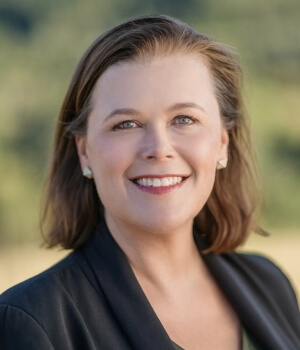
At 6 p.m. on April 16 in Lawson Auditorium (Fayerweather Hall), guest lecturer Heather White will speak about her work in environmental activism, as well as answer questions from attendees. Her most recently published book, Eco-Anxiety: Saving Our Sanity, Our Kids & Our Future, addresses the mental health struggles rampant around climate issues. White’s optimistic take on ecological concerns spans generations as she answers questions about how to make space for discussions of eco-anxiety.
White found herself drawn to eco-advocacy thanks to her upbringing in East Tennessee and the Smokies. Her inspiration is also drawn from her spirituality and the connection with nature that it enables for her, as well as finding motivation in her kids and her desire to perpetuate these conversations with her own family and others.
Though her passion sprung from a personal place, White took her environmentalism to her professional career and expanded her portfolio of environmental credentials. She holds a bachelor’s degree in environmental science from the University of Virginia and a J.D. from the University of Tennessee College of Law. White directed environmental education advocacy at the nation’s largest conservation organization, the National Wildlife Federation, served as executive director to an environmental health watchdog in Washington, D.C., and led the nonprofit partner to Yellowstone National Park. She also is the founder of the nonprofit OneGreenThing.org.
From litigation to public speaking to authorship, White’s experiences blend to result in a unique, joyful approach to environmental advocacy. Dr. Mark O’Gorman, professor of political science at Maryville College, said this type of positive thinking is more necessary now than ever.
“We talk about environmental issues in terms of an insider and outsider strategy. [White has] done both. The insider strategy is that you decide, I’m gonna get inside the system. I’m going to actually litigate and be a lawyer, or I’m gonna work with policy actors and change the law,” O’Gorman said.
From attorney in Al Gore’s campaign in 2000 to the environmental counsel to United States Senator Russ Feingold, White’s 20+ years of experience in litigation speak for themselves. White understands how important, but also overwhelming, education can be in activism. Her books attempt to make the topic more approachable, digestible and applicable. In addition to Eco-Anxiety, White has published 60 Days to a Greener Life: Ease Eco-Anxiety Through Joyful Daily Action and One Green Thing: Discover Your Hidden Power to Help Save the Planet.
“The science is changing all the time. Not climate science, but information about what is sustainable and what is not, and it can feel overwhelming to do your part,” White said. In Eco-Anxiety, she identifies seven archetypes that help readers assess who they are in service to the environment. She then offers daily sustainable practices for each archetype to emphasize how small, intentional and consistent action can make the difference when it comes to engaging in activism.
“What’s important here is the fact that I think her work is longer term,” O’Gorman said. “We now have a couple of generations of people who are uncertain, maybe even scared, trying to figure out, ‘How do I move forward in a life where I seem to see contradictions among politicians, but this group of scientists keep saying over and over again, We’re not in a good place, and we need to do better sooner than later?’ That can’t do anything but cause stress. How can you find ways to get past that? And I think that’s what her books are trying to do.”
White pointed out that her work urges older generations to approach these conversations with empathy because the youth are disproportionately suffering from the consequences of the earlier generation’s actions.
“Older generations need to create space and let Gen Z speak their feelings,” White said, emphasizing that her books seek to help create the space for these conversations. “Those contributing to climate change the least are suffering from it the most– this is true geographically and generationally.”
O’Gorman encouraged students to attend White’s visit as it is not only an opportunity for education but could also be a “free ecological counseling session” that equips them with practical tools to deal with eco-anxiety.
Inspiring intergenerational hope, White’s writing encourages everyone to think like an “awesome ancestor” with a mindfulness for cultural change and shifting expectations of what sustainability looks like. She believes that the key to making progress in sustainability is empowering people to find their niche and realize it is an area of common ground because change won’t happen unless everyone participates. Regarding the environmental movement, White said, “everyone is welcome and everyone is needed!”
White’s lecture on April 16 is free and open to everyone.
Written by Emma Henson ’25.