The Night Marauder: How a century-old cold case inspired a Maryville College professor’s research project and forthcoming book
April 30, 2026
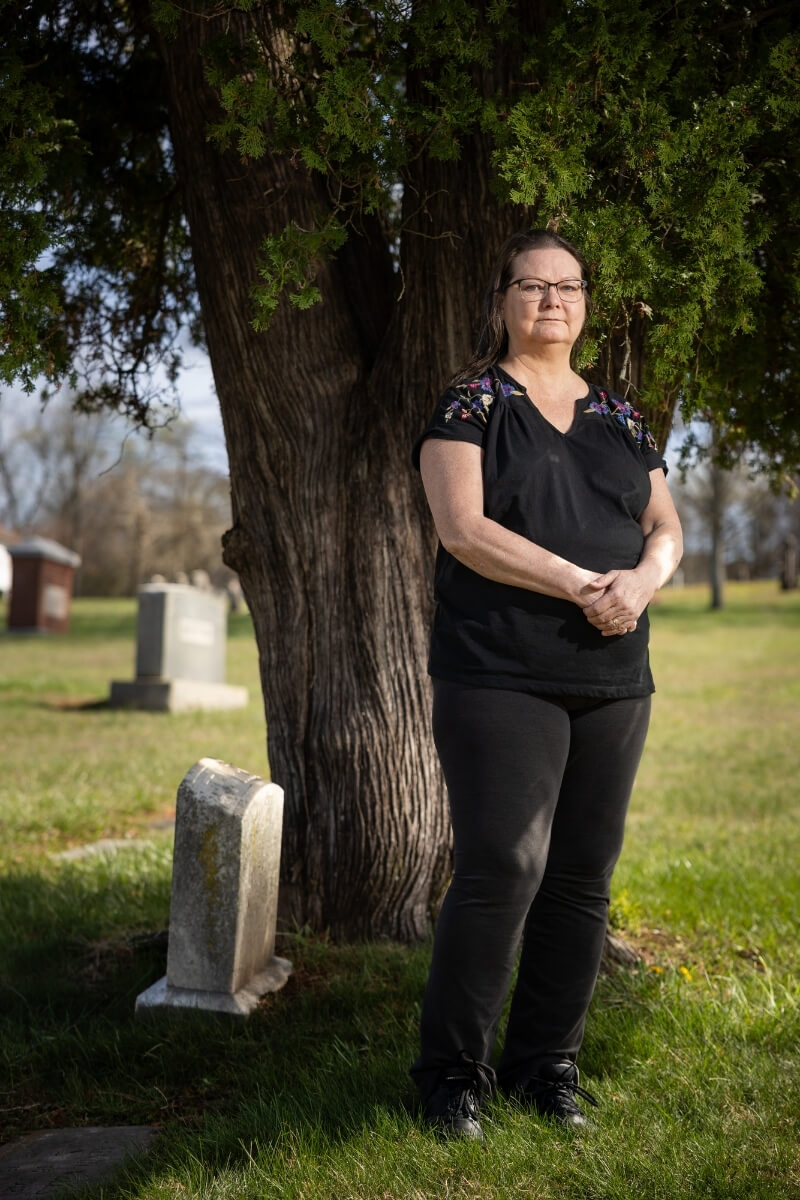
On quiet afternoons, History Professor Dr. Nancy Locklin-Sofer sometimes takes a stroll into the heart of the College Hill neighborhood adjacent to campus, walking past historic homes until she comes to Magnolia Cemetery.
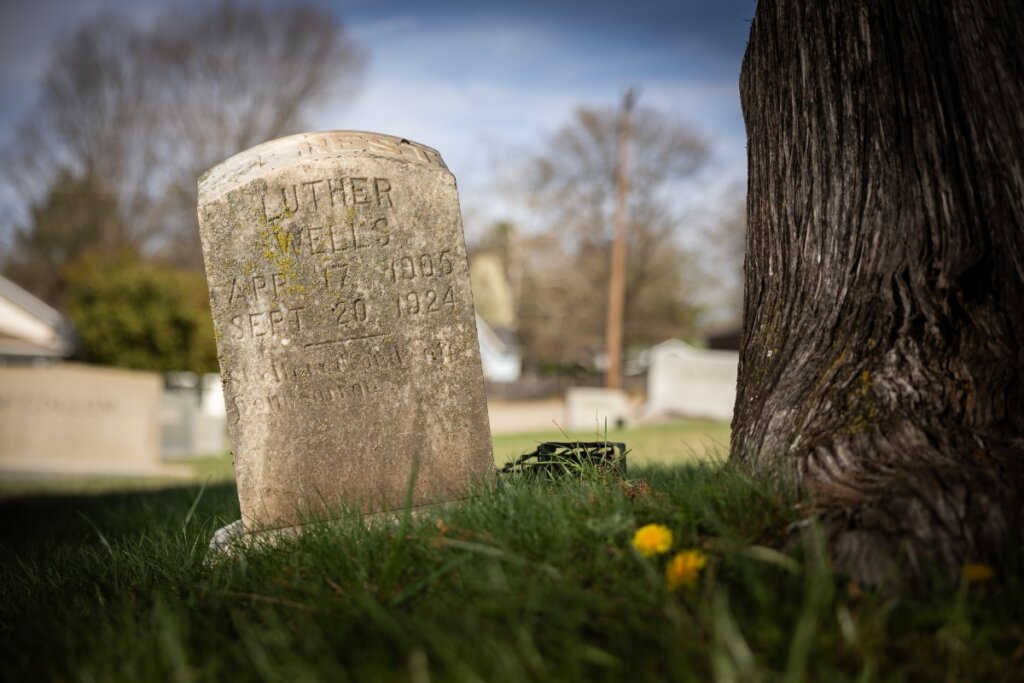
With more than 3,000 documented memorials, it’s the third-largest in the city, a quiet sanctuary for the bones of rich and poor, old and young, well-known and forgotten. She makes her way to one of the latter, a simple headstone that marks the final resting place of Luther Wells.
Living members of Luther’s family have scattered, and the years have taken their toll on the marble. Regardless, Locklin-Sofer always leaves a pebble atop it.
For her, the gesture is a promise to Luther Wells, shot three times while trying to protect his wife, Ada, from a masked intruder who terrorized Blount County for years. Despite three trials, his killer was never convicted, and while the community mourned his death, the tragedy soon faded.
She intends to make sure it does not disappear again.
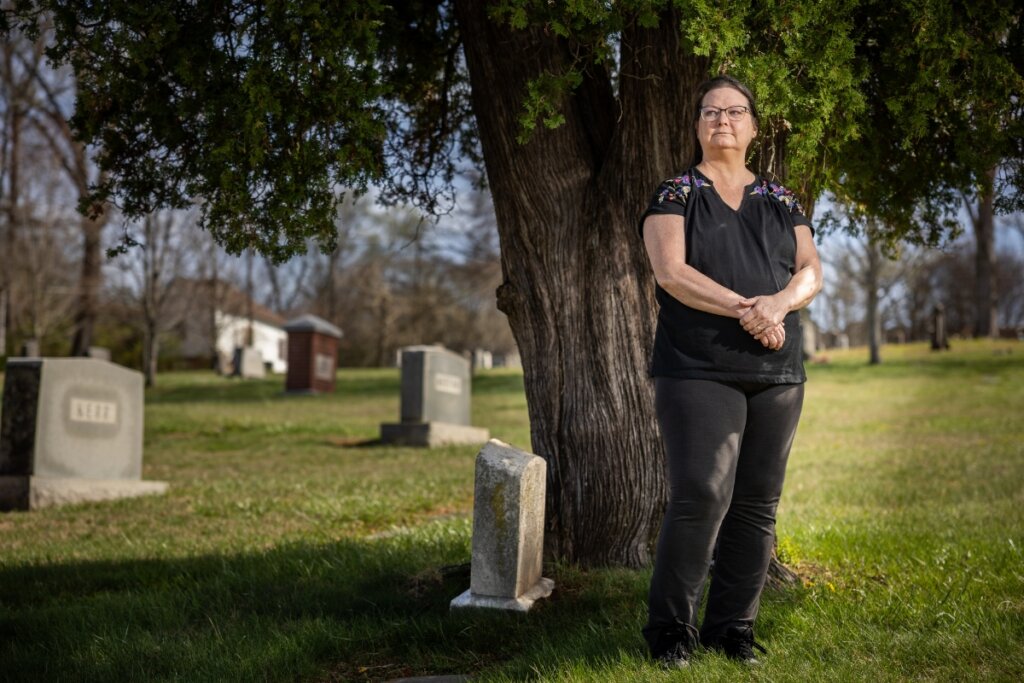
“When I first got my job at Maryville College, I lived in an apartment on Montvale Road and walked to work, passing that cemetery every day,” Locklin-Sofer says. “I knew he was buried there and first went out of curiosity. But this little tombstone is right next to a tree, and the roots will someday topple it. It needs a cleaning, too.
“It made me sad that he’s been forgotten. I’ve visited a couple of times, and I usually leave a pebble because I’m Jewish, and that means someone has remembered him. I’m so glad to know Ada built a whole life after all that she’d been through, but Luther didn’t get that chance.”
A mystery uncovered
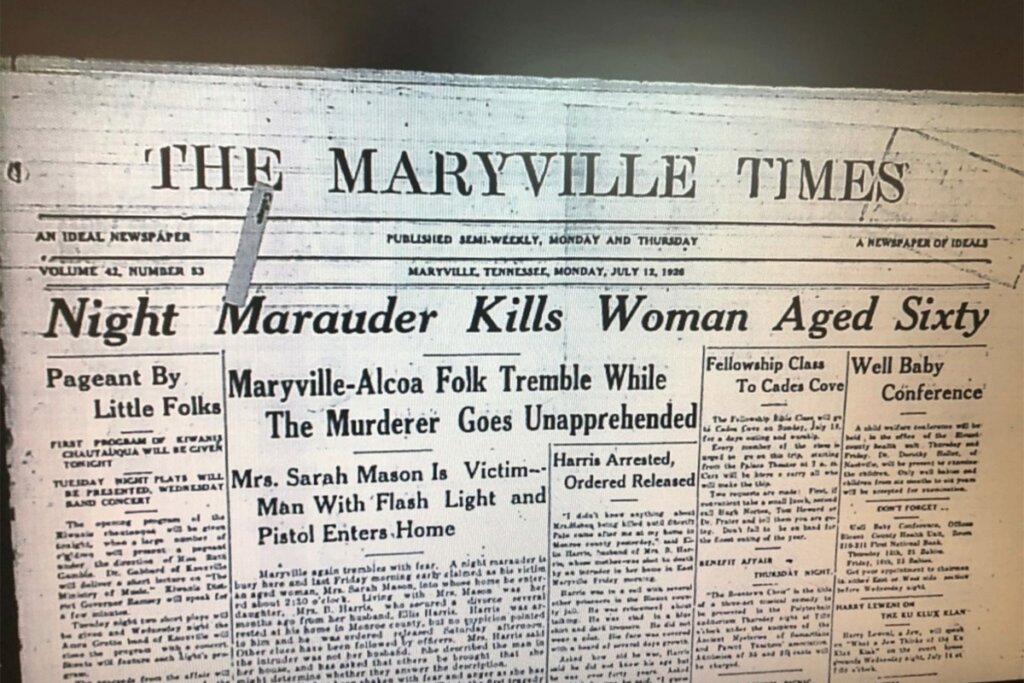
“Night Marauder Kills Woman Aged Sixty.”
There was no exclamation point on the front-page headline in The Maryville Times on Monday, July 12, 1926 — but the words themselves bore all the shock and dread of one. Splashed across the broadsheet with bold subheads framing the prose, the story carried the breathless urgency of an era when newspapers still understood that terror sold newspapers. “Maryville again trembles with fear,” the article began. “A night marauder is busy here and last Friday morning early claimed as his victim an aged woman, Mrs. Sarah Mason, late whose home he entered about 2:30 o’clock.”
For readers across Blount County, the killing of the 60-year-old widow was not merely tragic — it was horrifyingly familiar. For years, macabre news stories and chilling first-hand accounts had circulated through East Tennessee about a nocturnal intruder who slipped into homes in the darkest hours before dawn, armed with a pistol and guided by the narrow beam of a flashlight. He arrived when families slept and vanished after leaving behind a trail of carnage, leaving behind shattered households and a lingering question: Whose home would he strike next?
At the time, the story was riveting, made more so by the sensationalist slant of news outlets that breathlessly covered every unseemly detail. When a suspect was eventually arrested and put on trial, newspapers from across the country covered it, making it just as enthralling as the Scopes “Monkey” Trial, which had taken place in 1925. The quest for justice was even more captivating, ending in two mistrials and an acquittal … but the murders stopped, and the suspect left for California, and within a decade, the Night Marauder had been all but forgotten.
He might have stayed that way, had it not been for the work of Locklin-Sofer, who, in preparation for a new class in 2021, began digging through archival newspapers, court records and personal accounts to reconstruct the crime wave in its entirety. Discovering the case, she says, was a happy accident that developed from building out the curriculum for her “History of Murder” course.
“For one, I’m naturally curious, and I just love creating new classes,” she says. “My second book had come out about a murder trial in France in 1719 (“Murder, Justice, and Harmony in an Eighteenth-Century French Village”), and in order to understand that particular case, I was looking at the history of murder and found that it was an entire discipline. We had also just started the Criminal Justice major at the College, so I just thought, ‘What if we did a history of murder course?’ And the students were enthusiastic.”
For assigned readings, she turned to her own book, pivoted to 18th-century North America to examine the defense by future President John Adams of British soldiers accused of the Boston Massacre, turned to the 19th century to examine the women killed by London-based serial killer Jack the Ripper, and finally looked at writer Harper Lee’s attempts to document the case of accused Alabama killer Rev. Willie Maxwell. But the course needed local ties to make it truly engaging.
That’s when she came across that 1926 headline. The case itself, she remembers thinking, bore similarities to the Jack the Ripper slayings: two women were attacked, an elderly mother and a recent divorcee, and the police suggested it was her former husband. She disagreed, and by that point, Locklin-Sofer knew she had to find out more.
“Murder is a personal crime, and law enforcement can only work with what they’re familiar with, with what makes sense — so of course they’re going to say, ‘It’s probably your ex,’” she says. “But he had an alibi. He couldn’t drive, so he had no way of getting there, and then the story made reference to ‘this is happening again’ — and I knew I needed to know the rest of the story, because my head was spinning. This was wild.”
It was the spring of 2021, and COVID raged. Locklin-Sofer masked up and turned to the Blount County Public Library, where Reference Librarian Brennan LeQuire set her up with a microfilm machine. With LeQuire’s help, she began to construct a timeline, and what she discovered was far more complex and chilling than the scattered recollections that survived. That fear, in fact, didn’t germinate in Blount County; it took root 20 miles to the north in Knoxville, a bustling industrial city of about 80,000 residents at the time.
Knoxville’s long night

Beginning in the summer of 1919, police began receiving reports of strange nighttime intrusions — incidents that followed a disturbing pattern. The attacks almost always occurred in the silent hours around 2:30 a.m. Women woke to find a stranger already inside the room, illuminating their faces with a flashlight while holding a gun inches away, issuing “unspeakable demands,” survivors often claimed, and resorting to violence if met with resistance. The first widely reported killing came on Aug. 30, 1919, when a man broke into the bedroom of 27-year-old Bertie Lyndsey. She had been sleeping beside her cousin while her husband worked in Ohio; when Lyndsey tried to escape, the intruder shot her.
The crime quickly ignited one of the most volatile episodes in Knoxville’s history. Police arrested Maurice Mays, a well-known Black café owner, despite thin evidence linking him to the attack. Rumors spread that he was the illegitimate son of Knoxville’s mayor, and within hours, white mobs gathered outside the jail demanding access to the suspect. Authorities moved Mays to protective custody before the crowd could reach him, but the tension exploded into the Knoxville Race Riot of 1919 — a night of violence that left the city scarred and the investigation clouded by racial hysteria. Mays would eventually be convicted and executed in 1922, yet during the months between his arrest and his trial, attacks bearing the same chilling hallmarks continued to be reported: the flashlight, the pistol, the silent intrusion into sleeping homes.
By the winter of 1920, Knoxville newspapers described the city as an “armed camp.” Residents kept pistols beside their beds, police pursued vagrants and suspicious strangers through alleyways, and civic leaders debated curfews as gun sales surged. Yet the marauder — whether one man or several — seemed to adapt. In some assaults, he fled after threatening his victims; in others, the violence escalated with grotesque cruelty. One especially horrific episode involved sisters Lula and Elizabeth Eunice Robinson. When the intruder entered their home and Lula refused to remain silent, he shot her repeatedly. As she lay dying in the same room, her sister was assaulted. Such attacks deepened the sense that the intruder’s objective was not merely theft or even murder, but terror itself — the deliberate invasion of spaces that people believed were safest.
Then, gradually, the reports grew less frequent. Whether because the attacker moved on, or because newspapers lost interest in crimes that had become grimly routine, the sense of immediate panic subsided. Knoxville residents returned to their ordinary lives — but the pattern of attacks had not vanished entirely. Instead, it seemed to migrate.
In June 1922, the matron of the Blount County Children’s Home awoke to find a man standing inside the building with a pistol and flashlight. When she confronted him, he struck her and fled into the darkness. Over the next several months, similar reports emerged from Maryville and neighboring Alcoa: nighttime intrusions, women threatened at gunpoint, footprints in the dirt outside windows. The details were unsettlingly familiar to anyone who had followed the Knoxville crimes. If the same perpetrator had indeed moved south, the quiet communities of Blount County had inherited a terror that had already haunted another city for years.
Local law enforcement struggled to respond. Without the forensic tools modern investigators rely on today, Sheriff John McCampbell and his deputies pursued leads that were often little more than rumor. Shoe prints were compared. Neighbors were questioned. Suspicious drifters were detained and released. The sense of unease grew as reports accumulated — assaults in isolated homes, break-ins that occurred within hours of each other, and the constant recurrence of that same eerie detail: the thin beam of a flashlight sweeping across a sleeping face.
The investigation turned in a new direction after a series of particularly alarming incidents in the mid-1920s, including the killing of Sarah Mason. The attack intensified pressure on local authorities, who faced mounting public fear and an increasingly impatient press corps eager for answers. The investigation turned in a new direction after several witnesses independently described a man seen walking rural roads near multiple crime scenes — a man deputies soon identified as Will Sheffey.
Sheffey, Locklin-Sofer discovered, was from a respected family of some renown. His sister, Josephine, was the principal of the Springbrook School, and the family owned a house on Wilson Avenue in the College Hill neighborhood, adjacent to Maryville College. His neighbor, in fact, was Fred Proffitt 1907, an alumnus who had taught at the College and, as treasurer of the preparatory department, became an astute businessman … and would testify as a character witness for Sheffey.
Proffitt wasn’t the only MC tie to Sheffey, Locklin-Sofer discovered: After his arrest, his defense team consisted of Russell Kramer, whose children and grandchildren — including Wayne Kramer ’74, also an attorney and member of the Maryville College Board of Directors — would go on to build distinct legacies at MC; and Moses Gamble 1905, an alumnus and a former board member himself.
The Sheffey family, it appeared, were well-known and well-liked … except for Will: On the day of Sheffey’s arrest, MC President Samuel Tyndale Wilson 1878 wrote in his diary, “His family are a good people, but he is a wicked creature.”
Sheffey was not initially the obvious suspect in the case, but his name surfaced repeatedly as officers retraced the movements of individuals seen near several of the crime scenes. Witnesses described a man who had been walking along rural roads at unusual hours, sometimes appearing disheveled and agitated. Others recalled encounters that, in retrospect, seemed unsettling — a stranger lingering near a property line, or footsteps heard outside a house just before dawn.
None of these accounts alone amounted to proof. Yet taken together, they formed a thread investigators could not ignore. Deputies began quietly gathering statements from residents who believed they had seen Sheffey near their homes. Officers compared his movements to the dates and locations of the attacks, noting coincidences that appeared too frequent to dismiss. At the same time, the sheriff’s office faced enormous public pressure to demonstrate progress in a case that had terrorized two counties and baffled authorities for years. The mounting suspicion eventually culminated in Sheffey’s arrest, a moment that local newspapers greeted with dramatic headlines and cautious optimism.
For the first time since the Night Marauder began stalking East Tennessee’s nights, authorities believed they might finally have the man responsible, but the arrest did not bring immediate relief. Instead, it marked the beginning of another chapter — one that would unfold in courtrooms rather than dark bedrooms.
As prosecutors prepared their case and defense attorneys sharpened their arguments, the trials of Will Sheffey promised to become some of the most sensational proceedings the region had ever witnessed, drawing reporters and spectators from across the country and forcing a community already steeped in fear to confront the possibility that the mystery of the Night Marauder might finally be solved — or grow even more complicated.
Students join the search

As Locklin-Sofer began to incorporate facets of the case into her course, she quickly came to understand that larger forces were at work, both inside and outside the classroom. The more she pulled at the frayed threads of the old case, the clearer it became that the Night Marauder story needed to be far more than a single unit in her syllabus.
“Just the community connections — that’s what I love about this,” she said. “Tim Walker, the head of the Blount County Genealogical and Historical Society, had the time and the access to research all of these names. Every time I found another name, he’d get me everything he could on that person, and slowly I began to build a blog.
“And by that point, I had built it into the class so much that I knew the students would have to contribute to it somehow. A couple of them asked to edit the stuff I’d written, so I started assembling basic chapters, too big for blog posts, and then assigned them to figure out how to turn them into one. I had all of these students from all of these majors — History, Psychology, Criminal Justice, Writing Communication — who were all over this, because there were so many different ways you could contribute.”
Riley Cook ’23, who went on to earn her Master of Science in Criminal Justice from Lincoln Memorial University and now works for the State of Tennessee, was part of that inaugural class in 2021 that helped Locklin-Sofer transform the Night Marauder from a historical curiosity into a full-fledged research project. As soon as she was introduced to the case, Cook said, she was hooked.
“As someone who loves true crime, I’m always drawn to building my own theories and piecing together what might have happened, so getting to do that in a Zoom class (we were online due to Covid) full of other curious, analytical people was incredibly exciting,” she said. “It really did feel like peeling back layers of a dramatic onion — every discussion revealed something new, whether it was a detail we had overlooked or a completely different interpretation of the same evidence.
“We weren’t just learning about a case; we were actively engaging with it, challenging each other’s ideas, and experiencing its novelty together. And as a Criminal Justice major, this class impacted me in ways that went far beyond studying the Night Marauder case. It really helped shape the direction of my academic interests and ultimately set the framework for my thesis.”
Her Senior Study — an integral part of the Maryville College experience in which students conduct faculty-guided research in their major fields of study — gave her an opportunity to apply a scholarly lens to her fascination with serial killers. Locklin-Sofer’s course, she said, “pushed me to think more critically and analytically about them rather than just viewing cases at the surface level.” Like any unsolved case, opinions varied widely, which prompted Cook to step back and consider psychological, sociological and environmental factors more deeply as she began planning her Senior Study.
“Those discussions sparked a stronger curiosity in me about why individuals feel the urge to kill and what compels them to follow through, and that curiosity directly influenced my thesis, titled ‘The Makeup of a Serial Killer,’” she said. “The class helped me move from simply being interested in true crime to approaching it through a structured, research-driven lens. In many ways, it was pivotal to my overall education because it sharpened my analytical skills, encouraged open dialogue, and solidified the specific area within Criminal Justice that I wanted to explore more deeply.”
Even Scots with no background or particular interest in criminal justice found themselves captivated by the Night Marauder case. Connor Pylkas ’23, now a senior enrollment counselor in the Office of Admissions who graduated with a Management degree, originally enrolled in the course simply to fulfill needed credit hours — a testament to the liberal arts approach that defines a Maryville College education.
“At a liberal arts school, you’re taught to think differently,” he said. “A Management major doesn’t normally study murders, but at Maryville, it allowed me to be more creative, and this was my third history class. I didn’t think it would be engaging, but we got to look at mistakes that were made in the case, evidence and much more. It was a good class to learn how to use critical thinking strategies for my Management degree and future career.”
And, he added, he found a certain validation in being named as a contributor to what had become known as the Night Marauder Project. The blog drew significant traffic, particularly after being highlighted locally and mentioned on a number of true crime podcasts. The deeper Locklin-Sofer dug into the story, the more she encountered new leads, new sources and new opportunities that made the case increasingly difficult to set aside.
“I think when the students and I were working on the blog, I even said, ‘My hope is to make a book about this some day,’” she said. “I had promoted it a lot through public talks and podcasts and the website, but then I started to realize I had access to people and sources that most people wouldn’t, so that’s when I pitched it to the University of Tennessee Press.”
Walker, for example, introduced her to Blount County Circuit Court Judge David Duggan, long recognized as the historian for the City of Alcoa and author of “Alcoa: A Century in Words and Pictures.” As it turned out, Duggan was in possession of what Locklin-Sofer calls “the Hultquist Papers.” Victor J. Hultquist was the construction superintendent for the ALCOA Inc. plant that gave birth to the city, and he also served as Alcoa’s first city manager. His interest in the Night Marauder case at the time, Locklin-Sofer discovered, bordered on obsessive.
“He took it personally that there would be such terrible crimes in his city,” she said. “He must have been following the cases in Knoxville, because he ordered bloodhounds and told those who knew him, ‘We gotta stop this guy. We can’t let this happen in our town.’”
The man in the spotlight
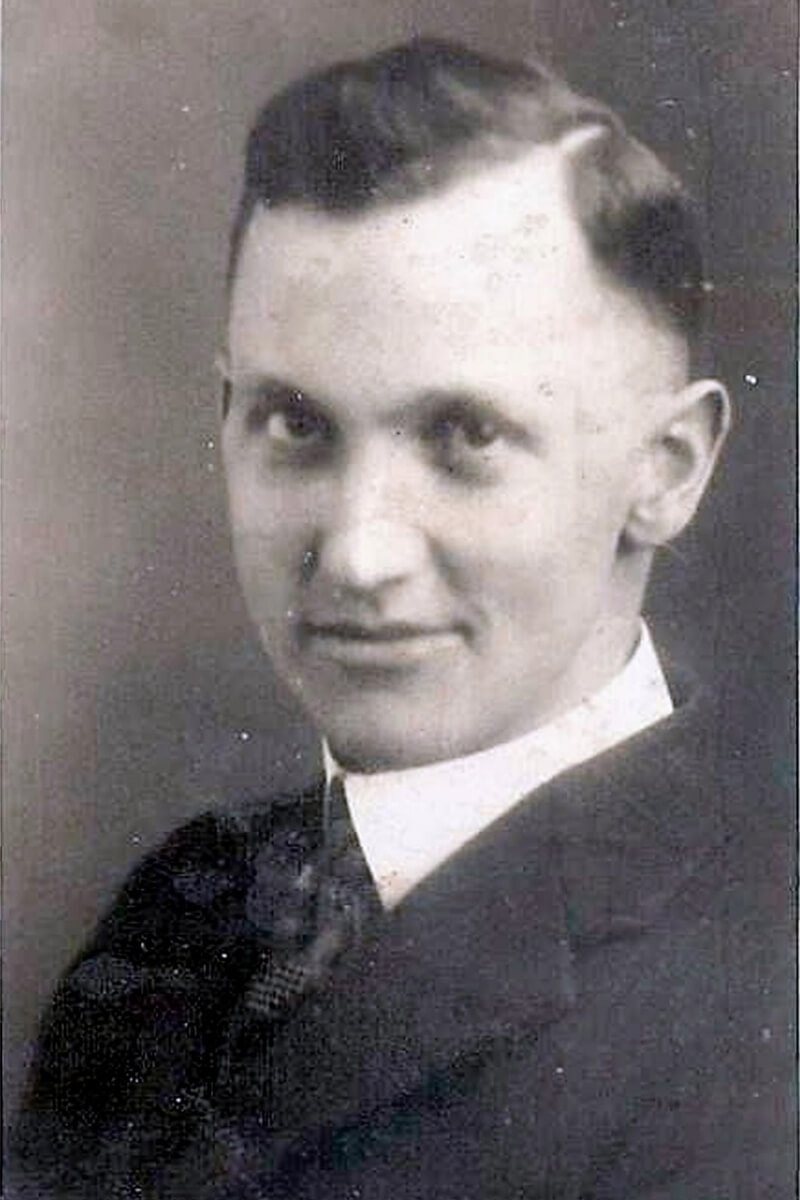
By the time authorities finally moved against Sheffey, the community had already endured years of whispered suspicions and mounting fear. The attacks attributed to the Night Marauder had stretched across Knoxville, Alcoa and Maryville since 1919, leaving behind a trail of shootings, assaults and terrorized households. Investigators had chased countless leads, but by the mid-1920s, the evidence — circumstantial though much of it was — began to circle repeatedly back to Sheffey, a soft-spoken Alcoa plant employee whose life outwardly resembled that of any other respectable young man in the industrial town.
Sheffey was not an obvious monster. He was educated, having attended Carson-Newman College, and he had served as a medic during the First World War. By the early 1920s, he was working as a storekeeper for the Aluminum Company of America and living quietly in Maryville with his family. Yet investigators increasingly found themselves confronted by a series of troubling connections: sightings of a man matching his build near several of the attacks, rumors about his nocturnal wanderings, and a past that included earlier brushes with scandal and even a previous murder trial in Sevier County in 1915, when he had been accused — and acquitted — in the killing of a young woman named Dora Davis.
The case that ultimately brought him into the courtroom, however, was the violent attack on Luther and Ada Wells. In the early hours of an October night, the Wells household was invaded by a man carrying a pistol and a flashlight — the now-familiar tools of the Night Marauder. Luther Wells was shot when he confronted the intruder, and Ada Wells herself was wounded during the struggle. Unlike many previous victims, both survived long enough to give investigators a description of the attacker, and Ada later insisted that the man responsible was William D. Sheffey.
Her identification would become the cornerstone of the prosecution’s case, and she would eventually testify in all three trials. In discussing Ada — whose great-great-granddaughter Locklin-Sofer interviewed about the case — the professor is overcome with emotion over Ada’s trauma and her bravery.
“When I got to talk to the great-great-granddaughter, I wanted to know if (Ada) was OK, because she lived through something unthinkable,” Locklin-Sofer says. “She faced him in court three times, giving eight hours of testimony, and she didn’t get to see him go to jail. Let’s face it — he was a White guy with connections, but even though she was only 19, saw her husband murdered next to her and was shot twice, she never wavered in her testimony.
“She would eventually remarry, and the great-great-granddaughter sent me a picture of her later on in life. She would go on to have 17 great-grandchildren.”
Locklin-Sofer declines to identify Ada’s descendants, primarily out of respect — true crime fans are sometimes insistent, and she wants to spare them harassment. The true crime scene, she adds, draws a variety of enthusiasts, including some who are titillated by the blood and violence. Others, however, simply enjoy the mystery, and in immersing herself into that scene, she began to attend a number of true crime conferences and expos.
“Crime writer conferences are fun!” she says. “One I went to, Killer Nashville, was a blast. I found out that a lot of people who write crime, whether it’s fiction or true crime, have other day jobs. They don’t need to do it; they’re there because they love it. But one of the biggest impressions on me, and one of the eight rules for being a conscientious true crime fan, is that you never forget the victims.”
And she never has. Even in interviews with descendants of some of the Night Marauder victims, she treaded carefully, and with some — like the great-niece of Georgia Tilson, whose sister, Ida, fought off the killer but was shot several times before he escaped — the sense of melancholy seemed to linger generations later, she said. While Georgia was never harmed, the trauma of her sister’s death — as well as subsequent threats — affected her for the rest of her life, and while she fingered the No. 1 suspect to investigators, she declined to take the stand.
“Here’s this teenage girl whose sister was murdered in front of her, and he told her, ‘If you tell anybody who I am, I’ll come back and kill you, too,’” Locklin-Sofer says. “One of her descendants said that they don’t think she ever recovered, and she couldn’t talk about it when she was older, but she did pick Will out of a picture.
“I’ve seen this question come up at crime writers’ conferences: It’s a cold case because they never solved it, but it stopped happening … so is it far enough in the past? If you do true crime, do you ever touch a case that’s cold? Some writers love to be able to get to the end and show you that justice was done, so as a writer, you can make a choice to only research cases that have a conclusion.
“But sometimes, there’s just no concrete evidence,” she adds. “Sometimes, there is no answer, and you just have to be OK with that.”
In some ways, resurrecting the Night Marauder case … bringing it back to life, in a sense … is the resolution. Throughout her work, she continued to circle back to the great gulf of sadness that swept the community in those days, and the emotional connections she forged with the victims makes it feel like a duty, she adds, to let the world know what happened … even if justice wasn’t done.
The trials of Will Sheffey
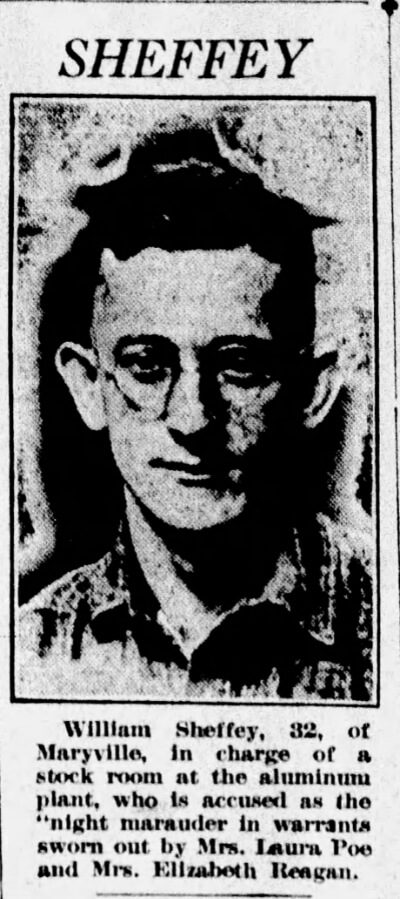
When Sheffey’s first trial opened in the Blount County Courthouse in August 1925, the spectacle drew crowds that spilled into the hallways and out onto the sidewalks. East Tennessee had followed the Night Marauder story for years, and now the man accused of being the shadowy figure behind the attacks sat quietly at the defense table, thin and bespectacled, his demeanor calm enough that reporters repeatedly remarked upon it.
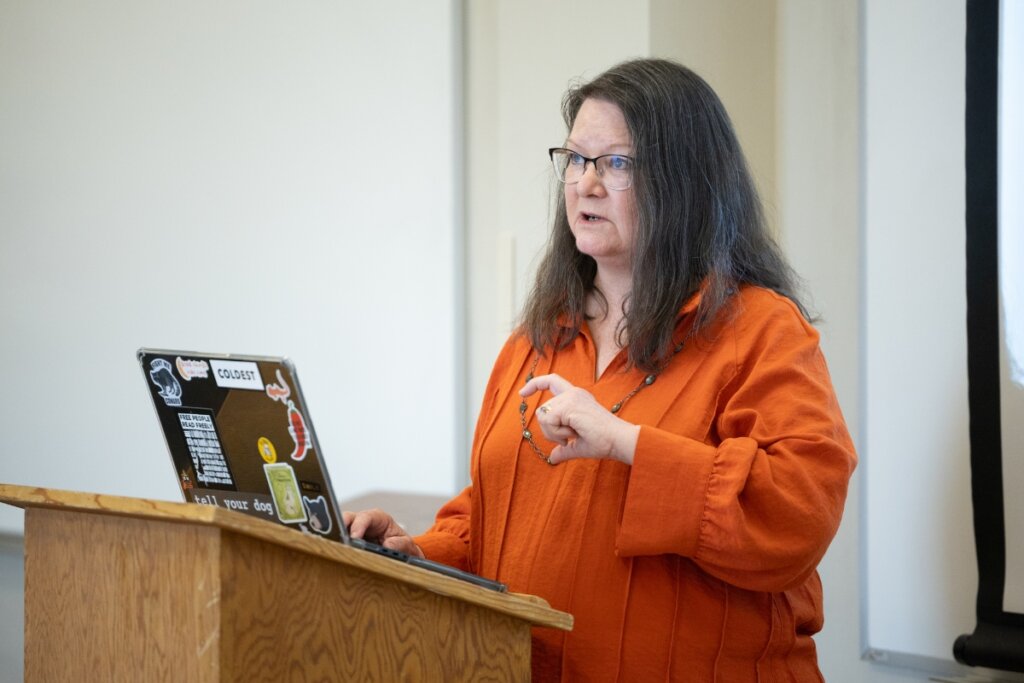
“In some ways, it was almost as big as the Scopes trial, which took place only two months earlier,” Locklin-Sofer says. “All eyes were on Tennessee, and there were newspaper stories about this case from Chicago to Miami. I had to recreate each trial from newspaper accounts, because the court files are gone.”
The prosecution’s argument rested on a simple but powerful narrative: that Sheffey was a man living a double life. By day, he was a dutiful son and factory employee; by night, he shed that respectable identity and prowled through neighborhoods armed with a pistol and a flashlight, searching for victims. The state pointed to the Wells attack as the moment when that secret life had finally collided with justice.
Ada Wells herself took the stand to recount the terror of that night, identifying Sheffey as the intruder who had burst into her home and killed her husband. Her testimony was dramatic and emotionally wrenching, and for many in the packed courtroom, it seemed decisive.
But the defense countered with an aggressive strategy aimed at undermining the certainty of her identification. Witness after witness testified that in the immediate aftermath of the attack, Mrs. Wells had expressed uncertainty about the identity of the intruder — even telling some neighbors that she could not describe the man at all. Others suggested that in the confusion and trauma of the moment, she might have misinterpreted what she saw.
“The entire case hinged on whether Ada Wells really could identify him, so when they questioned her and asked her if she could identify their attacker, she said no,” Locklin-Sofer said in 2022. “The next day, she hallucinates in the hospital, telling everyone, ‘Oh my God, he’s at the foot of the bed!’ She said she now had a clear view of him in her mind, and when the investigator brings her photos, she picks Will out of a group.
The state said that this was an authentic identification of Sheffey, and the defense turned around and said it was nonsense, that she had a daydream while she was recovering from trauma.”
Ida’s testimony, and the influence trauma had on her recollection and recounting of that horrific night, needed to be examined in-depth, Locklin-Sofer determined. Enter Autumn Carroll ’22, who answered a call the professor put out for research assistants to examine all aspects of the case. Carroll, a Psychology major, applied for the position and received a Ledford Scholarship, an award bestowed by the Appalachian College Association that provides financial and academic support, and she spent the summer of 2022 examining the state of the psychology field at the time of the trial, especially as it pertained to memory and whether Ada would have been taken more seriously using contemporary paradigms.
“As I learned more about the case, I was struck mostly by how we have evolved within criminal justice,” says Carroll, who graduated in December 2022 and now works as an assistant intake coordinator with First Tennessee Human Resources Agency’s probation services. “Of course, we learn things over time, but the investigative techniques used at the time of the case were a bit shocking to me. My research focused on Ada Wells and her testimony, so I delved deeper into interview tactics and memory lapses.
“I’m not saying interviews are perfect now, but I was fascinated by how leading they were then. Comparatively, I could see how investigators would grab every scrap of information to build the entire picture. The difference is that they have gotten better at it.”
Ultimately, she adds, her study concluded that while psychology applied to courtroom settings was debatable at the time, the evolution and refinement of both technology and techniques have only widened the debate.
“My conclusions were that psychology and criminal justice need to have a better relationship established in order for true justice to be given,” she says.
In many ways, she adds, working on the project with Locklin-Sofer reoriented her academic trajectory: Before she applied to the call for assistants, she was “aimless,” she adds, “looking at ideas that just were not sticking.”
“I jumped right at the opportunity to get involved,” she says. “I recall being very surprised that the murders took place in the same town. Serial killers are not as common as they may be made out to be, so learning that there was one that existed in Maryville, not too far from where I was raised, made me very curious.
“Working on the case as her intern led me to my thesis topic. Afterwards, I had direction and excitement about the work I was doing. The Ledford Scholarship, along with my thesis and research experience, helped me get into a graduate program, and I graduated with my Master’s in Criminal Justice and Criminology in 2024 (from East Tennessee State University.”
Freedom … and lingering doubt
Ada’s testimony failed to persuade the jury in that first trial, especially after Sheffey himself took the stand. Calm and deliberate, he described his ordinary routines, his work at the aluminum plant, and his movements on the night in question. He denied ever committing any of the marauder attacks and dismissed suggestions that he spent his nights prowling the countryside. While prosecutors dredged up details of his romantic relationships and earlier scandals to paint a portrait of a man whose private life was far less respectable than his public reputation suggested, his defense team managed to convince enough jurors that a mistrial was declared.
The state was unwilling to let the case end, however, and in December 1925, Sheffey was tried a second time. This time, the novelty had worn off, the crowds were smaller, and the proceedings often felt like a repetition of arguments already heard months earlier. Much of the testimony from the previous trial was read into the record, and witnesses repeated familiar accounts. Ada Wells again testified, standing firm in her identification of Sheffey as the man who invaded her home, but the defense had refined its approach, presenting additional witnesses who insisted she had once doubted that identification. They argued that the state’s case depended entirely on the testimony of a traumatized victim whose memory might not be reliable.
Sheffey took the stand on Christmas Day, and after closing arguments, the jury retired to deliberate. Again, a mistrial was declared — but this time, only three jurors voted to acquit, and so prosecutors felt they were within reach of a guilty verdict, and Sheffey returned to jail to wait for a third trial, which took place in 1926. The jury once again heard familiar arguments: the state’s portrayal of Sheffey as a man leading a secret nocturnal life, and the defense’s insistence that the evidence amounted to nothing more than suspicion and coincidence.
And this time, a final verdict put the case to rest for good: Not guilty. After three trials and years of terror that had haunted East Tennessee communities, the man many believed to be the Night Marauder walked free. Sheffey left the state soon afterward and eventually made his way west to begin a new life in California. The other charges against him were never pursued, and the murders that had once filled headlines gradually faded from public memory.
Some folks, however, never forgot. In the Kramer family, it was referred to as the “Sheffey Trial,” and Wayne Kramer still has a hefty file on the case that includes a recorded interview with his grandfather, one of Sheffey’s defense attorneys. Wayne was in the eighth grade when his grandfather died, and the interview, he says, was conducted by his aunt — Russell Kramer’s daughter, Emma Jame Kramer White ’38. White was one of several members of the Kramer clan who attended Maryville College; all four of her brothers — Arnold Kramer ’40, Jack Kramer ’43, Frank Kramer ’47 (Wayne’s father) and Roy Kramer ’51 also attended, as did all four of their spouses, and the Kramer name has become symbolic with service to MC.
“Yes, the Sheffey Trial was, in my view, certainly part of the Kramer family lore,” Wayne says. “While it was not all-consuming by any stretch of the imagination, it was something about which I spoke with my grandmother, my father and other family members, including aunts, uncles and cousins, over the years. Inasmuch as I do not recall speaking directly to my grandfather about the Sheffey Trial, I have no personal knowledge as to whether he had an opinion of Mr. Sheffey’s guilt or innocence.
“However, in listening to the interview, I certainly know he believed he had a duty to be an advocate for his client, that his client was entitled under the law to a competent defense, and that he believed in his client and that the ultimate result of the trial(s) was a good one. I can tell you that my Uncle Roy Kramer informed me when I discussed this matter with him in 2021 that my grandfather believed strongly in Sheffey’s innocence, and that Will Sheffey always vehemently denied he had committed the murders. However, and as again confirmed by my Uncle Roy and my own memory of conversations with her, my grandmother was never quite as certain.”
Neither were a great many other people, and Sheffey himself — tried three times for the murder of Luther Wells, along with a combination of other charges during the various proceedings — refused to give local residents an excuse to mete out vigilante justice. The community didn’t just forget him, however. A private investigator hired by Hultquist reached out to connections in California law enforcement to spread the word: A potential serial killer had moved there.
“He was supposed to come back to answer for additional charges, so he stayed in California,” Locklin-Sofer says. “This private investigator reached out and told them, ‘This guy’s a sicko; you want to keep an eye on him.’ Sheffey would later write to his lawyer and complain that people knew about the crimes, including a guy who ran a grocery store in (Los Angeles), whom Sheffey overheard talking about this ‘vile creature in our midst.’ He had no idea who Sheffey was, but he talked about him right in front of him.”
Sheffey’s family followed him west, and they made new lives for themselves in the Golden State. He married several times, fathering sons with his first and third wives, but neither chose to have children, and so Sheffey’s line ended with them. He lived for almost another 50 years, eventually dying in the 1970s. As far as anyone knows, he never returned to East Tennessee.
Although … perhaps he did.
“After he was acquitted, Mr. Sheffey went to California, but as the story goes, returned a year or so later,” Kramer recalls. “As described to me at various times, late one night, there was a knock at the door. My Uncle Arnold went to the door to answer, and it was a man he did not know, or at least he did not recognize him at the moment. He asked to see my grandfather.
“My grandfather went to the door and met with him and went outside for a visit. When he came back in, he told the family it was Will Sheffey, and that he had simply come by to thank him. (Apparently, he never paid my grandfather all of his fee, nor did he on that night.) He also told my grandfather he did not want others to know he was in town. I believe he was in town only for a very short time and then went back to California.”
Bringing the story back

And the community moved on.
“Whenever I ask someone local, especially people with roots here, they either have family lore and have talked about it their whole lives, or they’ve never heard of it and could never imagine something like that happening here,” Locklin-Sofer says. “Within weeks, the front page of The Daily Times was back to farm reports and petty crimes like the theft of a Victrola, and as far as we know, nothing like that happened again.”
Locklin-Sofer, however, hasn’t forgotten. Her book “The Night Marauder — East Tennessee’s Serial Killer, 1919-1926” — will be relesaed in February 2027, and it’s been a labor of love. Originally, she says, she began to lay out the entire case in chronological order, beginning with the murders in Knoxville. The revelation of Sheffey as the prime suspect, however, forced her to backtrack, and University of Tennessee Press editors suggested she instead begin with another murder entirely: that of Dora Davis, who grew up a few houses down from Sheffey in Seymour, Tennessee.
The pair both attended Carson-Newman, from which Sheffey was dismissed because of “inappropriate relations” — including, according to at least one accusation, with a 14-year-old disabled girl whom Sheffey impregnated, one former friend claimed. Sheffey attempted to court Davis, but her father was adamant he keep his distance. On Sept. 1, 1915, before the killings that would be attributed to the Night Marauder began, someone stood on a chair outside of Davis’ bedroom window and shot her three times. The method — a nighttime shooting through a bedroom window — eerily foreshadowed the crimes that would soon terrorize East Tennessee. Sheffey was accused, tried and acquitted, an eerie precedent to the Blount County trial that took place 11 years later.
The book includes research gathered by a number of Maryville College students who took Locklin-Sofer’s “History of Murder” course, and as the 2025-26 academic year comes to a close, she’s down to the minutiae of getting the book across the finish line. Many decisions, she points out, require thoughtful consideration. Take the cover of the book, for example: When publishers asked her about her thoughts, she was adamant that whatever illustration was chosen, it not feature a terrified woman.
“I’ve tried to be very respectful as I’ve met and talked to the victims’ descendants,” she said. “I feel like I have a responsibility to tell people’s stories, and I didn’t want to let them down. Their voices have been lost for long enough.”
That they will receive recognition in Locklin-Sofer’s book is, in some ways, because of her good fortune. Many of the official court records are long gone; in those days, law enforcement investigators often took their casework with them when they retired, and even the descendants of McCampbell, “who was dead certain Sheffey was the murderer,” believed his papers were tossed after his death. She was able to obtain a tape-recorded interview of McCampbell’s widow, and through painstaking detective work and community assistance, she was able to piece together as thorough a timeline of the Night Marauder killings as possible.
“It was said that when Sheriff McCampbell died in the 1970s, they took all the files in his attic and threw them in the Dumpster,” she says. “It was just perfectly random that Hultquist’s files were maintained, and when Judge Duggan contacted his daughter, she was willing to give them to him.”
Despite all of it, however, the lingering question remains: Did Sheffey get away with terrorizing East Tennessee? And if Sheffey was not the Night Marauder, then who was?
“I think there was a lot of evidence pointing to him, and the prosecution made a strong case,” Locklin-Sofer says. “But it would be irresponsible of me as a historian to say he was guilty.”
The search continues
For Locklin-Sofer, the story does not end with the publication of a book.
In the years since the Night Marauder Project first appeared online, the case has taken on a second life — not only among history buffs and true-crime enthusiasts, but among the people who live in the communities where the attacks took place. Her talks at libraries and conferences draw curious audiences eager to hear how a nearly forgotten crime wave once terrorized East Tennessee, and how a handful of archival clues, yellowed newspapers and community memories can resurrect an entire chapter of local history.
Along the way, Locklin-Sofer has found herself occupying an unexpected role.
“I gave a talk at the public library last October about my new side gig as a historic private investigator,” she says with a laugh. “People who hear me talk or read about the project sometimes contact me to research violent crimes in their family’s past. I’m always glad to help, but sometimes it gets out of hand.
“People insist their grandpa was the Night Marauder or that the ghost of Bertie Lindsey is haunting their Knoxville apartments. Occasionally, they argue about my findings, but I’m always respectful. Sometimes in historical research, the evidence doesn’t explain everything, but that doesn’t mean what their families have told them for years isn’t the truth. It just can’t be corroborated.”
Those stories — whispered family memories, fragments of folklore, the uneasy sense that the shadows hide a troubling secret that may never be revealed — have only reinforced for her how deeply the case once embedded itself into the region’s collective imagination. For Locklin-Sofer, that lingering uncertainty is not a frustration so much as a reminder of what history often is: incomplete, contradictory and shaped by the voices that survive long enough to be heard.
Which is why, every so often, she still finds herself walking through Magnolia Cemetery.
The headstone of Luther Wells sits quietly beneath the shade of the same tree that first caught her attention years ago. Time has weathered the marble, and the roots beneath it continue their slow, patient work beneath the soil.
But each time she visits, Locklin-Sofer pauses for a moment and places a small stone atop the grave — a simple gesture meant to signal that someone has come … and that someone is still searching for the truth, because the story of the Night Marauder is not finished yet.