From six members to 12,500 Scots: The remarkable journey of the MC Alumni Association
May 27, 2025
Not even 10 years had passed since Thomas Jefferson Lamar 1848 reopened Maryville College in the aftermath of the Civil War, and the building in which a half-dozen Scots gathered — Anderson Hall — was still considered new, having stood for only five years.
In those five years, Anderson would be joined by two residence halls, Baldwin and Memorial, on 60 acres to the southeast of downtown Maryville, purchased with the financial gifts of benefactors like William Thaw. At the time, according to MC Archivist Amy Lundell ’06, the college chapel was located on the second floor of Anderson Hall, and at 2 p.m. on May 27, 1875, the first meeting of the Maryville College Alumni Association was convened.
For 150 years, the organization has served a single purpose, one documented in his 1919 book, “A Century of Maryville College,” by Dr. Samuel Tyndale Wilson 1878, who would later serve 29 years as president of MC: “to rouse a fervent college patriotism that is both enthusiastic and enduring.”
“Wherever Maryville men and women are found, they are zealous champions of their alma mater,” Wilson continued. “They are the uncommissioned agents who send the ever-swelling tide of new students to the old College.
“Surely, too, this is as it should be; for not only have they the ties that would bind them to any school where their youthful memories cluster, but many of them have the additional ties of a gratitude that recognizes that, had it not been for Maryville’s marvelous success in keeping the expenses low and the standards high, and then its generosity in affording scholarship aid and opportunities to earn part of even the low expenses, they could never have had a college education or any part of it.
“And there, too, is the additional debt of gratitude for high moral ideals and stalwart religious character received from the College,” Tyndale concluded. “No wonder Maryville’s old students insist with loving urgency that ‘there is but one Maryville in the whole world.’”
A modest beginning
Discussions within the current MCAA about celebrating its 150th anniversary have been ongoing for at least a year, because as accurate as Wilson’s statement was in that 106-year-old book, it’s only magnified in the years since. Today, there are more than 12,500 members of the alumni community, scattered across the United States and on five other continents. (And Karla Beard Heidelberg ’88 has actually visited Antarctica.)
Stateside, there are numerous chapters whose members meet regularly for both fellowship and community service. Blount County, Knox County and Nashville all boast thriving chapters in Tennessee; other chapters include MC in DC in Washington, D.C.; the Tri-State Scotties for those in the New York/New Jersey/Pennsylvania/Connecticut area; the Atlanta Alumni Group; the Florida Alumni Chapter; and a burgeoning Kentucky chapter. Wherever more than one Scot finds another, however, is always celebrated as an impromptu reunion, says Jennifer Phillips Triplett ’07, director of Alumni Affairs for Maryville College.
“Some of our favorite stories are from alums who happen to be traveling, or even living, overseas, and running across another Scot they identify from the Maryville College hat or shirt they happen to be wearing,” Triplett said. “It really is a special connection, because when you graduate from Maryville and happen across others who have done so, either before you or after you, there’s this instant camaraderie that can only come from this place.”
Today, thousands of alumni return to College Hill every October for Homecoming, and the event is often the most important one to take place on the Maryville College campus, surpassed only by the annual Commencement ceremony that produces new MCAA members. It wasn’t always that way, however; Commencement was, for decades, the time for alumni to return to their alma mater, and so the Maryville College Alumni Association grew out of one such ceremony.
Wilson recounted that history in a speech to the MCAA on June 6, 1928. While graduates of MC had met in groups as early as 1857 (“at which the Rev. Gideon Stebbins White (1829) delivered a valuable historic address,” he added) … and Dr. Alexander Brabson Tadlock 1859 recalled attending another alumni meeting the year he graduated … and the concept of an alumni organization can be traced to 1869, when the Board of Directors (then known as the Board of Trustees) discussed a committee to “make arrangements for the Semi Centennial Celebration of the founding of the College, and for the organization of the Alumni of the College” … 1875 is considered the year, according to Wilson and the College’s official archival records, that the MCAA was officially launched.
It should be noted, however, that Dr. Ralph Waldo Lloyd 1915, the College’s sixth president from 1930 to 1961, claimed in his book, “Maryville College: A History of 150 Years, 1819-1969,” the Maryville College Alumni Association was founded in 1871, four years earlier — “an unusual act of energy, good will and faith,” he writes, given the wartime tribulations that almost shuttered the College for good. That early summer afternoon in 1875, however, has been officially declared as the beginning of the organization, according to Lundell.
“According to the official minute book, the first meeting was in 1875,” she said. “The idea started with the Board of Directors in 1869 but didn’t come to fruition until 1875. I’ve seen that 1871 date before in some late 19th-century catalogs, but I think it was just a typo or mistake that got repeated. It is also possible that the reference to 1871 is because the first graduating class after the Civil War was in 1871, so the post-war alumni ‘begin’ in 1871.”
According to those minutes, and to the remarks by Wilson to the association in 1928, that 1875 meeting was mostly organizational in nature, all in attendance having attended Commencement immediately prior and, after listening to “remarks by different members on the purpose and importance of such an association,” voting to approve a constitution and to elect officers. Those officers that first year included the Rev. Gideon Stebbins White Crawford 1871, president; Albert Melville Hook 1874, vice president; Sylvester S. Grinnell 1874, secretary; Organizing Committee members Crawford, Hook and George Craig Jackson 1875; and Executive Committee members the Rev. Charles Erskine Tedford 1867, Robert Harvey Hook 1874 and William Blackburn Brown 1875.
A lengthy list of accomplishments
Although small in number, mighty was their enthusiasm, and after deciding to charge 25 cents per member to purchase a secretary’s book, it was also moved and carried “that the secretary be instructed to correspond with alumni with a view to securing a speaker for next year. That was the year that Wilson, a sophomore at the time, first attended the group that was known in the beginning as the Society of the Alumni.
“This was the first Alumni meeting with a program,” Wilson said in 1928. “Professor Crawford, the president of the Association, the grandfather of John and George Crawford, delivered a very valuable historical address … the association was small in those days of beginnings, the roll-call revealed six alumni present.”
For the next several years, the annual MCAA meeting was held after Commencement, and while many such meetings likely echoed similar concerns that continue to the present day — boosting membership, planning events, discussing various ways to support the College — there were several notable meetings and alumni milestones in the years to come.
- In 1880, the Rev. Eli Newton Sawtell 1825, who inspired the “Sawtell Wagon Trail” challenge in the spring of 2025, spoke to the MCAA, five years before his death at 86.
- A year later, in 1881, Wilson took part in the association for the first time as a member, and in that 1928 speech, he recalled paying “$100.00 toward Professor Lamar’s Endowment Fund of $100,000.00. That was a daring adventure in those days, for dollars were few and far between. But I got the subscription paid off with interest in a few years, and felt better when I realized the proud fact that I now had stock in the beloved old college! … There were 19 alumni at the meeting, and they subscribed the very respectable sum of $1,350.00, an average of $70.00 a member.” Adjusted for inflation, according to the website Inflation Calculator, that’s a total of $42,756.35 in 2025 dollars, or an average of $2,217 per member. Wilson, incidentally, would go on to serve as secretary of the association for 28 years.
- In 1914, the meetings were still being held after Commencement, and “the association adjourned to meet at the same hour and place next Commencement Day.”
- By 1921, when the association met on June 9 of that year, after an invocation by the Rev. W.S. Bartlett and a violin selection by Mr. J.A. Keane, lunch was served “by the Home Economics department of the College.”
- According to “By Faith Endowed: The Story of Maryville College, 1819-1994” by Carolyn Blair and Arda S. Walker ’40, Professor Horace Orr 1912, secretary of the Alumni Association under Wilson’s presidency, spearheaded campaign funds for the Alumni Gymnasium, raising more than $16,000 by 1923. Professor Edwin Hunter 1914 supervised construction. Dedicated on Thanksgiving 1923, it has served for more than a century as a home for athletic and social events, and when the College chapel burned in 1947, it was adapted for daily chapel services as well.
- The presidential portrait of Wilson was commissioned by and presented to the College by the MCAA on June 1, 1927.
- The alumni association provided one of two World War II service flags that hung in Voorhees Chapel during the war, both of which remain in the Archives collection to this day.
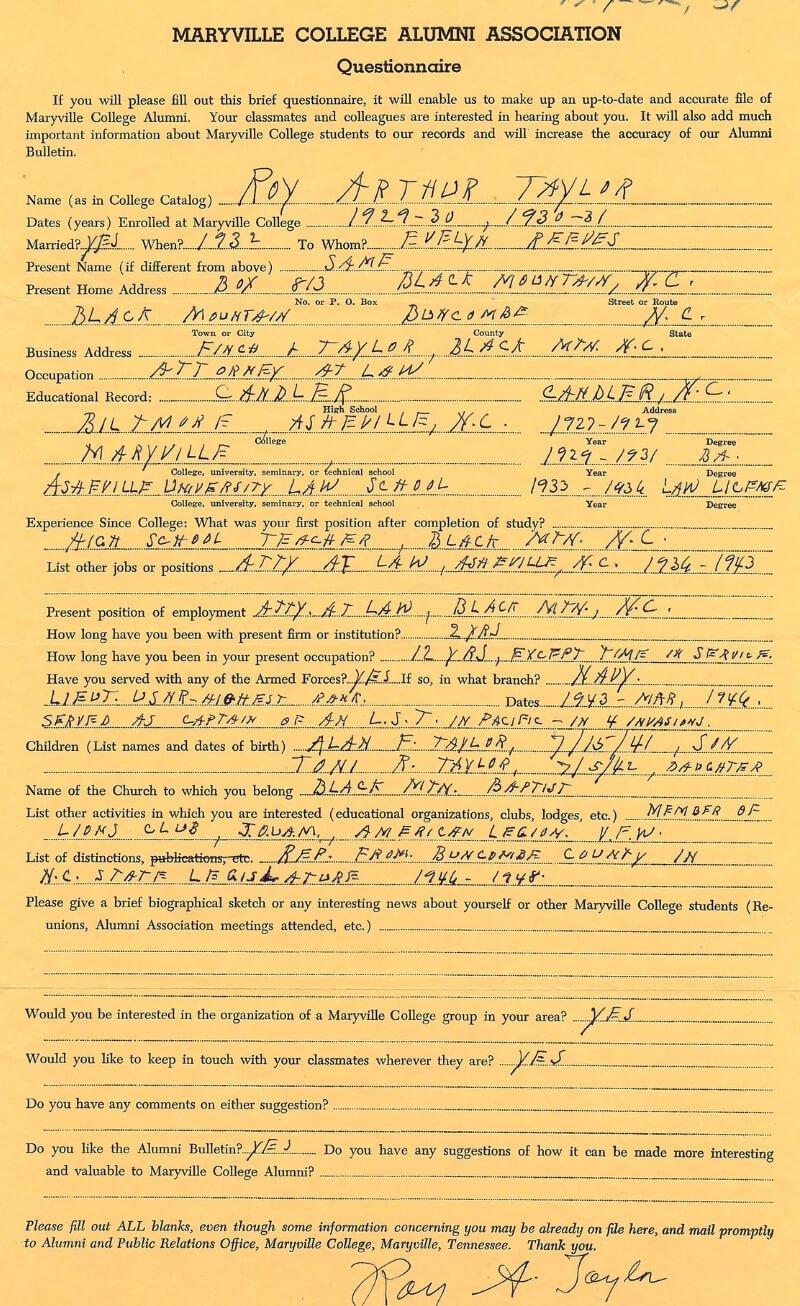
- In 1948, the MCAA sent out a questionnaire to build up its information on College graduates who may not have been members.
- In 1961, Alumni Day, held on May 27 of that year, brought more than 600 Scots back to campus, and at the evening dinner, the MCAA awarded the first Alumni Citations to surgeon Dr. Julian Johnson ’27 and insurance executive Earl Winston Blazer ’30. “The evening was climaxed with the presentation of Dr. and Mrs. (Joseph J.) Copeland, who were given their first formal introduction to a Maryville College audience as the new President and first lady,” according to an article in the Maryville College Bulletin.
- In 1974, the association established the Outstanding Senior Award “to honor achievements in both academics and extracurricular activities.”
- In the first year of the presidency of Dr. Wayne Anderson, inaugurated in 1977 as MC’s eighth leader, “alumni giving increased 29.6% over the year before, setting a record for which the United States Steel Foundation awarded a first place for increase in alumni giving,” according to Blair and Walker. In Anderson’s first five years, they continue, “restricted giving was outstanding. It provided scholarships, strengthened the international emphasis, endowed a program in journalism, and set up computer laboratories. Alumni debaters contributed over $40,000 to underwrite the debate program, and the Scots Club raised $20,000 for athletics.”
- Williard House was renovated in 1988 and became home to the Alumni Association.
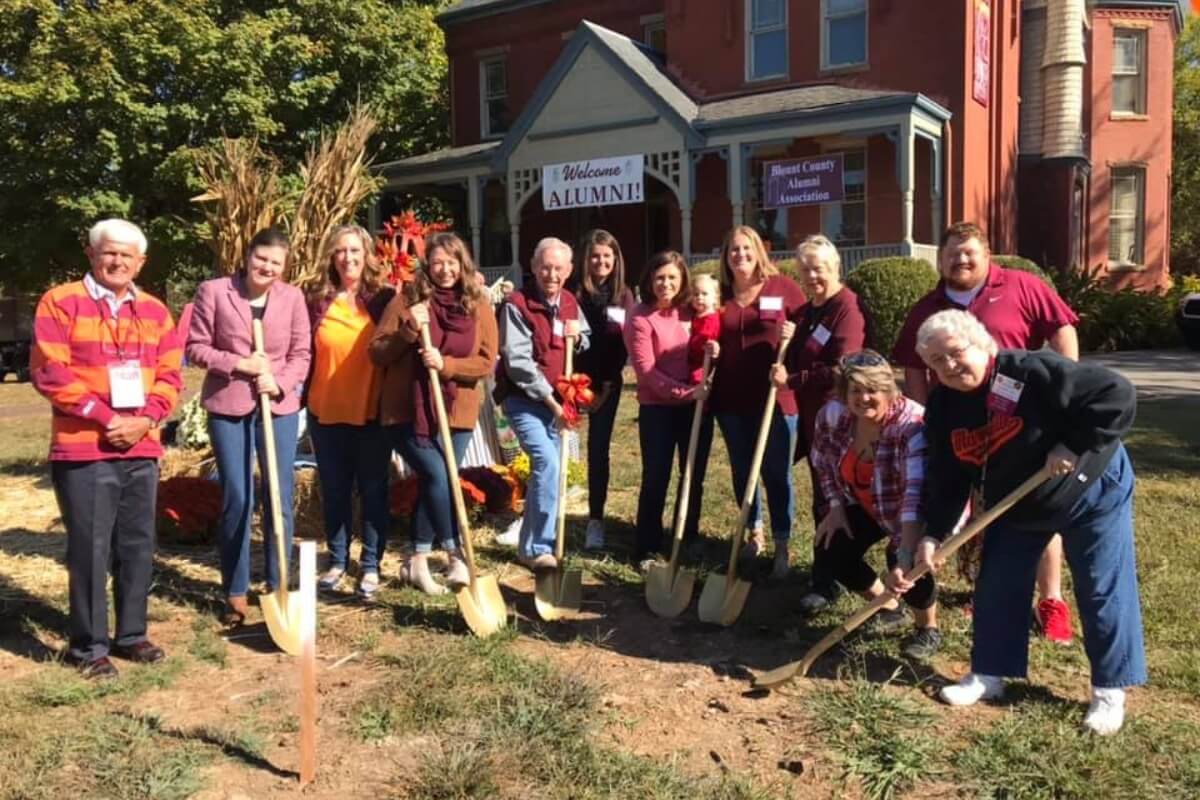
- Through the years, Homecoming traditions have been maintained by alumni, such as the Alvin C. Baker Harvest Craft Fair that was begun by the Faculty Wives’ Club decades ago and maintained by the Blount County Alumni Association chapter to generate funds for scholarships.
- In the 1990s, the KT Days service tradition was established by Class of 1960 alumni and continues as a beloved alumni tradition three decades later.
- The Distinguished Service Award was established in 1991.
- The Kin Takahashi Award for Young Alumni was established in 1999.
- During Homecoming 2006, the official tartan of Maryville College was unveiled after a two-year process carried forth by a committee that included MC President Dr. Gerald Gibson, alumni, faculty, staff and students. After the design was agreed upon and approved, it was then authorized and approved by the Scottish Tartans Authority and registered in the International Tartan Index.
- In 2020, the MCAA adopted a taskforce format “to remain nimble and responsive to the needs of MC and the Alumni Community.” All members of the MCAA board serve on at least one taskforce, and the groups themselves are open to alumni at large. To date, the taskforces include the Alumni Outreach Taskforce; the KT Global Taskforce; the Senior Communications Taskforce; and the Community and Belonging Taskforce.
- Most recently, alumni led the fundraising effort for a $100,000 major renovation to the Archives area in Fayerweather Hall.
A 150th anniversary shindig
When Pat Moyer ’85 accepted the nomination for presidency of the MCAA, he didn’t realize he would be leading the organization through its 150th anniversary year until afterward, he said.
“It really wasn’t until after I decided to serve in this role that I learned it would be during this amazing milestone,” Moyer said. “It just makes me even more committed to continuing the great work that this board has been doing for the past 150 years. Once the leadership of our new board was established, we almost immediately began working with the College and Jennifer Triplett to discuss ways that we can celebrate this amazing milestone.”
While the actual 150th anniversary of that first meeting — May 27, 2025 — was commemorated with a social media post, discussions and plans to hold a series of events throughout the 2025-26 academic year have been discussed for almost a full calendar year now. MCAA Vice President Theresa Taylor Gray ’87 has spearheaded much of the planning, and the unofficial kick-off to the observance began last spring, when students in Dr. Nathan Duncan’s Fermentation Science 201 created recipes and concepts for their final project: a beer recognizing the anniversary.
“During KT Week, alumni came and brewed these recipes, and as a part of the August Downtown Maryville Alliance third Thursday event, we held a tasting to determine the winning beer,” said Duncan, an associate professor of chemistry. “This process ended up being more complicated, because we had some really good ones to choose from, so we are brewing two beers.
“The first is ‘Crowned with Cedar,’ an IPA by Kaitlin Koster ’25. The concept recognizes the location of Maryville College, as well as the natural wonder of our campus and our region, while paying tribute to the Alma Mater. The second is ‘My Heart is in the Highlands,’ a Scottish ale with vanilla and cream by Izzy Wright ’25. The concept is the annual tradition of the Robert Burns Dinner, as well as the influence of Scottish heritage on the College identity. Izzy aimed to create a beer version of the annual favorite ‘Sticky Toffee Pudding’ dessert served at the Burns dinner.”
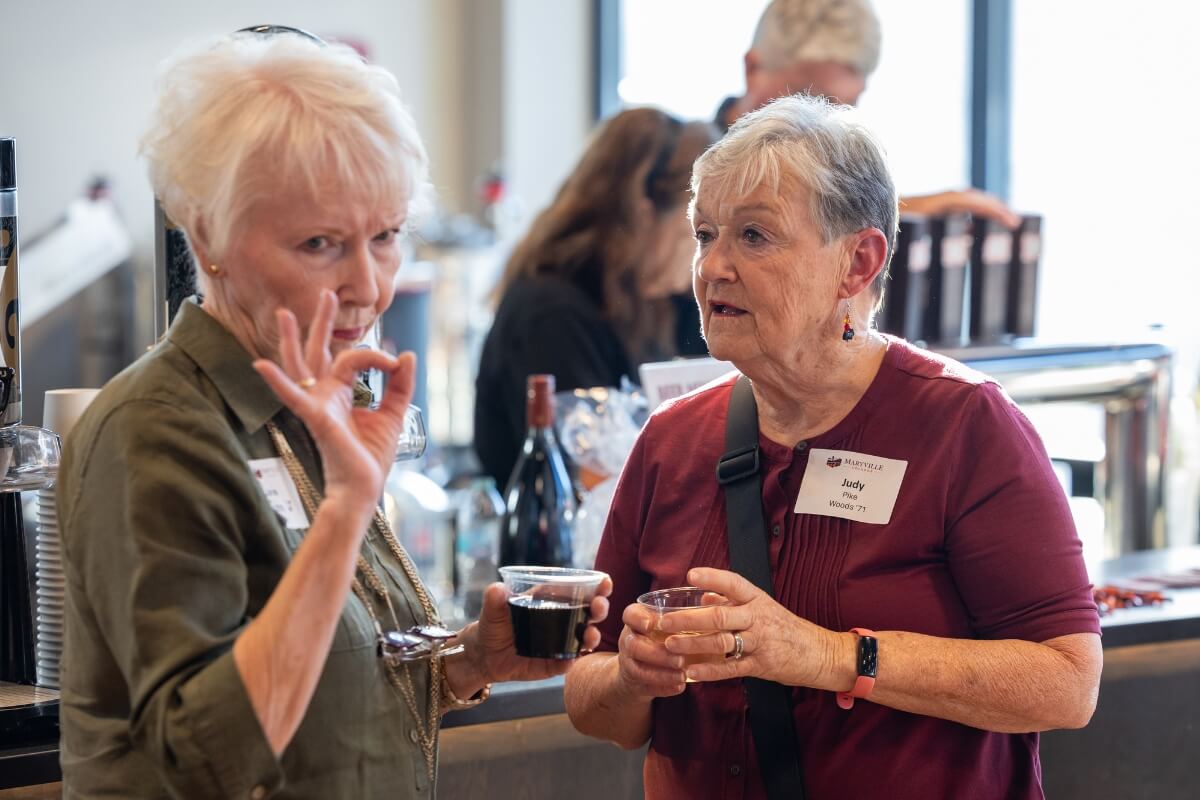
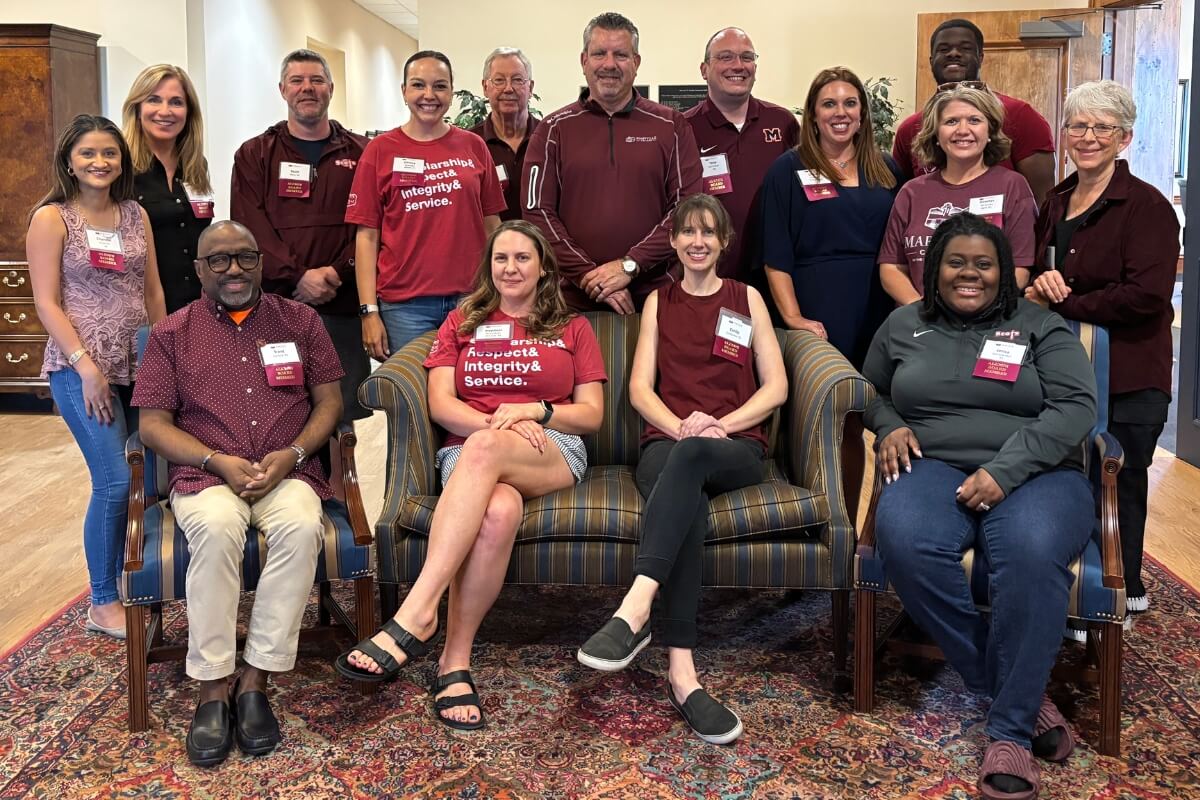
The casks for the two were tapped during the welcome reception on Homecoming Weekend, which was the second of several observances on the calendar. The first anniversary observance took place on Sept. 19 at the MC Downtown Center, during which current and former MCAA board members and alumni leaders, along with College leadership, came together for a night of celebration and fellowship.
It was an enjoyable evening, and if there’s anything that commemorations of the anniversary reinforce to Moyer, it’s the need to take the Alumni Association’s outreach work to the next level, he said.
“One area we will be focusing on during my term is to connect with more and more alumni to have a stronger voice across the nation,” he said. “With today’s technology, we believe that we can bring together a greater number of Scots from all over the world who would like to contribute to their beloved Alma Mater in a more meaningful way.
“Being part of our Alumni Board is a great way for those people to stay in touch with what is happening at the College. It’s also a way for those individuals to be part of positive changes that we are helping to shape, and a way for them to try and improve the student experience in a variety of ways.”
One of the ways current alumni can do that is by investing in the Alumni Future Fund, an initiative of the MCAA launched this fall in honor of the 150th anniversary. The three-point plan for the fund, according to the website, will:
- create connection between students and alumni;
- support new projects, gaps and needs of student groups and organizations; and
- foster collaboration between student organizations to create new opportunities and initiatives.
Funds will be raised annually each Maryville College fiscal year (from June 1 to May 31) and made available as grants at the beginning of the following academic year, providing one-time grants to student organizations, student-driven initiatives, specific classes and other projects. An application cycle will be created and implemented by the Advancement Office in partnership with Student Affairs, Academic Affairs and the Student Government Association. The MCAA Board of Directors will provide an initial review of all applications, forwarding the proposals of all finalists to be voted on by the donors who contributed at least $150 to the fund.
“The Alumni Future Fund is a way to bridge relationships between current Scots and those in whose footsteps they follow,” Triplett said. “I can’t think of a more invested group of donors than the alumni whose lives were molded by their experiences at Maryville College, and who love to see young people receive the same worthwhile education and experience the same set of unique challenges that make the MC experience so special.
“We talk a lot about ‘doing good on the largest possible scale,’ which our founder, the Rev. Isaac Anderson, urged us to do. The Alumni Future Fund allows its donors to do exactly that, because it establishes a sort of prudent reserve to ensure the financial stability of student organizations and initiatives year after year.”
Providing such financial assistance, Moyer added, serves to make the Maryville College experience even richer for the students who find themselves here as he once did … and hopefully encourages them to join an organization that for 150 years has stood as the vanguard of all that MC has to offer.
“Maryville College has helped shape my entire adult life,” Moyer said. “I met my wife of 41 years (Kimberly) while I was a student at Maryville. I have worked with many of my former classmates for much of my career. My first job upon graduation was working for a friend of Randy Lambert ’76‘s named John Thornton, who helped launch the careers of many MC alumni.
“My business career has taken me to 49 states and over 30 countries, and the work I do now would allow me to live anywhere in the U.S. … but I chose to move back to Maryville, and I now live 100 steps from the Maryville College campus.”