Why study Biology at MC?

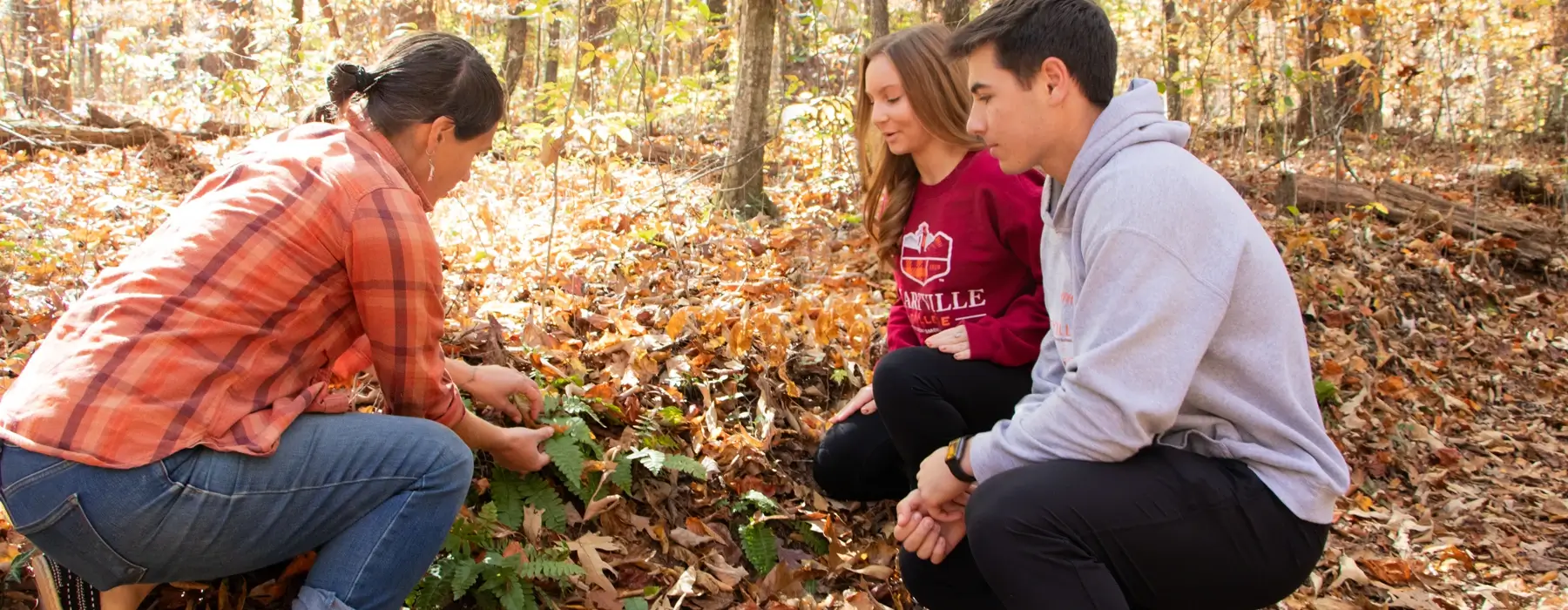
The curriculum in biology provides the student sound preparation in the major areas of biological science while permitting concentration in specialized areas of particular interest. Field study in the nearby mountains and lakes and opportunity for research through Oak Ridge Associated Universities and National Laboratories such as Argonne, Brookhaven, and Oak Ridge complement the curriculum.

The Major in Biology provides a comprehensive curriculum for students planning careers in which biological knowledge plays a central role. With careful elective choice students may pursue careers as professional biologists in any of the numerous sub fields and enter graduate school programs that lead to research-oriented careers, or they may enter medical school or other health-related programs.

Interested in teaching at the middle- or high-school level? We offer a traditional 4-year Biology for Teacher Licensure, or you can complete a Biology major and then pursue our Master of Arts in Teaching (M.A.T.) Secondary STEM degree that can be finished in just one additional year.

Are your sights set on medical school or another health-related program? Your application will be strong because of Maryville College’s rigorous academic program, the emphasis on undergraduate research and the personal reference letters written by faculty members and advisors who know you.

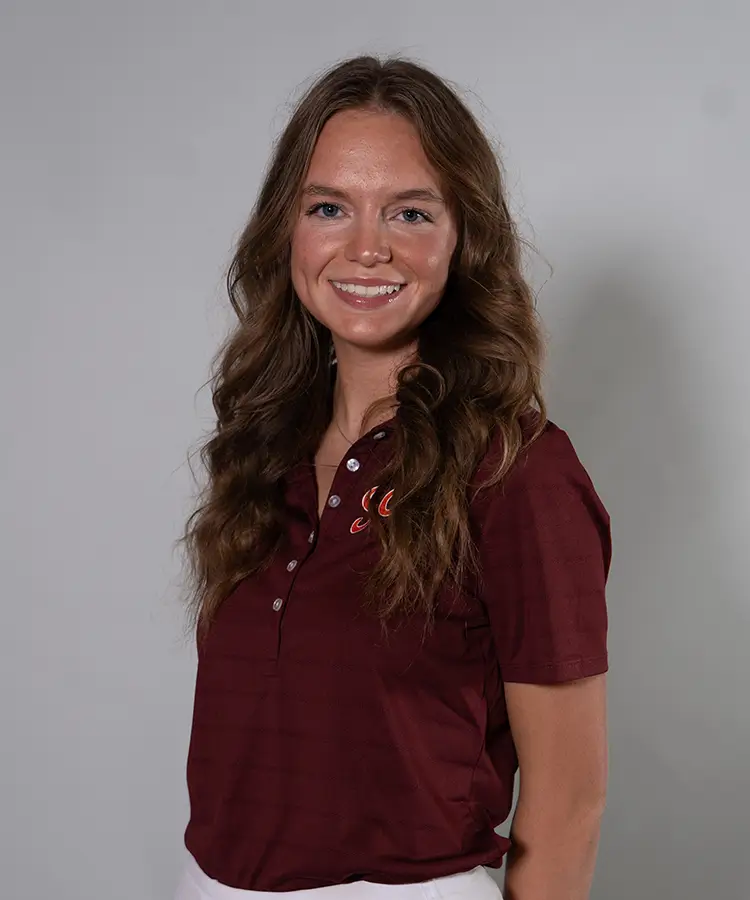
Photo of Emily Miller

Emily Miller

Hometown: Niota, TN

Emily is working toward a career as a physician assistant and plans to enter PA school after graduation. In the Biology major, she has enjoyed opportunities to experience the field up close and through hands-on activities. “In my coursework, I’ve had opportunities to observe wildlife in the national park, culture microorganisms and dissect a variety of animals,” she said, adding that a study abroad trip to Costa Rica gave her a chance to learn more about the connections between lifestyle and life expectancies.


Outside of classrooms and labs, she is involved in the Tri-Beta Honors Society and competes on the Scots’ golf team.


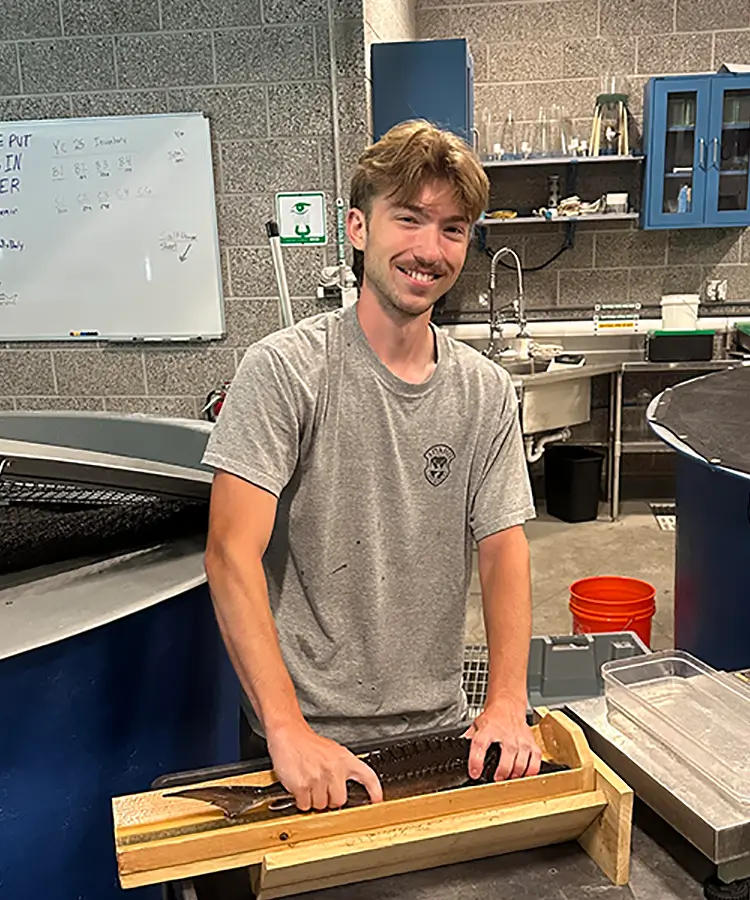
Photo of Noah Sikes, a recent graduate who majored in Biology.

Noah Sikes ’24

Currently: Biological Aide at Idaho Power/Idaho Fish and
Game Hatchery

Noah came to MC knowing he would major in Biology and found that “the small class size at MC makes it much less intimidating to seek help from the professors, all of whom want to see their students succeed.” He appreciated gaining practical applications of classroom learning in the living labs of the Maryville College Woods and the Smokies and credits his Senior Study (studying fish populations in the College Woods) with helping him land his first job in the field.

Noah’s career plans include continuing to work seasonal technician positions until he can find a master’s position in wildlife biology/fisheries management. “Eventually,” he says, “I would like to work for the National Park Service or U.S. Fish and Wildlife Service as a fisheries biologist.”

Professor of Biology
Dr. Drew Crain
Professor of Biology
More Info
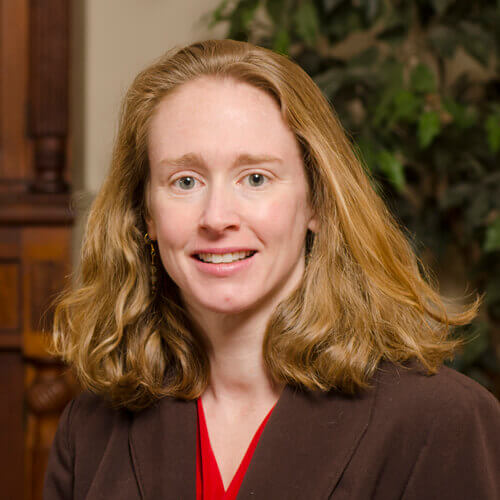
Chair, Division of Natural Sciences, Professor of Biology
Dr. Jennifer Brigati
Chair, Division of Natural Sciences, Professor of Biology
More Info
Associate Professor of Biology
Dr. David Unger
Associate Professor of Biology
More Info

Clemson University Graduate School
Duke University School of Medicine
ETSU Quillen College of Medicine
LMU DeBusk College of Osteopathic Medicine
Medical University of South Carolina
Purdue University Graduate School
University of Colorado School of Public Affairs
University of Georgia Franklin College of Arts and Sciences
University of Georgia Warnell School of Forestry and Natural Resources
University of Louisville Medical School
University of Tennessee: Colleges of Dentistry, Medicine and Veterinary Medicine
University of Washington School of Law
Vanderbilt University Graduate School of Developmental Biology

Blount Memorial Hospital
City of Townsend, Tennessee
Edward Via College of Osteopathic Medicine
Great Smoky Mountains Institute at Tremont
ORAU
Oak Ridge National Laboratory
University of Tennessee College of Pharmacy
University of Tennessee College of Veterinary Medicine

Students successfully completing the program of study will have achieved the following:

  • Demonstrate knowledge of basic terminology, concepts, and quantitative analysis in:
    • Cell Biology
    • Molecular Biology and Genetics
    • Organismal Biology
    • Ecology
  • Summarize, interpret, and present the primary biological literature.
  • Acquire and apply a set of basic laboratory data acquisition, analysis, and presentation skills.
  • Acquire and apply a set of basic field data acquisition, analysis, and presentation skills.
  • Design and execute an in-depth collaborative research project and successfully communicate the results formally in both written and verbal forms.


The Bachelor of Arts Degree in Biology consists of 42-44 hours in biology and chemistry.

Required coursework includes:

Major and Major-Related Courses

Three additional 300 or 400 level Biology courses excluding: Biology 337: Internship in Biology. At least one course must be a 4-credit course with a laboratory.

BIO 113: Principles of Organismal Biology(4 hrs)
BIO 115: Principles of Cellular Biology(4 hrs)
BIO 221: Genetics(4 hrs)
BIO 222: Ecology and Evolution(4 hrs)
BIO 353: Senior Study(3 hrs)
BIO 412: Animal Physiology(4 hrs)
CHM 121: General Chemistry I(4 hrs)
CHM 122: General Chemistry II(4 hrs)
SCI 299: Professional Practices in the Natural Sciences(1 hrs)


Three additional 300 or 400 level Biology courses; at least one must be a 4-credit course with a laboratory

Three additional 300 or 400 level Biology courses excluding: Biology 337: Internship in Biology. At least one course must be a 4-credit course with a laboratory.

Through a four-year plan developed in consultation with an academic advisor, students develop a program of elective coursework in a variety of subjects individualized to their career goals.

Specific requirements of particular post-graduate institutions should be ascertained early in the undergraduate program because they may require courses for admission beyond the minimum required for the B.A. in biology. The Major in Biology is not open to students majoring in Biochemistry, Biological Sciences, or Environmental Science.


The Bachelor of Science Degree in Biology consists of 62-67 hours in biology, chemistry, and physics/math.

Required courses include:

Major and Major-Related Courses

BIO 113: Principles of Organismal Biology (4 hrs)
BIO 115: Principles of Cellular Biology (4 hrs)
BIO 221: Genetics (4 hrs)
BIO 222: Ecology and Evolution (4 hrs)
BIO 351: Senior Study I (3 hrs)
BIO 352: Senior Study II (3 hrs)
BIO 412: Animal Physiology (4 hrs)
BIO : Four additional 300 or 400 level Biology courses excluding BIO 337 Internship in Biology; at least one must be a 4-credit course with a laboratory (13-16 hrs)
CHM 121: General Chemistry I (4 hrs)
CHM 122: General Chemistry II (4 hrs)
CHM 223: Organic Chemistry I (4 hrs)
CHM 224: Organic Chemistry II (4 hrs)
SCI 299: Professional Practices in the Natural Sciences (1 hrs)

Two of the following courses (Note Prerequisites)

CSC 130: Introduction to Computer Science and Programming (4 hrs)
CSC 225: Data Structures (4 hrs)
MTH 125: Calculus I (MR) (4 hrs)
MTH 225: Calculus II (4 hrs)
MTH 221: Inferential Statistics w/Data Visualization (3 hrs)
MTH 222: Regression Analysis (3 hrs)
PHY 101: College Physics I (4 hrs)
PHY 102: College Physics II (4 hrs)


The Bachelor of Science degree in Biology is designed to prepare students for graduate programs in medicine, veterinary medicine, pharmacy, dentistry, and other health professions.

The Major in Biology is not open to students majoring in Biochemistry, Biological Sciences, or Environmental Science.


The Major in Biology for Teacher Licensure is designed for students planning careers as teachers of biology, environmental science, and general science at the secondary level. The Major in Biology for Teacher Licensure consists of 35 hours in major and major-related courses and 46 credit hours in courses related to educator preparation.

Required courses include:

Major and Major-Related Courses

BIO 113: Principles of Organismal Biology (4 hrs)
BIO 115: Principles of Cellular Biology (4 hrs)
BIO 221: Genetics (4 hrs)
BIO 222: Ecology and Evolution (4 hrs)
CHM 121: General Chemistry I (4 hrs)
CHM 122: General Chemistry II (4 hrs)
PHY 149: Selected Topics (1-4 hrs)
Two additional courses chosen from BIO 217, BIO 218, or any 300 or 400 level Biology courses with laboratory

Educator Preparation Courses

PSY 101: Introductory Psychology (3 hrs)
PSY 218: Adolescent Development (3 hrs)
STA 120: Introductory Statistics (4 hrs)
EDU 202: Educational Technology (3 hrs)
EDU 299: Contemporary and Professional Issues in Education (1 hrs)
EDU 300: Field Experience (1 hrs)
EDU 301: Models of Classroom Management & Instruction (3 hrs)
EDU 312: Instructional Strategies for Diverse Learners (3 hrs)
EDU 321: Disciplinary Literacy Methods (3 hrs)
EDU 333: Applied Pedagogy (3 hrs)
EDU 351: Senior Study I (3 hrs)
EDU 352: Senior Study II: Professional Seminar (3 hrs)
EDU 403: Clinical Practice for PK12/Secondary (10) (10 hrs)
EDU 411: Educational Assessment & Evaluation (3 hrs)


The Minor in Biology requires a minimum of 19 hours.

Required courses include:

Minor and Minor-Related Courses

BIO 113: Principles of Organismal Biology (4 hrs)
BIO 115: Principles of Cellular Biology (4 hrs)
BIO 221: Genetics (4 hrs)
BIO 222: Ecology and Evolution (4 hrs)
At least one course at the 300- or 400-level that satisfies requirements for the Major in Biology

The Minor in Biology is not open to students in Biochemistry.

In addition to required courses for majors and minors, Maryville College students take classes in the Maryville Curriculum, a core program of general education. Consisting of 51 credit hours, the Maryville Curriculum ensures that students see their major in a wider context and develop the basic communication, quantitative, and critical thinking skills that are needed for success in college and career.

Apply

Request Info

Interested in this Program of Study at Maryville College? Submit your basic information and an Admissions counselor will contact you shortly to answer any questions you might have.

Loading…