MC professor Kim Trevathan looks toward new journeys in the wake of impending retirement
March 30, 2023
Kim Trevathan can’t see a river from his office window on the third floor of Maryville College’s Anderson Hall, but he hears it calling sometimes.
Trevathan, a professor of Writing Communication at MC, will retire at the end of the 2022-23 academic year, having spent more than two decades educating young minds and coaching young writers to find the muse that so inspires him when he’s in a canoe, padding up or down a body of water.
The author of four books — Paddling the Tennessee River: A Voyage on Easy Water (2001), Coldhearted River: A Canoe Odyssey Down the Cumberland (2006), Liminal Zones: Where Lakes End and Rivers Begin (2013) and Against the Current: Paddling Upstream on the Tennessee River (2021) — Trevathan has made a home at Maryville College, remaining here longer than he has any other job, he said.
But the opportunity to finish long-simmering projects and undertake new ones … as well as answer the river’s siren song when he hears it … is something he’s looking forward to.
“I’ve been here 23 years, including one part-time year, and I’m ready to do some full-time writing and see what comes out,” he said. “Teaching comes with great hours and great flexibility, but it’s one of those things where you can’t turn it off. It’s infinitely perfectible, as Dr. (Sam) Overstreet says, and you’ll never be able to assure yourself you’ve done everything perfect, because there’s always something to work on.
“Not having that will free me up to finish up projects I’ve half-started, or start ones I’ve wanted to for a while now. I’ve been thinking about retiring for the last few years. I mean, it’s not like I don’t have any new ideas, but I feel like the position could benefit from some new blood, from somebody who can bring some new ideas to it. I’ve been doing this a long time, and I love doing it, but it felt like it was time to try something different and begin a new adventure.”
A lifelong love of voyages
Trevathan’s origins as a writer had a prescient start: The first story he remembers penning as a third-grader — “about a voyage in a boat, of all things,” he said. It’s a tale as old as time — or at least as old as Homer’s The Odyssey: circular journeys, homecomings, and the discovery that the peace of mind sought along the way was in the place where it all began.
“The first time I remember getting interested in writing was because my mom was a public librarian, and she did this thing called a story hour,” Trevathan said. “She would sing songs to me that were story songs, like ‘The Old Grey Goose.’”
After obtaining his bachelor’s in English from the University of Louisville in 1980, he set out on another journey, of sorts, to find a way to turn his passion into a paycheck. A master’s in English from the University of Illinois led him to consider a career as an educator of English literature. Another master’s, this time in journalism from the University of Wyoming, followed, and his final post-graduate degree — an MFA in creative writing from the University of Alabama — led him to a discovery.
“At Alabama, I met a lot of folks who were like me and wanted to write fiction, and that’s all we talked about, so it validated what I wanted to do,” he said.
He’s written fiction, and continues to do so, and after following his then-wife at the time to Auburn, where he worked in landscaping, he thought that he’d perhaps found his calling: a struggling writer who worked odd jobs during the day and stayed up into the night until the right combination of words led to a big break.
The break, however, came when he moved to East Tennessee, where continued work in landscaping and garden centers to make a living and writing to make a life eventually led him to Maryville College.
The path leads to MC
In the late 1990s, he worked with Vandy Kemp — former vice president and dean of students who at the time was director of the MC Learning Center — as part of the Upward Bound initiative (a predecessor of the College’s TRIO program). After a brief stint there, he went to work for a time at Interactive Pictures Corporation (iPIX) in Oak Ridge as a technical writer and content developer. Layoffs led to a return to the job market, and a part-time adjunct position at MC in 2000 turned into a full-time instructorship the following year.
The same year he joined the Division of Languages and Literature as a full-time faculty member, he published his first book, one that grew out of an organic experience and a childhood love of the water.
“Growing up in Murray, Kentucky, I spent a lot of time on Kentucky Lake,” he said. “My dad taught me to fish, and I did a little canoeing, but not that much. When we first moved here, we lived in Rockford (Tennessee, in Blount County), right near the Little River, and I thought, ‘That looks like a cool place to canoe.’
“I started looking at maps and saw that the Little River flows into the Tennessee River, and where did that go? All the way to Murray, my hometown. And that’s when I thought a canoe trip all the way from here to Murray might make a good book idea. So I bought a canoe and got really serious about using it as a tool for writing, and that trip was part of what got me into outdoor writing.”
At Maryville College, he turned that burgeoning passion into an experiential learning course known as “Words and the Land,” one that includes short hikes and a paddling excursion on the same body of water that inspired his first non-fiction work. He freelanced as an outdoor columnist for both Metro Pulse and the Knoxville Mercury, two now-defunct independent weekly newspapers in nearby Knoxville, and it always provided a handy excuse, he added with a laugh.
“When people would see me out fishing, or with a boat on my car, they’ll always ask, ‘Are you taking some time off?’ And I always tell them, ‘No, this is my work!’” he said.
Off he goes
In addition to his classroom duties, Trevathan has served as advisor of The Highland Echo, the MC campus newspaper, for 23 years as well. Like all print news publications, the Echo has seen a great many changes over the years, but he feels passionately that it’s still a vital resource of information for students, faculty and staff.
“We used to print 12 issues each academic year, but with cuts being made, we’ve had to cut down,” he said. “But I do think print is still important. The students tell me they want to continue with the print issue, and that they enjoy seeing it and reading it around campus.”
The way it’s consumed, though, follows similar trends: a digital edition is just as necessary as a print one, and the role technology has played in reshaping the career to which he’s dedicated his life means that writers — himself and his students — have had to adjust.
“Helping students to write content that’s going to compel people to read, that’s been the challenge, and that’s a big challenge,” he said. “The whole world of the writer has changed, and the whole publication business is chaotic right now. There’s so much out there, and it’s a challenge as a reader, and as both consumers and producers of journalism and creative writing.
“Part of the challenge is encouraging students to feel it’s worthwhile, and that if you love to write, do it no matter what everybody else tells you. You can find a way to make a living if you’re a writer who knows how to meet deadlines and work toward getting better.”
Because like teaching, he added, it’s a process that’s ever-evolving. Although he’ll miss the proximity to the Maryville College Woods, he plans to keep to certain routines, like playing tennis competitively and making more frequent trips back home to Murray. Getting out of those routines, however, is where the magic of the muse resides … again, he added, just like teaching.
“Students keep you young, keep you thinking and keep you on your feet,” he said. “The cool thing about teaching is that you don’t know what’s coming every day, and you start over again every semester. There aren’t many jobs like that, but it also means you’re in charge of your own material and how you present it, and that’s a big responsibility I always take seriously.
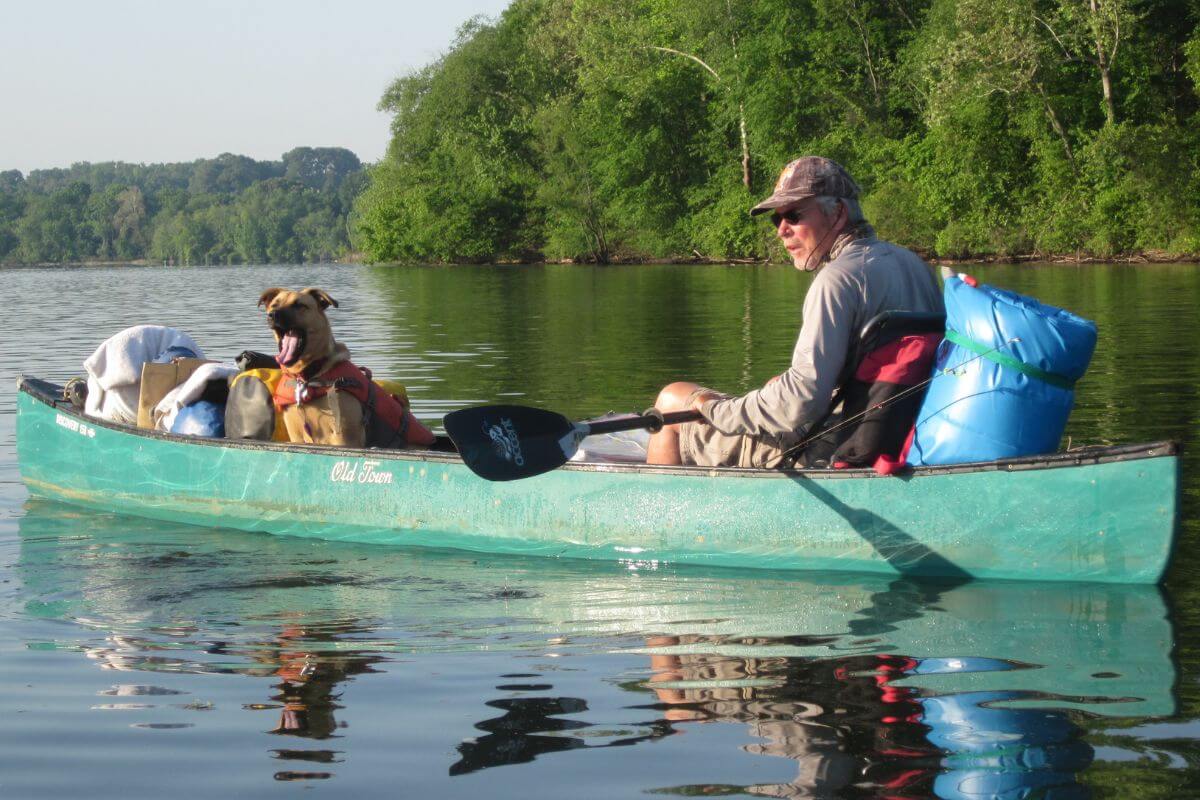
“That’s also the thing about narrative nonfiction that I love. For example, the last book I wrote, I went to the Knox County Humane Society and got Maggie — who was a two-month-old puppy at the time — and took her on the journey a few months later, knowing there would be all kinds of drama. I liked the whole planning of the trip and thinking about it but not knowing everything and not knowing what’s around the next bend. That’s what gives you the material to write a good story when you get back.”