This is Bat Country: Senior Study tracks the hidden nightlife of Maryville College bat species
Nov. 24, 2025
As the sun set behind the Tennessee hills overlooking Nickajack Lake, the young campers turned their canoes back toward the boat ramp from which the evening paddle had been launched.
Behind them, Maryville College senior Molly Bailey ’26 remembers, the cave exploded.
A colony of gray bats, estimated to number more than 100,000, famously calls the cave home, and visitors to the Nickajack Cave Wildlife Refuge can walk down to the observation deck on summer evenings and watch the bats take flight to feed. As a fifth-grader, Bailey was on the water with fellow campers from the Tennessee Aquarium, and in that moment, her fascination with bats — which continues to this day and into her Maryville College Senior Study — was born.
“One of the activities we did was canoeing on the lake with the bats,” said Bailey, an Environmental Science major. “Basically, we canoed out to the cave right before sunset, and as we turned around and headed back to shore, thousands of bats headed back with us, swooping down and catching insects out of the water. Ever since then, I have found the species fascinating, and I am so incredibly grateful to get to study them.”
Winged and furry neighbors
With guidance from Biology Professor Dr. Dave Unger, Bailey’s Senior Study — an integral part of the MC experience in which students conduct faculty-guided research in their major fields of study — sets out to identify differences and density in bat species in the Maryville College Woods vs. the College’s campus. While it was inspired by a scientific paper that detailed a similar study in Grand Teton National Park that Bailey read last semester, her long-time fascination with the winged mammals, as well as her occasional encounters with them, played just as big a role.
“I first had the idea to study the bat population when I was watching bats fly around the Clayton Center for the Arts one day my sophomore year,” Bailey said.
Bats offer important ecosystem benefits, such as pest control and pollination, and monitoring bat populations can assist in the environmental health assessment of areas in which they roost. Given the number of older buildings and the bucolic nature of the Maryville College campus, bats have long found nesting places at MC, sometimes to the annoyance of the humans with whom they share the institution. A decade ago, renovations to the College’s oldest building, Anderson Hall, meant the forced relocation of bat inhabitants — primarily big brown and Brazilian free-tailed — from the bell tower and attic of that facility as well, Unger pointed out.
“This then is the entire reason for this study, to try and identify what species we have flying around campus and what structures they seem to be drawn to,” Unger said. “Molly mentioned she wanted to study bats but didn’t really know where to start. This is where our Biology 351 course, the first half of our standard Senior Study series, comes in. That course allows students to explore possibilities and develop a project on their own.
“I mentioned the (Grand Tetons) paper to Molly, provided it for her to read, and she just ran with it. The next thing I knew, we were ordering echolocation recorders and software for her to do her project. Thankfully, a variety of sources of funding allowed us to get up and running far faster than I initially anticipated. As an example, a portion of our funding was generously provided by the MC Woods Committee to enhance research and knowledge of the fauna living in and around our beloved College Woods.”
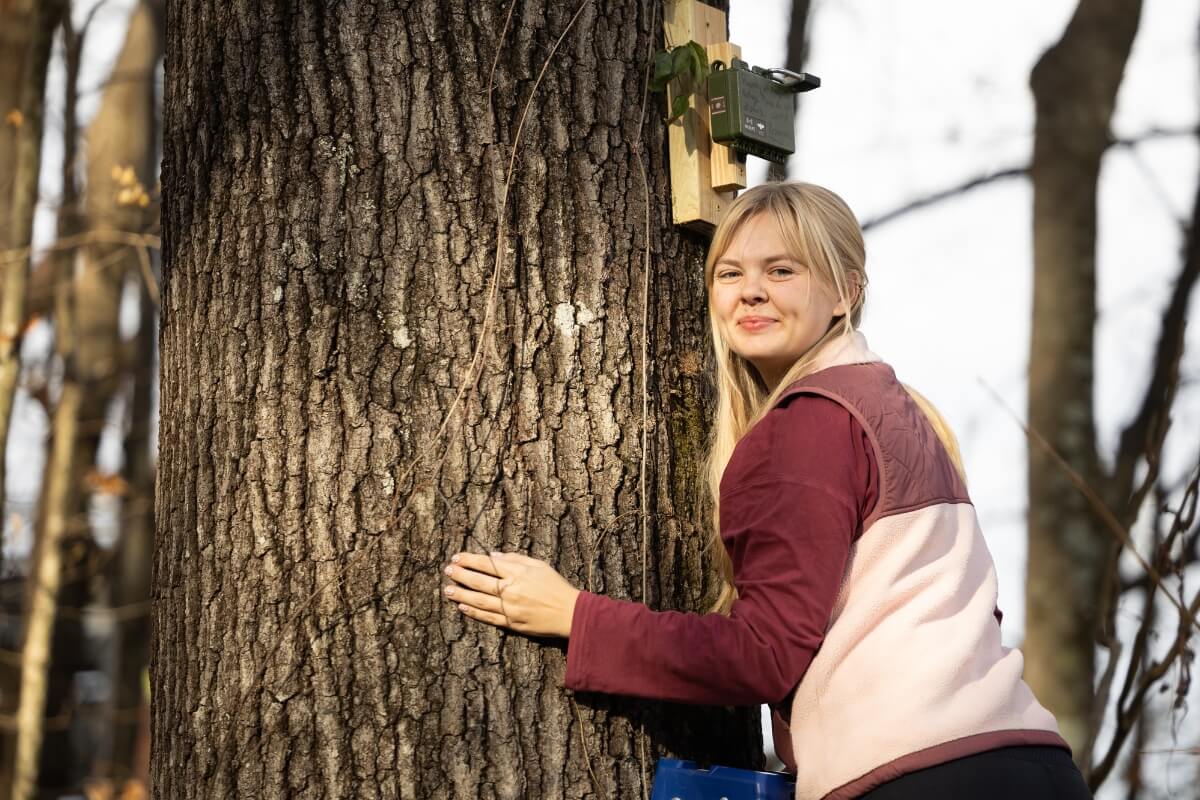
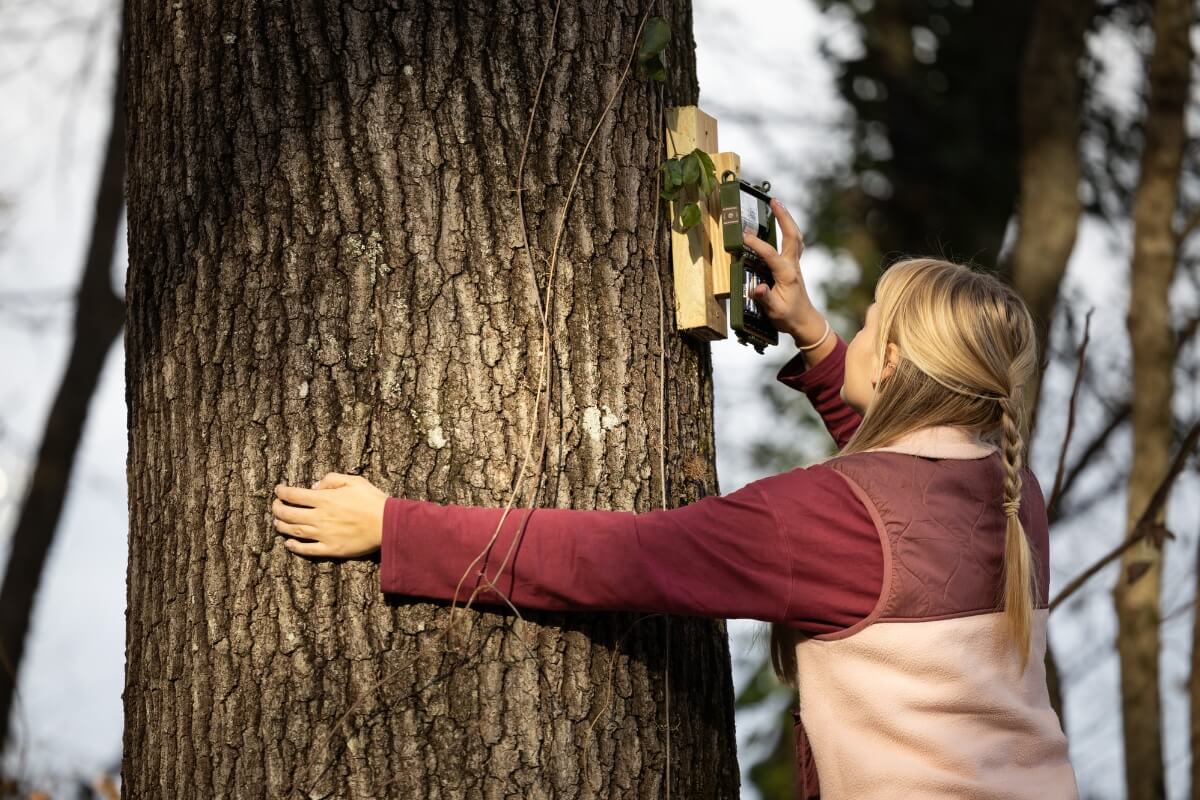
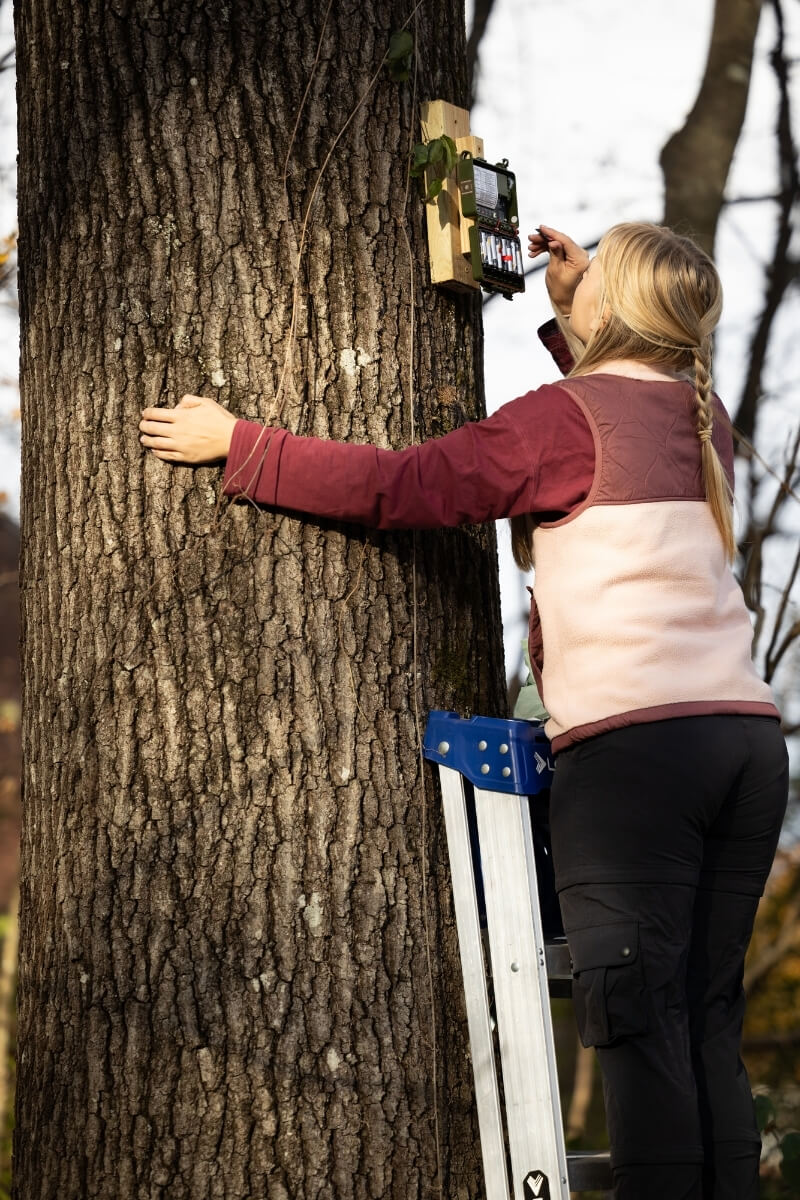
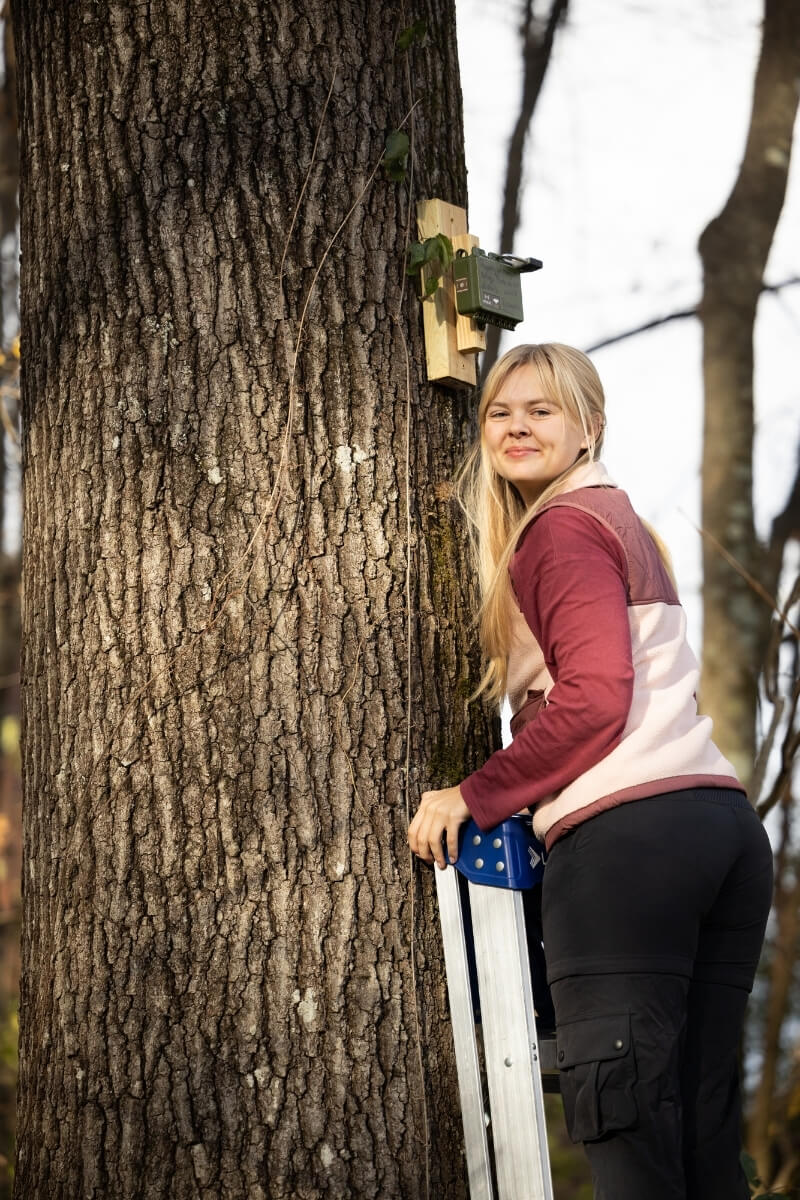
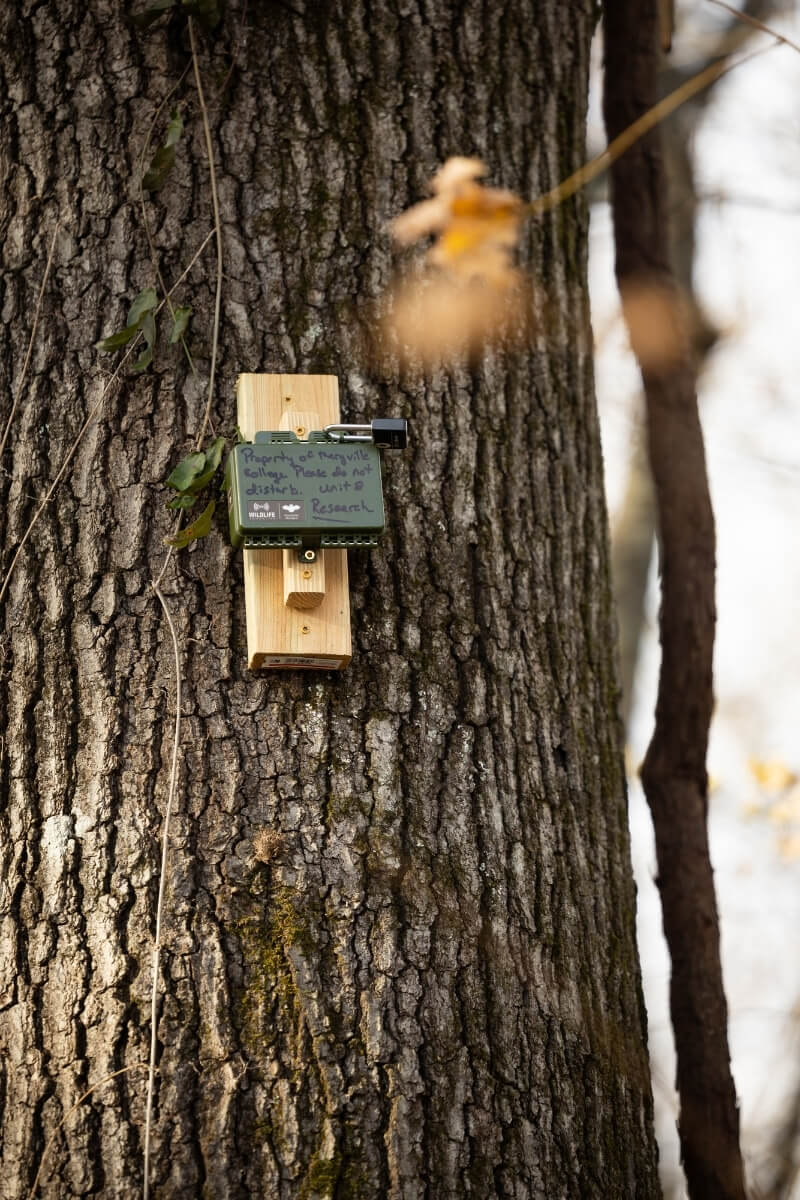
Echolocation recorders are used to track high-frequency sounds outside the range of human hearing, which bats use for navigation and the hunting of insects at dusk. These recorders use special ultrasonic microphones to capture the sounds, which can then be analyzed to identify species, study behavior and monitor population health. After the devices arrived, Bailey installed them near or on the Sutton Science Center; the College’s steam plant; Scotland Yard (the baseball field); Honaker Field (the football field); Crawford House, home of Mountain Challenge; and in the Woods, the Knoll Orchard, the Log Bridge and at the House in the Woods.
Incidentally, a decade ago and in conjunction with the Anderson Hall renovation project, bat boxes and a bat condominium — the former simple man-made roosts with a single chamber for a handful of bats, the latter a larger structure designed to mimic natural habitats like attics, both built to the specifications of experts on establishing bat habitats — were erected near Crawford House, but to Unger’s knowledge, have never been occupied.
“Bats are oddly picky,” Unger said. “I’ve seen brand new immaculate bat boxes sitting next to a broken-down bat box with holes and shingles falling off, and it’s the old box the bats are using. I’ve also seen large bat boxes established in areas where bats are occupying a home or barn that’s ready to fall down into pieces, and they choose to remain in the aging structure.
“At the same time, I’ve seen the flipside of that where a new bat box is set up and the bats immediately enter. There’s no clear ‘why’ when it comes to bats choosing a home, which makes them all the more interesting to study.”
The data flow continues
So far, Bailey said, she’s identified 11 different bat species recorded on the echolocation devices (including her personal favorite, the hoary bat), with the numbers of each split relatively evenly between campus and the MC Woods. Given that there are only 11 to 13 species in the entirety of the Great Smoky Mountains National Park, Unger pointed out, that number is “very surprising.”
“To ensure accuracy, we will perform careful dissection of the recordings and likely request those with more experience at other universities or government agencies (like the National Park Service) to also take a look at our data,” Unger said.
“I am working on an activity analysis, and I expect to see more noticeable differences in activity in the woods and on campus,” Bailey added. “So far, we are receiving the most consistent calls concentrating on the monitor located at the steam plant. This makes sense, because it is in the middle of three buildings with known roost sites. As far as concentrations in the Woods, so far, the monitor at the Log Bridge has been picking up the highest concentrations.”
Every 10 days or so, Bailey makes the trek to each monitor to swap out SD cards, putting in fresh ones and downloading data on those that have been recording. She’ll continue to collect and analyze through March — she’s excited to see how the population changes through the winter and into spring, she adds — and then, in April 2026, she’ll present her research and her findings at the Natural Sciences Symposium, held in the spring and fall for students in the majors of MC’s Division of Natural Sciences.
Upon completion, Unger pointed out, Bailey’s work will serve as a foundation study that reveals how diverse the bat species on campus are, because the initial data will help future student researchers and their faculty mentors answer several important questions: What’s the status of each species? What resources do they need? Are there actions that can be taken on campus to meet those needs? Should Maryville College reach out to other institutions or bat conservation groups (like Bat Conservation International or the North American Society for Bat Research) to assist with that work?
“The whole project is a wonderful way to return to a question that was asked back in 2013 when the renovation of Anderson required the removal of the bats,” Unger said. “Since the bat boxes and condominium went up, I have had neither the time, funding, expertise or technology to try and come back to this interesting topic, as I had too many other projects going on.
“After running around the country (as well as other countries) conducting ecological research, it’s wonderful to have such a robust research opportunity right here in our backyard. It speaks wonders to not only our inherent campus biodiversity, but to Maryville College’s environmental stewardship that likely contributes to attracting such a charismatic animal to our grounds. What a wonderful place to live, work, study and learn!”