


Reed Claiborne named as new director of Maryville College Office of Disability Resources and Accessibility
July 16, 2025
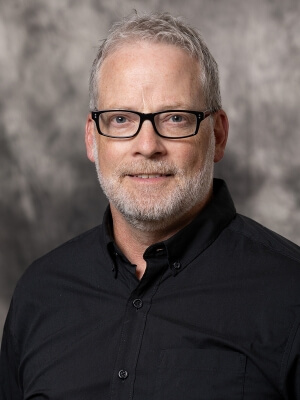
As an East Tennessee native who had recently discovered his passion for helping college students struggling as he once did, Reed Claiborne’s first stint at Maryville College was so inspiring that he made a vow to return.
That was back in 2011-2012, during his work-study as an assistant in the Office of Disability Resources and Accessibility while pursuing a master’s in rehabilitation counseling from the University of Tennessee-Knoxville. Fast-forward to 2025, and Claiborne has made good on that vow as the newly named director of the office for which he once interned.
“I’m originally from Knoxville, and this is where my family and close friends are — so returning to East Tennessee has always been part of my long-term plan,” he said. “As an intern at Maryville College, I developed a real connection with the campus. I was drawn to the College’s size, which fosters meaningful engagement with both students and faculty, and I appreciated the welcoming and collaborative culture it creates.
“I remember thinking at the time, ‘If a position ever opens up here, I’m going to apply.’ I’m grateful that it did — and even more grateful that it worked out.”
Claiborne brings lived experience to the role, in addition to professional expertise gathered over the past 13 years in the Disability Resource Center at the University of Arkansas-Little Rock. In the third grade, he said, he was diagnosed with dyslexia, which made his early education a struggle.
“I was fortunate to attend private schools and work with tutors, but even with those supports, school was never easy,” he said. “By the time I reached college (at UT-Knoxville), I had developed some helpful study habits, but I still faced challenges. Early on in college, I sought support from the Disability Services Office and was approved for accommodations. I also worked with a TRIO program, which played a significant role in helping me get through school. I eventually earned my degree, though my GPA reflected the uphill battle I had faced more than my ability.”
A bachelor’s in speech communication led to an initial career in sales and customer service. Claiborne was successful, but the work wasn’t fulfilling, he said, and so he decided to enroll in graduate school. At the same time, he connected with someone who helped him better understand his dyslexia and “what it meant, how it affected me, and how I could work with it instead of against it,” he said.
“That conversation was a turning point,” he added. “I realized how different and more rewarding my undergraduate experience could have been with the right tools and self-awareness. That realization sparked something in me. I began exploring how I might support college students who face barriers similar to mine. I had found a passion — this was important work, and I believed I could make a difference.”
The difference in academic success between his bachelor’s journey and the pursuit of a master’s was like night and day, he pointed out, because the latter was accompanied by tools, support and confidence — all things he brings to every student interaction seeking similar assistance from the Maryville College Office of Disability Resources and Accessibility. His time at UA-Little Rock was grounded in the “Social Model of Disability,” he said, “which views most barriers as being created by society — not the individual.”
“For example, if a wheelchair user encounters stairs, the issue isn’t the person’s mobility; it’s the design of the environment,” he said. “With a ramp, the barrier is removed — and importantly, ramps can benefit everyone, while stairs limit access. This approach aligned perfectly with the principles of Universal Design, which seeks to create inclusive environments from the start rather than retrofitting for access later.
“I know that my predecessor at Maryville College also championed Universal Design, and I intend to carry that forward. When we proactively design physical spaces, curricula, and campus experiences to be inclusive of as many people as possible, we improve access for all — not just those with documented disabilities. It’s a philosophy that reflects the spirit of Maryville College’s founder Isaac Anderson’s charge to ‘do good on the largest possible scale.’”
Whereas UA-Little Rock was more of a commuter campus, he said, MC has a greater percentage of students who take advantage of on-campus housing, which fosters more opportunities for community engagement. In addition to taking advantage of those opportunities, Claiborne is tasked with providing leadership for programs, services and resources that enhance success for students with disabilities.
“At its core, our primary role is to work one-on-one with students in a collaborative process to identify barriers — whether in the classroom, on campus, or in co-curricular events — that may impact access or learning,” he said. “We also work closely with faculty to help recognize and address potential barriers in advance. A few thoughtful adjustments on the front end can prevent challenges later on. This approach not only benefits students who are registered with our office but also supports a broader range of students who may never formally disclose a disability. Ultimately, the more accessible our campus environment becomes, the less need there is for individual intervention — which is a win for everyone.”
“Reed brings to the College years of experience leading a Disability Resources office as well as a caring, personal approach to working with students, faculty members, and colleagues,” said Dr. Ben Stubbs, vice president and dean of students at MC. “He is a wonderful team player and a great fit for Maryville College.”
The role of the office, Claiborne added, is to forge a partnership with students and faculty members in order to identify and remove barriers in order to create access for as many Scots as possible.
“At the heart of it, I hope to help students have a richer, more rewarding College experience than I had as an undergraduate,” he said. “College is a privilege, and with so many opportunities available, my goal is to ensure that as many students as possible are able to fully engage and make the most of their time here. If students have questions — whether they’re navigating specific challenges or just unsure where to start — we want them to never hesitate in reaching out.
“Give us a call or send an email to set up a time to talk. Sometimes, there are barriers we can work around together, or we might connect you with another helpful campus resource, because in addition to accommodations, we function as a resource center. If we don’t have the immediate answer or solution, we’ll work to point students in the right direction — whether that’s another campus office, a specific support service, or outside resources.
“Our goal is to make sure students feel supported, informed, and connected,” he added. “And sometimes, it’s just about having a conversation.”
All discussions are confidential, Claiborne added, and privacy is sacrosanct. Students can find more information on the Maryville College Office of Disability Resources and Accessibility’s web page; to contact Claiborne and others in the office, email disabilityresources@maryvillecollege.edu, or call Claiborne at 865-981-8124.