For the love of Appalachia: MC’s Great Smokies Experience gets a helping hand from Kathy Ansley
Sept. 26, 2025
No matter where life took her, East Tennessee always called Kathy Ansley home.
From the moment she set foot on Blount County soil in 1969, when her family moved to the area from Alabama, she felt a kinship with the land and the people here, and more than 50 years later, she’s making it possible for young people to make similar connections. Inspired by a sixth-grade trip to the Great Smoky Mountains Institute at Tremont — a time when Maryville College operated the facility — Ansley’s financial gift to Maryville College’s Great Smokies Experience is born out of her love of this place and the beauty she still finds breathtaking.
“Maryville City Schools gave our sixth-grade class a week at Tremont, and of my 12 years in school, that was the highlight,” Ansley said. “There were a lot of band contests, a lot of football games and pep rallies and different educational and honorary types of things, but going to Tremont stuck. And when I found out about the Great Smokies Experience, I thought, ‘Wow — if I had known there was something like that when I was that age, I would have set aside a lot of hours to be a part of it.”
A life-changing experience
First introduced in 2013 and founded by History Professor Dr. Doug Sofer, the Great Smokies Experience, or GSE, is a 10-day retreat for rising high school juniors and seniors, as well as recent high school graduates, to receive an immersive hands-on understanding of the Great Smoky Mountains National Park, and how the ecology, sustainability, sense of place and biodiversity that makes it one of the most visited and biodiverse parks in the system is unique to Southern Appalachia. Participants begin with a few days of classroom instruction on the Maryville College campus before embarking on a week-long stay at Tremont, where instructors from that retreat work alongside MC faculty members and outdoor experts from Mountain Challenge — the on-campus nonprofit that offers teamwork-building outdoor excursions and activities to businesses and members of the public — to lead hikes, paddling trips, tours of historical sites and more. Upon completion of the Great Smokies Experience, participants receive three college credit hours for taking part in it.
“It’s certainly a lot of work, but it’s a labor of love,” said Maryville College Associate Professor of Sociology Dr. Andrew Gunnoe, the program’s coordinator. “As environmental educators, we understand the importance of transformative outdoor experiences for young adults. These experiences often serve as turning points for young adults and can produce ripple effects that alter students’ beliefs, desires and practices. I think a lot of environmentalists have what I refer to as our ‘environmental stories,’ and these are the moments in our lives that transform us into lifelong environmental stewards.
I have no doubt that GSE serves as an important moment in the environmental stories of most of the students who come through the program. Many of our students come from East Tennessee, yet it often feels like we are introducing them to a completely new region as they come to know the deep ties between social and environmental history that makes Southern Appalachia so unique.
“We encourage students to think about place and how a sense of place creates opportunities to connect with both the environment and culture of a region,” Gunnoe added. “Ultimately, we believe that this message is what creates long-term environmental stewards.”
Ansley — a retired home health nurse whose career in rural parts of the South influenced her almost as much as her childhood trip to Tremont — first learned about the GSE a couple of years ago and reached out to Gunnoe in January 2024, determined to find a way to help local students discover the same love for and sense of wonder about the Smokies that she did on that sixth-grade trip. At first, she suggested a financial donation to sponsor a needs-based scholarship for a program participant who couldn’t afford the full sticker price. After discussions with MC administrators about the difficulties of assessing participant needs without requiring more in-depth financial information than the application process allows, Gunnoe convinced Ansley to instead present GSE with a lump-sum donation.
“In conversation with Kathy about this, we agreed that we would use her donation to lower costs across the board and make it more affordable to students who might not otherwise be able to attend,” Gunnoe said. “She ended up donating $5,000 to GSE in 2024, and this allowed us to lower the cost for each student by $200. When we didn’t receive enough applications to run it in 2024, we rolled her donation over to 2025 and offered it at the same price.
“It is difficult to know what sort of difference her donation made for specific students, but surely it helped convince some parents to apply. I do wish we had a way of directing this donation directly to students in need, but for now I am happy just to make the program as affordable as possible for students.”
More students, more money
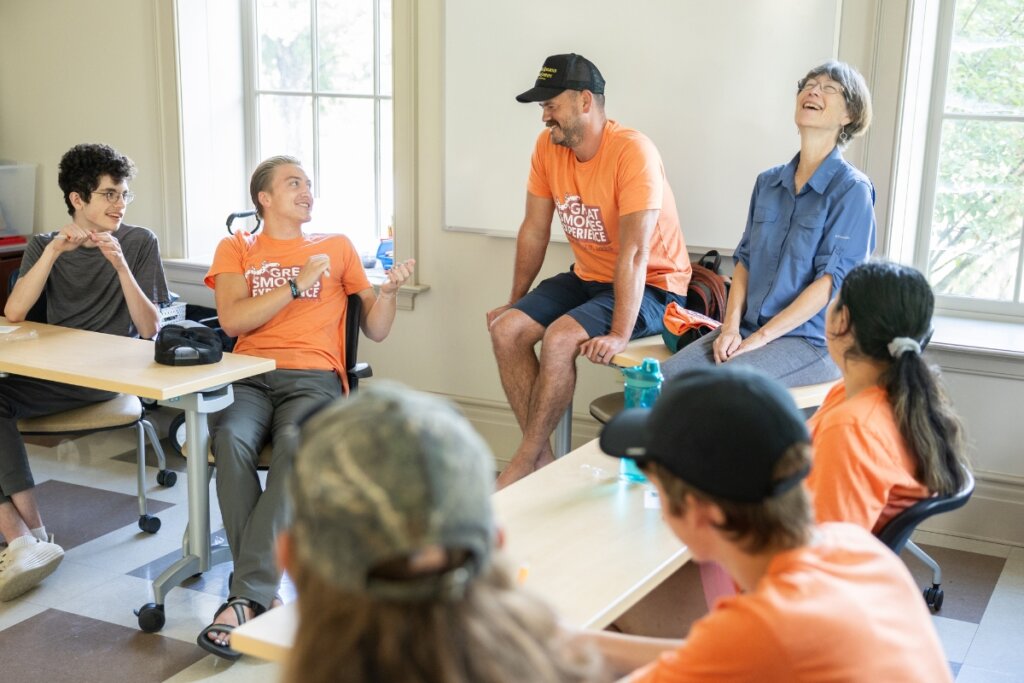
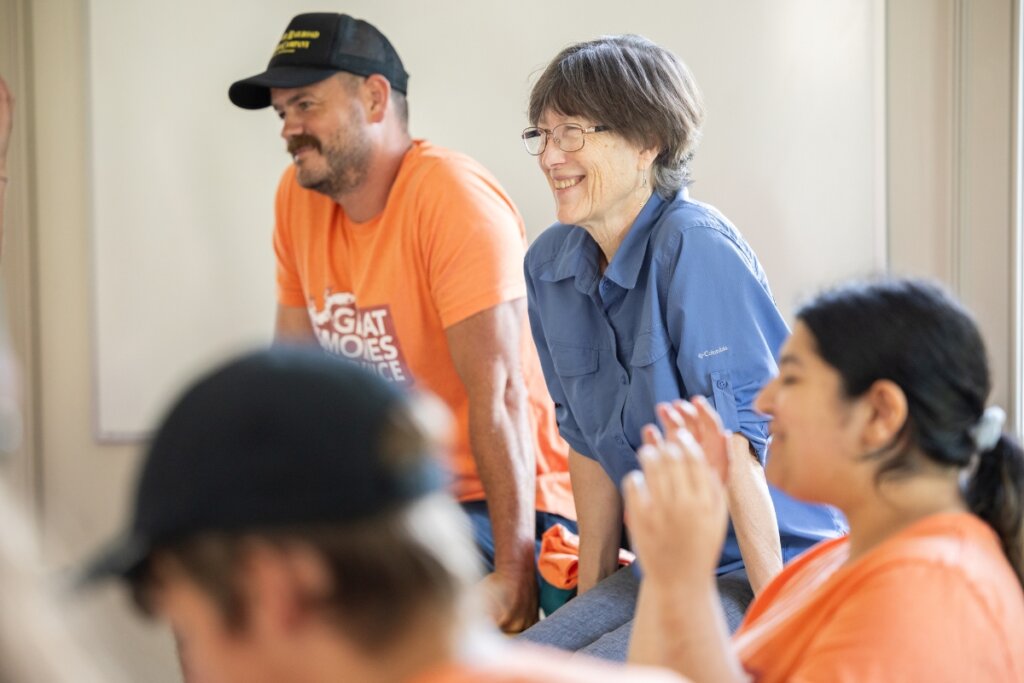
The program rebounded in 2025, and every demand was so high that Gunnoe and his fellow organizers — Political Science Professor (and lead GSE instructor) Dr. Mark O’Gorman, Mountain Challenge director Tyson Murphy ’03 and John DiDiego and Jeremy Lloyd of Tremont — increased the number of available slots from 13 to 15. To express gratitude for her support, Ansley was invited to attend a lunch with 2025 attendees, and it was, she said, like stepping through a portal through time to those heady days as a sixth-grader at Tremont.
“When I got to have lunch with them, you could just see the emotions and the camaraderie,” she said. “It was just so energizing, and when one of the leaders started asking them all what their favorite parts of the experience were, so many different things resonated. There wasn’t a sour face in the room, and I realized that in 50 years, when they’re looking back and maybe looking for a way to give back to a younger generation, this will pull at their heartstrings. I just hope that my drop in the bucket fuels that.”
Ansley and her husband, Brad, chose to give another $5,000 to the Great Smokies Experience, and for Gunnoe, using it to defray the total cost of the excursion is meaningful in so many different ways, especially given the invitation she accepted to join this year’s coterie of GSE participants.
“What she saw was the intangible aspects of a program like GSE, where a cohort of students with different backgrounds and experiences come together for 12 days of immersive outdoor education, divorced from the screens and distractions of everyday life, and compelled to confront each other through a series of challenges and triumphs,” Gunnoe said. “The camaraderie and sense of belonging that develops through this experience is truly something to behold, and it has become my favorite part of the program. Of course, the stated reason for this program is immersive environmental education, but I think it is the cohort aspect of the program that truly makes it a transformative experience.”
Because a similar experience transformed her, all those years ago. She can close her eyes and remember it like yesterday … and when she does, her face lights up with a grin that’s as bright as the breaking morning sun over the grassland floors of Cades Cove.
“I remember that two of us girls got to go on a 10-mile hike, and we were the first girls out of our school who had gotten to do that,” she said. “I remember the Smoky Mountains were so misty, and at one point we intentionally rolled down a hill and wound up caked in mud. I remember the laughter and the joy and that a peanut butter and honey sandwich had never tasted so good. I remember the Cades Cove sites, making cornhusk dolls, learning to square dance … but that hike is what I remember the most.
“And being able to help young people at that age, that late high school, into early college age, and give them a similar opportunity … it just means a lot, and I’m grateful to be able to do what I can.”