From College Hill to the wider world: Maryville College celebrates Commencement 2026
May 9, 2026
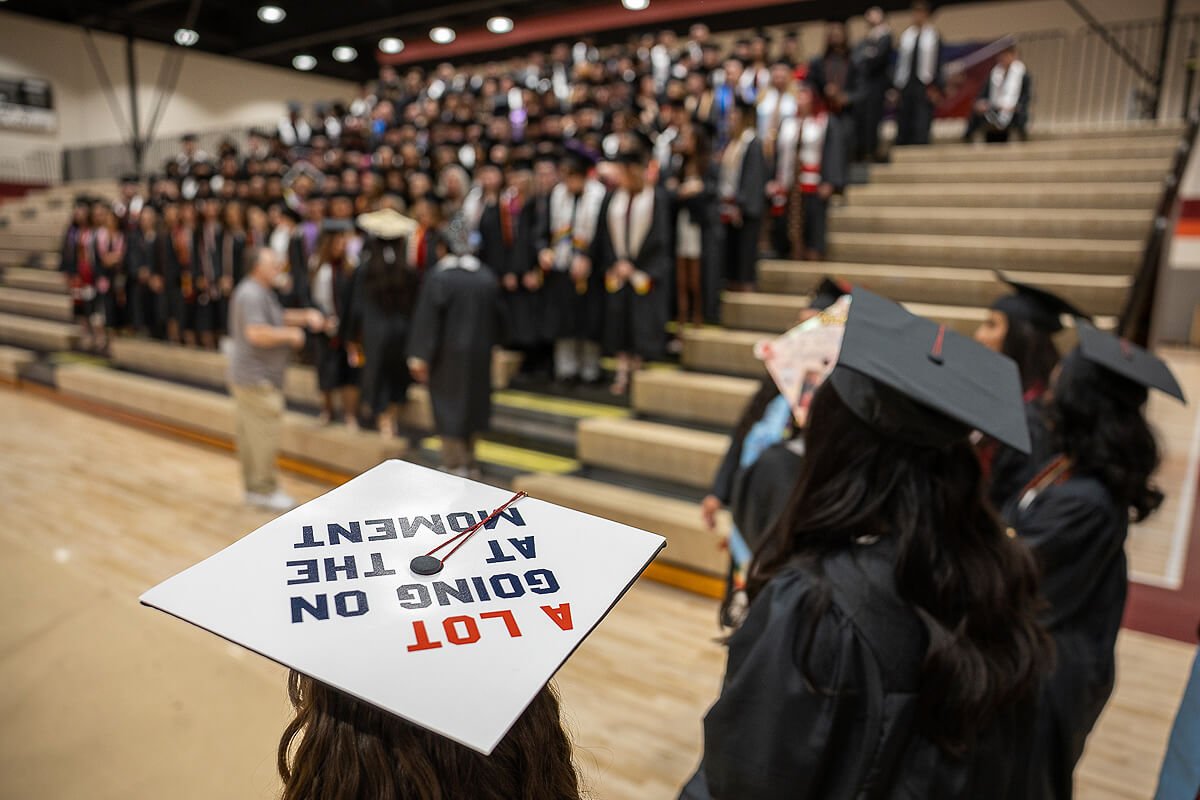
As the Maryville College Class of 2026 gathered beneath azure East Tennessee skies on Saturday morning for the institution’s 207th Commencement ceremony, graduates were reminded that the future awaiting them will require, above all else, courage.
Held in the heart of campus, the Great Smoky Mountains shimmering in the distance, the ceremony honored the achievements of the graduating class while inviting seniors to reflect on the values cultivated during their time on College Hill: community, curiosity, resilience and a commitment to “do good on the largest possible scale.”
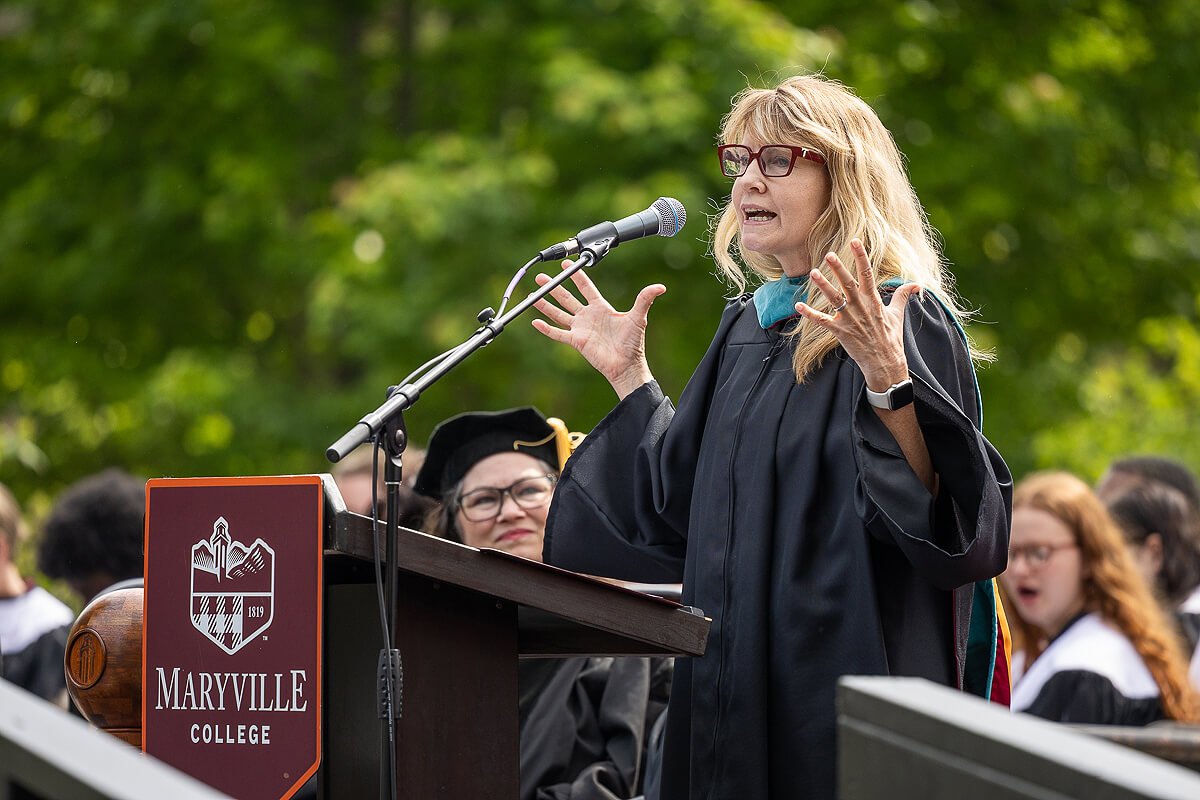
In her keynote address, Jennifer Morris, CEO of The Nature Conservancy and recipient of an honorary Doctor of Public Service degree, urged graduates to embrace what she described as three essential forms of courage, beginning with “the courage to say yes.”
Drawing from experiences living abroad in Japan and Namibia, as well as her work leading one of the world’s largest environmental nonprofits, Morris challenged graduates to view uncertainty not as something to avoid, but as an inevitable part of meaningful leadership.
“You must believe that your dreams, and the steps required to reach them, are bigger than your fear of the unknown,” she said. “For me, that meant leaving home at 21 after my own college graduation to live in a tiny town in Japan where almost no one spoke English — and I only spoke halting Japanese.
“But my dreams were bigger than my fears. When you’re young, your risk tolerance should be very high. Find the dreams that are bigger than your fears. The courage to say yes is what launches your journey.”
Just as important, she added, is the courage to say no, because refusing to compromise one’s values, declining to take part in negative groupthink, and choosing long-term impact over short-term approval will be required in critical moments.
“Leadership will ask this of you,” she said. “There will be moments when saying ‘no’ costs you something. But those are often the moments that define you the most. In fact, leadership in our polarized world will challenge you in new and often unexpected ways.
And finally, she extolled, the courage to say “I don’t know” opens doors for new information that may change the trajectory of one’s thinking, deepen understanding, and create opportunities for collaboration and growth that certainty alone can never provide. A mentor from the Quinault nation in Washington state once told her, she said, “that if you are not Native American, you will never know, can never know, the inter-generational trauma of indigenous people.”
“But she showed me that if you can have the courage to admit you don’t know, and can simply listen to the needs of others, then you can help in a powerful way. For me, that action has turned into a personal passion.”
Student leaders encourage their classmates
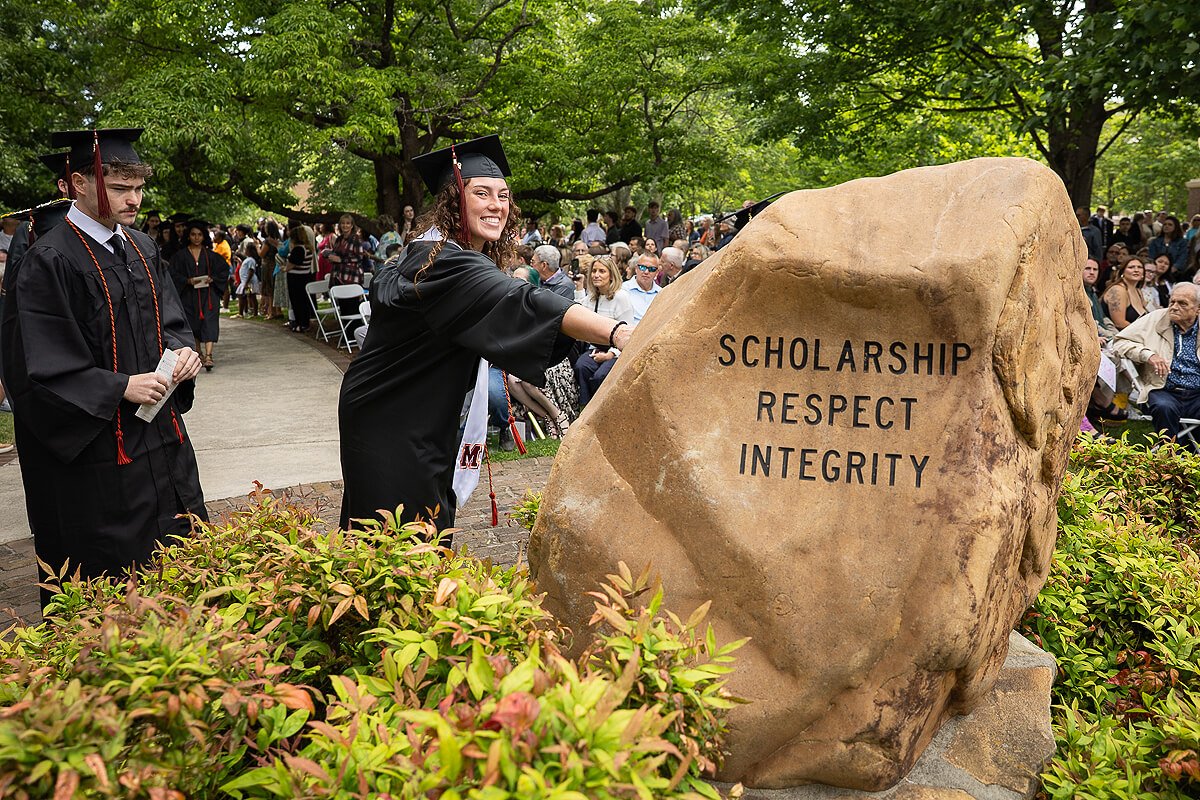
For the first time since 2023, the ceremony was held on Humphreys Court, the lawn between Anderson and Fayerweather halls, with the Covenant Stone at its center. As they processed from the Clayton Center for the Arts, the graduates’ path took them alongside of it, and each senior stopped to place a palm on the rock inscribed with three words that sum up their Maryville College experience: Scholarship, respect and integrity.
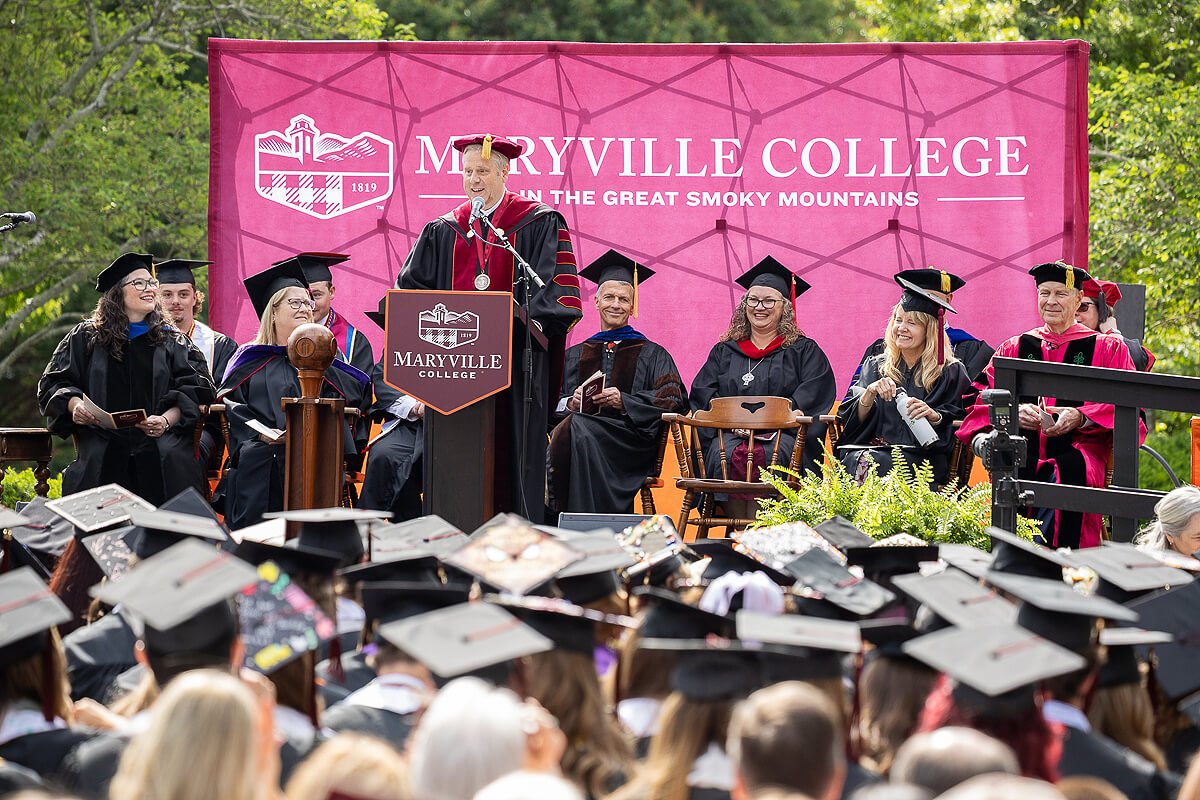
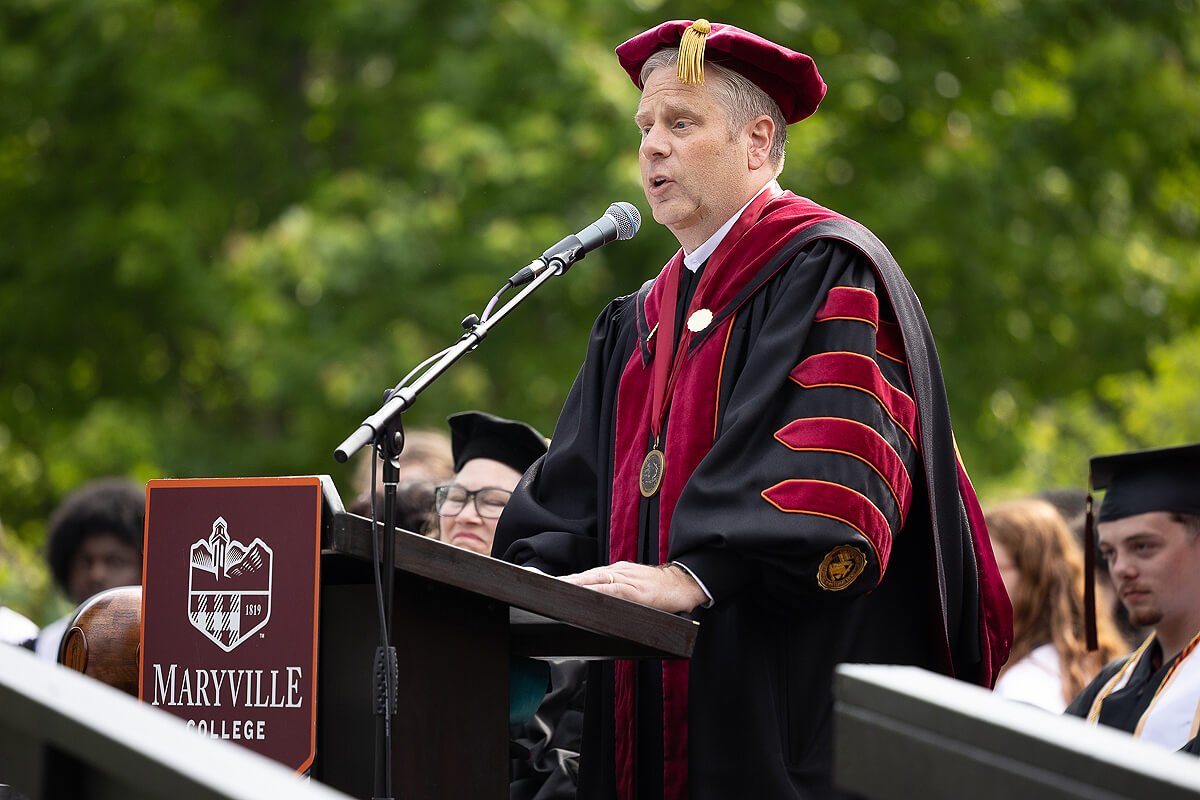
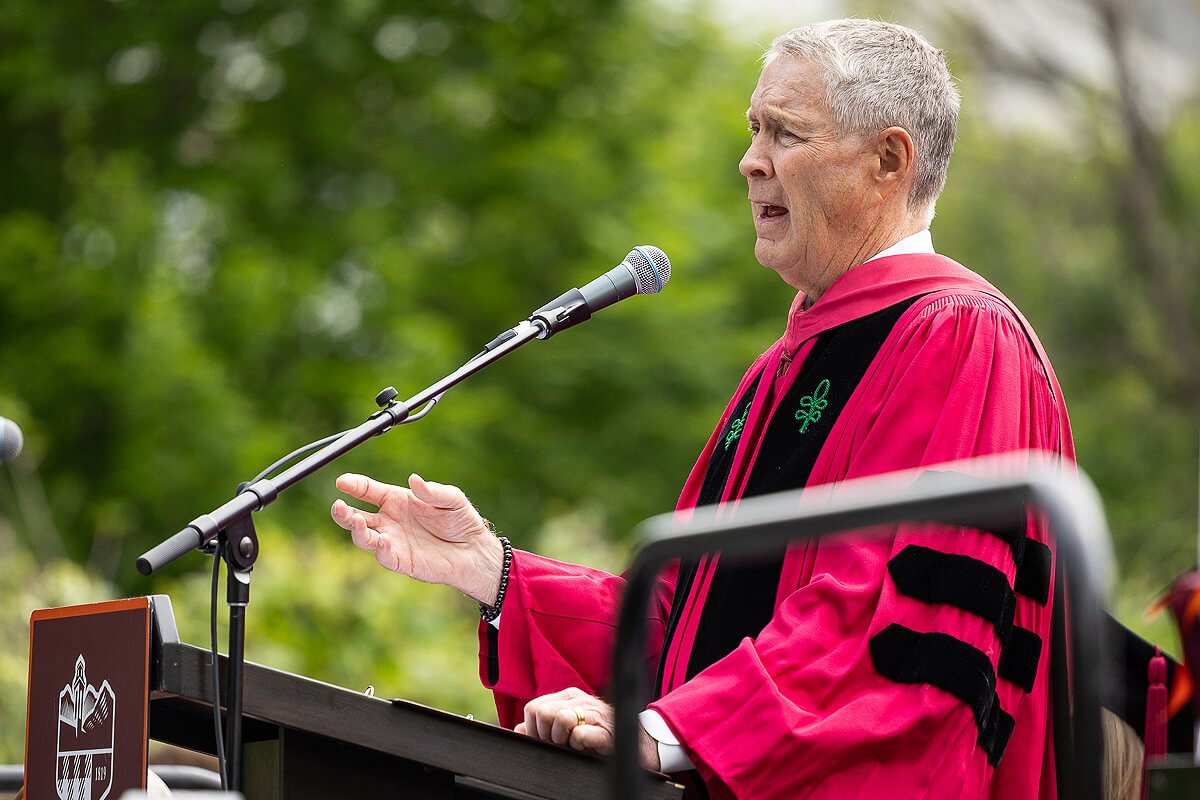
The event began with a welcome from Maryville College President Dr. Bryan F. Coker, who acknowledged members of the MC Board of Directors and the Maryville College Alumni Board, including delegates representing each graduating decade from the 1970s forward — a tradition underscoring the enduring connection between the College and generations of Scots.
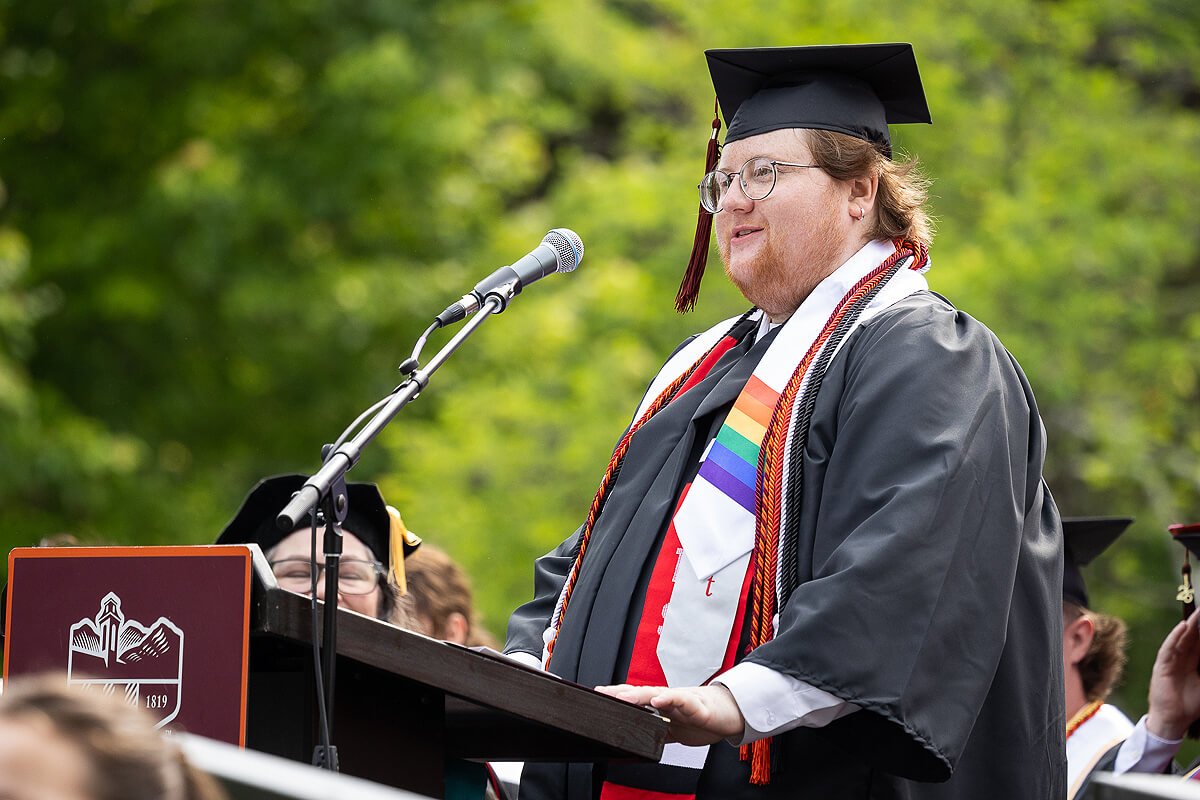
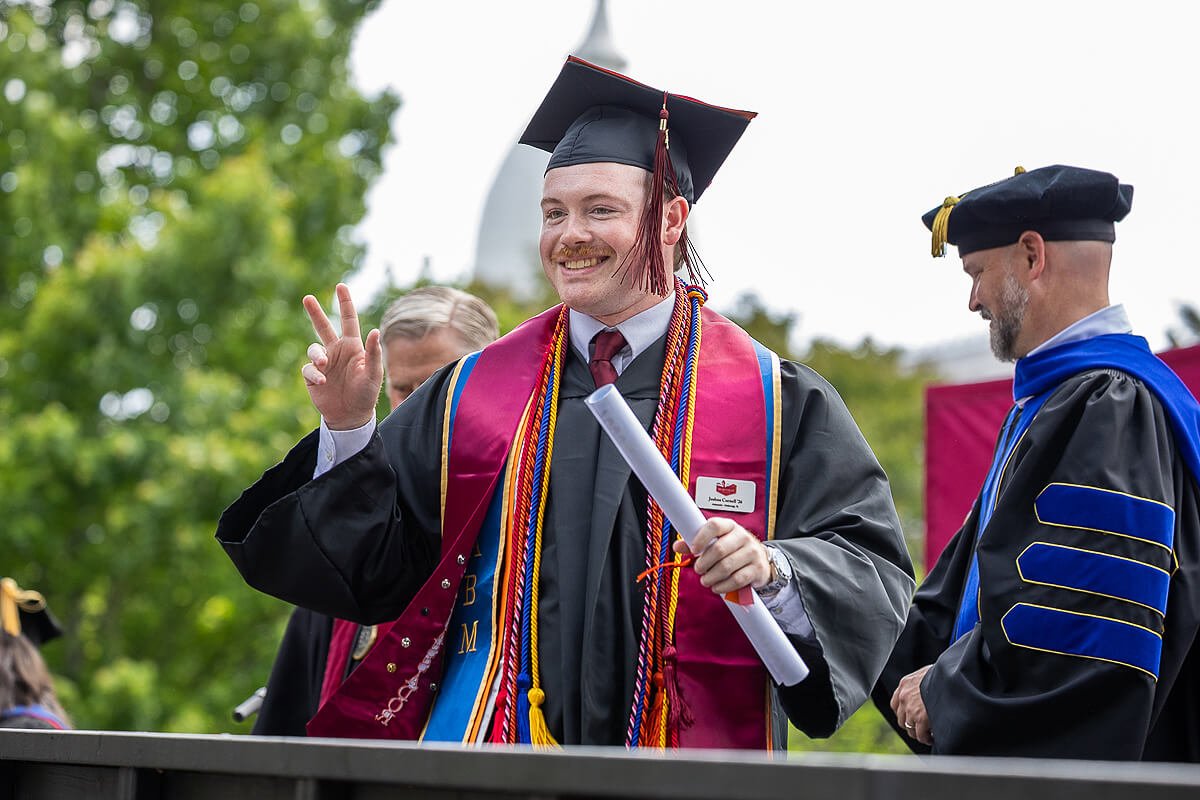
Throughout the morning, speakers returned repeatedly to the importance of community and the relationships that shaped students’ college experiences. Senior Class President Josh Cornell ’26 reflected on Robert Frost’s poem “The Road Not Taken,” using its familiar imagery of diverging paths to frame the uncertainty — and possibility — awaiting graduates beyond College Hill. While acknowledging that many members of the Class of 2026 are stepping into futures not yet fully defined, Cornell encouraged classmates to trust themselves, embrace uncertainty and continue moving forward with purpose.
“What matters is that we keep moving forward, even when the path isn’t clear,” he said. “As we step into whatever comes next, I hope we remember this: It’s OK not to have all the answers. It’s OK if the road ahead looks uncertain. Just choose a direction, trust yourself and commit to that first step. Because one day, we’ll look back and realize it wasn’t the path itself that defined us; it’s what we did on it.”
Student Government Association President Austin McKee ’26 echoed those themes of uncertainty and belonging, reflecting on his own experience arriving at Maryville College as a nontraditional transfer student unsure of where — or whether — he would fit in. Drawing on a quote from writer James Baldwin, McKee acknowledged the anxiety that often accompanies moments of transition, but encouraged graduates to remember the community, resilience and support systems that carried them to Commencement.
“For me, that light, that warmth and comfort, is the community I’ve found here,” he said. “It’s prepared me for even greater opportunities. I encourage the Class of 2026 to find their own ‘light’ and frame their time as a Scot as a moment of growth and development, leading them to limitless possibilities.”
Special guests take part
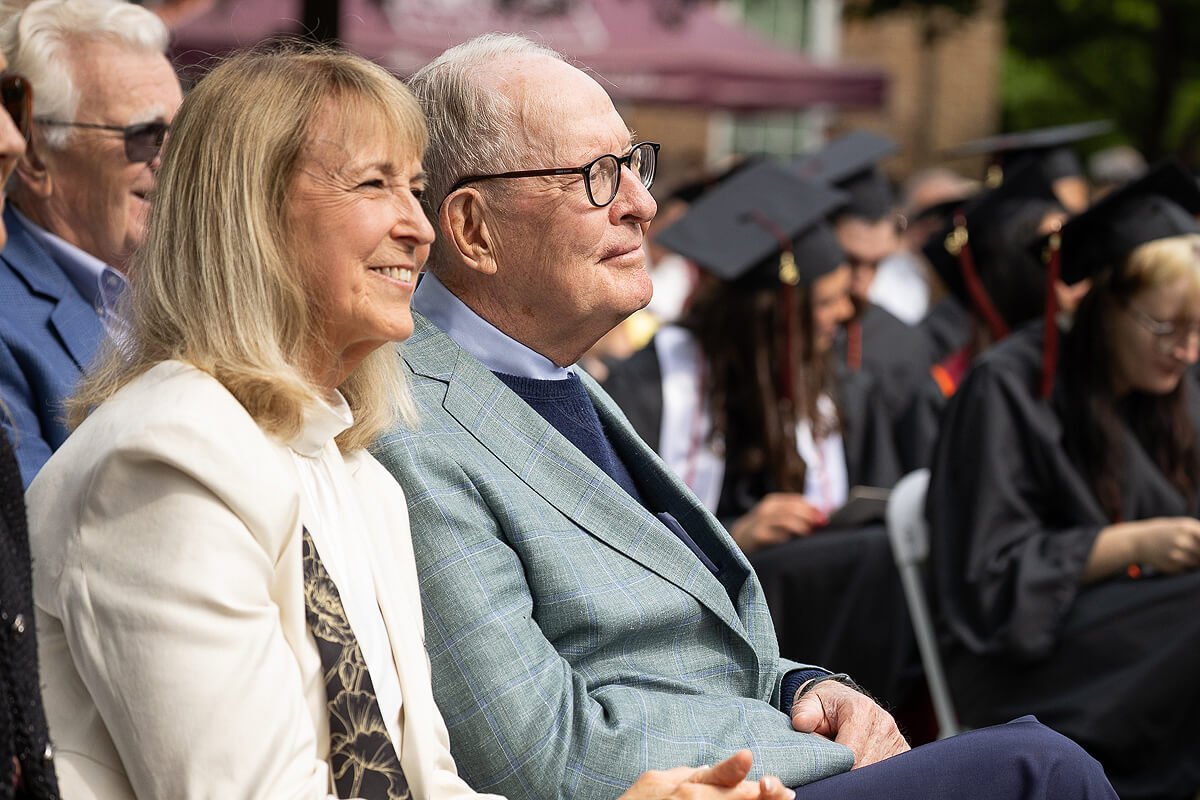
Two special guests joined College officials for the occasion, both former U.S. senators whose longstanding commitments to conservation and public service are closely tied to Maryville College’s vision for the future. Former U.S. Sen. Lamar Alexander, who has worked alongside College leaders in shaping the planned Alexander Institute for Conservation Leadership and the Sciences — the future science facility bearing his family’s name — was recognized from the platform. Also in attendance was former U.S. Sen. Bill Frist, who recently announced, alongside his wife, Tracy, support for the Frist Center for Appalachian Wellness and the Outdoors within the Institute. During brief remarks, Frist reflected on the profound natural beauty of the Great Smoky Mountains and emphasized the vital connection between environmental stewardship and human health.
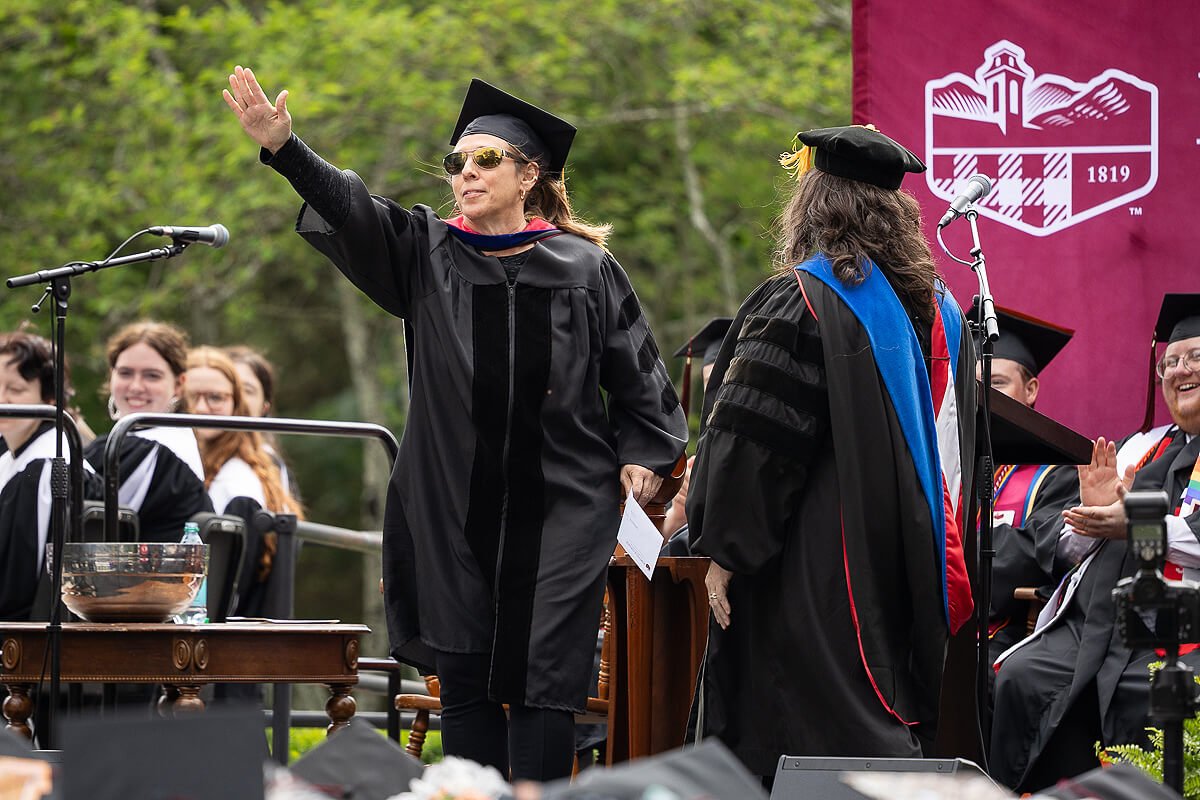
As chair of The Nature Conservancy’s global board of directors and a longtime supporter of the organization, Frist introduced Morris after she was given an honorary Doctor of Public Service by Coker and MC Board of Directors Chair Marcia Kilby ’89. Other honors announced from the stage included the annual Outstanding Teacher Award, and the runner-up for that honor. Psychology Professor Dr. Karen Beale was announced as the award’s winner, and Assistant Professor of Neuroscience Dr. Jeff Kelly was named the runner-up for the second year in a row. Dr. Heather McMahon, assistant dean of academic success, called both winners to the stage.
“This faculty member is, according to one student, ‘full of so much knowledge that they need more classes to fit it all in,” McMahon said of Beale. Kelly, she added, was “described as ‘teaching with a joy’ for their discipline and their students, and for encouraging students to celebrate their growth as learners.”
That spirit of curiosity and intellectual openness — hallmarks of Maryville College’s liberal arts tradition — echoed throughout the morning’s ceremony, as speakers repeatedly reminded graduates that education is not confined to classrooms or completed with the awarding of a diploma. Rather, they suggested, it is a lifelong practice of humility, attentiveness and engagement with the world beyond oneself.
And graduates, Morris said, should continue to learn from the world around them, wherever their paths lead. She issued a challenge to the Class of 2026 to “have the courage to step away from your computers and your screens and open your ears and simply listen.”
“My mom, who has Appalachian roots, shared these poignantly succinct words with me when I was about your age,” Morris added. “She said, ‘Jennifer, I never learn much when I am talking.’ But as I have learned, deep listening isn’t just about being quiet — it means challenging your own worldview and being able to admit when you might be wrong.
“This is something we should all aspire to — both in our closest relationships and in our careers.”
Newly minted MC alumni
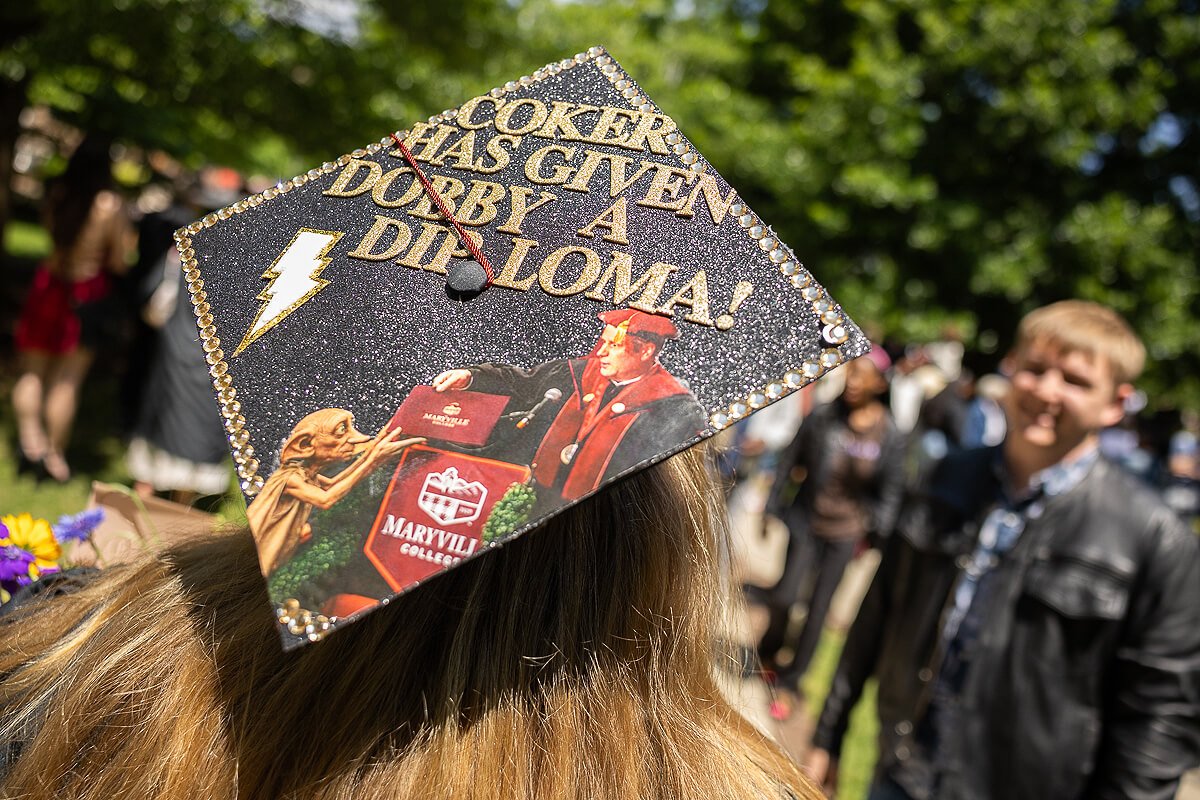
After Morris concluded her remarks, Coker returned to the podium to guide the Class of 2026 toward the ceremony’s long-awaited culmination, formally declaring them recipients of bachelor’s and master’s degrees “with all the rights, privileges and honors pertaining thereto,” before awarding their diplomas.
“Class of 2026,” he proclaimed, “you may now move your tassels to the left!”
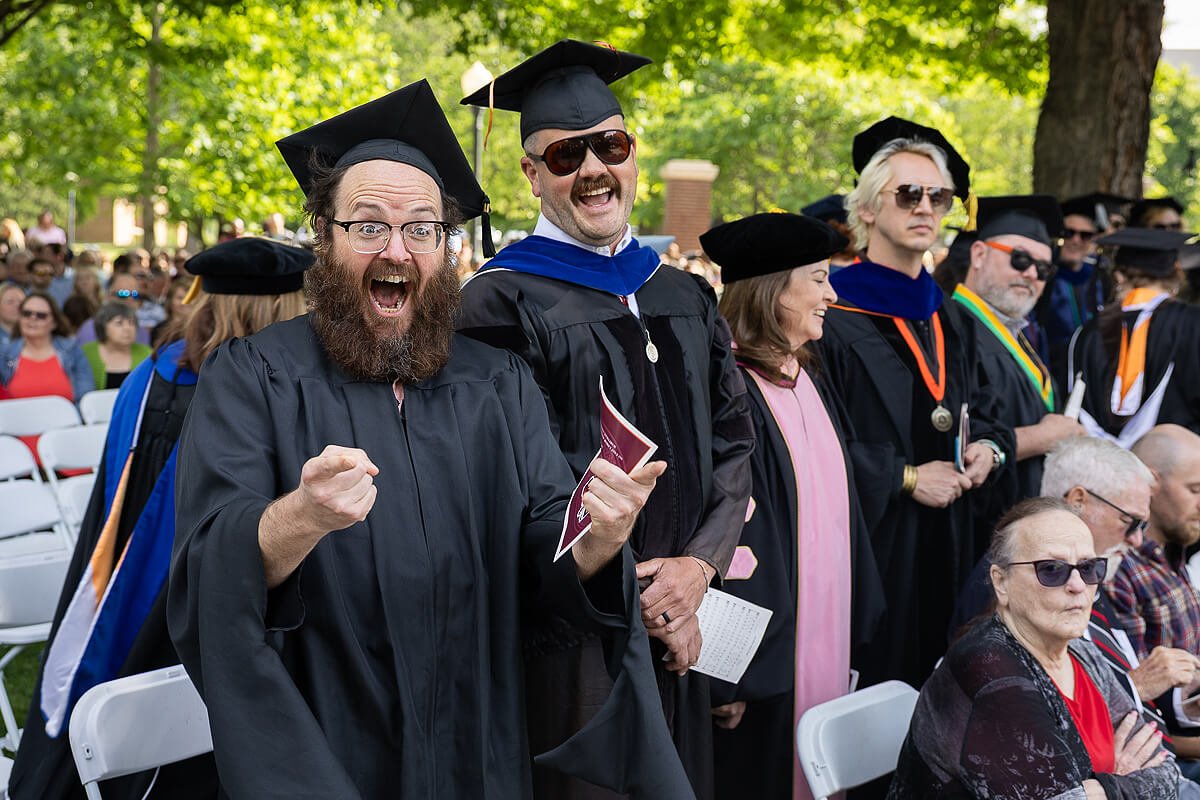
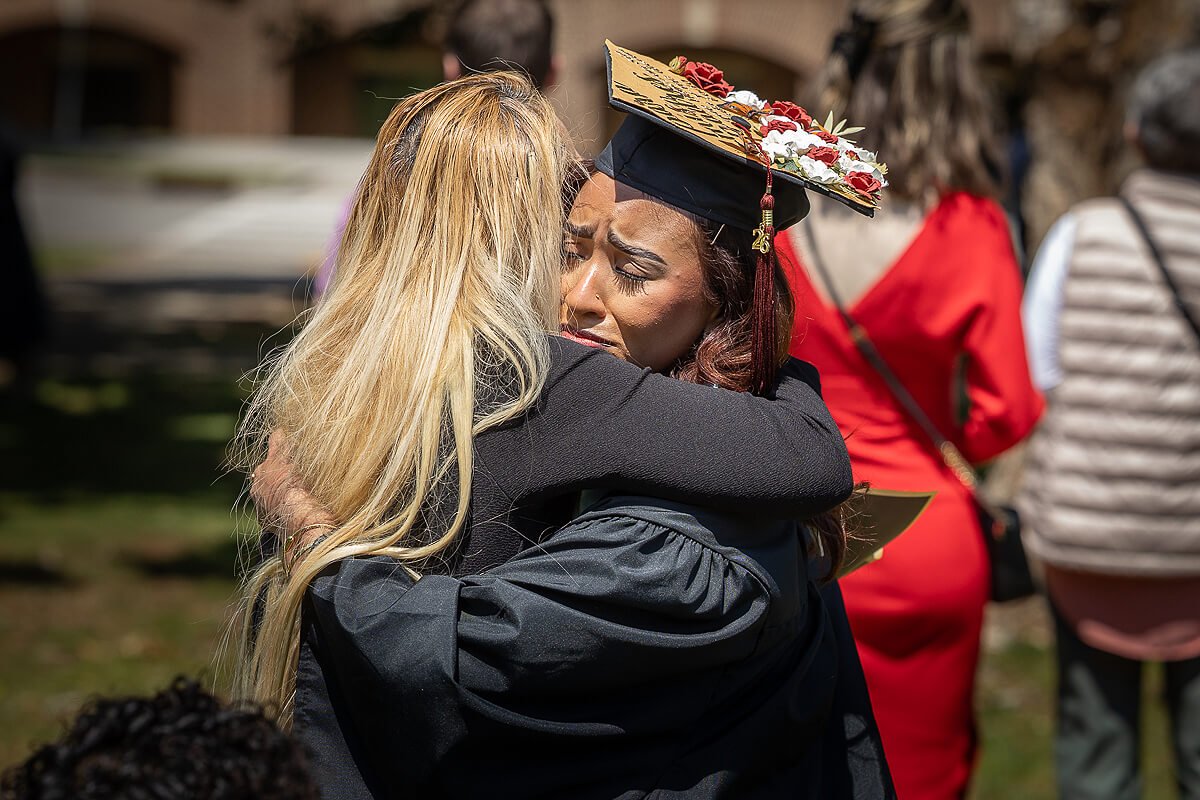
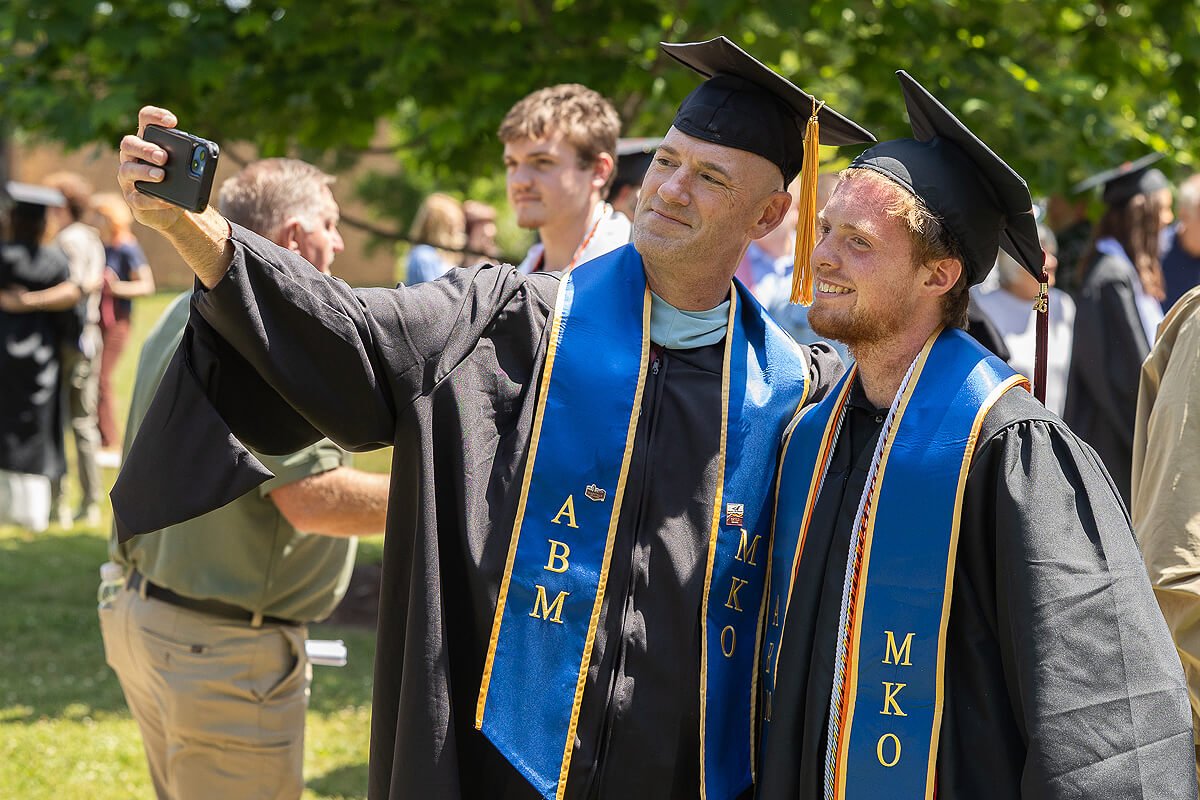
A roar of applause swept across Humphreys Court, rolling outward beneath tree-dappled sunlight as families, friends and faculty rose to their feet in celebration. That energy lingered as graduates formed a line at the edge of the stage, each name carrying with it years of work, sacrifice, friendship and transformation. One by one, they crossed before the assembled crowd to receive their diplomas and shake the president’s hand — a ritual both deeply personal and profoundly communal.
Then came one of the morning’s most emotional moments.
As Coker delivered the traditional Charge to the Senior Class, the weight of the occasion became unmistakable. His voice caught with emotion, the finality of the moment settling visibly over the ceremony as he addressed the graduates one last time before they stepped beyond the boundaries of College Hill and into whatever awaited them next.
As the ceremony drew to a close, Coker offered one final reflection to the graduates gathered before him, reminding them that Commencement marked not an ending, but an invitation to carry forward the values and purpose cultivated during their years on College Hill.
“There is no greater joy for our faculty, staff and administration than seeing the growth and development which takes place from the time you first set foot on campus until you crossed this stage today,” he told the Class of 2026.
Calling graduates “the latest in a long and distinguished line of alumni” stretching back more than two centuries, Coker urged them to leave Maryville College with the confidence to use their voices in service of others.
“I hope you each have found your voice here — your voice for what is true, what is right, what is beautiful, what is kind and what is just,” he said. “I hope and pray that you will go forth into the world, raising your voice — because our world certainly needs your voice now, more than ever before.”
Then, invoking both the College’s alma mater and the enduring words of founder Rev. Isaac Anderson, Coker offered graduates a final blessing and charge: to leave campus knowing they would always have a home where “Chilhowee’s lofty mountains pierce the Southern blue,” and to continue “doing good on the largest possible scale.”
“Congratulations, once again, Class of 2026,” he said. “And Godspeed, my dear friends.”
For the Maryville College Class of 2026, Commencement was not simply a conclusion, but an invitation — to move forward with courage, grounded by the community and education that shaped them.