Maryville College professor, students use study to explore how Appalachians understand death — and life
March 23, 2026
For generations, the mountains of Southern Appalachia have borne witness to some of humanity’s most elemental truths — rugged terrain, hard-won harvests and the ever-present shadow of mortality.
In these hills, where early settlers braved isolation and hardship, death was never easily ignored. It appeared in hymns lifted at the close of a long day, in quiet gatherings beside graves and in raw, plaintive music that grapples openly with life’s final chapter. Mortality was not abstract — it was lived, mourned and remembered within tight-knit communities.
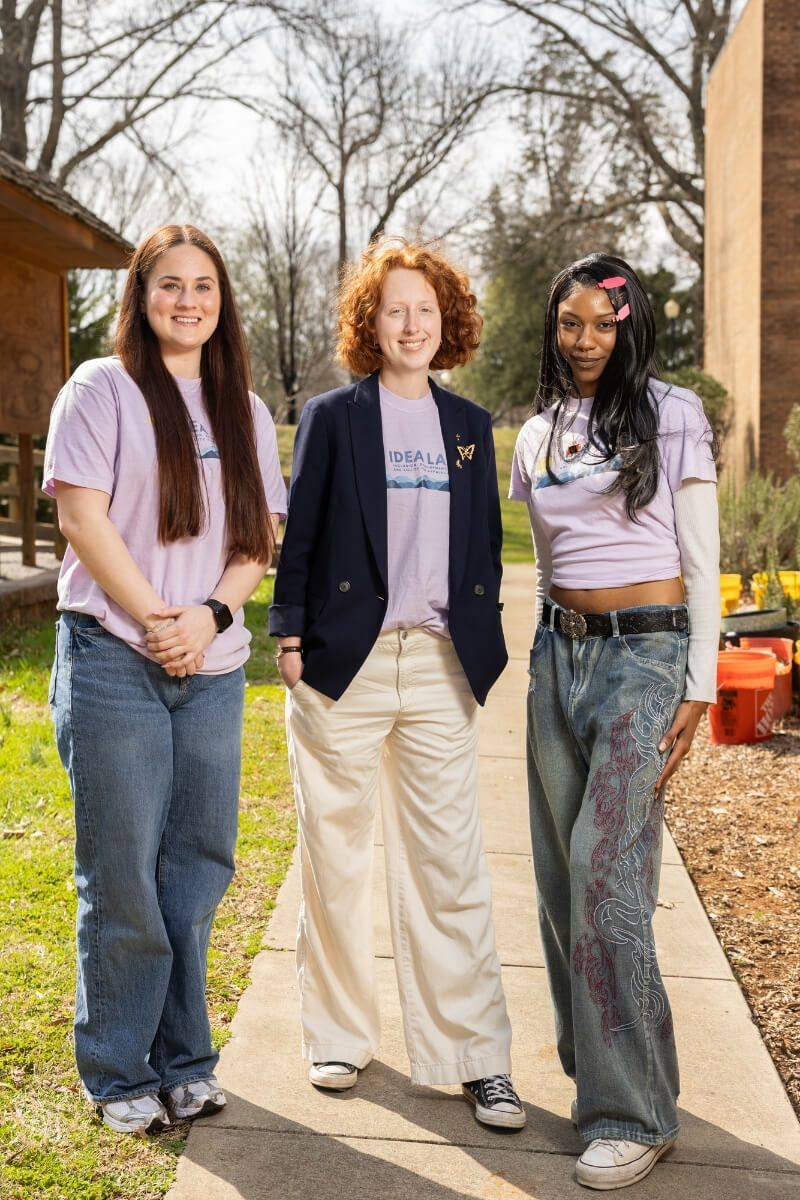
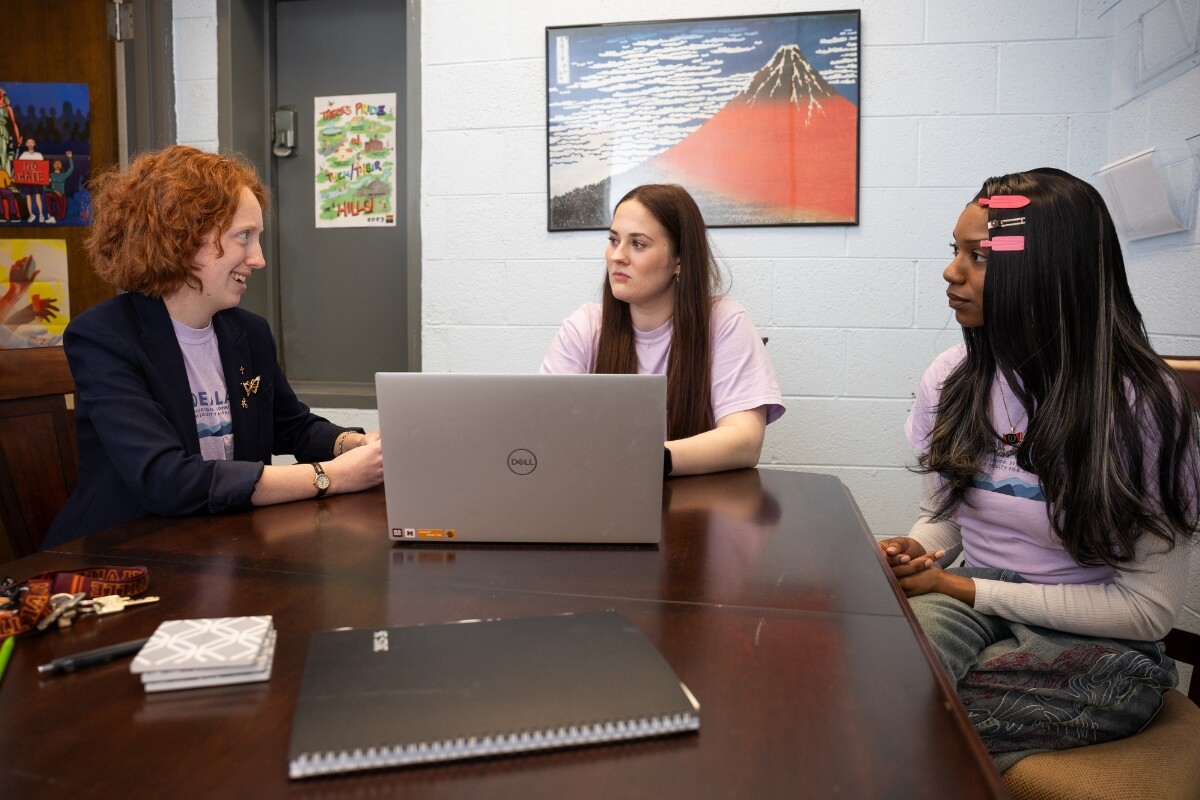
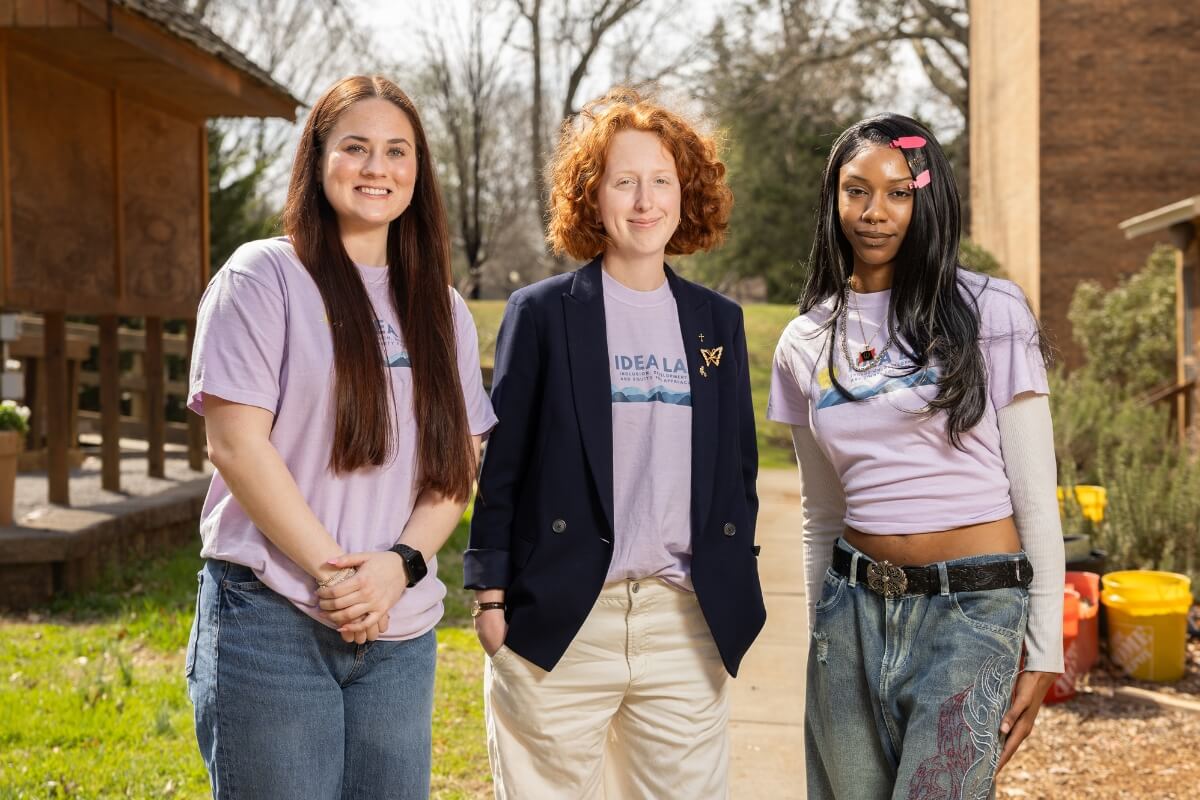
This semester, that rich cultural legacy is being explored through an innovative Maryville College research project spearheaded by Dr. Tess Ann Simpson, assistant professor of developmental psychology, and two of her undergraduate research assistants — Annie Melhorn ’26 and Sol Robinson ’27. Through the Death Experiences and Attitudes Toward Health (DEATH) study, the team is gathering data nationwide, with a particular focus on how Southern Appalachians think about death — and how those attitudes may shape the way they age.
At its core, the project asks a deceptively simple question: Does the way people think about death relate to the way they think about life?
“I’ve been interested in death for a long time, mostly out of fear. How can this thing that is so incredibly natural and guaranteed be so scary?” Simpson said. “So, I spent a lot of time trying to learn as much as I could about dying and the ways we approach (or avoid) death. In my searching and attempts to understand, I read a very intriguing article [“Factors associated with attitudes toward death and dying in the second half of life: a scoping review,” by Alana Officer and published in 2024] that summarized the current research on what things are related to attitudes on death.
“In that article, the authors stressed that research on death and dying is growing, but not in the context of healthy aging. A light bulb went off in my brain. As a developmental scientist, I thought, ‘I can do that!’”
Dispelling fear and negativity
The study also aligns with the United Nations’ “Decade of Healthy Ageing,” a global initiative aimed at improving quality of life for older adults. While many studies on Appalachia focus on addiction and opioid-related deaths, Simpson chose to approach the region through a strengths-based lens.
“I want to ask, ‘What strengths do Appalachians have when it comes to healthy aging and understanding the end-of-life?’” she said.
Through her teaching — including courses in Adult Development and Aging and a co-taught Death and Dying course — Simpson has encountered common misconceptions about aging from students who often see it as a perilous frontier awaiting them as they grow older.
“I find that young adults sometimes have an attitude that aging is inherently negative and a rapid decline towards death,” she said. “But, we have so much evidence that shows that we continue to have meaningful life experiences, purpose, and joy throughout the lifespan. Aging is not evil, and it doesn’t have to be scary either. But facing this will require us to acknowledge the ageism that is pervasive across our culture.”
And the final stop on that journey is as much a part of life as anything else. Death, as the doorway between physical existence and whatever awaits on the other side, has long fascinated humanity, and cultures across time have explored it through various means and media.
“Death is an incredibly natural part of life. From a young age we experience small and large deaths, whether it is a beloved house plant, a pet fish, or a family member. Our media is full of death imagery in art, children’s fairytales, primetime TV, tear-jerker movies, the daily news,” she said. “I think that where we miss the mark is having conversations about our wishes for the last moments of our lives. Majority of folks will die of chronic illnesses, cancer or heart disease, which can give us the opportunity to talk with our loved ones or our health professionals about what we would want for our bodies when we can no longer make those decisions. I feel that those conversations might be the hardest to have, because we must center our own mortality.”
While Simpson leads the study, Melhorn and Robinson are at the forefront of its community engagement. The pair manage the project’s Instagram account, using interviews, short videos and educational content to make research on death and healthy aging accessible — and less intimidating.
“We have an interview series on our Instagram where we talk to Maryville College students about Appalachia, whether about Southern accents, opinions on fashion, or memorial tattoos,” said Melhorn, a Psychology major from Ten Mile, Tennessee. “It is really fulfilling to speak with the student body about our research in a fun way that engages our peers.”
Melhorn’s own research examines how scholars recruit participants in Appalachian communities — comparing active methods, such as face-to-face conversations, with passive strategies like flyers and QR codes.
“I hope readers understand that Appalachia is a region that deserves a place in research and offers great insight into the culture and way of life of many Americans,” she said. “Our voices matter, and we are such a diverse group of people who have a longstanding history. We will have a lot of good data to report on as well that can give insight into our healthy aging habits and our views on death/dying.”
Conversations and community
For Robinson, a Counseling major from Columbia, Tennessee, the project opened the door to exploring the experiences of Black Appalachians, often referred to as “Affrilachians,” and Soulaans — an emerging ethnonym for Black Americans whose cultural identity developed on American soil.
“Soulaans experience death through the lens of trauma and erased cultural practices, because our cultural traditions are still being passed down through oral storytelling,” she said. “This is the theme that I have found throughout the states of our country: Because our culture is stigmatized, we lose a lot of the historical context for our traditions. This is most commonly seen throughout the grief process: We are able to properly express our spiritual death rituals and end-of-life practices without the societal judgment that usually involves our closed ancestral practices.
“Death is very layered, and for Soulaans and Affrilachians (a portmanteau of “African American” and “Appalachian”), I have found that the process of death is very layered and more complicated than previously researched.”
She hopes the project encourages a broader understanding of how culture shapes grief and remembrance.
“I want people to understand that culture has a powerful influence on how we view, conceptualize, and experience death,” Robinson said. “To me, death is proof that life existed — nothing ever truly disappears — yet my culture is losing its roots.”
The students’ work will extend beyond campus this spring, when they present their research at the 49th Annual Appalachian Studies Association Conference.
For Simpson, the project’s impact lies not in changing how people think about death, but in opening space for deeper reflection.
“In the DEATH study, the central question we are attempting to answer is, ‘Does the way we think about death relate to the way we think about life?’” she said. “Currently, there are very few empirical studies on how our attitudes about the end-of-life can be related to how we practice healthy aging. Sometimes researchers are viewed as outsiders, and sometimes we kind of make ourselves outsiders.
“By bringing the research back to the community, we can give people the opportunity to meet a researcher or take some ownership over the knowledge that is being created by these scientists. What is the point of doing the science, if it only is shared with a select few?
“I believe Sol and Annie are in the perfect position right now to do translation,” she added. “They are embedded into our science, but not so much that they have become disconnected from the greater community. I am very proud of their efforts.”
Ultimately, Simpson hopes the project affirms something both ancient and urgent in Appalachia — that conversations about mortality are also conversations about meaning and belonging in which families and communities come together to honor those whose lived experiences have added to the collective good.
“I hope that folks see the work that we are doing and that it resonates with them,” she said. “I hope that they feel that their voices are heard, because we want to listen. The reception for this project has very much warmed my heart and shown me that people are interested in asking these questions.
“We are concerned about how we can live a healthy life. We want to understand the role that death plays in our lives as well. I am exceptionally thankful that folks are willing to share their personal experiences and feelings with us.”