Go West, young woman: Recent Maryville College graduate Kaitlin Koster ’25 takes her wildlife biologist dreams to Arizona for new National Park Service position
June 23, 2025
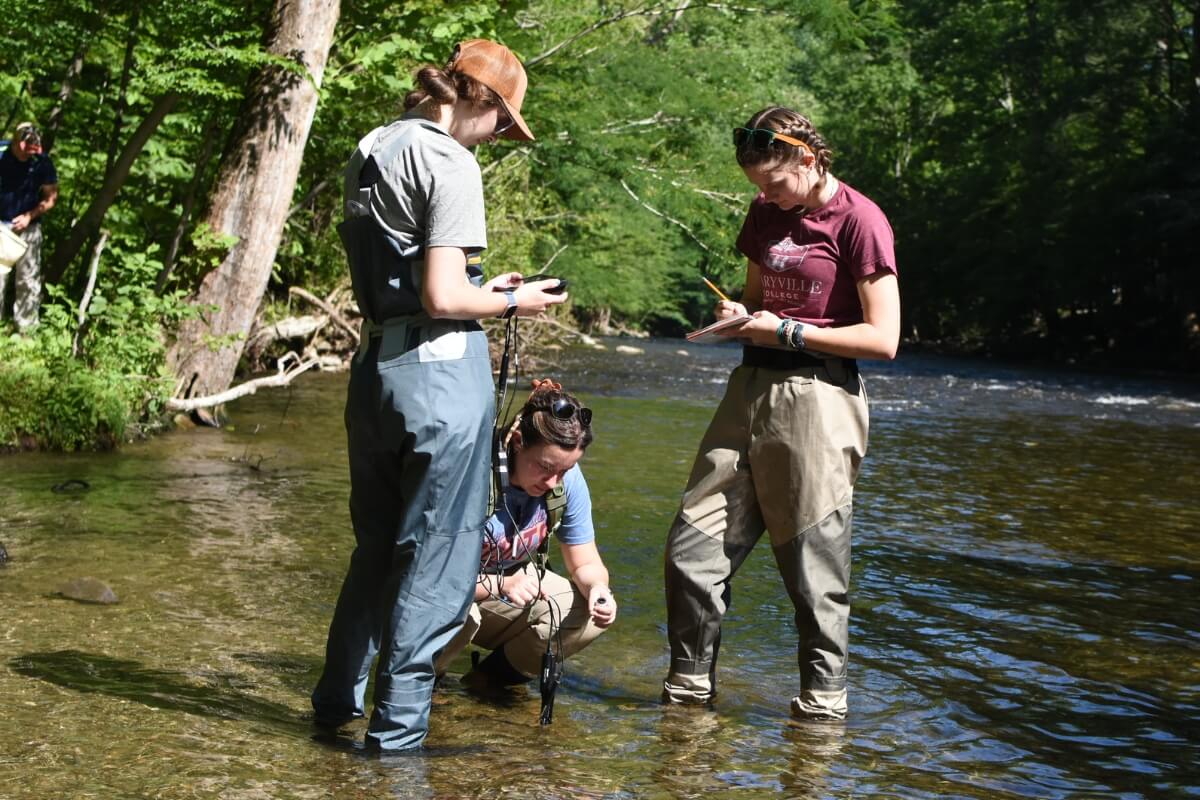
After spending her senior year working on the Little River as part of the Maryville College water quality survey for the City of Townsend, recent Maryville College graduate Kaitlin Koster ’25 is trading the temperate rainforest of the Great Smoky Mountains for the high desert of the Arizona Upland.
Koster, a native of Hendersonville, Tennessee, had barely settled back into her hometown after completing her senior year with a bachelor of science in Biology when the U.S. National Park Service (NPS) called her with an offer to spend the next year as an ecology assistant working out of the Sonoran Desert Network’s Desert Research Learning Center in Tucson, Arizona.
One of 32 networks that comprise the National Park Service Inventory & Monitoring (I&M) Division, the Sonoran Desert Network includes 11 National Park Service units of the Sonoran Desert and southwestern sky islands, isolated mountain ranges rising out of a surrounding lowland environment. As part of the Research Learning Center, she’ll be tasked with collecting “key ecological information on vegetation, soils, biological soil crusts; (assessing) the hydrology and water quality of perennial springs, rivers and wetlands; and (surveying) park wildlife using remote wildlife cameras, environmental DNA (eDNA) and autonomous acoustic recorder devices (ARUs).”
“I have never been to Arizona, but I’m eager to learn and experience new environments,” she said. “The desert is vastly new to me and makes up a large portion of the country. The work sounds intense, and there will definitely be a period of adjustment, but I have spent a lot of time working outdoors, and I’m excited for the challenge! I love spending time outdoors and backpacking, so I am very excited to do so in a brand-new environment.”
A firm science foundation
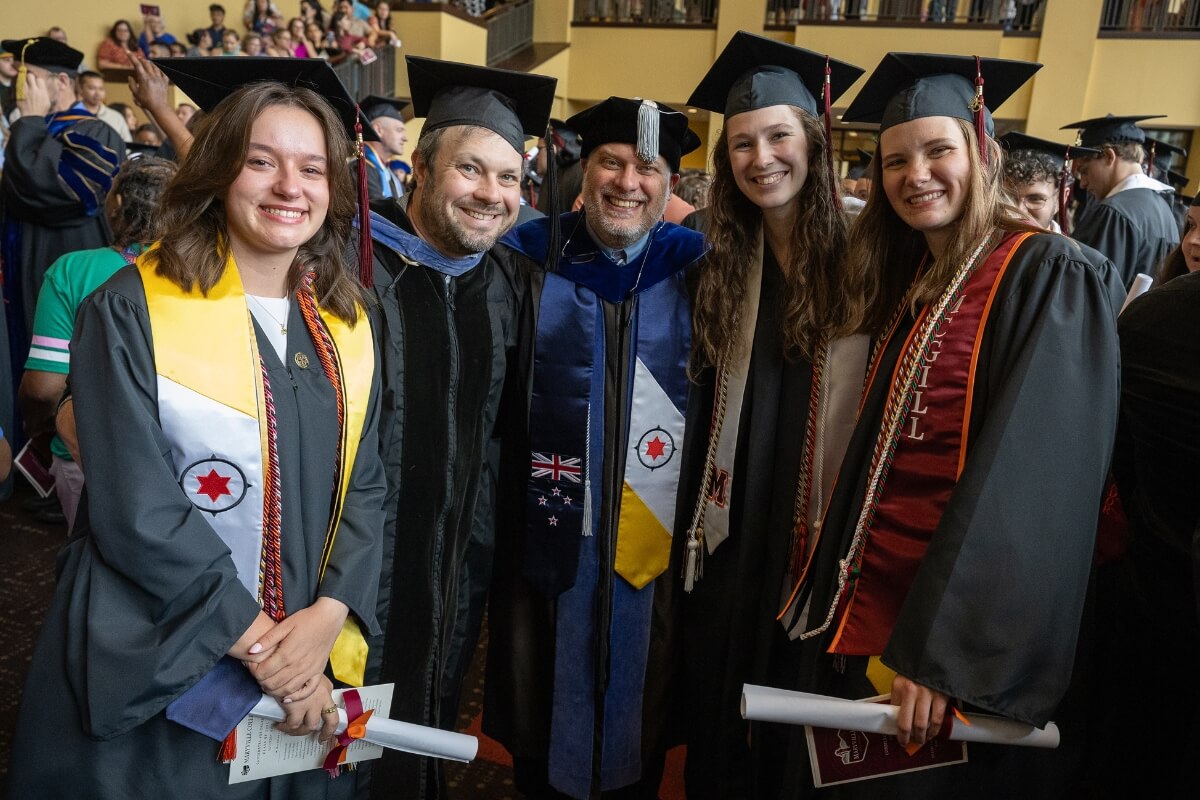
Leaving Tennessee, however, will be bittersweet. Already, the Maryville College Commencement ceremony on May 3 brought with it some emotional turmoil for Koster, who found her two most influential professors in the MC Division of Natural Sciences afterward and shed more than a few tears in saying goodbye. The feeling, said Dr. Dave Unger, associate professor of biology at MC, is very mutual.
“Kaitlin is among the top 0.5% of all students with whom I have ever worked. She is brilliant, mature, capable, trustworthy and endlessly curious,” Unger said. “The National Park Service could not ask for a more exceptional young scientist than Miss Koster. I am so excited to see where life takes her; she has an amazing adventure ahead of her.
“As to this opportunity for Kaitlin, it’s nothing short of sensational. From the job description, it appears she will get to develop a large suite of skillsets, which is exactly what she needs at this point in her career. Not only will she learn useful and applicable skills, but she’ll be able to narrow down and focus on the areas of environmental science in which she wants to specialize.
“It is, after all, as important to know what you DON’T want to do as it is to find out what you DO want to do,” he added.
Koster’s time at Maryville College gave her plenty of those opportunities, and her involvement in the College’s partnership with the City of Townsend to conduct a four-year water quality study to assess the health of the Little River gave her the experience needed to land her most recent job opportunity, she said. Originating in the Great Smoky Mountains National Park, the Little River flows through Townsend, the community adjacent to one of the park’s major entrances that’s a 20-minute drive up East Lamar Alexander Parkway from Maryville College. Funded by grant money from Arconic Foundation, the Little River Watershed Association, the City of Townsend and a private donor, the project was approved in the fall of 2023, and Koster spent the summer of 2024 working with two other 2025 graduates (Izzy Wright ’25 and Reese Bailey ’25) conducting research projects along the river. Looking back on that experience as a recent Maryville College graduate, she’s confident it will come in handy for her assignments in Arizona, she added.
“I don’t yet know what techniques specifically we will employ, but assessing metrics such as pH, dissolved oxygen, temperature, ion concentration, total suspended solids, turbidity, flow rate, fecal coliforms and biological indicators (i.e., aquatic macroinvertebrates) are all in my wheelhouse, so I feel well prepared for the aquatic aspect of this role,” she said. “From my Ecology coursework and experience as an ecology lab assistant, I also have some experience with soil and vegetation sampling techniques. Obviously, the types of soil and plants one finds in the desert are slightly different than in Appalachia, so I will have some learning to do on that front, but I am familiar with several of those techniques.
“As wildlife biology is my long-term goal, some of the techniques I’m most excited to learn are the camera trapping, eDNA (environmental DNA), and ARUs (acoustic recording devices), which are non-invasive methods of wildlife research. Camera trapping is good for long-term monitoring and is something I just haven’t had experience with yet. eDNA is used for capturing the presence of species in an environment. It’s a relatively new technique, but one I’ve heard and read about throughout my undergraduate experience but have yet to learn. (And) ARUs are common methods in wildlife work for species that are difficult to monitor visually.”
Ideally, the experience will give her the knowledge and insight that she can use to determine where her post-graduate path will lead. She eventually hopes to enroll in a wildlife biology graduate program, but she’s in no rush, instead opting to pursue experiential opportunities that will give her a better understanding of graduate-level course and lab work.
Exceeding expectations
The position in Arizona, Unger added, will be a true test of her capabilities … something he expects her to pass with flying colors given the skills she learned during her river research and ecology lab time: radio telemetry, orienteering, plant identification, stream ecology, macroinvertebrate work and statistics, just to name a few, he added.
“I often say to my students that wildlife/ecology/environmental science researchers are looking for three things in a research technician: collect accurate, repeatable data; find the truck at the end of the day; and don’t die. It may sound like a joke, but it is extremely serious, and every colleague with whom I’ve shared this mantra has agreed emphatically,” Unger said. “If you are collecting accurate data, then you remembered all your scientific instruments, showed up on time, worked well as part of the team, found your way to the study site, recorded your data correctly, and got it into the computer upon your return without being asked. That it’s repeatable means you followed instructions correctly and collected the data in a cohesive manner that others can repeat later.
“If you are finding the truck at the end of the day, then you are capable at orienteering using a map, a compass, and GPS. You know your study area and are familiar enough with procedures to complete the day successfully. And if you don’t die, then you are clearly observing safety protocols, carrying the correct gear, know first aid, don’t take unnecessary risks, are not driving the field vehicle unsafely, etc. In short, the basic research skills needed for a job like Kaitlin has accepted is to be responsible, curious, mature, capable, confident, willing to learn, able to take constructive criticism, and intelligent enough to grasp and follow the objectives of the research project. These skills translate universally to any research project.”
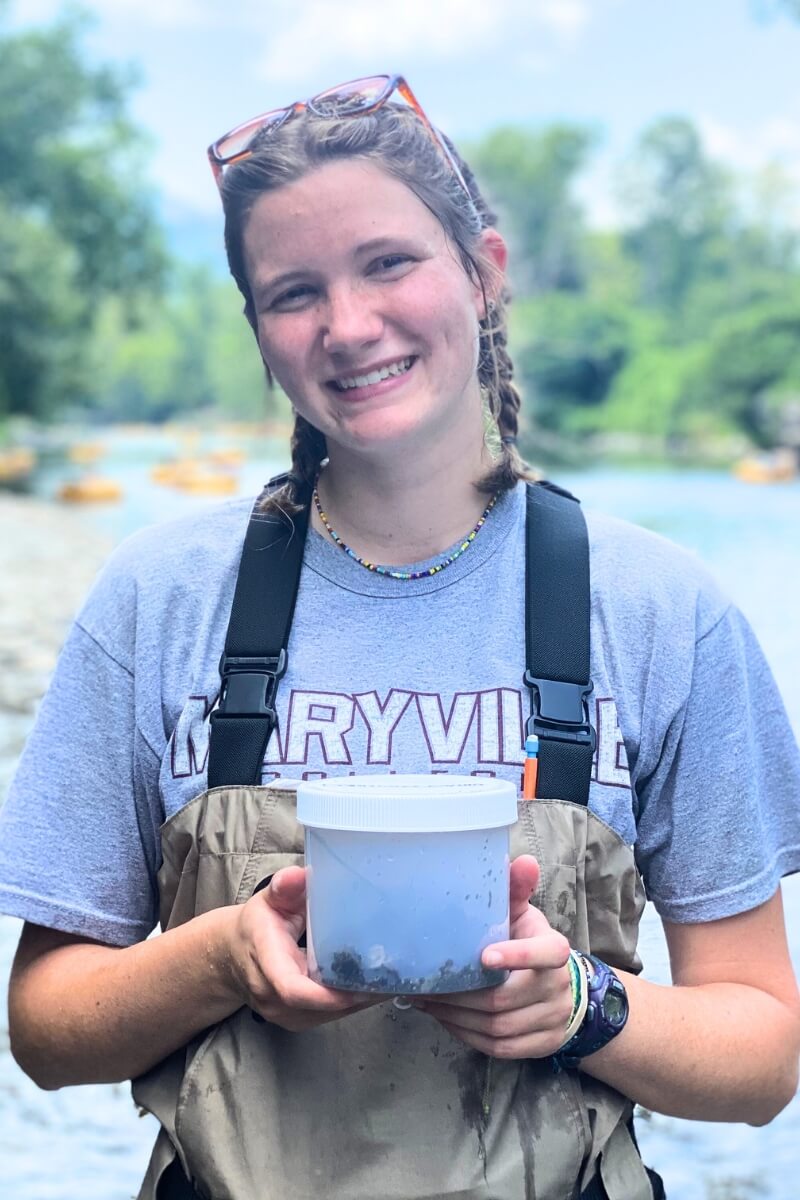
Last summer, Unger and Dr. John Enz of Jacksonville University worked with Koster to analyze the macroinvertebrates she collected using a kick net at specific sites along the Little River. By counting and sorting the insects and cross-referencing populations with an index that specifies the pollution tolerance of different insect families, she was able to conduct a statistical analysis of the results to show how the organisms and levels of pollution vary from site to site.
The work not only doubled as her Senior Study — a key component of the MC experience in which degree candidates complete research projects in their programs of study with the guidance of faculty members — it added important data to the water quality study on which MC Associate Professor of Chemistry Dr. Nathan Duncan and additional MC students continue to work. Koster’s participation, however, was funded through a $645,000 Fund to Improve Post-Secondary Education (FIPSE) grant administered by the U.S. Department of Education.
The FIPSE money, earmarked to expand the College’s Scots Science Scholars program, has been used up, however, meaning that Duncan and Dr. Jay Clark ’96, director of environmental and sustainability initiatives at MC, are seeking additional funding to continue the work … and the experiences that afford Scots like Koster opportunities they likely wouldn’t get at other colleges or universities.
“Maryville College has maintained a commitment to students in the sciences actually doing the science themselves,” Duncan said. “Projects like these give students who are motivated to pursue a career in the sciences a more extensive opportunity to gain a lot of hands-on experience in sample collection and processing, data collection and cultivation of large data sets, development and validation of methods, and also critically the opportunity to present their data to the greater scientific community. All of these experiences help our students get set up for long-term success.”
That success pays dividends that may have an incalculable impact on science down the road, thanks to the doors it has opened for recent Maryville College graduates like Koster. Earning a position with the National Park Service in Arizona is certainly a life-changing one, she added, of which she plans to take full advantage.
“This experience will give me a greater perspective on working in environments different from everything I have experienced so far,” she said. “It will also help me figure out what’s next. My eventual plan is graduate school … (but) it depends on the connections I make, the doors that continue to open, and what I’m feeling in a year!”
To support and learn more about the Townsend water quality survey, as well as other efforts by the MC Office of Environmental and Sustainability Initiatives, visit the office’s page on the Maryville College website.