


MC alum Dr. Robert Mahley ’63 to present on Alzheimer’s research as part of Homecoming activities
Oct. 10, 2024
The pre-football game potluck alone is reason enough for alumni of the academic divisions housed in Sutton Science Center to return to campus for Homecoming, but this year, there are even more motives to come home to College Hill.
The divisions of Natural Sciences and Mathematics and Computer Science, along with the Neuroscience major and Scots Science Scholars, are hosting two events on Friday, Oct. 25, that will showcase student research and success and the work of one distinguished alumnus and scientist, Dr. Robert Mahley ‘63.
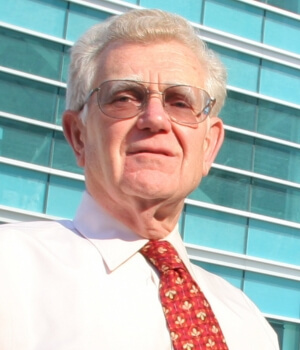
Mahley, senior investigator, president emeritus and founder of Gladstone Institutes in San Francisco, California, and professor of pathology and medicine at the University of California-San Francisco, will present “Alzheimer’s Disease: Protecting or Replacing Neurons to Rebuild Lives” at 2 p.m. in the Lambert Recital Hall of the Clayton Center for the Arts. The event is free and open to the public.
Mahley’s presentation will center on his current research, which focuses on identifying the cellular and molecular mechanisms of apoE4, the strongest risk factor gene in Alzheimer’s disease, and on approaches for limiting the negative effects of apoE4 in the nervous system. He has identified a series of small molecules that convert abnormal versions of apoE4 into less toxic variants. His lab also investigates how the production of apoE4 within the nervous system may impair essential cellular activities.
During the event, College leaders also will honor Mahley as a most recent inductee of the Tennessee College Public Relations Association’s (TICUA) Hall of Fame, which honors the distinguished alumni of its 34 member institutions and highlights their contributions to the state, nation and world.
“We are fortunate to have Dr. Mahley to return to campus, visit with students, and give a presentation for students, returning alumni, and community members,” said Dr. Angelia Gibson, professor of chemistry at Maryville College. “It is an incredible opportunity for our students to learn directly from a world-class scientist like Dr. Mahley, whose work has contributed so meaningfully to understanding the molecular basis of conditions like Alzheimer’s disease and atherosclerosis.
“Our students regularly comment that their interactions with alumni who are STEM professionals motivate and encourage them. We think they’ll be especially inspired by the Mahleys, who have used their Maryville College education to do good on the largest possible scale.”
Mahley’s wife, Linda Kenzie Mahley ’64, will also be a guest during Homecoming weekend, when she will sit in on some of the College’s Teaching English as a Second Language classes. During her own time at Gladstone, she taught English as a second language to more than 300 scientists, researchers and Ph.D. candidates from more than 30 countries.
Mahley leads groundbreaking research
After majoring in Biology and graduating from Maryville College in 1963, Mahley earned his M.D. and Ph.D. from Vanderbilt University. In 1971, he joined the staff of the National Heart, Lung, and Blood Institute (NHLBI) and, in 1975, became head of the Comparative Atherosclerosis and Arterial Metabolism Section in NHLBI’s Laboratory of Experimental Atherosclerosis. Mahley was recruited four years later to create Gladstone Institutes. He is a member of the National Academy of Sciences, the National Academy of Medicine, and the American Academy of Arts and Sciences.
As Gladstone’s president, Mahley oversaw the organization’s establishment and growth, including the creation of the Gladstone Institute of Cardiovascular Disease, Institute of Virology and Immunology, and Institute of Neurological Disease. In 2006, he developed the Gladstone Center for Translational Research to facilitate the movement of Gladstone’s basic research into therapeutic development. Mahley’s research defined the critical role of apolipoprotein (apo) E in cholesterol homeostasis, atherosclerosis, and the nervous system. These findings laid the groundwork for the explosion of research linking apoE4 — a variant of apoE — to the pathogenesis of Alzheimer’s disease and other neurodegenerative disorders.
Sutton hosts Open House
After Mahley’s presentation, attendees, alumni and friends are invited to visit Sutton Science Center and visit with current faculty, staff and students in an Open House. The event will include light refreshments, lab tours and mini-poster presentations set up throughout the first and second floors of the building, and interested participants can refer to a suggested route map on the Maryville College website that details the scientific topics and their respective room numbers.
“We want to give visitors an opportunity to learn what current Scots in Sutton are researching and, for alumni, to share their own experiences, reconnect with faculty and meet new faculty,” Gibson added.
The one-hour Sutton Science Center Open House begins at 3 p.m.
Potluck and Social held Saturday
Hosted by the divisions of Behavioral Sciences, Mathematics and Computer Sciences and Natural Sciences, the annual potluck and social event at McArthur Pavilion gives alumni and current students an opportunity to gather for food, fellowship and fun. People are invited to bring a dish, fire up their own grills, or enjoy the food truck options available to all Homecoming attendees.
The gathering starts at 11:30 a.m. and continues through 1:30 p.m.