From Maryville College to Harvard: Junior Gianna Mantegna earns prestigious research internship
March 26, 2026
It’s the oldest college in the United States, founded almost two centuries before the Rev. Isaac Anderson established Maryville College in the foothills of East Tennessee.
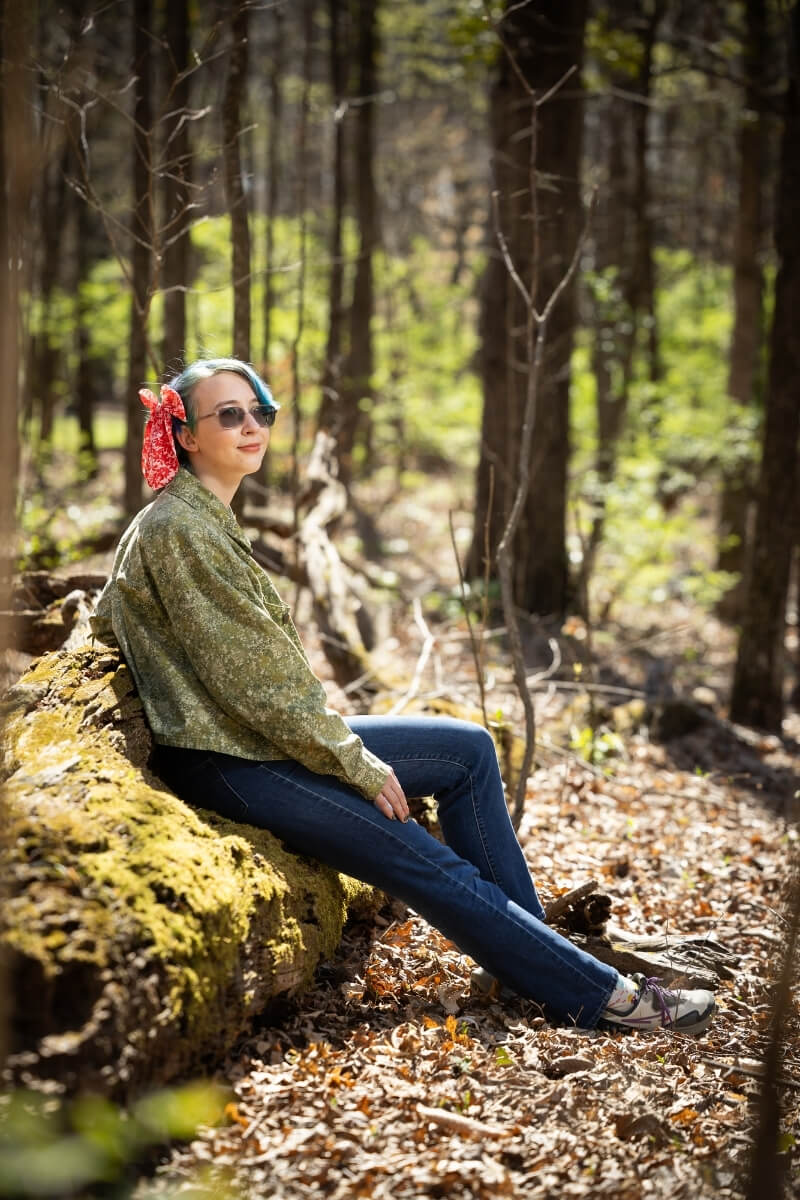
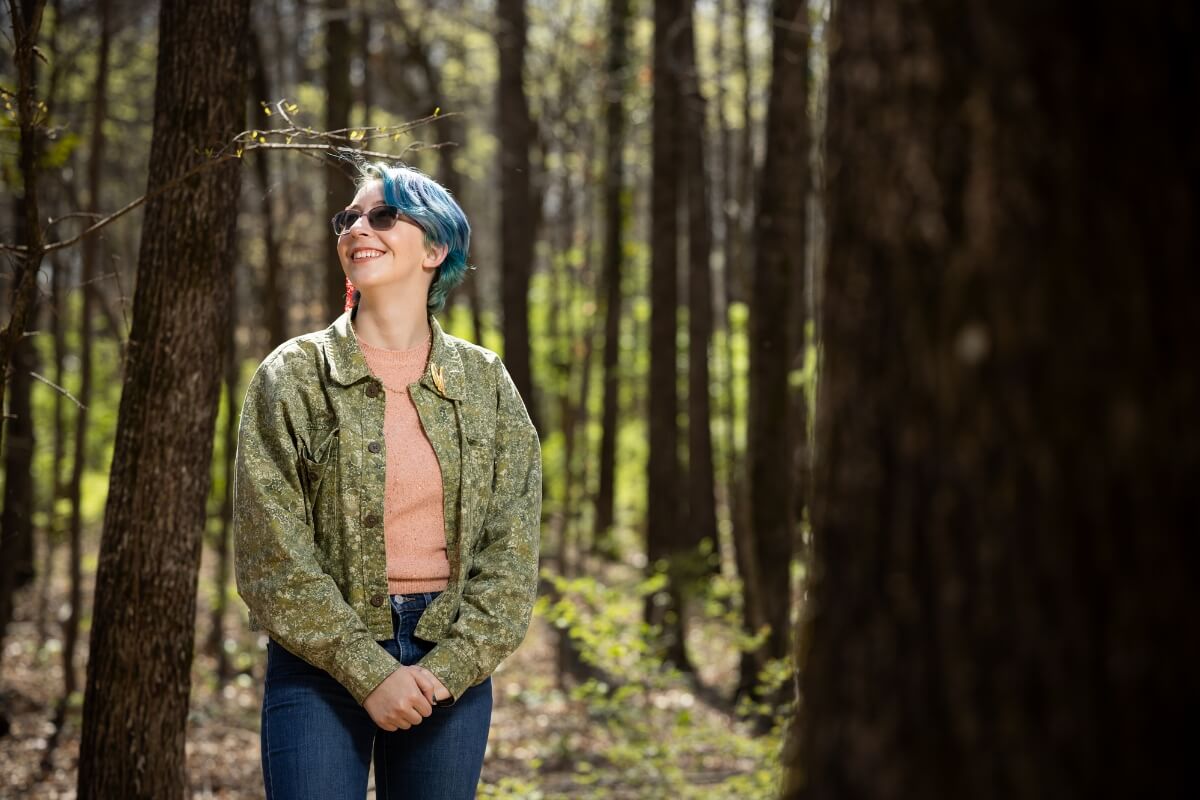
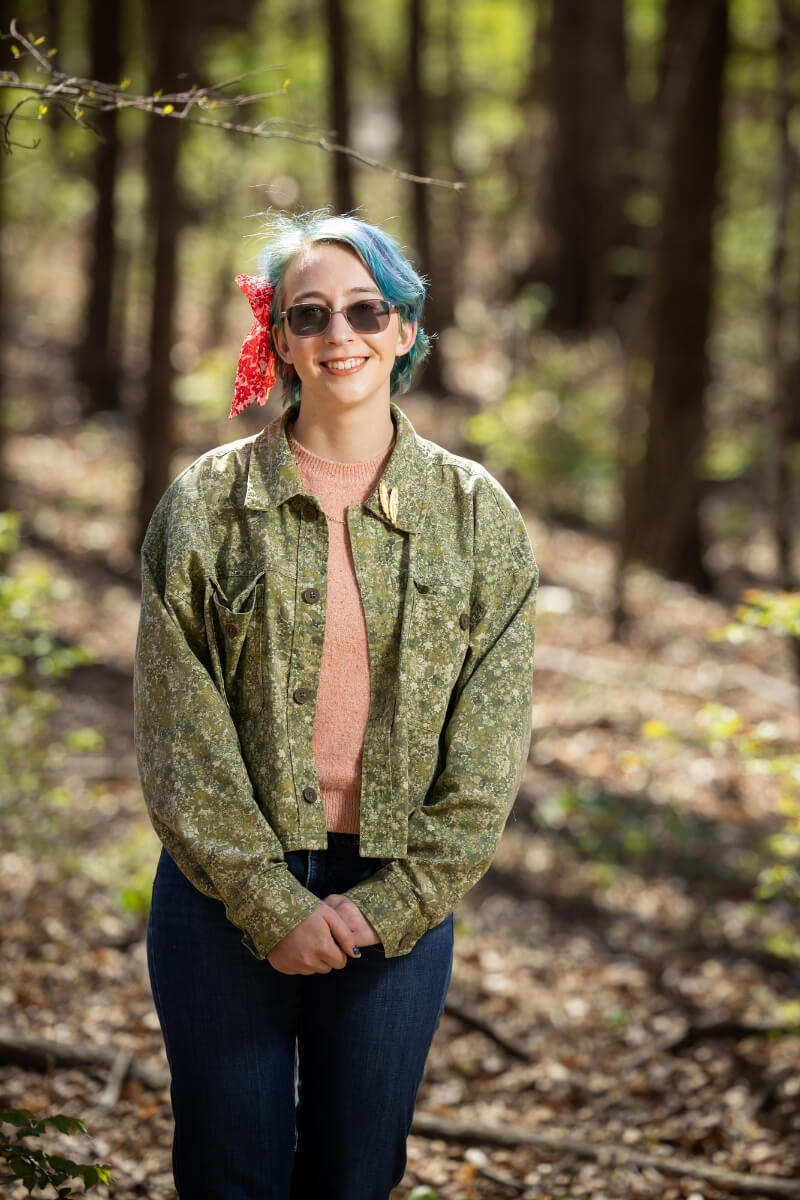
And come the fall semester, the name Harvard will be on a Scot’s curriculum vitae. Gianna Mantegna ’27, a junior from Lakeland, Florida, has earned a coveted summer research internship at Harvard Forest, one of the nation’s leading ecological research sites affiliated with Harvard University.
It’s a highly competitive program that draws top undergraduate researchers from across the country, and when Mantegna learned she had been selected, it took a while for the reality to sink in.
“I was incredibly excited, but also a bit shocked,” she said. “I remember that I was talking to one of my mentors that morning about how anxious I had been the previous week waiting to hear back from the interview. I joked that ‘Maybe the acceptance is just waiting in my email right now,’ not realizing that they had actually emailed me during that hour. I was overwhelmed with gratitude and disbelief at being chosen for such a selective role.”
Hands-on environmental research
Mantegna, a native of Lakeland, Florida, who is pursuing an individualized major in Computational Environmental Science, will spend the summer conducting hands-on research in ecological data and environmental monitoring — work that places her alongside scholars at one of the most respected research institutions in the world and that reflects both the interdisciplinary nature of her studies and the kinds of hands-on scholarship emphasized at Maryville College.
“Gianna has such a wide range of interests … from math to computer science to environmental science,” said Dr. Barbara Johnson, who advises Mantegna’s individualized major alongside Dr. Julie Konkel. “She developed her own individualized major to incorporate all of these things. Her initiative and energy are amazing.”
That blend of disciplines — and the initiative required to design her own academic path — helped position Mantegna as a strong candidate for the highly competitive program.
“The fact that she herself designed this major makes her particularly well-suited,” Johnson said. “She is approaching it with skills in all three areas as an undergraduate. I have no doubt this attracted interest in her as a candidate for this position.”
At Harvard Forest, Mantegna will contribute to research that seeks to better understand the impact of environmental practices through data. According to the research project’s web page, it “will bring together the use of simulation models and spatial analyses to better understand physical, biological and social processes on the New England landscape.” It’s an opportunity Mantegna sees as both exciting and meaningful.
“The most interesting part of this research topic is finding ways to put real numbers to the effect that operations like logging or conservation sites have on forest ecosystems,” she said. “I hope that my contribution to this project will allow future scientists to have a quantifiable reference.”
She is also eager to build new technical skills and expand on what she has learned in the classroom, specifically through the use of ArcGIS, a Geographic Information System (GIS) designed to create, manage, analyze and map spatial data in both 2D and 3D. Applying classroom skills to real-world problems, she said, is one of the reasons she pursued her individualized career path, and she credits her Maryville College experience with helping her earn the internship.
“The advanced curriculum I have been able to take here has taught me invaluable skills that helped me stand out,” she said. “I have been exposed to many different programming languages and given the opportunity to experiment with them in my Computer Science classes. I have also learned many field and lab skills like transect sampling, river seining, soil respiration measuring, NMR analysis and more.
“Without the support from my professors to push through the challenging work, and also the opportunity to learn these skills, I would have felt much less prepared for this internship. (In addition) while at Maryville College, I have made amazingly talented friends who encouraged me to apply to places that I would have never considered, like the Harvard Forest program. Without their support, I would not have felt confident enough to submit an application.”
Connecting the dots across disciplines
Her academic journey reflects the flexibility of a liberal arts education. Initially unsure of her path, she discovered a passion at the intersection of environmental science and computing through the College’s Core Curriculum, and the liberal arts approach helped her realize that while certain classes might look disparate on the surface, they’re actually more interwoven than she first realized.
“I picked Environmental Science because I had always had a particular fascination for it in high school,” she said. “In addition, while trying to dodge taking calculus in high school, I also ended up choosing a class on introductory computer science. I loved the coding and problem-solving, so I decided to add a computer science minor to my major to explore that avenue. In particular, my classes in Natural History, Algorithms, and Regression Analysis helped me realize that my passion lies in extracting the meaning from large sets of numbers.”
Beyond the classroom, her involvement in campus organizations — including the Programming Team, the Scots Science Scholars and the Clayton Center for the Arts technical team — has further shaped her problem-solving abilities and leadership skills … as well as traits that make her ideally suited for working as part of a team.
“My work with all three of these teams has greatly affected my character,” she said. “I always thought of myself as a good leader, but my work with each of these teams has shown me how to be a better leader and a good follower.”
As she prepares to spend the summer immersed in research, Mantegna sees the opportunity as both a personal milestone and a step toward her future goals. The Harvard name carries with it a certain cachet that makes such an honor both humbling and a point of pride, she said, and returning to MC for her senior year afterward will be an ideal jumping-off point for the pursuit of a master’s degree in environmental science.
“I am honored to have been offered to work with the renowned researchers at Harvard Forest,” she said. “It feels like a pinnacle of achievement for me. This internship will give me valuable research experience that would make me more well-informed and a better candidate.”
And, she said, it will hopefully serve as an example that through hard work at Maryville College, prestigious opportunities are possible. That’s a sentiment Johnson has been familiar with for a while, and Mantegna’s achievement, she said, reflects not only individual excellence but also the strength of the College’s approach to undergraduate education. (Incidentally, that strength served as a foundation for another Scot who’s now at Harvard: Assistant Professor Dr. Ben Taylor ’06, a Harvard Forest researcher who also teaches organismic and evolutionary biology at the university.)
As far as Mantegna goes, “We have previously had students earn prestigious internships and jobs, and this is one more example of how Maryville College, small as we are, prepares students for top-notch positions,” Johnson said.